Tatara (traditional smelting) and tamahagane production — how the material of the Japanese sword is born
 * Image is for illustrative purposes only.
Table of Contents
What is tatara — the ancient smelting method that produces the material of the Japanese sword
Tamahagane, the material of the Japanese sword, is produced through a smelting technique unique to Japan known as tatara (traditional smelting). This method, which uses only iron sand and charcoal burned in a clay furnace (takadono) over three days and nights, sustained Japan's iron production from ancient times through the end of the Edo period. A notable feature is that the furnace is rebuilt for each operation and, once the operation is complete, dismantled to extract the iron mass from the furnace floor — a form that is close to single-use. The furnace fire must be kept burning without interruption for three days and nights, with multiple craftsmen taking turns attending the furnace and continuously feeding in iron sand and charcoal. This extended, uninterrupted continuous operation itself forms the backbone of the system that sustains tatara.
Iron sand and charcoal — the quality of the raw materials determines the fate of the steel
The iron sand used in tatara is considered finest when it is masago iron sand, derived from the weathering and accumulation of granite. Low in titanium and containing highly pure iron, masago iron sand was produced abundantly in the mountain districts of the Chūgoku region (Shimane, Tottori, Hiroshima). The collected iron sand undergoes a process of washing through water channels, using differences in specific gravity to sort out impurities and soil, before being fed into the furnace. Charcoal from hardwoods such as pine and oak is used, directly affecting the control of furnace temperature and the reducing atmosphere. Unlike coal or coke, charcoal contains almost no sulfur, which also means that the introduction of impurities that would contaminate the steel can be avoided — one of the reasons charcoal has continued to be chosen. The origin and quality of the raw materials greatly determine the quality of the final tamahagane.
From firing to breaking the kera — the craft of the murage who commands the furnace
Operations are directed by the chief craftsman known as the murage. After feeding iron sand and charcoal alternately into the furnace and burning for approximately 70 hours, an iron mass called kera forms at the furnace floor. The murage judges the state inside the furnace from the following cues and adjusts the amount and timing of iron sand and charcoal input:
- The color of the flame rising from the furnace
- The appearance of sparks shooting out
- Changes in the sound of combustion
These criteria do not rely on numbers or instruments; they are an intuitive technique passed down orally from murage to apprentice through years of experience. Once the operation is complete, the furnace is broken apart to extract the kera, which is then crushed and classified by carbon content. Of this, the portions with approximately 0.6–1.5% carbon are selected as tamahagane and become the material for Japanese swords.
The selection of tamahagane — the tōshō's discernment of the steel's quality
Examining the cross-section of the crushed kera and determining carbon content from the brilliance of the crystals and the state of the fracture surface is a skill that only a trained eye possesses. By differentiating the steel as follows, the tōshō (swordsmith) creates a blade that achieves both toughness and pliability:
| Part | Steel used | Properties |
|---|---|---|
| Edge | High-carbon steel for kawagane | Toughness |
| Core | Low-carbon steel for shingane | Pliability |
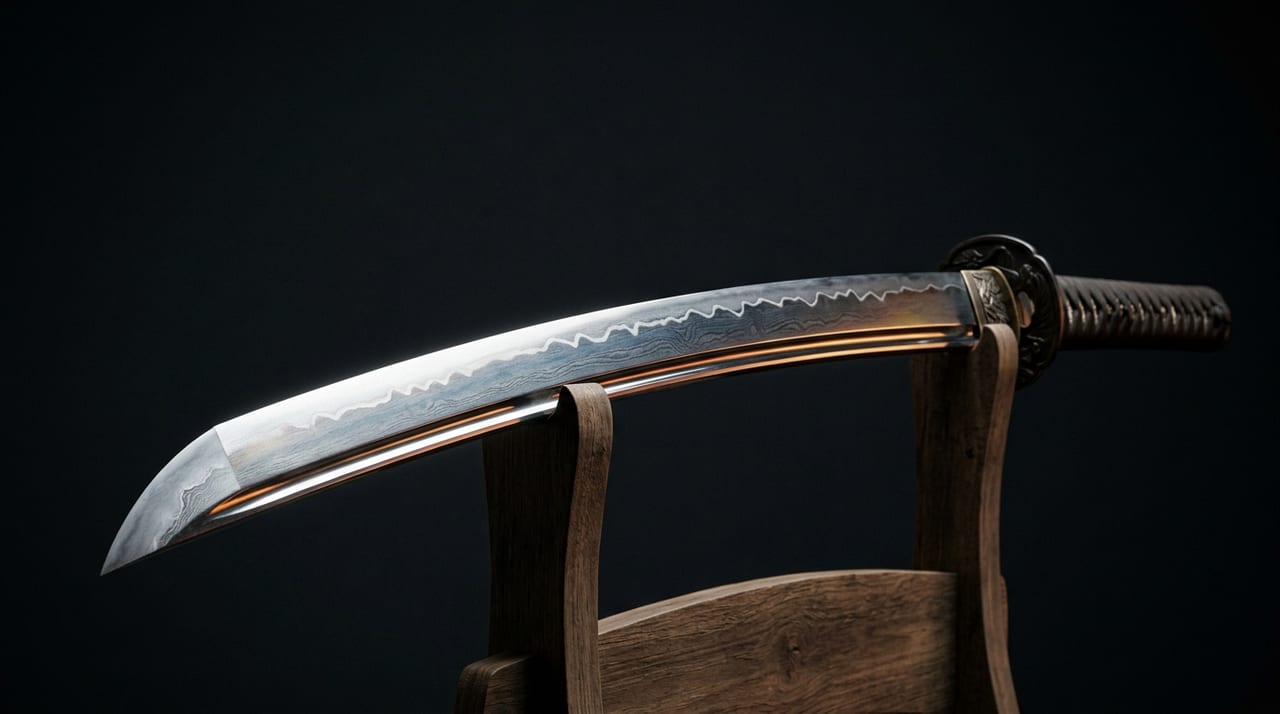
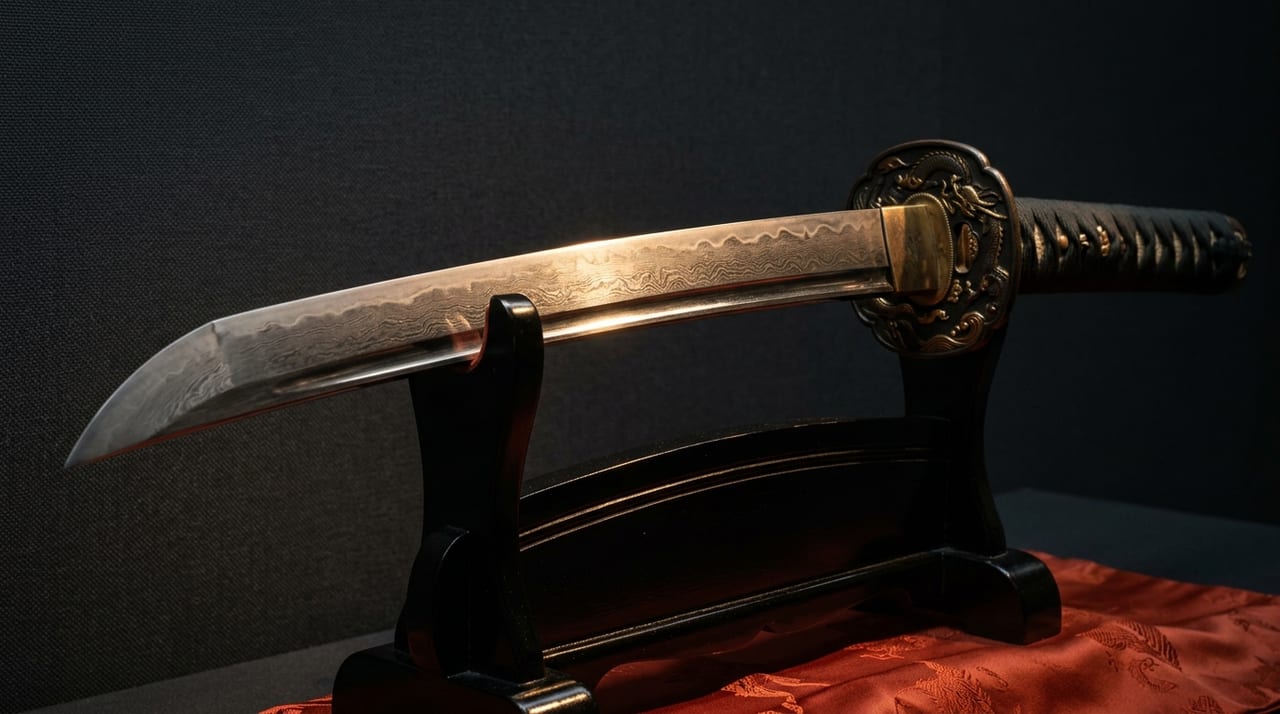
Because the selected tamahagane still has uneven composition in its raw state, it undergoes orikaeshi tanren (folding) at the tōshō's workshop — repeated heating and hammering that drives out impurities and excess inclusions and brings the structure closer to uniform. The many layers produced through this orikaeshi tanren process appear on the surface of the finished blade as a distinctive surface pattern called jigane (steel of the blade surface). The inherent unevenness of composition in tamahagane as a material is itself the foundation that produces a jigane appearance unique to each individual sword — something that cannot be found in mass-produced industrial steel.
The difference between tamahagane and modern steel — why tamahagane continues to be used in making Japanese swords
Most modern industrial steel is produced in large quantities in a blast furnace using iron ore and coke at high temperatures, with composition uniformly controlled. Tamahagane, by contrast, is made through tatara, where iron sand is reduced by charcoal at relatively low temperatures, resulting in variation in the distribution of carbon content and impurities from part to part even within a single kera. Tōshō have not treated this variation as a defect but have instead made use of it as a material — differentiating between kawagane and shingane, and refining the structure through orikaeshi tanren. Even after uniform and easy-to-handle industrial steel became widespread, tamahagane continues to be used in traditional Japanese sword-making because the techniques that make use of this material's unique properties are indispensable for achieving both the strength of the blade and the beautiful jigane and hamon. Attempts to reproduce an equivalent blade from industrial steel are difficult because the inherent compositional variation of tamahagane cannot be artificially replicated, and as a result the character of the jigane and the quality of the hamon tend to differ.
Tatara passed down to the present — the role of the NBTHK
Tatara died out once after the spread of modern iron production following the Meiji period, but today the NBTHK (Society for the Preservation of Japanese Art Swords), a public interest foundation, continues annual operations at the Nittōho Tatara in Okuizumo, Shimane Prefecture. The tamahagane produced is distributed to registered tōshō and sustains the lifeline of Japanese sword-making through traditional techniques. Because the amount of tamahagane distributed is limited, even registered tōshō treat the tamahagane they can obtain as a precious resource, and this weight is reflected in every step of the process through to completing a single sword. The fact that this ancient smelting method continues to be passed down even now in 2026 in a form unique in the world demonstrates the profound depth of Japan's sword culture.
What to know when choosing a sword made from tamahagane
It is not easy to judge by appearance alone whether a Japanese sword was made from tamahagane, but the surface pattern that appears in the jigane and the hamon that appears at the boundary between the edge and the flat of the blade are expressions that emerge as evidence of having undergone traditional techniques such as orikaeshi tanren and yaki-ire. These characteristics do not appear in the same way when the materials or processes differ. A kanteisho (appraisal certificate) from the NBTHK indicates that the sword has been recognized as a genuine Japanese sword and serves as one point of reference for determining whether it was made through the traditional production process using tamahagane. When considering a purchase, checking for the presence of a kanteisho alongside the character of the jigane and hamon is a practical guide to choosing a reliable sword. If there is an opportunity to examine a sword in person, try viewing the jigane pattern while changing the angle at which light falls on it. The layering created by orikaeshi tanren changes in appearance depending on the angle and intensity of the light, making it easier to perceive a character that is difficult to convey through photographs alone. Rather than judging by images and descriptions alone, verifying alongside the details recorded in the kanteisho is the approach that leads to choosing a sword with genuine confidence.