The Craft of the Sayashi and Tsukashi — Artisanal Skills in Accessory Making That Draw Out the Blade, and Period Authentication
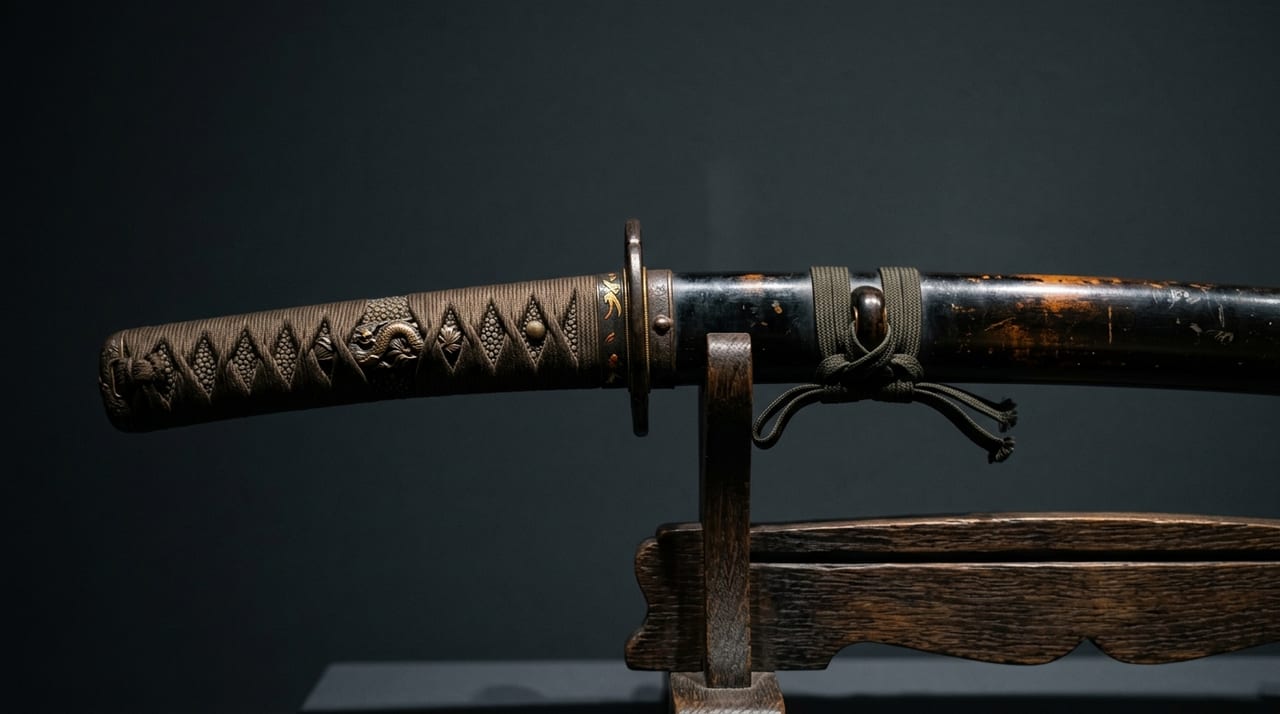 * Image is for illustrative purposes only.
Table of Contents
What Tōsōgu Reveal About a Blade's Origins
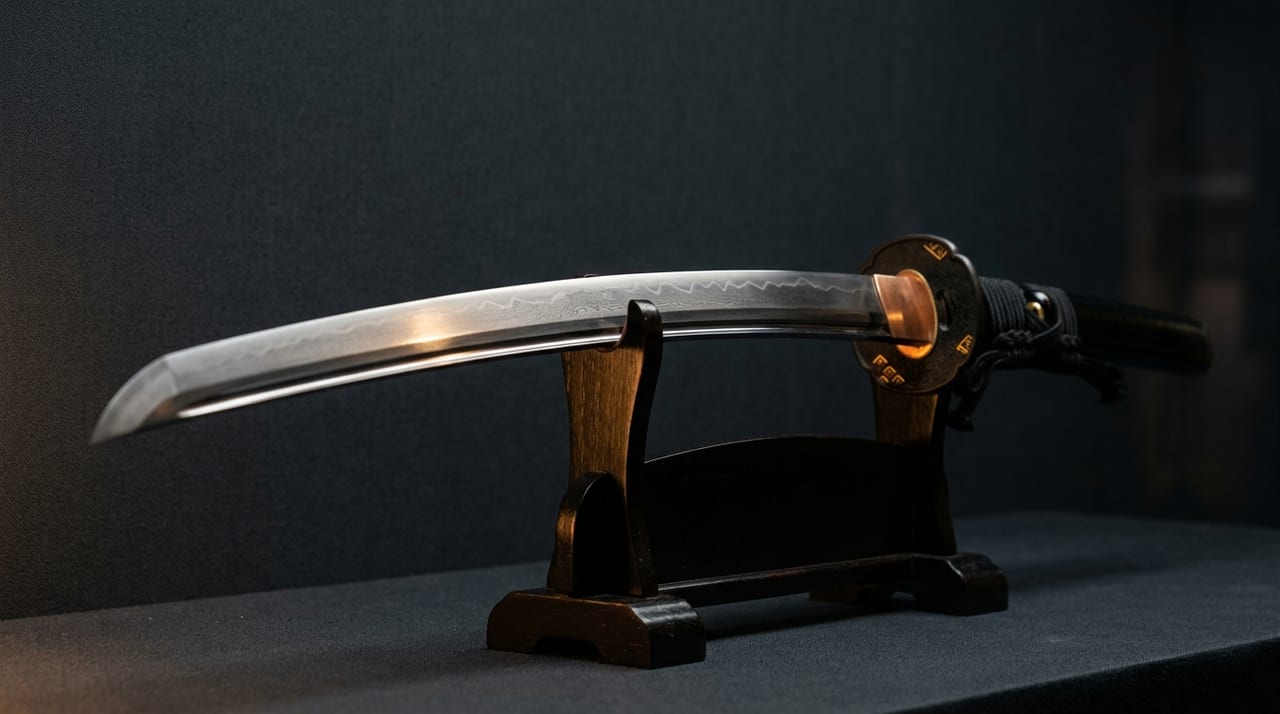
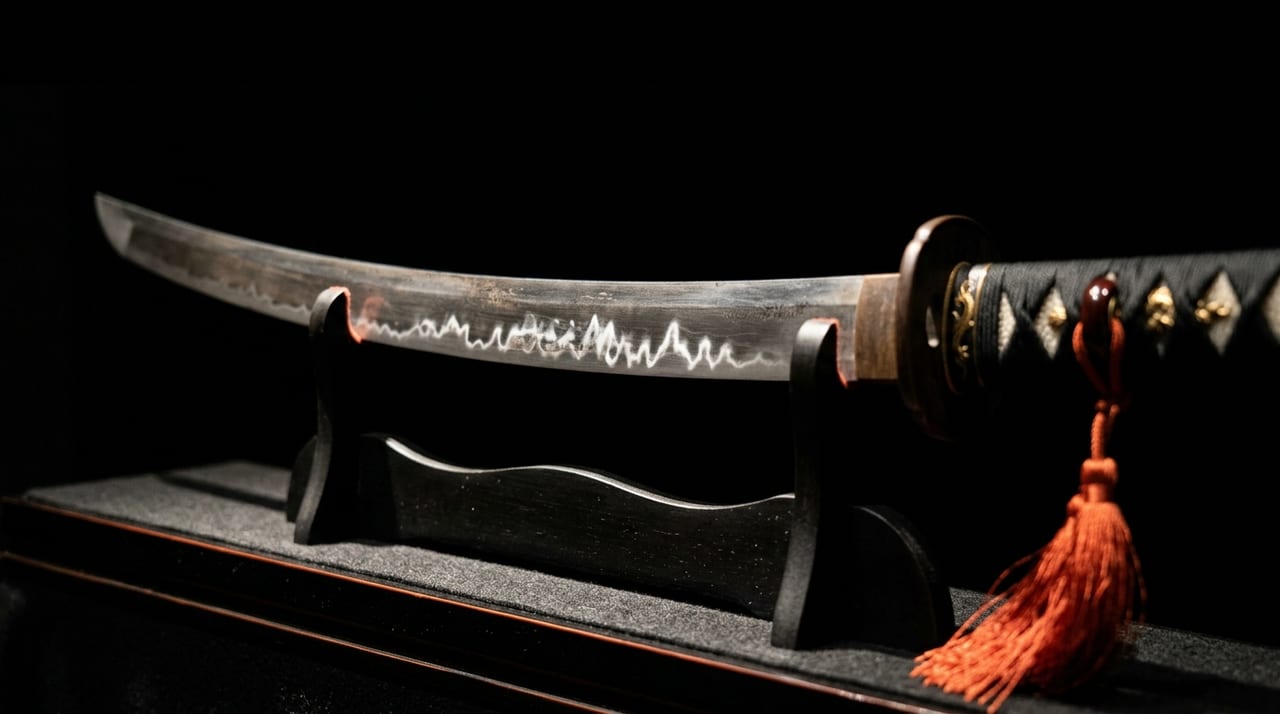
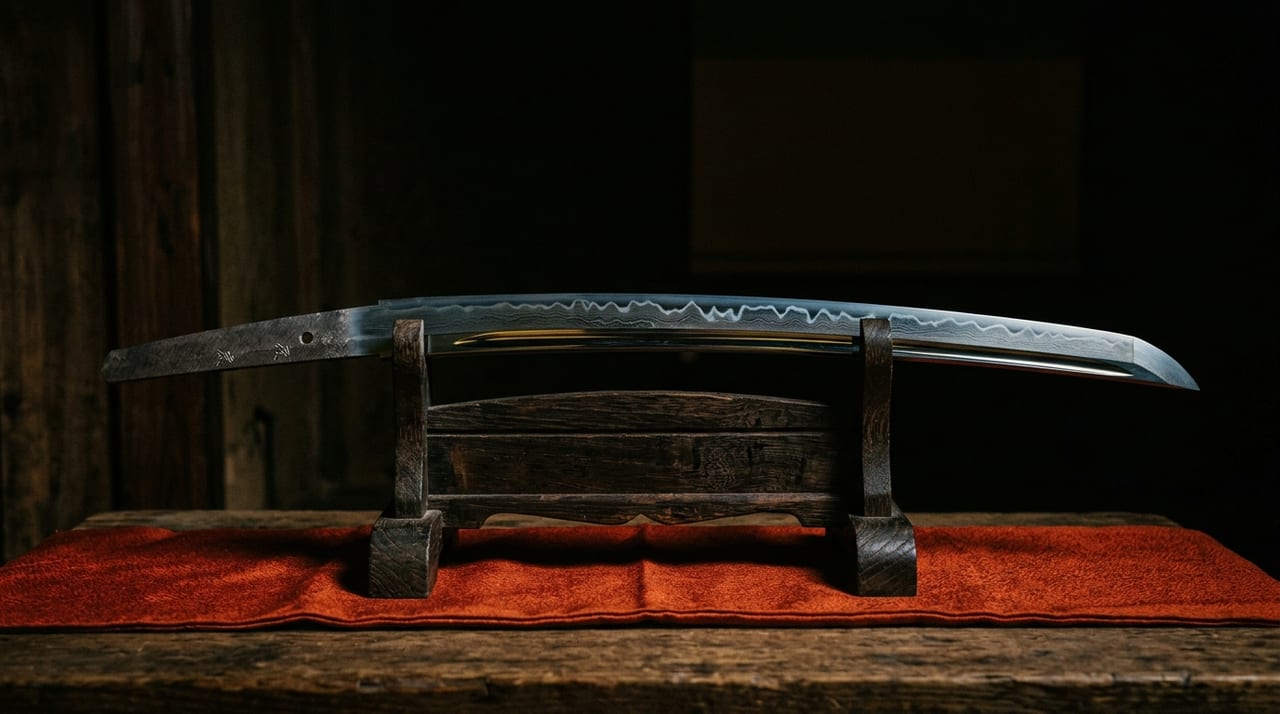
The evaluation of a nihontō does not rest on the blade's jihada and hamon alone. Only when the skills of the craftsmen responsible for these accessories — the sayashi (scabbard maker) and the tsukashi (hilt maker), who create the saya that houses the blade and the tsuka that is gripped by the hand — come together does a single sword achieve its full dignity as a work of art.
In the field of authentication too, the condition of the accessories serves as important evidence for judgment. A sword that retains its original saya and tsuka contains within it evidence of the era and path through which the blade was transmitted. A sword fitted with goho (later replacements) — that is, accessories that were remade at a later date — is not thereby inferior, but in authentication such accessories are treated as a different category of information. When purchasing a sword online as well, paying close attention to the accessories is a perspective that greatly improves the accuracy of one's sword selection.
The Sayashi's Craft — From Wood Selection to Lacquering
For the material of the saya, honoki (magnolia) has long been used. Honoki is soft and easy to work, and its nature makes it unlikely to damage the blade; its moderate oil content also serves to prevent rust on the blade. The sayashi begins with wood selection, carefully hollowing out two pieces of honoki that have been split apart to match the shape of the blade, then joining them together. This process is a highly skilled operation that creates a subtle gap so that the blade does not press too tightly against the inner wall of the saya, while at the same time allowing smooth drawing and sheathing.
The lacquer finishing comes in the following varieties.
- Kuro-urushi-nuri (black lacquer): Used most widely on practical swords of the warrior class. Its luster is deep, and over time it changes to an amber-tinged black.
- Shu-urushi-nuri (vermilion lacquer): A vibrant finish using vermilion-red lacquer. Seen on sword mountings used as furnishings by daimyo and court nobles.
- Ishime-nuri (stone-texture lacquer): A finish that renders fine granular texture in lacquer, combining anti-slip functionality with decoration.
- Hakeme-nuri (brush-stroke lacquer): A distinctive texture that leaves traces of the brush. Its rugged quality made it favored for practical swords.
Lacquer is robust against changes in humidity and temperature, yet dries out and cracks if too dry, and excessive moisture causes it to swell. The sayashi, having mastered the properties of these materials, has continued to craft saya that can withstand Japan's four seasons. That accumulated knowledge is the product of craftsman-specific judgments that cannot be replaced by modern industrial coating techniques.
Signs of Aging in the Saya and Clues for Period Authentication
The condition of the saya quietly tells the story of the time a sword has traversed. An old saya that has passed through years of use and storage retains characteristic traces.
Lacquer that has deepened with age and shows fine cracks and worn patches in places is proof of long passage of time. It is also characteristic of an old saya that the wood base has contracted and the joints have opened slightly, or that the interior wood has absorbed oil from the blade and become discolored. On the other hand, a saya whose condition is too uniform, or whose lacquer gloss looks too new, is likely to be a later replacement.
Throughout the Edo period, the shape and decoration of the saya underwent changes reflective of the era. Swords from eras when combat was a real consideration tend to have saya of simple, sturdy construction. As the Edo period brought a prolonged era of peace, decorativeness increased, and saya adorned with makie (sprinkled lacquerwork) and raden (mother-of-pearl inlay) began to appear. Such differences in construction help estimate the period in which the sword was made and used.
In the evaluation of accessories during authentication, "temporal consistency between the blade and the accessories" is given great importance. If the blade is the work of the early Edo period yet the finish of the saya is clearly in a style of a later era, the accessories are judged to be later replacements. Having a complete set of period accessories means that part of the sword's provenance is preserved, and in the sword market, descriptions such as "accessories complete" or "with original saya" are likewise evaluated as added value.
The Tsukashi's Work — The Art of Samegawa and Tsuka-maki
The main materials handled by the tsukashi are samegawa (ray skin) and tsuka-ito (hilt cord). What is called samegawa in practice often uses ray skin, whose fine granular texture functions as a non-slip surface when the sword is gripped with bare hands. The basic structure involves covering the tsukagi (hilt core) with samegawa and then wrapping tsuka-ito over it.
There are various schools of tsuka-maki technique, and the following are representative examples.
- Moroyori-maki: The most common method, in which the cord is twisted in a moroyori fashion and wrapped. It was widely used throughout warrior society.
- Jabara-maki: Characterized by a crossed pattern reminiscent of a snake's belly. Highly decorative, it was used on sword mountings for ceremonial occasions.
- Hira-maki: A method in which the cord is wound flat side by side. Its clean, uncluttered finish is seen on swords that emphasize practicality.
The length and shape of the tsuka also varied by era; swords from periods when combat use was demanded tended to have relatively shorter tsuka, while there was a trend toward longer ones in times of peace. The materials used for the cord also vary — silk, cotton, and leather, among others — and the choice of material and degree of fading can sometimes provide clues for estimating the period of manufacture.
The decorative metal fitting known as menuki is also closely connected to the tsukashi's work. Menuki are inserted beneath the samegawa of the tsuka, combining a practical role as a grip for the hand and a decorative function. During the Edo period, the designs of menuki often incorporated family crests and auspicious motifs, making them an element that indicated the owner's rank and tastes.
The Condition of Accessories and the Valuation of a Sword
Understanding the provenance of a sword's accessories is indispensable knowledge when purchasing or owning a sword. In the sword market, the condition of accessories is generally categorized as follows.
- Jidai-koshirae complete: A state in which the period saya, tsuka, and tsuba are all present and temporally consistent with the blade. Highly regarded as the form in which the sword's provenance is most richly preserved.
- Goho-koshirae: Accessories made in a later era than the blade. They do not diminish the blade's appeal, but the fact is often noted in the kanteisho and sales descriptions.
- Shirasaya only: A state in which only the shirasaya — an unvarnished, undecorated plain-wood scabbard made for storage — is present. The shirasaya is a practical item for safely storing the blade and is also the standard preservation form for art swords.
When purchasing a sword online, it is important to check the condition of the accessories from the product page photographs as thoroughly as possible. The sheen of the lacquer, the condition of the samegawa, and the degree of fading of the tsuka-maki cord are clues for reading the sword's age and storage conditions. If the description contains wording such as "with original saya," "replacement tsuka," or "in shirasaya," one should understand the precise meaning of each before deciding to purchase.
Contemporary Craftsmen and the Transmission of Accessories
The work of the sayashi and tsukashi is carried on in the present day. Craftsmen who restore and replace the saya and tsuka of old swords maintain traditional techniques while making material choices and judgments adapted to modern storage environments.
To keep an old sword for a long time, it is important to check the condition of its accessories regularly. If the interior of the saya is damaged, the blade risks being scratched, and looseness in the tsuka also affects handling safety. When such deterioration is observed, consulting a specialist craftsman is a practical option for passing the sword on to the next generation.
The craft of the sayashi and tsukashi not only sets the stage that brings out the beauty of the blade, but also bears the role of preserving the sword's historical record in physical form. When you take a sword in hand, pay attention not only to the blade but also to the story told by the accessories that envelop it. As one's understanding of accessories deepens, the way one views and selects swords for a collection will surely change.