Types and Reading of Sword Appraisal Certificates — NBTHK, NTHK, Appraisal Reliability and Selection Criteria
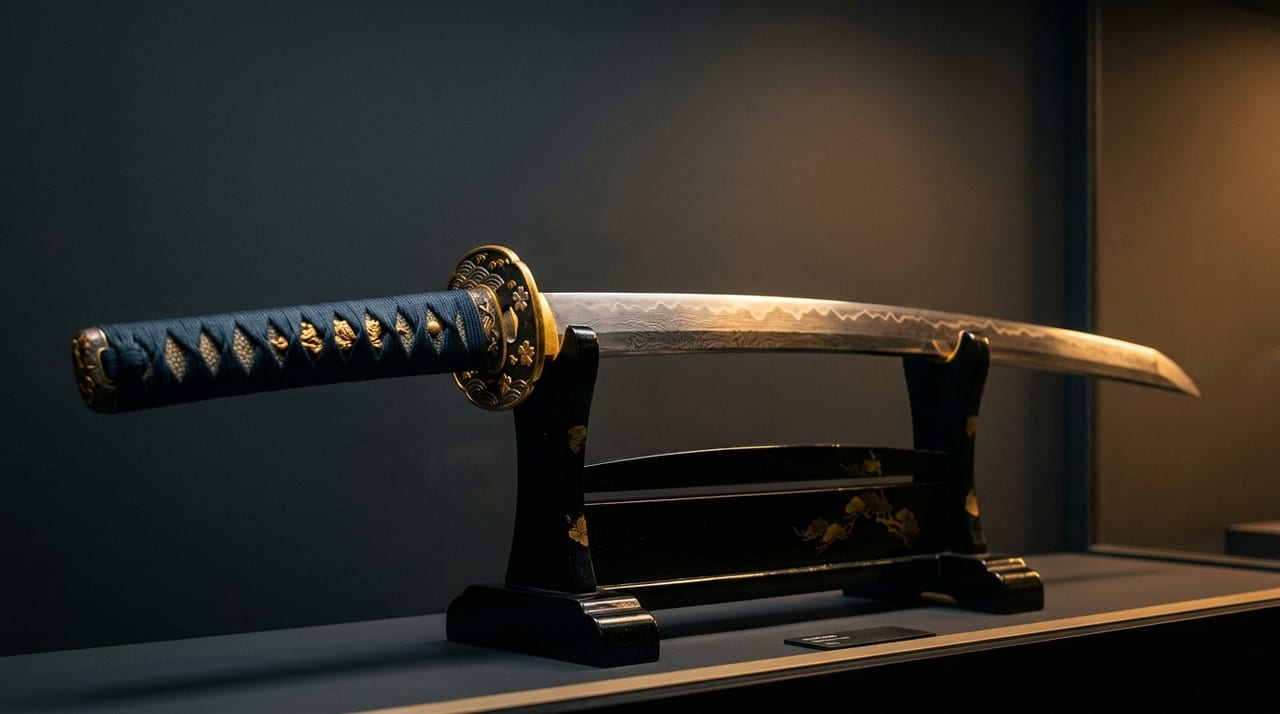 * Image is for illustrative purposes only.
Table of Contents
What Is a Sword Kanteisho?
When purchasing a nihontō, especially a high-priced piece, one of the most important factors for making a judgment is the kanteisho (appraisal certificate). A kanteisho is a document in which specialists record their evaluations concerning a sword's authenticity, period, tōkō, and condition. However, kanteisho come in different types, and their reliability and meaning differ depending on the issuer.
To understand why a kanteisho matters, one must understand what drives value in the nihontō market. The value of a sword is determined by the quality of the work, its condition, the reputation of the tōkō, the period, and finally — crucially — proof of authenticity. No matter how beautiful a sword may be, if its authenticity is in doubt, its market value drops dramatically.
Major Appraisal Organizations and Their Characteristics
Several organizations in Japan carry out sword appraisals. Of these, two are the most authoritative and widely recognized.
| Organization | Characteristics |
|---|---|
| Public Interest Corporation, Japan Sword Preservation and Promotion Association (NBTHK) | One of the oldest and most authoritative appraisal organizations. Its kanteisho record the style, tōkō, period, and condition of the sword in detail. It operates a grading system with designations such as Tokubetsu Hozon Tōken and Hozon Tōken, and enjoys high market credibility. Obtaining an NBTHK appraisal can be considered a de facto requirement for the buying and selling of high-priced swords. |
| Society for the Preservation of Japanese Art Swords (NTHK) | A major appraisal organization on a par with NBTHK. NTHK likewise issues detailed kanteisho and assigns grades such as Hozon Tōken. NTHK kanteisho are also highly regarded in the market and carry a level of credibility equal to that of NBTHK. |
Beyond these two organizations, appraisals by regional sword dealers' associations and individual tōkō also exist, but in terms of market credibility, NBTHK and NTHK are the two that clearly stand out.
Contents of a Kanteisho and How to Read It
NBTHK and NTHK kanteisho normally contain the following information.
- Tōkō name: The name of the craftsman who made the sword. Works by renowned tōkō command higher market value by that fact alone.
- Period: The era in which the sword was made. Classifications include kotō (Heian to early Edo), shintō (Edo), shinshintō (Meiji), and others. Works from earlier periods generally command higher value.
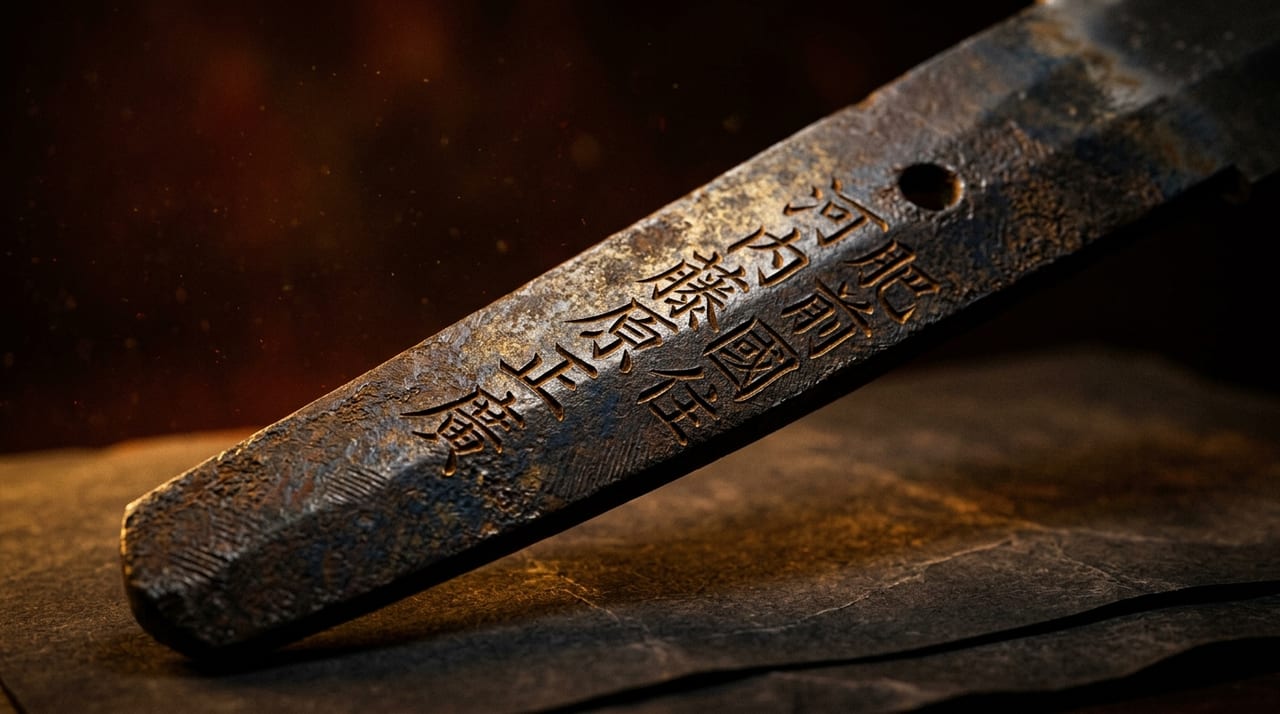
- Style and inscription: Detailed information including the sword's dimensions, sori, the pattern of the hamon, and the mei (name) carved into the nakago.
- Condition: A description of the sword's physical state, including rust, edge chips, and warping. Perfect undamaged condition is noted as "mukizu" (no flaws), and minor flaws are noted as "kizu ari" (flaws present).
- Grade: Grading designations such as Tokubetsu Hozon Tōken and Hozon Tōken. A higher grade indicates that the quality and importance of the sword are greater.
By reading this information accurately, one can understand the true value of a sword.
Swords Without a Kanteisho and the Risks of Purchase
Swords without a kanteisho also exist in the market. These include swords handed down through generations in old families — pieces whose provenance is certain but that have never received an official appraisal.
The absence of a kanteisho does not mean a sword is fake or without value. However, from a buyer's perspective, verifying authenticity is difficult, and there is a tendency to be at a disadvantage during price negotiations. Conversely, from the perspective of a tōkō or sword dealer, obtaining a kanteisho can substantially improve both market credibility and the selling price.
In practice, the presence or absence of a kanteisho can cause a sword's market price to differ by 10 percent to 50 percent. The more expensive the sword, the more pronounced this difference.
Counterfeit Kanteisho and Fraud in the Market
Regrettably, the sword market also harbors the danger of fraud. One form of this is the "counterfeit kanteisho." This involves creating a kanteisho that closely resembles a genuine one, attaching it to a sword that has not actually been appraised, and selling it.
Several methods exist for identifying counterfeit kanteisho.
- Contacting the issuing organization: By inquiring directly with NBTHK or NTHK, one can verify whether a specific kanteisho is genuine. Many organizations maintain a database of registration numbers, making verification relatively straightforward.
- Physical features: Genuine kanteisho incorporate specific security features (watermarks, holograms, signatures, and so on). Careful observation can sometimes reveal differences from counterfeits.
- Seller credibility: Purchasing from established sword dealers or sellers with a long track record reduces the risk of fraud. Purchasing through a trustworthy platform such as toukenza also contributes to reducing this risk.
The Kanteisho as a Tool for Buyer Decision-Making
When purchasing a sword, the kanteisho functions as a tool for judgment in the following ways.
- Confirming authenticity: First and foremost, it confirms that the sword is genuine.
- Confirming period and tōkō: The kanteisho records the sword's precise period and tōkō. This can significantly change both the historical value and the market value.
- Objective evaluation of condition: The condition recorded in the kanteisho allows one to assess the need for restoration and maintenance costs in advance.
- Determining resale value: A sword with a high-grade kanteisho is more likely to fetch a comparatively favorable price when resold in the future.
The Limits of the Kanteisho and the Importance of Specialist Knowledge
While the kanteisho is an important basis for judgment, it is not all-powerful. Even if a sword comes with a high-grade kanteisho, the aesthetic value of that sword and whether it matches one's personal taste cannot be determined by the kanteisho alone.
Furthermore, a kanteisho reflects an evaluation made at a particular point in time, and the actual value may change afterward due to deterioration in storage condition or reappraisal in the market.
Ultimately, buyers of swords are required to have a basic knowledge of swords and their own aesthetic judgment. Consulting the kanteisho while not relying on it entirely, and evaluating the sword with one's own eyes and knowledge, is what leads to a satisfying purchase.