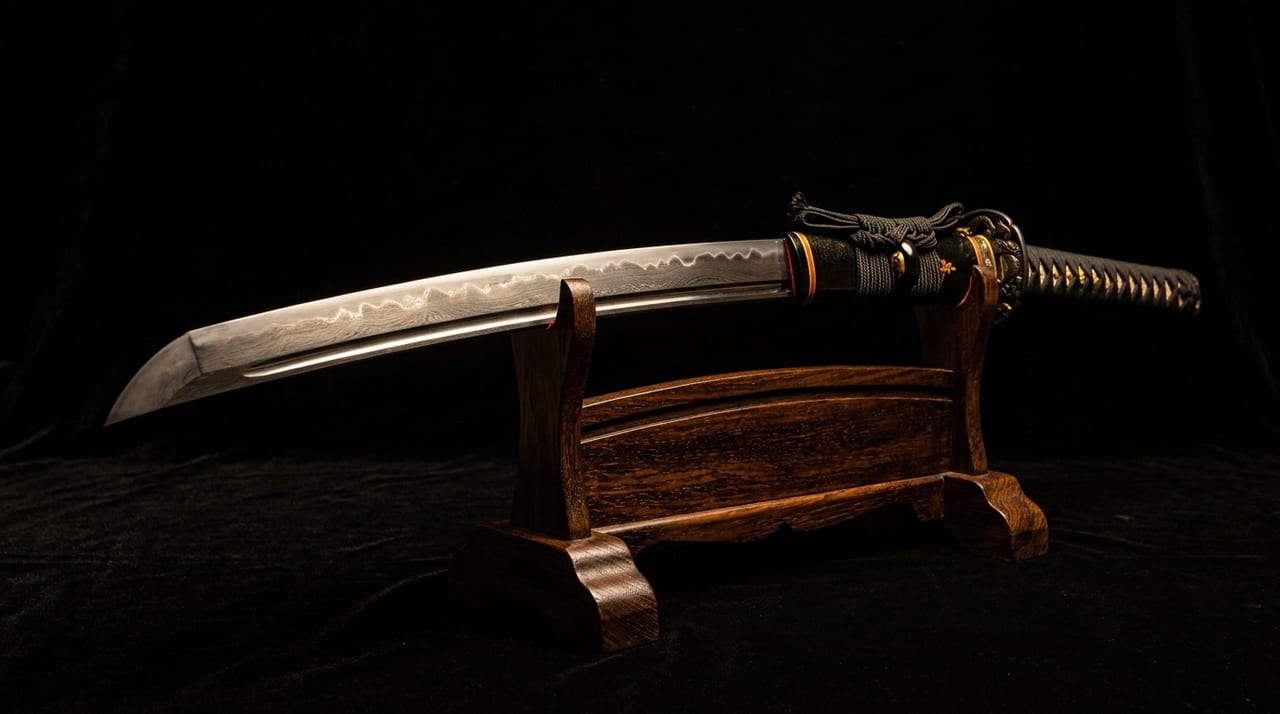
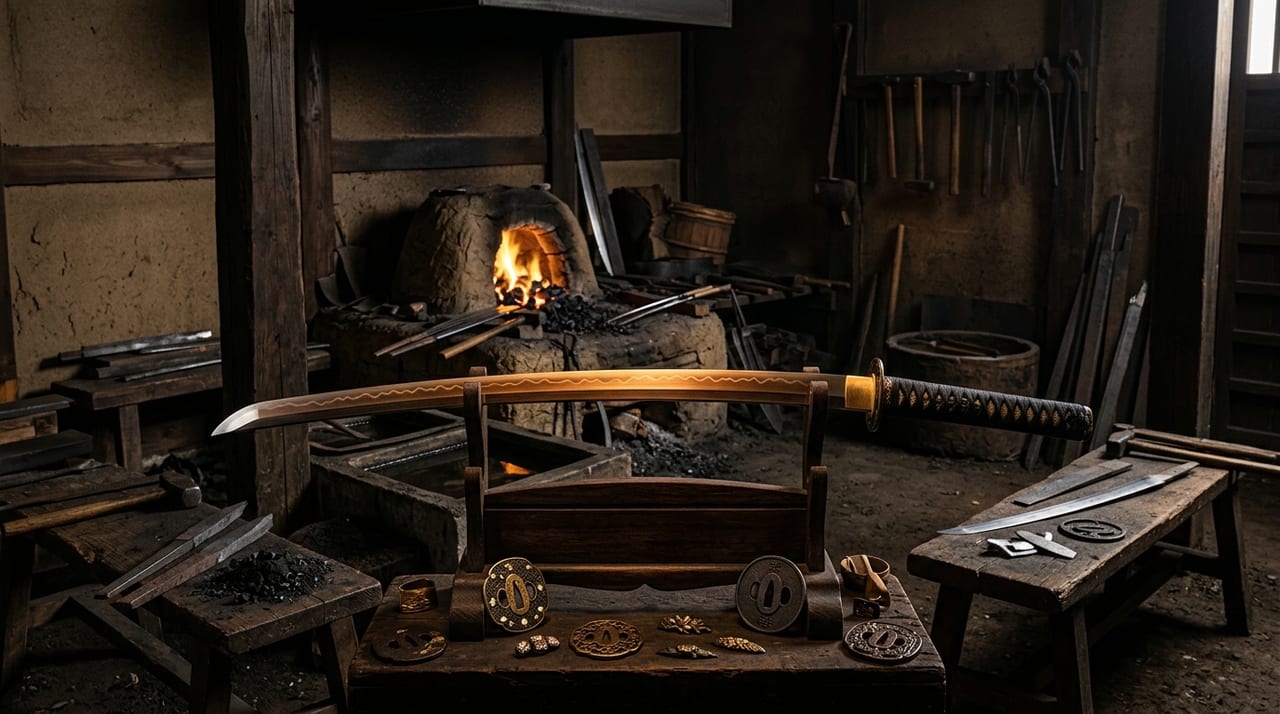
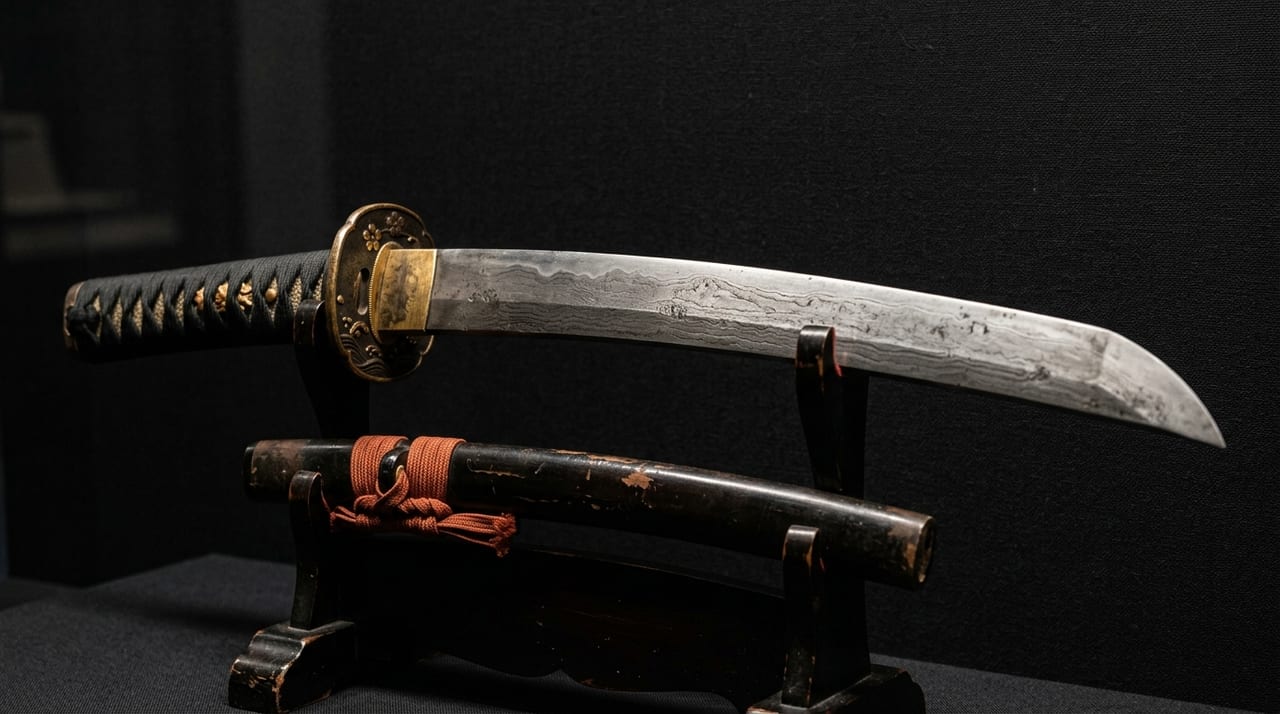
Umetada Myōju's Tsuba: The Sword Decoration Metalwork Revolution of the Azuchi-Momoyama Period and Its Legacy
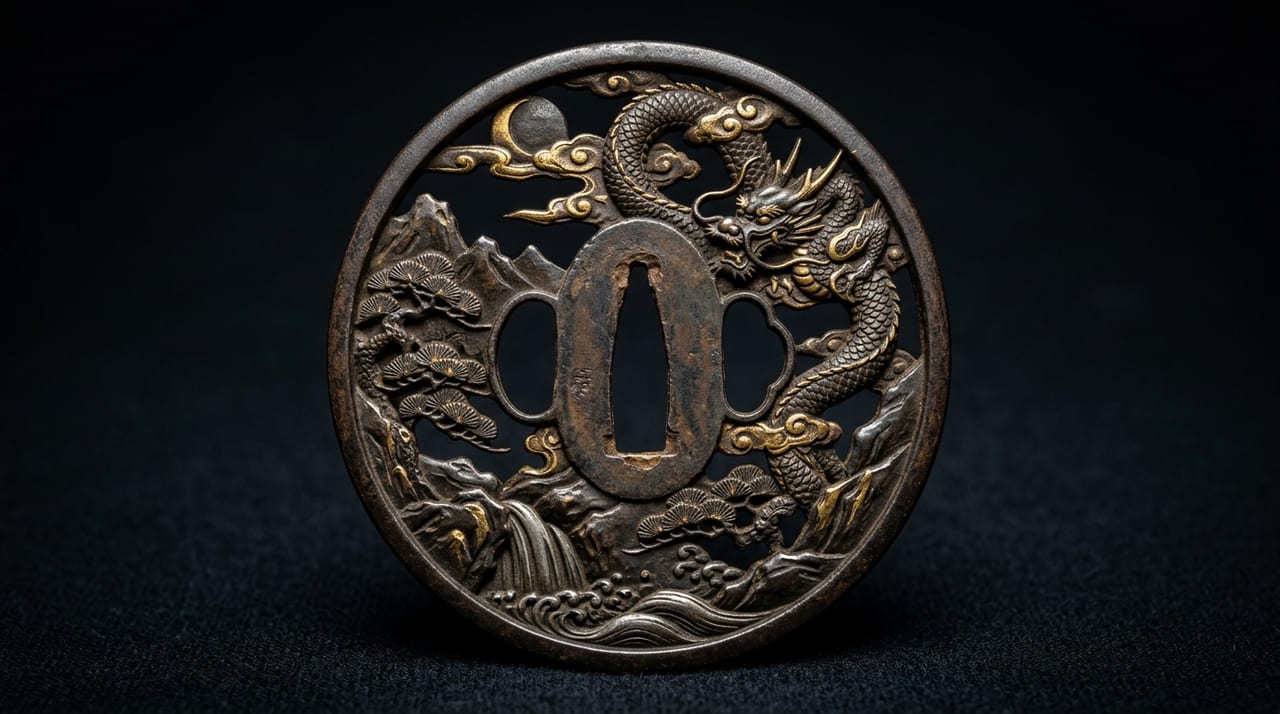 * Image is for illustrative purposes only.
Table of Contents
Umetada Myōju: The Sword Mounting Revolutionary of the Azuchi-Momoyama Period
Umetada Myōju (1558–1631) was a Kyoto swordsmith and metalworker who flourished during the Azuchi-Momoyama and early Edo periods. While he also forged blades, he achieved revolutionary innovation particularly in the creation of sword furniture (koshirae), with the tsuba at its center.
Until then, sword furniture had been largely functional and simple. But Myōju deployed precise chasing, inlay, and gilt techniques to transform the sword's "dressing" into a work of art. This revolution arguably determined the direction of Japanese decorative metalwork for centuries to come.
Social Context of the Azuchi-Momoyama Period: The Age of "Swords on Display"
The Azuchi-Momoyama period (circa 1573–1600), during which Umetada Myōju rose to prominence, was an era when distinctive warlords like Oda Nobunaga and Toyotomi Hideyoshi contended for supremacy. Key characteristics of the age were:
The Rise of "Power on Display": Nobunaga and Hideyoshi displayed authority through ostentation—from castles (Azuchi, Ōsaka, Juraku) to clothing and tea utensils. Sword furniture became part of this culture of visual display.
Connection to the Tea Ceremony: Tea culture, epitomized by Sen no Rikyū, refined aesthetic appreciation of detail to an extraordinary degree. This aesthetic consciousness influenced the craftsmanship of sword furniture.
The Politicization of Sword Gifting: The custom of presenting fine swords to mark alliances and vassalage relationships evolved further, and "a celebrated sword mounted with the finest koshirae" became the supreme gift.
This social context generated demand for master metalworkers like Umetada Myōju.
Umetada Myōju's Techniques: Revolutionary Metalworking Methods
Refinement of Colored Flat Inlay (Iroé Hira-Zōgan)
Myōju's most distinctive technique was colored flat inlay (iroé hira-zōgan). He would inlay thin sheets of different metals—gold, silver, shakudō—creating realistic depictions of plants such as radish, grape, arabesque vine, and narcissus. This method, which composed painterly scenes through color and material contrast on a flat surface, was Myōju's singular expression.
He created tsuba with vibrant botanical imagery spreading across the surface, achieving a refinement comparable to a single plant study painting.
Inlay (Zōgan) Technique
Inlay is the technique of filling grooves carved into one metal with another metal—gold, silver, copper, etc. Myōju's inlay work included:
- Gold inlay (kin-zōgan): Gold patterns inlaid into the base metal, with the brilliance of gold contrasting beautifully against the base metal's tone
- Silver inlay (gin-zōgan): Similarly using silver
- Mixed gold and silver: Complex ornamentation combining both metals
For a broader explanation of chasing and inlay techniques, see the article The Work of the Metalworker.
Pictorial Qualities of Chasing
Myōju's tsuba featured not mere geometric patterns but "painterly scenes"—narrative, natural, and mythological imagery. A samurai beneath cherry blossoms, koi swimming through waves, a pine tree on a moonlit night—each was rendered as a complete "painting" within the roughly 10-cm diameter of a tsuba.
Relationship with Toyotomi Hideyoshi
Umetada Myōju is known to have enjoyed the patronage of Toyotomi Hideyoshi. Records indicate he worked on Hideyoshi's sword furniture, establishing himself as a craftsman in Hideyoshi's service.
At lavish events organized by Hideyoshi, such as the "Cherry Blossom Viewing at Daigo" (1598), guests' sword furniture was subject to formal standards, further boosting demand for master craftsmen like Myōju.
Characteristics of Myōju's Work: Authentication Points
Materials
Myōju's tsuba characteristically used little or no iron base, instead employing shakudō, yamagane, and brass, crafted into small, thin-laminated forms. The play of color and texture inherent to the materials themselves was the focal point of the work.
Form
He produced tsuba in various shapes—round, square, and others—with round (marugata) being most common. The rim shape also varies from piece to piece.
Signature (Mei)
Authentic works by Myōju bear a signature reading "Myōju" (明寿). However, later copies and recut signatures exist, so expert authentication is essential for verification.
Market Value Guidelines
Authenticated Myōju tsuba vary considerably in price depending on certification body assessment and provenance, but generally fall within these ranges:
- NBTHK Special Preservation Tsuba Class: approximately 1–5 million yen
- NBTHK Important Sword Fittings Class: may reach 5–20 million yen
In either case, valuation varies significantly based on authenticity, condition, and accompanying certificates; buyers should always verify documentation from a recognized authentication body.
Influence on Later Metalworkers
Myōju's technical innovations profoundly influenced subsequent decorative metalworkers:
Comparison with the Gotō Family: The Gotō family, a prestigious line of decorative metalworkers continuing from the Muromachi period, was known for ornate work centered on gold. Myōju's approach—shakudō, yamagane, and colored flat inlay—represented a different aesthetic direction from Gotō goldwork.
The Development of the Edo-Period "Tsuba-shi" (Tsuba Specialist): After Myōju, specialist tsuba-shi—craftsmen who made inlaid tsuba their profession—emerged. Daimyo-employed tsuba-shi in Mito, Satsuma, Owari, and other domains established independent schools throughout the country, most bearing Myōju's technical influence. How the tsuba-shi profession achieved independence and formed schools is detailed in The Independence and School Formation of Tsuba Artisans.
Contemporary Sword Furniture Craft: Even today, Myōju's tsuba serve as models for the highest standards of decorative metalwork, studied and referenced by craftspeople.
Conclusion: What a Single Tsuba Reveals About Japanese Aesthetics
Myōju's tsuba are not mere "accessories" to the sword but complete artworks in themselves. To compress the cosmos, nature, and narrative into a thin disc scarcely 10 centimeters in diameter—this was the apex of Japanese aesthetic consciousness in the Azuchi-Momoyama age.
For Japanese sword collectors, evaluating koshirae and tsuba as artworks on par with the blade itself is an essential step toward understanding the fuller picture of Japanese sword culture.