Complete Guide to the Wakizashi: The Culture of "Daishō" Paired Swords and Master Craftsmen
 * Image is for illustrative purposes only.
Table of Contents
Wakizashi: Definition and Blade Length Standards
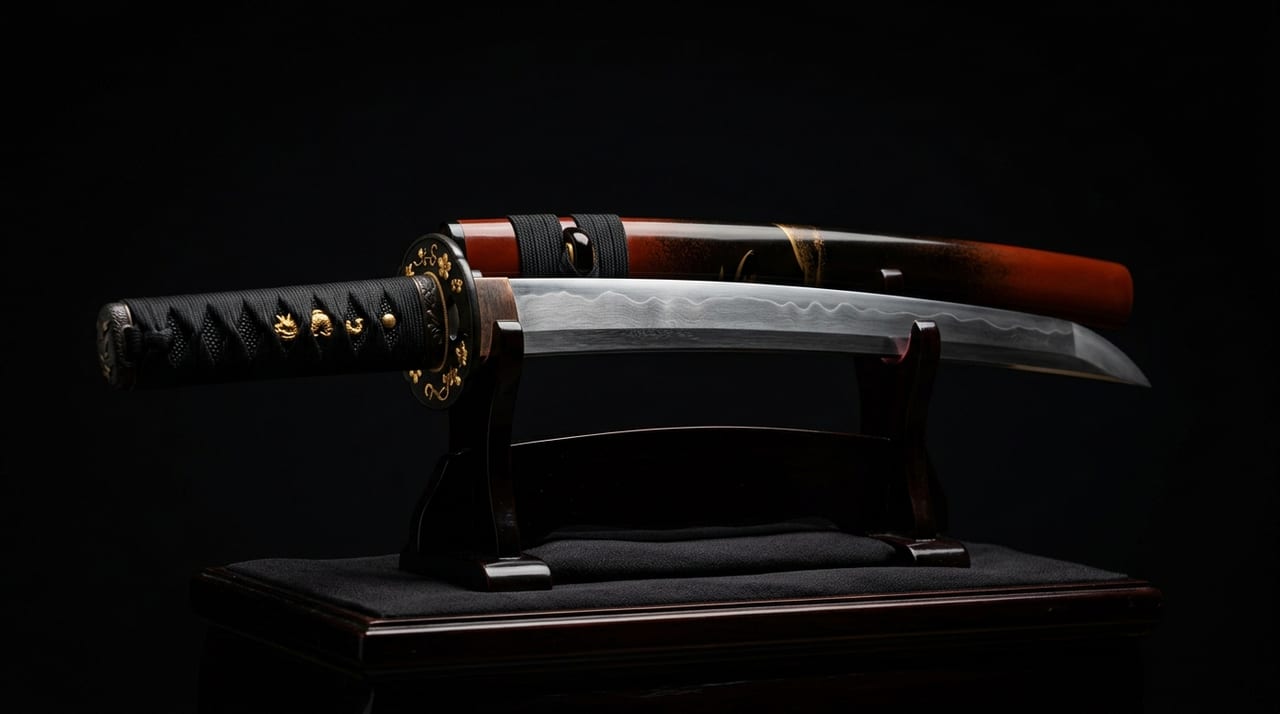
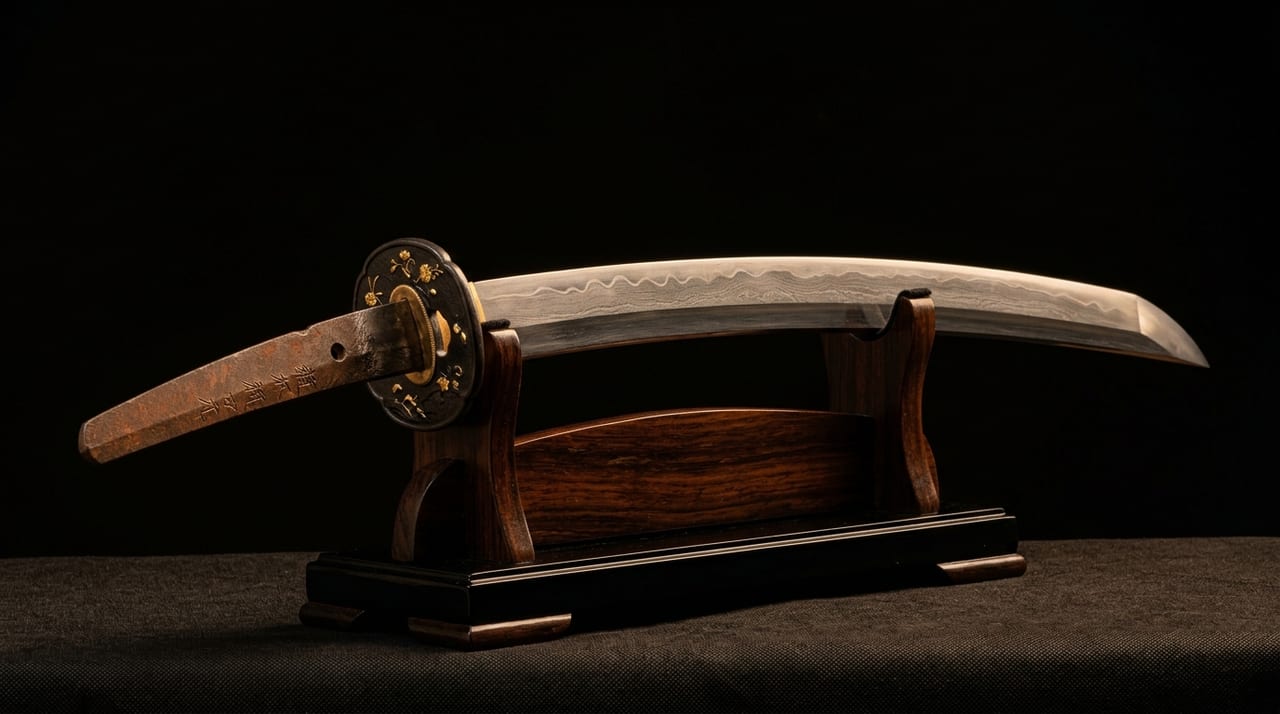
The "wakizashi" (short sword) in Japanese sword classification refers to blades with a blade length (hachō) of 1 shaku or more but less than 2 shaku (approximately 30.3–60.6 cm). In contrast to the "katana" or "uchigatana" (long sword), which has a blade length of 2 shaku or more, the wakizashi is positioned as "a somewhat shorter sword."
However, in practice, blade length definitions are rarely applied strictly, and what is called a wakizashi is often "something that looks like a wakizashi (something that was forged and used as a wakizashi)."
Note that the Jūhō Tōkenrui Shoji-tō Torishimari Hō (Firearms and Swords Possession Control Law) does not define a separate category for wakizashi, but instead collectively treats blades with an edge length of 15 cm or more as "swords" (Article 2, Section 2, Firearms and Swords Possession Control Law (e-Gov Law Search)). The distinction between wakizashi, long sword, and tantō is based on blade length divisions according to the traditional shaku measurement system (1 shaku ≈ 30.3 cm, 2 shaku ≈ 60.6 cm).
The Symbolic Meaning of "One Shaku Five Sun (Approximately 45 cm)"
During the Edo period, when the practice of wearing a matched pair of a tachi (or uchigatana) and wakizashi as a "daisho" became widespread among samurai, the general blade length of wakizashi was typically 1 shaku 3 sun to 1 shaku 8 sun (approximately 39–54 cm).
Historical Changes in Wakizashi: The Importance of a Sword That Was Not the "Lead"
Before the Muromachi Period: The Absence of the Wakizashi Concept
Samurai of the Heian and Kamakura periods basically carried a single "tachi" (long sword). The concept of "wakizashi" (a supplementary, shorter blade) did not exist clearly, and tantō and koshigatana (waist swords) were used as secondary weapons.
Muromachi Period: The Dawn of Daisho Culture
With the arrival of the Muromachi period (1336–1573), the practice of samurai carrying a "tachi plus koshigatana (or tantō)" as a pair became widespread. This "paired two-sword" culture was the prototype of "daisho."
Particularly in the late Muromachi period (Sengoku era), the "uchigatana" (a sword style worn with the edge facing upward on the waist) began to spread, and the combination of "a longer uchigatana plus a shorter supplementary sword" became generalized.
Edo Period: The Systematization of Daisho
Wearing two swords, the daisho (a long and short sword pair), became an established convention throughout the Edo period as a status symbol of samurai, and it became a practical norm for the samurai class to carry both a "dai" and a "sho" in official settings. The "dai" is an uchigatana (blade length 2 shaku or more), and the "sho" is a wakizashi (blade length less than 2 shaku).
This systematization established the status of the "wakizashi" as a sword type. The wakizashi became part of a samurai's "uniform," and part of the samurai's identity and etiquette.
The Samurai Role of Wakizashi: A Sword of "Self-Defense" and "Etiquette"
The wakizashi held meaning beyond that of a mere secondary weapon.
Role on the Battlefield
A secondary weapon in indoor combat and close-range situations where a longer uchigatana was difficult to use. Also, in situations such as falling from a horse or grappling, the wakizashi was easier to handle.
Ritual Role
When samurai visited a castle or residence, they had to leave their longer sword (uchigatana) at the entrance, but were permitted to keep the wakizashi on their person. From the notion that "the wakizashi is part of a samurai's body," its carrying indoors was permitted.
The Blade for Seppuku
The wakizashi was designated as the blade used during "seppuku" (ritual suicide) (there are also cases where a tantō was used). Seppuku was an "honorable way of death" for samurai, and the wakizashi became the standard blade for this ritual.
Moreover, the wakizashi also held an important role in "kaishaku" (the coup de grâce delivered by the second at seppuku). Records show that the kaishakunin, who shortened the suffering of the person performing seppuku by cutting off their head, used a wakizashi, demonstrating that the wakizashi was a central tool throughout the entire seppuku ceremony.
Symbolic Permission for Common People and Townspeople
During the Edo period, when non-samurai (wealthy merchants, doctors, and others) were specially permitted to carry swords, it was often "wakizashi only." The carrying of an uchigatana (dai) was a samurai privilege, and the wakizashi (sho) was permitted to a wider range of social classes.
In particular, wealthy merchants (gōshō) of Edo were sometimes permitted to carry "wakizashi only" through the purchase of gokenin-kabu (samurai stock) or major contributions to government offices. The wakizashi was also called a "zashikigatana" (indoor sword), and was sometimes recognized as an indoor-only form intended for self-defense within buildings.
Physical Characteristics of Wakizashi
Wakizashi often have the same construction as uchigatana (long swords), but because of their shorter blade length, they have some distinctive features.
Construction: Shinogi-zukuri (ridged construction) is most common. However, hira-zukuri (flat construction) wakizashi are also common (especially those of high aesthetic value).
Curvature (sori): Curvature patterns similar to those of uchigatana.
Blade pattern: Wakizashi often have the same school of blade pattern as uchigatana in "soroi" (matched pairs). Master smiths left works matched with long and short swords.
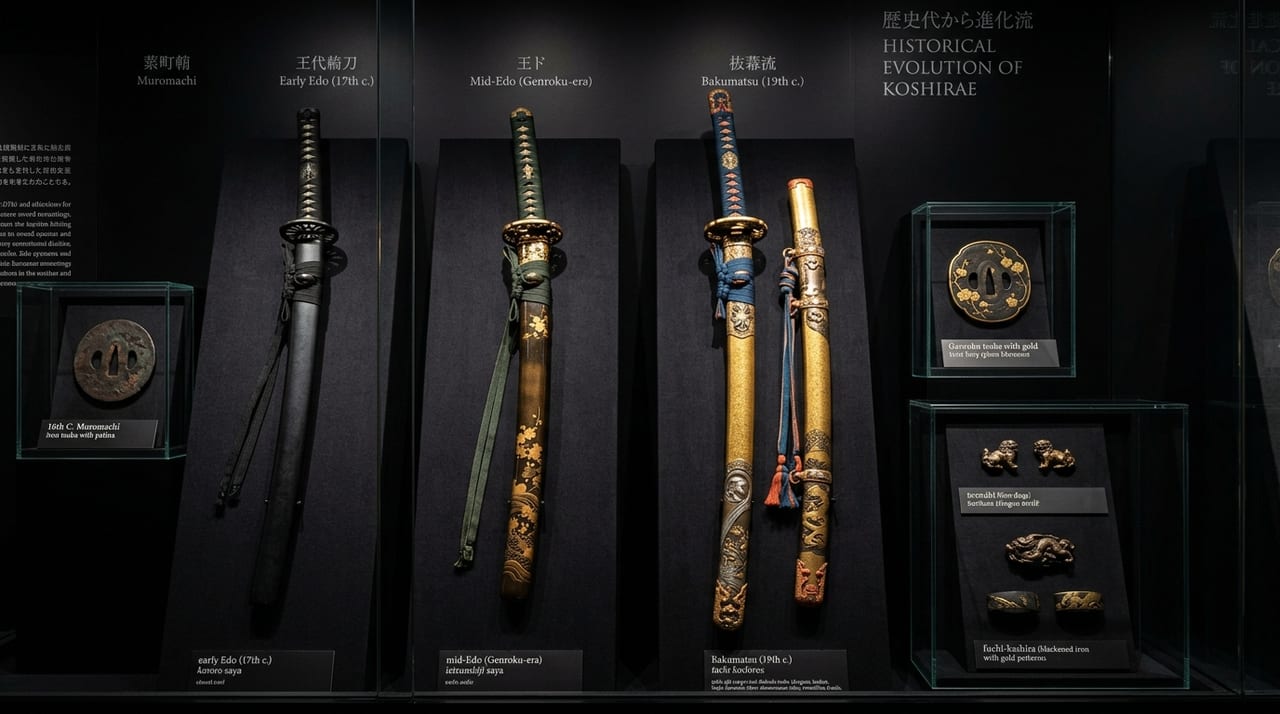
Fittings (koshirae): As "daisho-goshirae" (large and small sword fittings) paired with an uchigatana, they often have fittings with unified designs.
Representative Wakizashi Masters and Masterpieces
Major Sword Smiths Who Left Fine Works in Wakizashi
Bizen School Wakizashi (Ichimonji and Osafune): The master smiths of Bizen Province left masterpieces not only in long swords but also in wakizashi. Wakizashi of the Osafune Sadamitsu and Nagamitsu schools currently exist as multiple NBTHK Important Swords.
Soshu School Wakizashi: The wakizashi of the Masamune Ten Disciples and Samonji embodied the beauty of the Soshu tradition's nie in a smaller blade.
Shinshintō Matched Works: Master smiths of the late Bakumatsu period such as Koyama Munetsugu and Taikei Naotane created matched daisho pairs. When a pair exists, the value increases significantly.
The Cultural Value of "Daisho Zoroi" (Matched Long and Short Swords)
The existence of a long sword and wakizashi as a "matched pair" holds special value in Japanese sword collections.
As a Single Work of Art: When a single sword smith created a "daisho" (long and short swords) in the same period, the decorative designs of the koshirae, the style of the blade pattern, and the texture of the metal are unified, and it is evaluated as a single artistic work.
Market Value: A matched daisho is valued higher than the sum total of the individual blades. If there is a certification document for the "pair," the value increases.
Points to Look for When Selecting a Wakizashi
The wakizashi has the following characteristics compared to the uchigatana.
- Ease of Storage: Because of the shorter blade length, less space is needed for storage and display
- Wide Price Range: The range extends from entry-level prices (preserved sword class) to works by master smiths
- Visibility of Blade Pattern: Because it is compact, observation on a tabletop is easier
For people who handle swords for the first time, the wakizashi is one type of sword that is easy to choose as an option due to its ease of observation and storage.
Conclusion: What the Wakizashi Tells Us About Samurai Daily Life
The wakizashi often lurks in the shadow of the uchigatana, the "lead role," but it was the "most familiar sword" in every aspect of samurai daily life. Indoor self-defense, part of etiquette, the tool of seppuku—the multifaceted roles of the wakizashi provide an indispensable perspective for understanding the overall picture of samurai culture.