What Is a Sun'nobi Tantō — The History and Appreciation Points of Border Blades That Exceed One Shaku
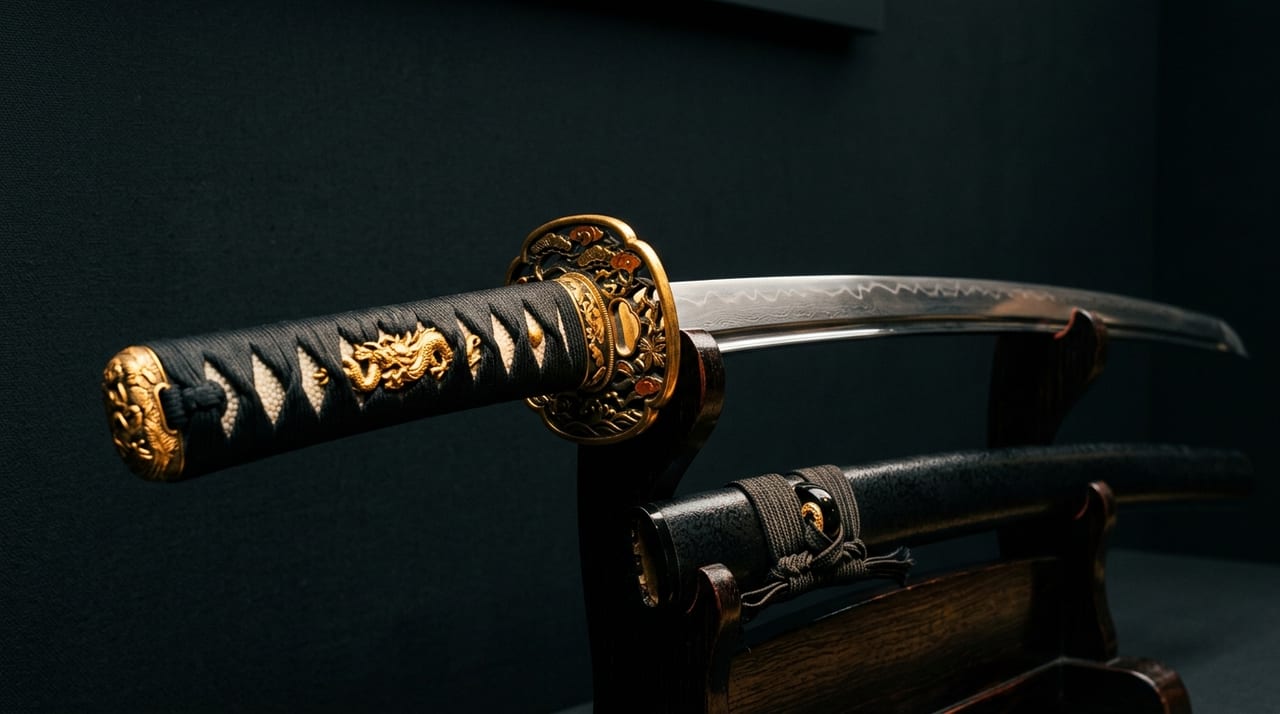 * Image is for illustrative purposes only.
Table of Contents
Definition and Classification of the Sun'nobi Tantō
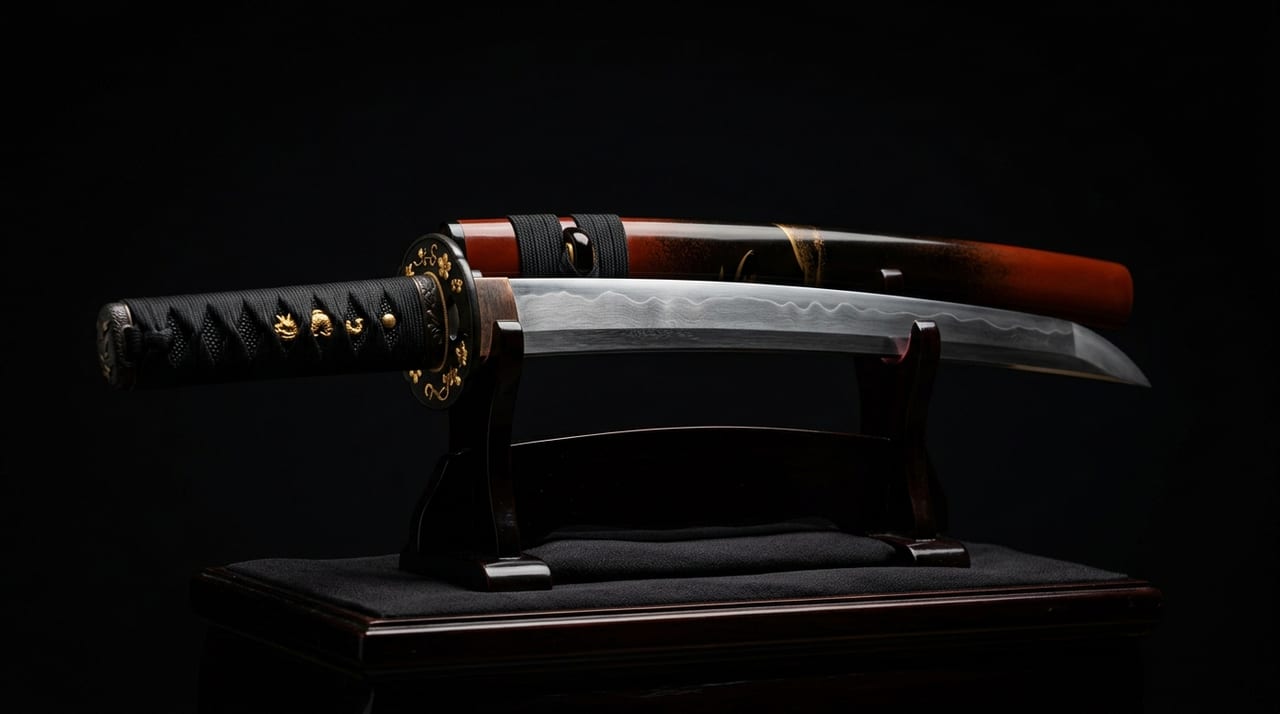
The sun'nobi tantō is a general term for swords that are slightly longer than the standard definition of a tantō in the classification criteria for swords. Swords are classified by blade length as follows.
| Classification | Blade Length |
|---|---|
| Tantō | Under one shaku (approximately 30.3 cm) |
| Sun'nobi tantō | Exceeds one shaku |
| Sun'nobi tantō of the Nanbokuchō period | Some reach one shaku two sun to one shaku four sun (approximately 36–42 cm) |
The sun'nobi tantō occupies this borderline region.
This positioning as a "borderline region" shapes the historical and cultural significance of the sun'nobi tantō. It was not merely a difference in length; rather, a shift in purpose, the evolution of forging techniques, and changes in the social class system gave rise to this non-standard sword.
Historical Background of Becoming Non-Standard
The Transitional Period from the Muromachi Period to the Edo Period
The sun'nobi tantō appeared in the Nanbokuchō period (1336–1392) and became fashionable during the Enbun and Jōji eras (the latter half of the 14th century). It continued to be made through the late Muromachi into the early Edo period. During this time, Japan's weapons system was changing dramatically.
There was a shift from conventional sword-centric combat to new tactics brought about by the introduction of matchlock firearms. At the same time, samurai status became hereditary, and swords increasingly took on the character of markers of social rank and ceremonial implements rather than practical weapons. In this situation, blades of an intermediate size between the tantō and the wakizashi generated a distinctive market demand.
The Functional Necessity as a Koshigatana
Among the townspeople and lower-ranking samurai of the Edo period, small blades worn at the waist — such as the futokoro-gatana (tucked blade) and the chōsentō (Korean-style blade) — were fashionable. However, existing swords presented the following challenges.
- Tantō: too short to be practical
- Wakizashi: too long and cumbersome
The sun'nobi tantō was born out of this practical need. For urban dwellers, the size of the sun'nobi tantō offered the right balance both as a self-defense implement and as an ornament.
Manufacturing Techniques and the Ingenuity of Tōkō
Application of Yaki-ire Techniques
In manufacturing sun'nobi tantō, tōkō developed new yaki-ire (quenching) techniques. Producing a blade longer than a tantō while giving it the same level of strength as a tantō required precise management of steel quality and the heating process.
In order to finish the longer blade uniformly, special yaki-ire refinements were sometimes applied, and it was necessary to increase overall durability while at the same time securing an appropriate degree of flexibility.
The Position of the Mei and the Ingenuity of the Craftsmen
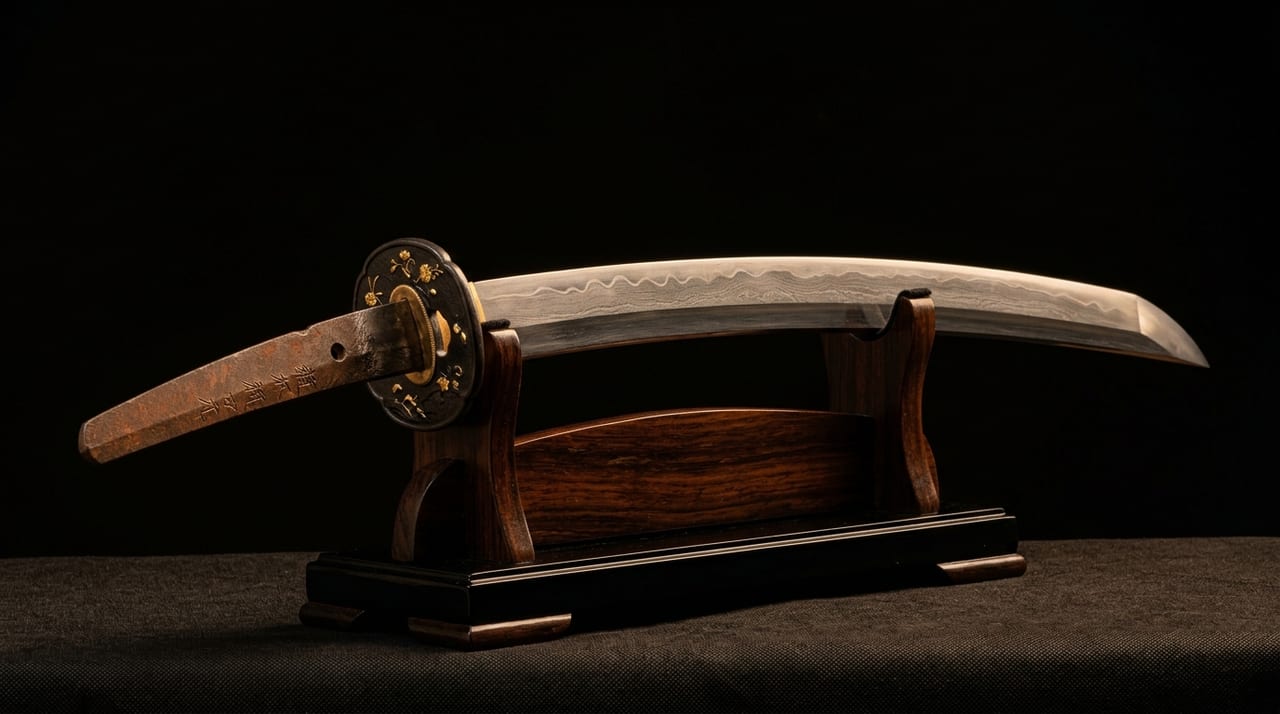
The mei (signature) of a sun'nobi tantō — the tōkō's signature — was often inscribed larger and more prominently than on a standard tantō. It is thought that this was intended to emphasize the non-standard size and to indicate that the sword was produced using special techniques.
Refinements were also often applied to the polishing of the blade, and the overall shape of the blade was adjusted in order to emphasize its more elegant curves.
Uses and the Social Strata of Users
Status as a Samurai's Personal Blade
From the middle to the latter part of the Edo period, the sun'nobi tantō was highly regarded, particularly as the personal blade of middle-ranking samurai. Daimyō and high-ranking samurai wore wakizashi with lavish ornamentation, but middle-ranking samurai preferred the sun'nobi tantō, which combined practicality with dignity.
To meet the needs of this class, tōkō across the country devoted their efforts to producing sun'nobi tantō of high quality at affordable prices.
Possession by Townspeople and Cultural Significance
Townspeople of the Edo period also valued the sun'nobi tantō, which they could legally possess. This was because ownership of tantō up to a certain size was permitted, rather than an outright prohibition on carrying swords.
The sun'nobi tantō became a means by which townspeople could achieve a samurai-like display of status within the bounds of the law. Merchants also gained economic profit by manufacturing high-quality sun'nobi tantō and selling them throughout the country.
Famous Sun'nobi Tantō and the Achievements of Tōkō
Notable Tōkō of the Edo Period
During the Edo period, there were many tōkō known especially for the manufacture of sun'nobi tantō. The following are representative schools.
- Echizen school (Echizen Province, Fukui Prefecture): applied superior techniques to the manufacture of sun'nobi tantō and gained nationwide recognition
- Bizen school (Bizen Province, Okayama Prefecture): engaged in the manufacture of sun'nobi tantō, and many of their works are still preserved in museums and private collections today
Inscribed Mei and Challenges of Appraisal
Sun'nobi tantō are complex to appraise because of their non-standard size. Since the blade length falls between that of a tantō and a wakizashi, and the location and form of the mei vary widely, advanced knowledge and experience are required for authentication.
Among modern sword enthusiasts, sun'nobi tantō that can be confirmed to have been manufactured in the Edo period are highly regarded for their rarity and technical refinement.
Evaluation of the Sun'nobi Tantō in the Modern Era
Reevaluation of Artistic Value
With the development of sword art museums and general museums in the postwar period, the artistic value of the sun'nobi tantō has come to be reevaluated. Although they were sometimes dismissed in the past as "non-standard, halfway swords," today their manufacturing background and technical achievements are recognized, and they are treated as important cultural assets.
In particular, the historical significance of the sun'nobi tantō has increasingly been emphasized as a sword that reflects the social diversity of the Edo period.
Collecting and Preservation Efforts
At present, large sword art museums across the country are working to strengthen their collections of sun'nobi tantō. Sun'nobi tantō are also a popular subject of collection among individual enthusiasts, and high-quality works are traded at high prices.
Conclusion
The sun'nobi tantō is not merely a "non-standard tantō" but a distinctive sword that emerged as a result of the technical ingenuity of tōkō and the diverse needs of society during a period of historical transition in Japan. In the transitional period from the Muromachi to the Edo period, the following historical factors combined to inevitably produce this sword of distinctive size.
- Changes in the weapons system
- Growing complexity of the social class system
- The development of urban culture
Today, the sun'nobi tantō is recognized as an important cultural heritage that speaks to the diversity of Japanese swords and the creativity and ingenuity of the craftsmen who made them.