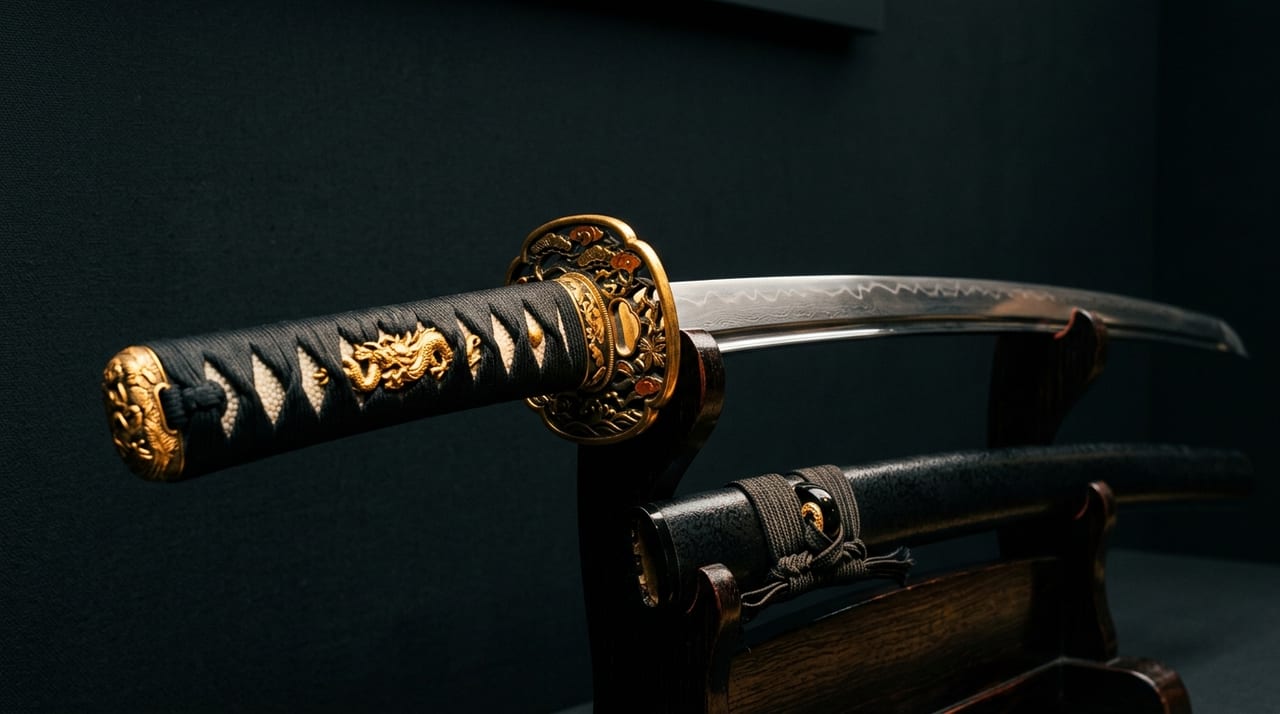
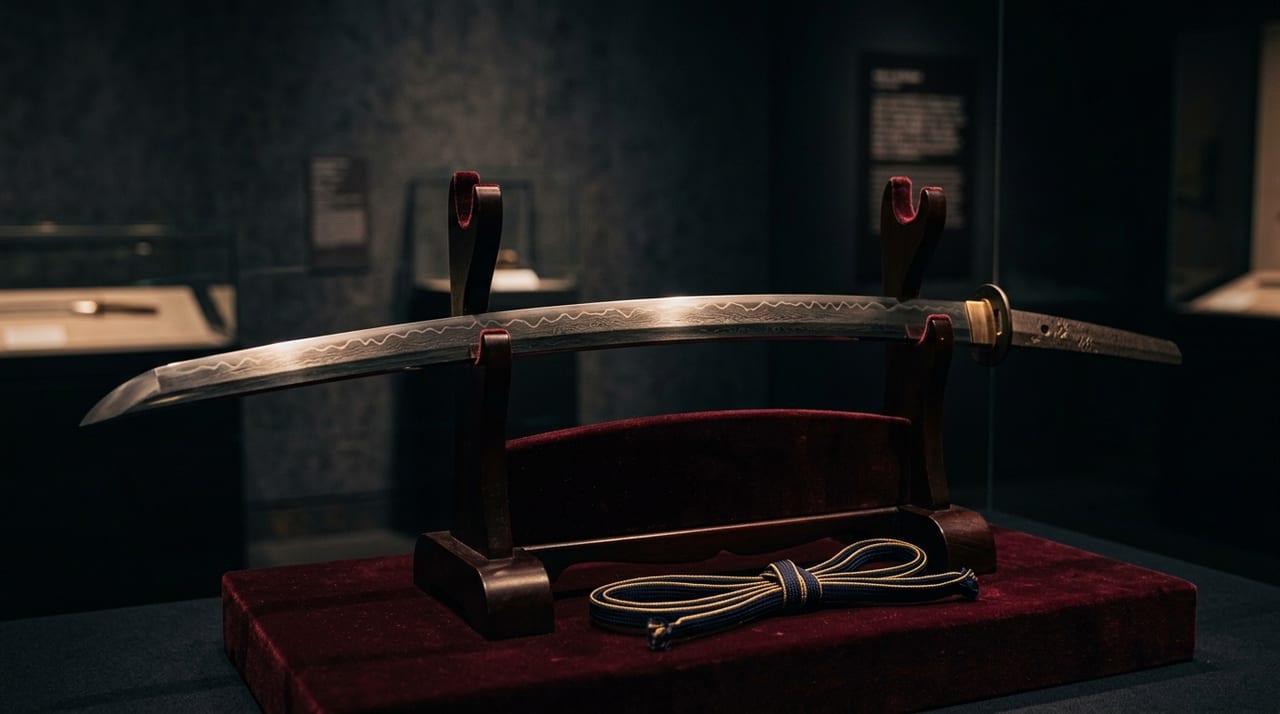
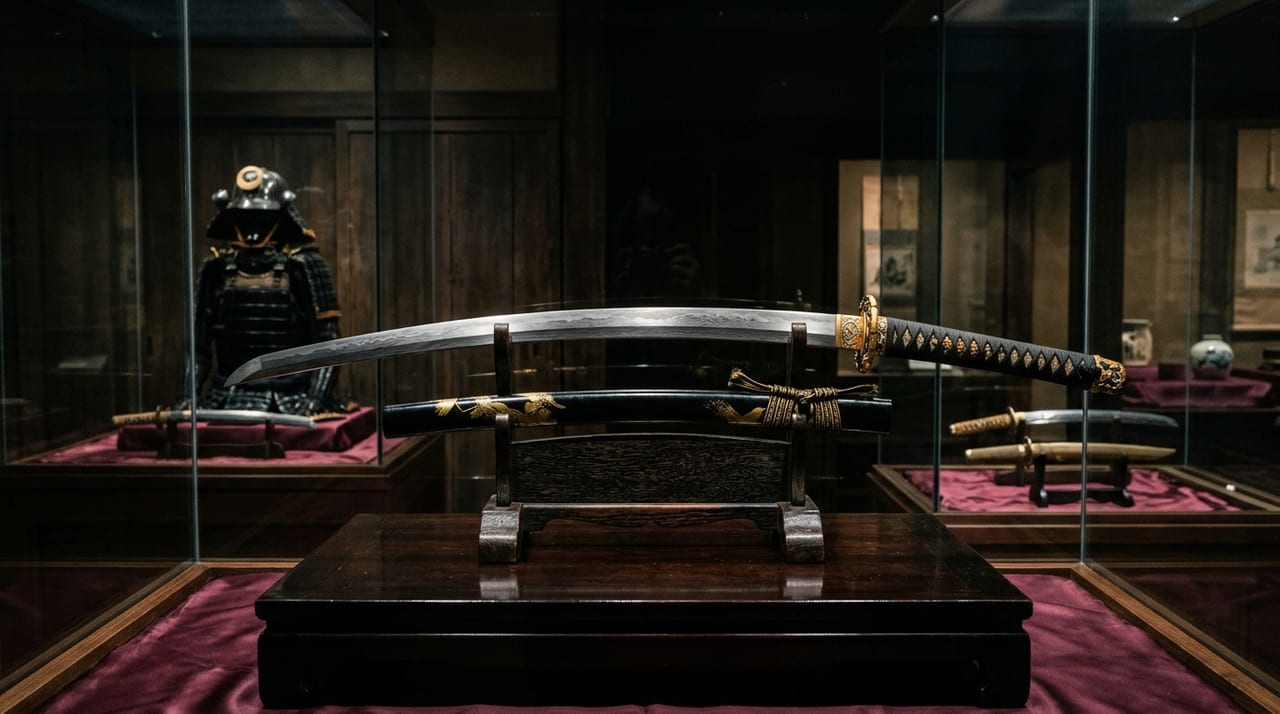
Shōwa 20 · The End of the War and the Confiscation of Swords — A Record of the Shock and Resistance That GHQ Disarmament Inflicted on Japanese Sword Culture
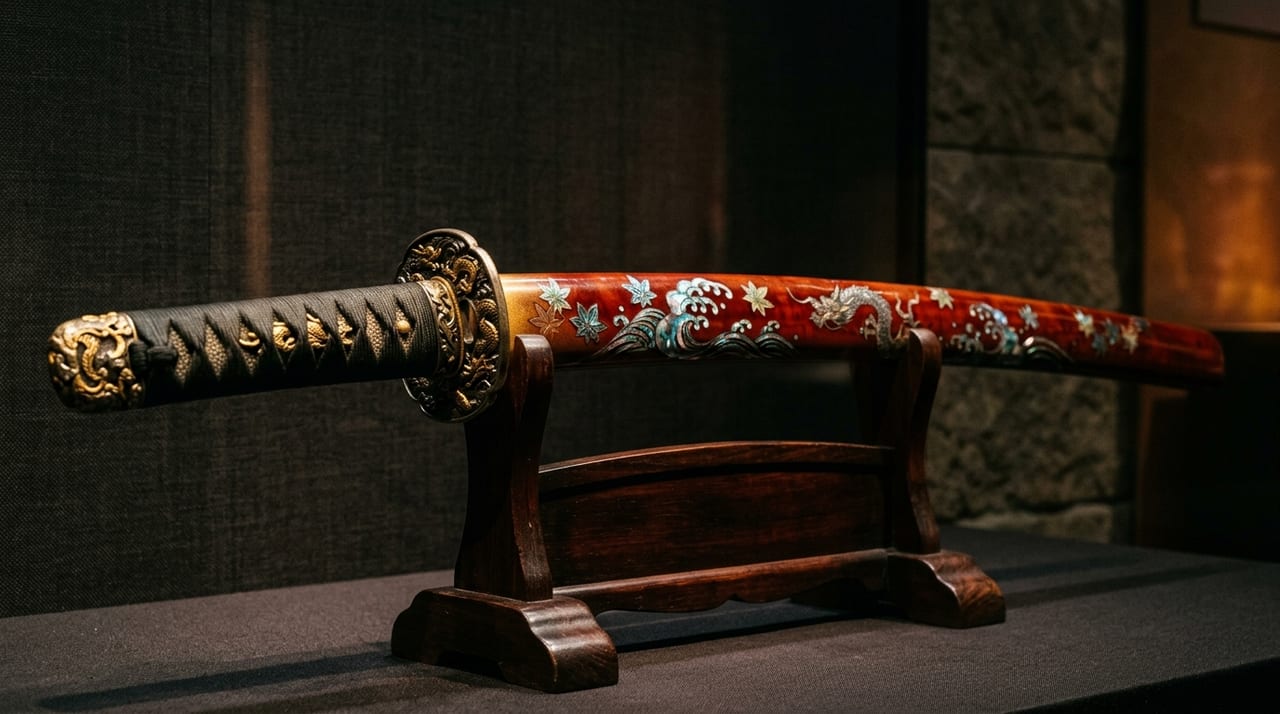 * Image is for illustrative purposes only.
Table of Contents
August 1945 — A Sudden Disarmament Order
On August 15, 1945, Japan's defeat was announced via the imperial radio broadcast. Just 18 days later, on September 2, the instrument of surrender was signed on the deck of the battleship Missouri in Tokyo Bay. From that day, Japan entered the period of occupation, and disarmament by GHQ (General Headquarters of the Supreme Commander for the Allied Powers) began in earnest.
GHQ's "General Order No. 1" and subsequent memoranda obligated both military personnel and civilians to surrender immediately all firearms and swords. At the collection points established throughout each prefecture — police stations and U.S. military facilities — people carrying ancestral blades formed long lines day after day. Cases were reported of individuals being taken into custody simply for carrying a sword in the street or on a train, and in urban areas military police and American soldiers cooperated to conduct unannounced inspections. House searches were also carried out in rural areas, and swords hidden deep in barns and storehouses were confiscated.
The order targeted "swords and bladed weapons in general" and made no distinction between guntō, wakizashi, tantō, or naginata. People were at a loss, unable to decide how to handle the swords that remained in their homes. Though accurate records are scarce, the number of swords confiscated and destroyed during this period was enormous.
"Cultural Property" or "Weapon"? — The Classification Debate That Determined Their Fate
Facing this crisis, Japanese intellectuals, sword enthusiasts, and museum officials moved immediately. Their argument came down to one point: "The Japanese sword is an inherent cultural property and art object, fundamentally different from a weapon."
The Tokyo National Museum (then known as the Imperial Museum) petitioned GHQ to protect its collection and held repeated negotiations with the officials in charge. Sword researcher Inagaki Tsunekichi and curators from the Imperial Household Museum prepared written petitions in English, presenting the artistic value of the Japanese sword — the smelting technique for tamahagane, the formation of the hamon, the craftsmanship of polishing and koshirae — along with specific documentation.
Opinion was divided within GHQ as well. The hardline disarmament faction argued that "a blade is a blade," while some officials in the Civil Information and Education Section (CIE) showed an understanding of Japanese culture. Negotiations were difficult, but by around the spring of 1946 the policy was established that swords registered and certified as art objects would be excluded from confiscation. This became the historical turning point that served as the origin of Japan's later sword registration system.
Confiscation, Destruction, and Outflow — The Number of Lost Swords
Even so, the vast majority of swords received no protection. Postwar surveys by the Agency for Cultural Affairs and estimates by multiple researchers suggest that the total number of swords lost during this period exceeded one million, with some accounts placing the figure as high as several million. No accurate records remain.
The confiscated swords met several different fates.
- Disposal and melting down: The largest number of swords were melted down as scrap iron. The majority were industrially produced blades and guntō manufactured in large quantities during the Shōwa era, but it is said that masterworks of kotō and shintō made from traditional tamahagane could not escape this fate either. No documentation work was carried out prior to disposal.
- Removal overseas by American soldiers: Cases arose one after another of American soldiers involved in confiscation taking swords home as "war trophies" or "souvenirs." Many swords that went overseas in this way remain abroad to this day, and some have returned to Japan through repatriation efforts that have gained momentum since the 2000s. It is not uncommon for pieces that would qualify as fine or important blades to have passed into the hands of private collectors.
- Transfer to institutions: Some are said to have been transferred to and stored at the Smithsonian Institution in Washington, D.C. and U.S. military facilities, but the full extent remains unknown even today.
The Birth of the Preservation Movement — The Precursor to NBTHK and Civilian Resistance
Even as GHQ confiscations proceeded, organized efforts to protect swords were taking shape.
The "Society for Japanese Sword Preservation," which began activities in 1946, systematically handled documentation work for swords possessing cultural property value, assisted with possession applications, and submitted petitions to GHQ. The following year, 1947, through accumulated negotiations, an exceptional provision was legally codified allowing civilian possession of swords registered as cultural properties.
As the culmination of these efforts, NBTHK (Society for the Preservation of Japanese Art Swords) was established in 1948. The association subsequently became Japan's largest specialist institution responsible for the appraisal, preservation, and promotion of swords, and continues to this day with the annual examination and registration of several thousand blades. The transmission of skills among related craftsmen — tōshō, togishi, saya craftsmen, lacquerers, and tsuka-wrapping specialists — has also been sustained on the foundation of NBTHK's activities.
Civilian Ingenuity — Concealed Swords and Disguise
Though difficult to find in the historical record, the various measures taken by civilians to evade confiscation are an important aspect of this era.
Farm households hid swords under tatami mats, beneath the earthen floors of entryways, and deep in storehouses. There are also examples of blades being removed from their fittings and disguised as farm tools, or enshrined inside household Buddhist altars and declared to be "religious implements." A considerable number of swords escaped confiscation by being registered as furnishings of shrines and temples, and it is said that among the blades stored today as go-shintō, some were "entrusted" during this period.
In urban areas, intellectuals, scholars, and physicians became nominal owners, and a method was used of filing cultural property applications covering multiple swords together — in effect, "proxy custody" of swords. The fact that such tenacious civilian resistance and ingenuity protected many of the famous blades that have been handed down to the present ought to be recognized as carrying more weight than the official record conveys.
Recovery — The Lifting of the Ban on New Sword Production in 1953 and the Enactment of the Firearms and Swords Control Act in 1958
With the conclusion of the San Francisco Peace Treaty in 1951, Japan recovered its sovereignty, and the establishment of the legal framework for swords advanced at a rapid pace.
In 1953, the ban on the production of new swords was formally lifted. The tōshō broke their long silence and resumed production using tamahagane and traditional techniques. 1953 is, in effect, the "founding year" of modern Japanese sword culture.
Subsequently, in 1958, the current Act for Controlling the Possession of Firearms or Swords and Other Such Weapons (Jūtōhō) was enacted. This law, which clearly defined the legal status of the Japanese sword, made civilian possession legal for swords registered with the prefectural Board of Education as "art swords," and established the institutional framework for their manufacture, sale, and inheritance.
Approximately eight years from defeat to recovery. In the face of the countless swords that had been burned, melted down, and carried across the sea, the determination of those who strove nonetheless to protect the Japanese sword as an art object and cultural property became the foundation of the Japanese sword culture that continues to the present. The argument put forward in negotiations with GHQ — "this is not a blade but a work of art" — was not mere expedience, but words that struck at the very essence of the Japanese sword.