A Guide to Building an Online Shop for Japanese Sword Dealers — Practical Steps for Cross-Border E-Commerce, SEO, and Legal Procedures
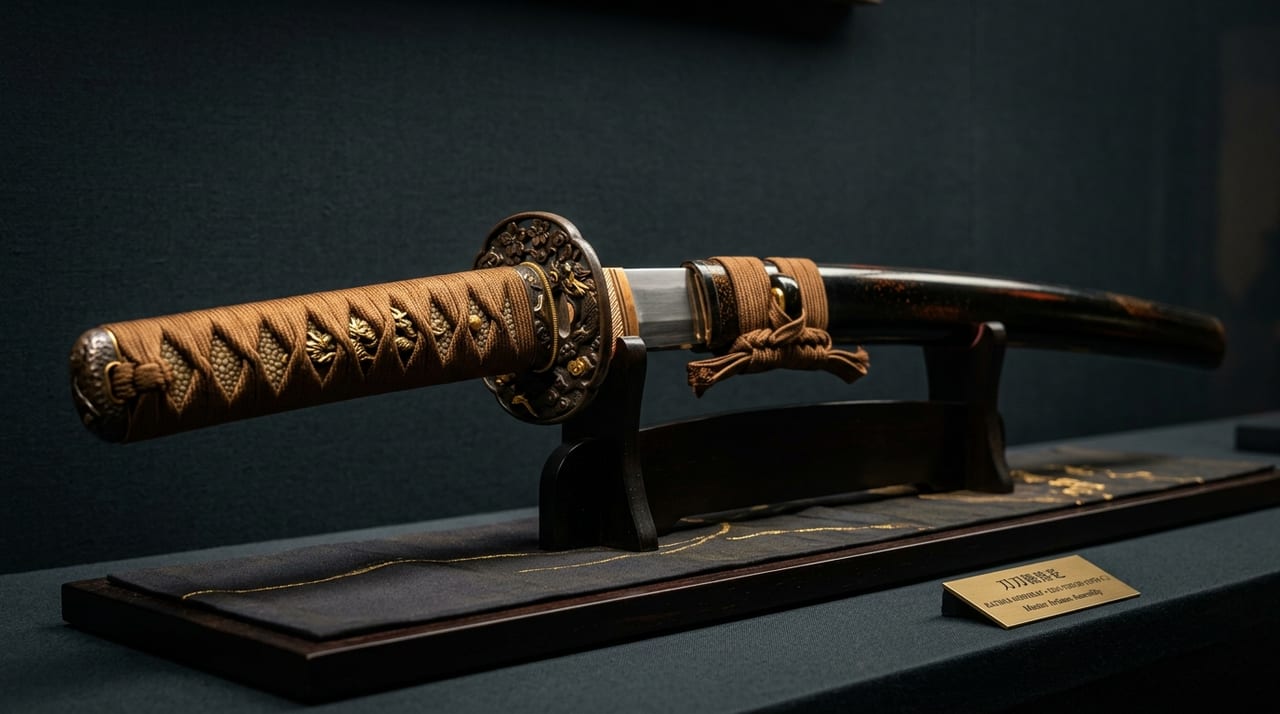 * Image is for illustrative purposes only.
Table of Contents
Why Online Sales Are Now a Lifeline for Sword Dealers
The population of nihontō enthusiasts within Japan has been on a long-term decline, while interest in Japanese swords from overseas continues to grow. Even when collectors in North America, Europe, Taiwan, and South Korea try to access Japanese sword dealers directly, many long-established specialty shops have no website, and their inquiry channels are often available only in Japanese. Sword dealers who can bridge this mismatch between supply and demand are likely to establish a strong position in the industry going forward.
At overseas auctions, Japanese swords sometimes change hands at prices different from those seen domestically. Having an online sales channel also serves as a direct gateway to capturing that overseas demand.
Secondhand Articles Dealer Permit and Legal Prerequisites
To sell swords online, the first requirement is obtaining a secondhand articles dealer permit. Under the Secondhand Articles Dealer Act, both individuals and corporations submit a permit application to the prefectural Public Safety Commission with jurisdiction over the location of their principal place of business and receive the permit (Secondhand Articles Dealer Act (e-Gov Law Search), Articles 3 and 5). The review process takes a certain amount of time, so business launch plans should allow for adequate lead time. Clearly displaying business information and the permit number also directly contributes to customer trust.
Possessing a nihontō requires a "registration certificate" (tōroku-shō) issued under the Act for Controlling the Possession of Firearms or Swords and Other Such Weapons (Jūtōhō). Confirm that the swords you sell have a properly issued registration certificate, and follow the required procedures when transferring ownership — such as notifying the Board of Education. Swords without a registration certificate must not be sold. Indicating on the product page that the registration certificate has been verified is also a trust signal for overseas buyers.
Care must be taken regarding exports overseas. Swords designated as kokuhō (National Treasure) or jūyō bunkazai (Important Cultural Property) and swords recognized as Important Art Objects cannot in principle be exported. Even for other registered swords, export requires obtaining the Agency for Cultural Affairs' "Certificate of Export Inspection for Antique Art Objects," which shows that the sword is none of these, and returning the registration certificate to the Board of Education of the prefecture where the sword was registered (Tokyo Metropolitan Board of Education, "When Exporting Firearms and Swords"). On the other hand, the appraisal classifications issued by NBTHK, a private organization, do not in themselves constitute grounds for export restriction. It is important to confirm with the Agency for Cultural Affairs and other relevant agencies before exporting. As for the blade regulations of the importing country, thoroughly notifying customers in advance contributes to commercial trust.
Choosing a Cross-Border E-Commerce Platform and Multilingual Support
There are several options for cross-border e-commerce of nihontō, but for long-term brand building, investing in a proprietary e-commerce site is a strong candidate.
| Service | Features |
|---|---|
| Shopify | Easy to integrate with payment services; straightforward to introduce apps for multilingual support and multi-currency display |
| Custom site built with Next.js or similar | High degree of SEO flexibility; allows flexible implementation of high-specialty features such as structured data for product pages and proprietary column functionality |
| eBay | Has global name recognition; on the other hand, swords and bladed items are subject to strict listing policy restrictions. Listing without confirming each country's category rules carries a risk of suspension, so the realistic approach is to use it as a supplement for initial traffic acquisition while designing a funnel toward a proprietary site |
| Payment (Stripe, etc.) | Can accommodate yen, US dollars, euros, and more. Clearly stating the foreign exchange fee calculation method on the product page lowers the psychological barrier to purchasing high-value items |
Providing support in major languages such as English, German, French, and Traditional Chinese is something to consider early on, in order to reduce visitor drop-off.
SEO Strategy — Getting Found by Overseas Collectors
Search in English-speaking markets is a domain that is relatively approachable for Japanese sword dealers. There is room to target top positions with high-quality content for keywords such as "japanese sword for sale," "nihonto buy online," and "authentic katana dealer." Regularly analyzing search queries in Google Search Console and improving page content in line with actual inbound keywords is essential.
The three fundamentals of technical SEO are as follows.
- Improving Core Web Vitals (LCP, CLS, INP) scores
- Mobile compatibility
- Implementing structured data with Product schema
Each product page should include the following items in carefully written English, building pages with high information density.
- NBTHK appraisal classification (if available)
- Period
- Maker
- Nagasa (blade length)
- Sori (curvature)
- Condition
- Registration certificate number
Content marketing through columns also becomes a pillar of long-term traffic acquisition. Educational articles such as "How to buy authentic nihonto," "Understanding hamon patterns," and "Japanese sword care and maintenance" continuously generate search traffic while earning the trust of overseas collectors. Publishing articles in both Japanese and English and structuring them with SNS sharing in mind makes for an effective approach.
Practical Notes on International Shipping
Specialized knowledge and preparation are required for the international transport of nihontō. The blade should be housed in a koshirae (mounting) or shirasaya (plain storage scabbard), protected with two or more layers of bubble wrap or similar material, and secured inside a wooden box. Attach a fragile/handle-with-care label to the outer box, and include an English contents description sheet for customs officials in the importing country — this helps customs clearance proceed smoothly.
Because nihontō are treated as bladed weapons, they generally cannot be carried on passenger aircraft as carry-on or checked baggage. Sea freight or specialized international shipping companies are commonly used. Specialized carriers can often handle everything from export declaration to packing, and while costs are higher, their robust compensation for damage or loss makes them well-suited for shipping high-value items.
On the export declaration, enter "Japanese Sword / Katana" as the item description and use HS code 9307 (sabers, swords, bayonets, and similar weapons). Enter the actual selling price as the declared value. Declaring a lower amount constitutes a violation of the Customs Act and must never be done.
Conclusion — The Sword Dealers Who Embrace Digitalization Will Shape the Next Era
The structural shift — a shrinking domestic market alongside growing overseas interest — is expected to continue. Sword dealers who advance the following steps early on will establish a strong presence in the industry in the years ahead.
- Securing a secondhand articles dealer permit
- Building an online shop
- Implementing multilingual search optimization
- Establishing an international shipping infrastructure
Particularly important is foregrounding "trust and expertise" in the digital arena as well. The following careful information disclosures form the foundation for being chosen on value rather than price.
- Clearly indicating registration certificate verification status
- Accurate recording of kanteisho (appraisal certificates) and appraisal classifications
- High-quality product descriptions
Respecting tradition while actively harnessing the power of digital tools is the path to survival for the modern sword dealer.