Sword Dealers' Business and Trust from the Edo Period to Today: From Neighborhood Shops to Department Stores and Online Sales
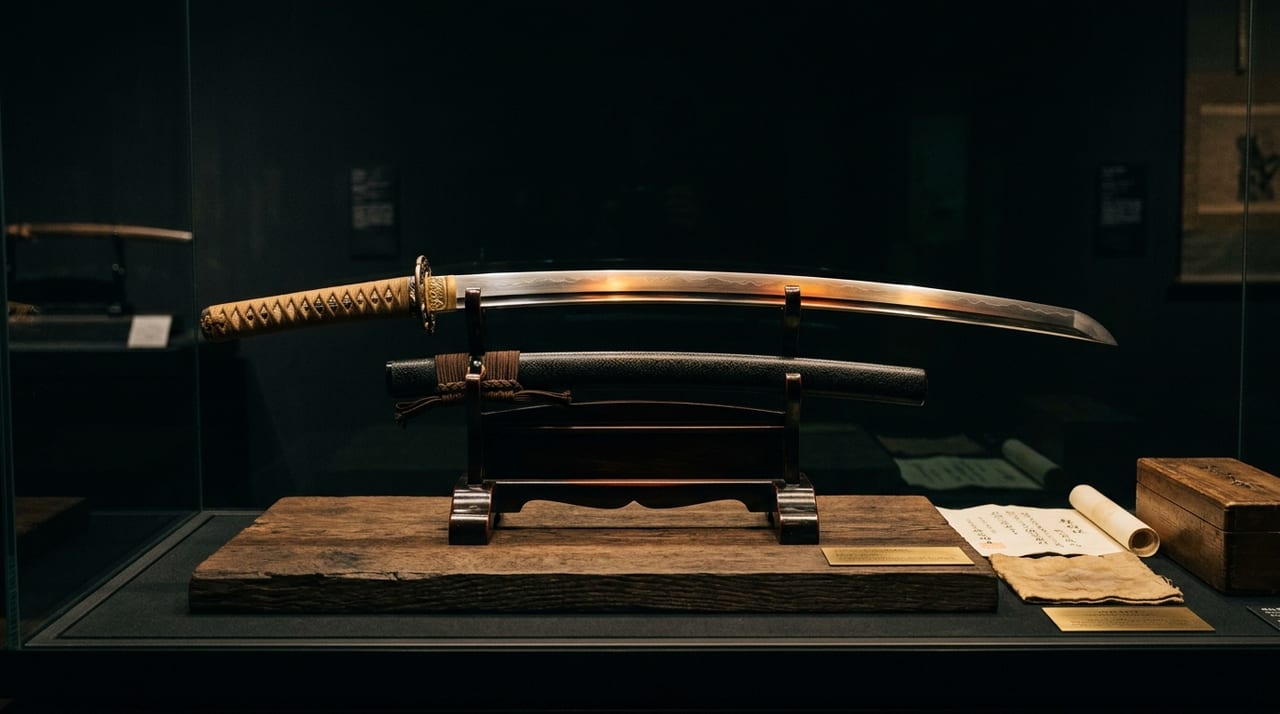 * Image is for illustrative purposes only.
Table of Contents
Edo-Period Sword Merchants—Building Trust in Samurai Society
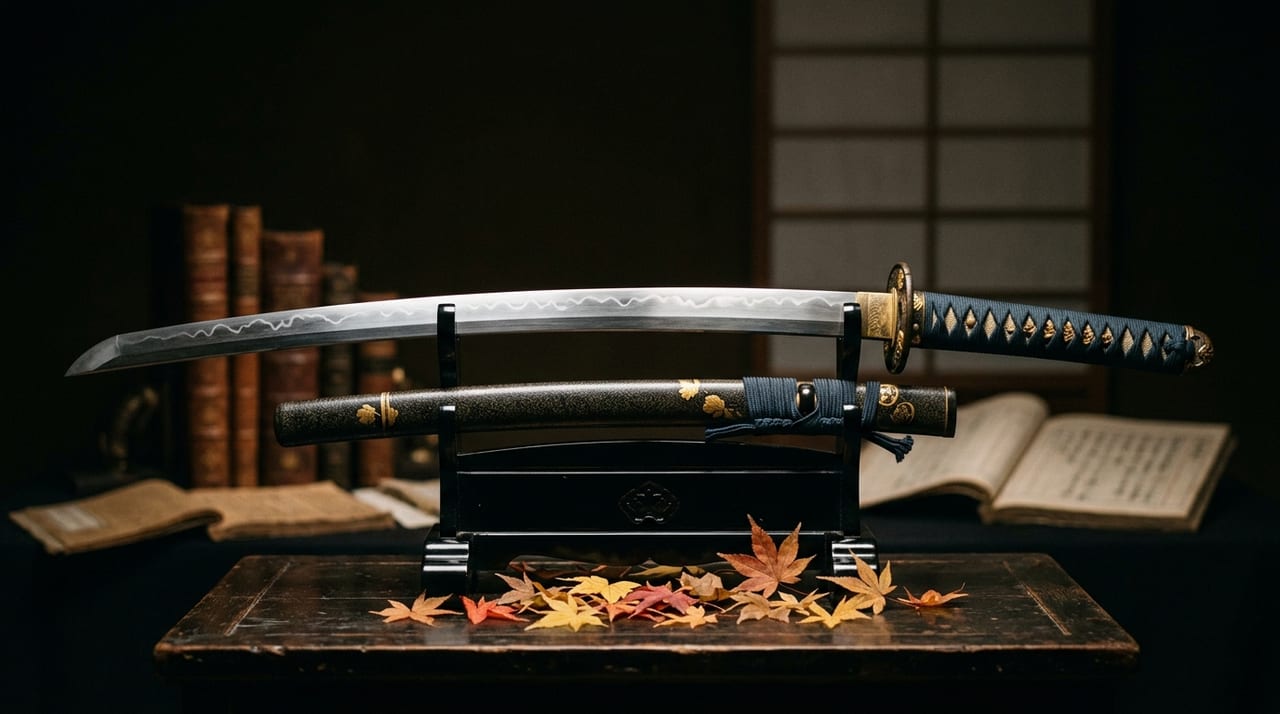
Japanese sword trading had long been inseparably linked to the order of samurai society. During the Edo period, the carrying of swords was a system that made visible the status of being a samurai, and sword merchants were not mere commodity sellers but individuals who built trust within ongoing relationships with feudal lords and samurai families. When ordering a new sword, merchants often handled the entire process from conveying orders to sword smiths to arranging the fittings and sometimes mediating polishing and maintenance—and long-term relationships that extended beyond a single transaction were the fundamental form of this commerce.
The skill of discernment in assessing the authenticity and quality of swords was valued as a specialized profession passed down through generations, and when samurai sought swords, this evaluative judgment became a crucial element supporting the credibility of transactions. It was an era in which not only technical information about the sword itself—such as the signature, steel quality, and blade pattern—but also the transparency of provenance, namely "through whose judgment did it pass" and "at which shop was it handled," influenced price and reputation. Some merchants built relationships with samurai families not only through cash transactions but also through forms similar to credit sales or installment payments, and it can be said that long-term credit relationships rather than one-time transactions were the foundation of commerce.
The Sword Suppression Edict and the Transformation of Sword Merchants—From Weapons to Art
When the 1876 Sword Suppression Edict (Meiji 9) eliminated the system of sword-wearing itself, the market in which sword merchants operated underwent a complete transformation. This was because the customer base of samurai and the demand for swords as functional weapons disappeared nearly simultaneously. While many sword smiths were forced to change their professions, sword merchants too shifted their focus from selling weapons to dealing with Japanese swords as antiques and art objects.
This transformation was not merely a change in the items handled but a transformation of value standards themselves. In place of the value of performance in actual combat or as a symbol of status, the technical perfection of sword craftsmanship, historical significance, and appreciation value as an art object came to the fore. Sword merchants found themselves required to take on a new role: rather than serving as intermediaries for samurai, they now needed to explain the artistic value of Japanese swords to collectors and connoisseurs, providing their discerning judgment regarding authenticity and quality. The type of commerce that developed during this period—"guaranteeing value through discernment"—became and remained the core of the sword merchant business thereafter.
From the Showa to the Heisei Era—Two Sales Channels: Specialty Shops and Department Store Exhibitions
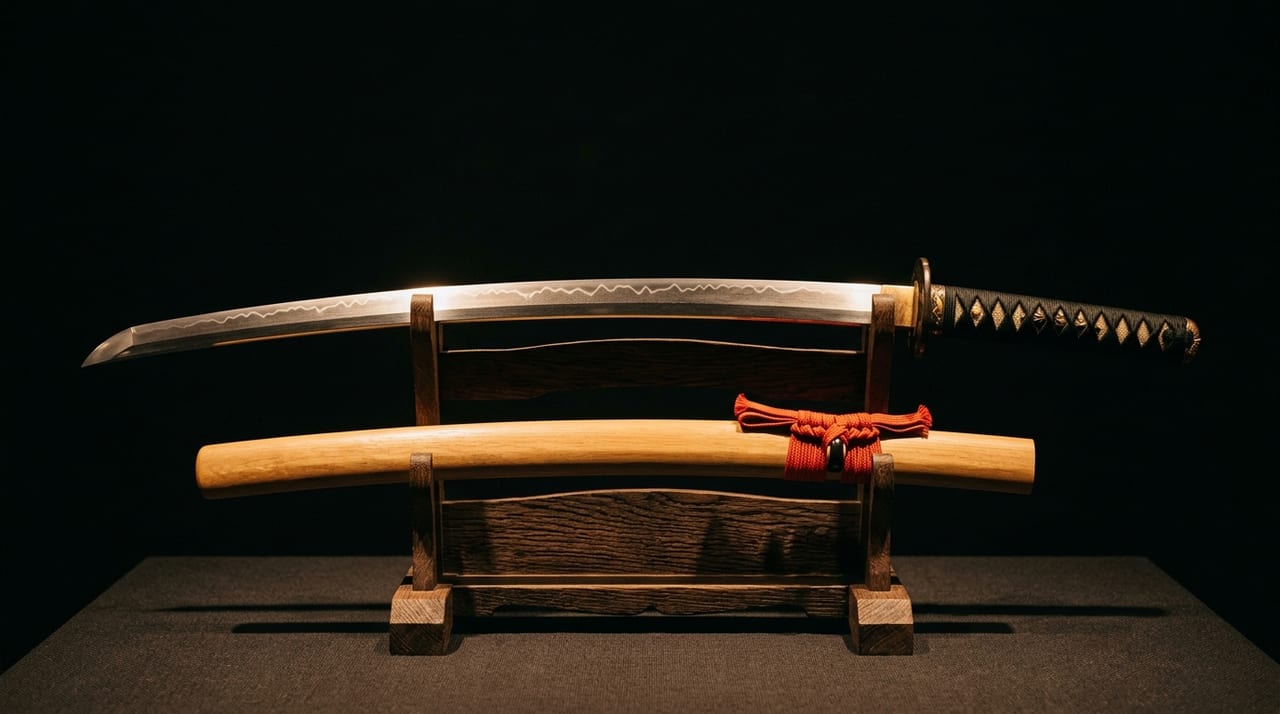
After the war, Japanese swords, following a period of confusion over possession regulations, established their legal position as art objects. In this process, sword merchants' sales channels were divided into two main forms. One was specialized sword shops that had accumulated professional knowledge, with permanent physical locations. The other was the format of period-limited sales events held in art galleries or exhibition spaces of major department stores.
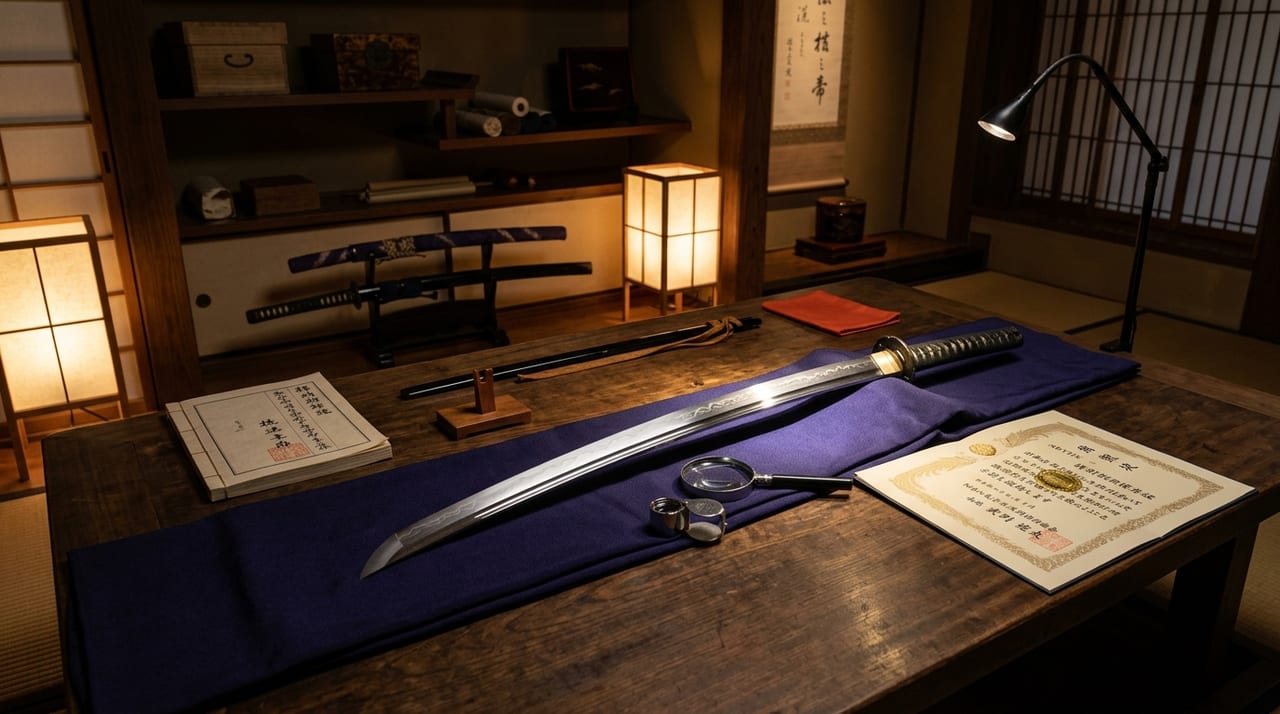
Department store exhibitions functioned as an opportunity to impress people who had no habit of visiting specialty sword shops with the existence of Japanese swords. By relying on the trust inspired by the venue itself, staff could allay the anxieties of first-time buyers of swords by presenting provenance and certificates of authentication while explaining the items in person. Specialty shops weaponized their permanent inventory and ongoing customer relationships, while exhibitions created opportunities to meet new customers in venues with strong drawing power—and this complementary two-pronged sales strategy persisted for many years.
What was common to both formats were elements like these:
- Being able to hold the actual item in one's hands and receive direct explanation from the staff
- Being able to confirm certificates of authentication and provenance materials in person
- The "reputation" of the shop or exhibition itself functioning as a guarantee of credibility
All of these were methods of building trust that depended strongly on the form of face-to-face commerce.
The True Nature of "Trust" Borne by Face-to-Face Business
The trust that has long been valued in sword merchant commerce can be said, ultimately, to have been the work of bridging information asymmetry. Sword merchants played the role of communicating information across the divide between sellers who possessed expert knowledge about the authenticity, quality, and provenance of swords and buyers who in most cases did not.
Ongoing business relationships, the fixed location of the shop, third-party authentication through certificates, and reputation built by word of mouth were all devices for closing this information gap. Buyers made their purchasing decisions not only on the basis of the individual sword before them but also on the track record and reputation of the merchant or shop handling it—and this is a fundamental mechanism of trust formation that extends to modern commerce as well.
The Changes Internet Commerce Brought to Sword Trading
The proliferation of the internet brought structural change to this face-to-face-dependent business. It became technically possible to disseminate information to and conduct transactions with buyers throughout the nation and indeed the world, whether without a physical storefront or beyond the commercial radius of a store. As the means of information disclosure expanded—through photographs and videos sharing how the item looks, image attachments of certificates of authentication, and detailed measurements and condition descriptions—some of the information that had previously been obtainable only through face-to-face interaction could now be conveyed remotely.
On the other hand, the very experience of face-to-face business—"confirming the actual item on the spot and making a judgment while asking questions of the staff"—needs to be replaced with a different form online. The fullness of photographs and descriptions, the transparency of listing information, and the accumulation of transaction history are coming to serve as trust indicators taking the place of the traditional "shop reputation" and "word of mouth."
What Is Required of Sword Merchants in the Age of Online Commerce
The history of sword merchants—the ongoing trust relationships built by Edo-period sword dealers, the transition to the art market after the Meiji Restoration, the two-pronged strategy of specialty shops and department store exhibitions in the Showa and Heisei eras—can be seen as a process of remaking the means of building trust in response to changes in the institutions and lifestyles of each era. Even as online sales expand in the modern day, what remains unchanged is the fact that "disclosing information grounded in expert knowledge in a way that is understandable to buyers" is the foundation of trust.
The following forms of information disclosure have become particularly important as the key to building trust in the absence of face-to-face interaction:
- Specific and accurate description of signature, period, and condition
- Clear presentation of information regarding certificates of authentication and provenance
- Transparency in the procedures from listing through transaction completion
An online sword marketplace like toukenza is one such undertaking aimed at providing an environment where buyers can make confident judgments through such information disclosure, even without a physical storefront. We encourage those with an interest in Japanese swords to take a close look at a sword of interest in the online catalog (sword gallery). Should you have questions or concerns about a particular piece, you can reach out through the contact form.