Japanese Sword International Exhibition and Art Fair Entry Strategy: Dealers Opening Overseas Markets through Cultural Diplomacy
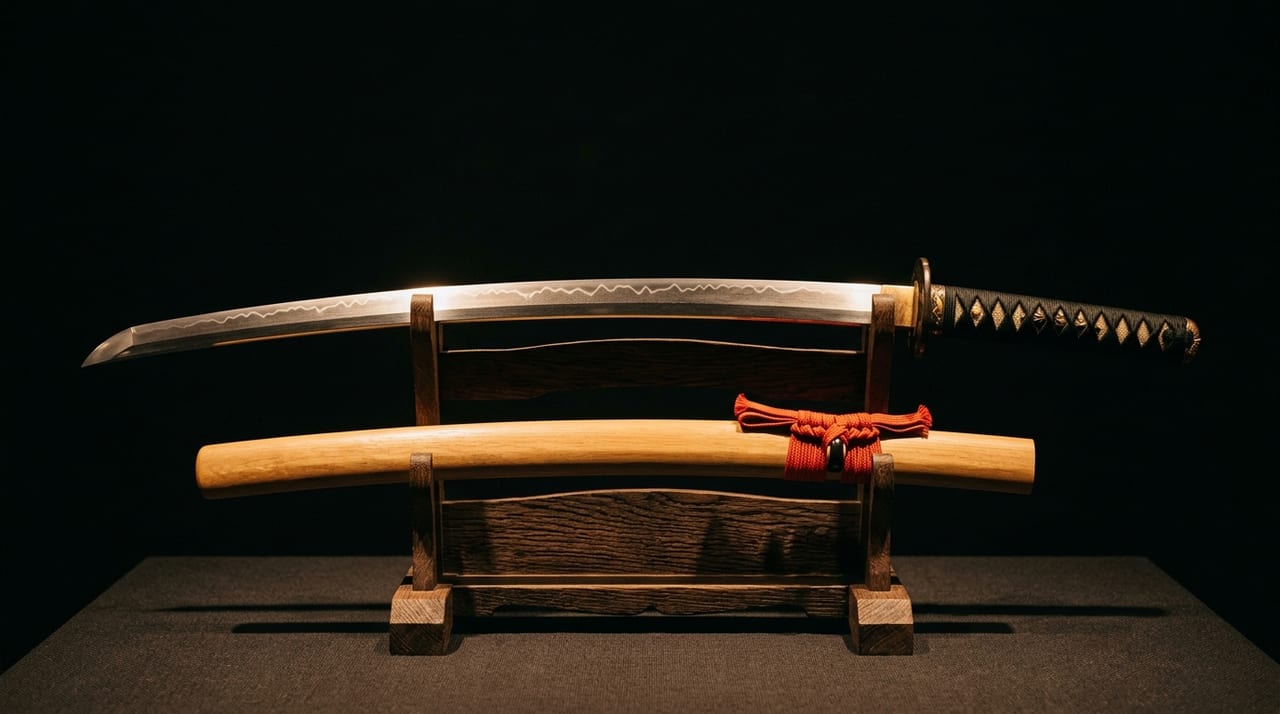 * Image is for illustrative purposes only.
Table of Contents
Overseas Markets Are Opening New Possibilities for the Japanese Sword
Driven by the weak yen and a surge of international visitors to Japan, global interest in the Japanese sword has never been higher. But simply waiting in Japan for buyers to come will not truly open overseas markets. A growing number of sword dealers are instead traveling directly to the world's leading art fairs — Art Basel, Frieze, and TEFAF (Maastricht) among them — as well as specialist Japanese art auctions held in London, New York, and Hong Kong, to negotiate face-to-face with collectors. This article details the practical steps and strategy for entering overseas exhibitions and art fairs.
Legal Groundwork Before Entry
Taking a Japanese sword out of the country requires several legal procedures. Domestically, dealers must first confirm the blade's registration certificate (toroku-sho, issued by the prefectural board of education under Article 14 of Japan's Sword and Firearms Control Law) and obtain the Agency for Cultural Affairs' "Certificate of Export Inspection for Antique Art Objects." Taking a blade abroad for a short period for an exhibition also counts as "export"; because the registration certificate becomes invalid the moment the blade leaves Japan, it must be returned to the board of education of the prefecture where the blade was registered, and once the blade is back in Japan, it must be registered again with the board of education of the prefecture where the owner lives (Tokyo Metropolitan Board of Education, "When Exporting Firearms and Swords"). Swords that are National Treasures, Important Cultural Properties, Important Art Objects or the like are, in principle, prohibited from leaving the country (Agency for Cultural Affairs, "Certificate of Export Inspection for Antique Art Objects"), so it is essential to confirm the designation or certification status of any blade intended for exhibition well in advance.
Once the domestic procedures have been confirmed, the next step is confirming the import regulations of the destination country. The EU weapons directive (Directive (EU) 2021/555, which repealed and codified the former Directive 91/477/EEC) categorizes and regulates firearms; swords and other weapons that are not firearms are governed by the national law of each member state (EUR-Lex, "Directive (EU) 2021/555", Annex I). The conditions for bringing a sword in must be confirmed for each country where it will be exhibited. In the United States, federal regulation is relatively light, but blade-length restrictions vary by state. For Hong Kong and Singapore as well, confirm with the authorities in advance whether a permit is required to bring a sword in.
Packaging must be designed with both blade protection and customs inspection in mind. The sword should be housed in its shirasaya (plain wood storage mount) and cushioned with low-acid foam padding. Do not put labels on the outer case or the waybill that recast the contents, such as "NOT A WEAPON"; describe the item correctly as a sword, and indicate the exhibition purpose with a supplementary note. In the export declaration to customs, the name of the goods must be declared, and exporting goods with a false declaration is subject to penalties (Customs Act (e-Gov Legal Search), Articles 67 and 111). Depending on the destination country's regulations, it is often safer to ship polishing powder (uchiko) and maintenance oil separately.
Choosing the Right Art Fair: Criteria and Cost-Effectiveness
The world's major art fairs differ significantly in character, and their compatibility with Japanese swords varies accordingly.
TEFAF (Maastricht and New York) represents the pinnacle of classical art and antiques, with a strong affinity for early Japanese swords (koto, from the Kamakura through early Edo periods) and sword fittings. Its jurying process is extremely rigorous — the TEFAF Vetting Committee physically examines every piece — and admission itself functions as a mark of quality. Booth costs run to several million yen, but the fair attracts collectors with substantial purchasing power.
Frieze (London and New York) centers on contemporary art, but its "Masters" section has increasingly featured classical works in recent years, providing an entry point to younger, affluent collectors.
For dealers hoping to start on a smaller scale, London's Olympia International Art & Antiques Fair or Japan Art Week Tokyo, supported by the Tokyo National Museum, offer viable alternatives. The latter, an autumn event that gathers Japanese art galleries together, also serves as a venue for business negotiations aimed at both domestic and international buyers. Permanent overseas display is another option worth considering: examples of Japanese swords held in the collections of the British Museum and the Metropolitan Museum of Art demonstrate the potential for a blade to move beyond a temporary exhibit and put down roots in an overseas cultural institution.
Negotiating and Pricing in the Field
Selling a Japanese sword to an overseas collector requires more than a simple transaction — it demands cultural education. At minimum, dealers should prepare the following materials for any negotiation:
- An English translation of the appraisal certificate (from the NBTHK or the Nihon Token Hozon Kai)
- A copy of the oshigata — a hand-traced rubbing capturing the hamon and jigane characteristics, allowing a collector to study the blade's features without handling the piece directly
- A biography of the smith, prepared in English, French, German, or Chinese
- A guide to export and import procedures, so that a buyer's procedures for bringing the blade home are anticipated in advance — a gesture that builds significant trust
Many dealers price overseas sales at 1.5 to 2 times the domestic price. Under a weak yen, the relative cost of domestic procurement stays low, which tends to improve profit margins on overseas sales. Even so, dealers must calculate net proceeds carefully after subtracting shipping insurance (specialized fine-art transit insurance), fair participation fees, and local interpreter or agent fees.
Building Lasting Relationships with Overseas Clients
A single fair appearance is rarely enough to turn a profit. What matters most is diligent follow-up afterward. Dealers should send a thank-you email in English to every prospective buyer they spoke with, and invite them to subscribe to a newsletter describing preferred sword styles, budget ranges, and upcoming auction listings. Maintaining active Instagram and LinkedIn business accounts — regularly sharing new arrivals, smith visit reports, and exhibition news — helps sustain relationships with collectors located far from Japan.
Joint exhibitions organized through a trusted trade association of Japanese sword dealers, such as the All Japan Token Dealers Cooperative, are another option worth exploring. Sharing costs reduces the burden of booth fees, while combining multiple specialties — tachi, sword fittings, armor-piercing blades, and more — in a single space increases the fair's appeal to visitors.
Exhibiting overseas is not simply a matter of "export." It is also an exercise in cultural diplomacy, repositioning Japan's sword culture as part of the world's shared cultural heritage. Careful legal preparation combined with genuine cultural education forms the foundation for building a durable overseas market over the long term.