Antique Dealer Law and Online Sword Sales: Identity Verification Duties in Remote Transactions
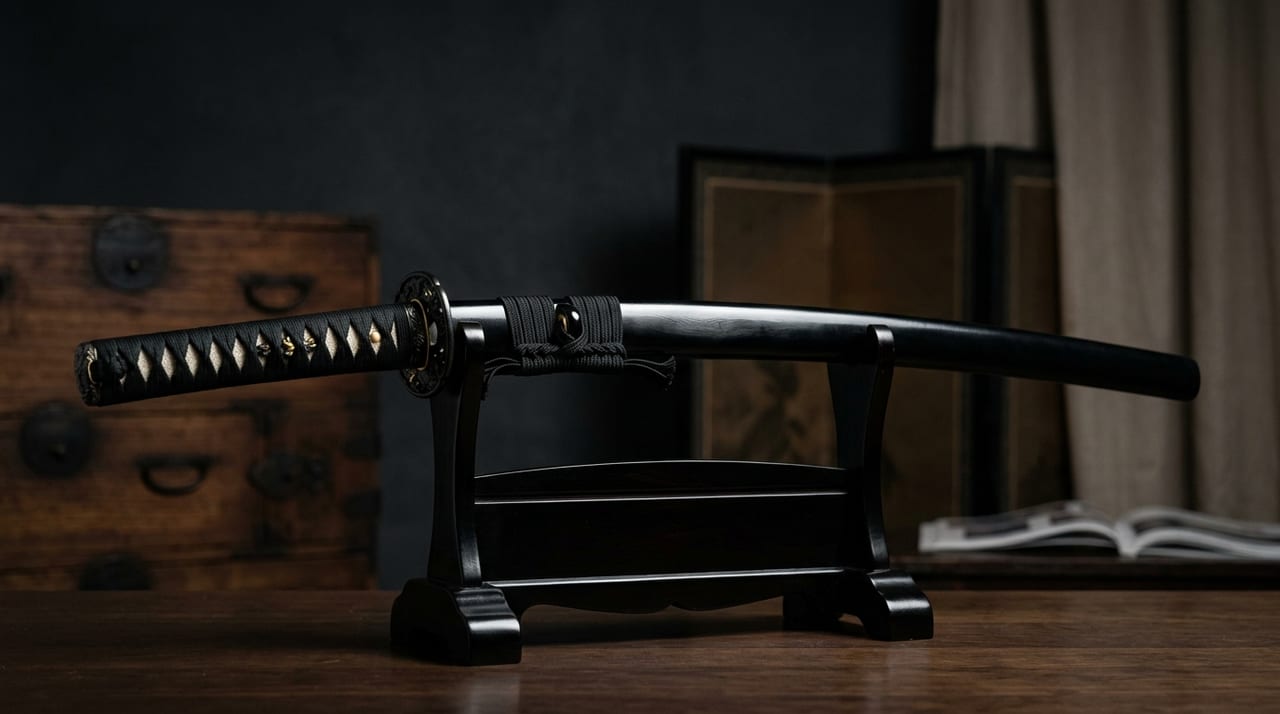 * Image is for illustrative purposes only.
Table of Contents
Why Used Japanese Sword Transactions Fall Under "Antique Business" Regulations
Japanese swords are art objects, and in most cases they are bought and sold as "used goods." While purchasing a newly forged sword directly from a swordsmith does not constitute a used good, any business that acquires a sword that has passed through the hands of an individual or dealer, or resells it to another party, requires a license as an "antique dealer" under the Antique Business Act. Japanese swords fall within the art goods category of the antique classifications defined by the law, and strict transaction record-keeping obligations are imposed to prevent the circulation of stolen items and unauthorized monetization.
As online sword trading has expanded, the scope of application of the Antique Business Act has come under renewed attention. In face-to-face transactions, one can simply request the other party to present a driver's license or My Number card and verify it on the spot. However, in online transactions where seller and buyer do not meet in person, such as with sword e-commerce, one must follow the non-face-to-face transaction verification procedures stipulated by the law. The difficulty in the practice of this field stems from the fact that the common sense of face-to-face transactions cannot simply be transferred to online settings.
Three Methods of Identity Verification Required for Non-Face-to-Face Transactions
The Antique Business Act Enforcement Regulations limit the acceptable methods of identity verification in non-face-to-face transactions to several specific types. The three main ones are as follows.
- The registered mail method—conducting payment and delivery of goods through a postal service that only the intended recipient can receive, and relying on the postal service operator's verification procedures to confirm the person's identity.
- A combination of no-forwarding mail and identity verification documents—receiving public documents such as a copy of a resident registration from the other party, sending non-forwarding mail to the address listed in that document, and confirming the person's existence and actual residence by whether it is delivered.
- Bank transfer to an account in the person's name—receiving copies of resident registration documents and entering into a contract to transfer payment to a deposit account in the name listed in that document, confirming that the account name matches the declared information.
A characteristic feature of all these methods is that simply sending an image of an identification document is not sufficient. More business operators are adopting online verification methods via image submission, known as eKYC, but this is only recognized as a valid verification means if it meets the requirements stipulated in the enforcement regulations—such as photographing the identity verification document in a way that shows its thickness and distinctive features, and cross-checking with a facial photograph. Regardless of the type of document, there is also an obligation to preserve records of the verification for a certain period.
Risks and Industry Impact of Neglecting Identity Verification
Japanese swords, being high-value art objects, are commodities where stolen items easily slip into the market disguised as goods with questionable backgrounds. Transactions conducted with only formal identity verification or with identity verification omitted not only increase the risk of being exploited as a pathway for converting stolen goods into cash, but may also result in the business operator facing cancellation of their business license or penalties.
For sword specialty dealers, identity verification is not merely a matter of legal compliance, but also a mechanism to ensure that the trading partner is the true legitimate owner and to protect the provenance of each sword the buyer receives. Having systems in place to trace stolen swords from transaction records when they are discovered becomes a metric for measuring the credibility of the entire industry. In recent years, international circulation of art objects and antiques has increased, and there is a growing trend of swords whose provenance cannot be traced being avoided in overseas markets as well.
Recording in the Antique Ledger Required Alongside Identity Verification
The obligations imposed by the Antique Business Act on antique dealers do not stop at identity verification alone. Dealers are also required to record the other party's name, address, occupation, and age, the transaction date, the characteristics of the antique item, and other details in the antique ledger with each transaction and preserve the records for a certain period. This is not merely a matter of internal management but is also a system that serves as an important clue when police investigate the distribution routes of stolen goods.
Japanese swords are antiques that are easy to identify as individual items based on their inscriptions, forms, and fittings. The more accurate the entries in the ledger, the easier it becomes to trace a sword when theft or illegal circulation is discovered. While online transactions have the advantage that transaction records are automatically preserved in the system, cases can occur where the recorded content remains merely a list of formal input fields and is not linked to the actual identity verification process. Designing identity verification implementation and ledger recording as an integrated procedure becomes the key to maintaining the effectiveness of the system.
Systems Supporting the Integrity of the Online Sword Market
As online transactions for swords expand, identity verification practice is a field that will continue to require greater sophistication in the future. Options for non-face-to-face verification methods with certainty equal to or greater than face-to-face interactions—such as verification through My Number card IC chip reading or verification methods utilizing official personal authentication services—are expanding year by year.
From the perspective of sword purchasers, checking the antique dealer license number and identity verification system of a trading partner becomes a practical clue for distinguishing business operators with whom one can transact with confidence. The fact that the Antique Business Act, seemingly a mundane regulation at first glance, actually forms the foundation for protecting the value and provenance of Japanese swords as works of art is surprisingly little known. When searching for swords online, it would be wise to use the presence or absence of a displayed antique dealer license number as an initial benchmark for measuring trustworthiness.