A Practical Strategy Guide for Japanese Sword Dealers to Succeed in International Markets
 * Image is for illustrative purposes only.
Table of Contents
The Practical Flow of Export Procedures: Legal Compliance and Efficiency
Overseas sales of nihontō are not a simple commercial transaction; they require compliance with multiple laws. The first hurdle is the Act on Protection of Cultural Properties. Jūyō bunkazai (including kokuhō) may not be exported except in cases where the Commissioner of the Agency for Cultural Affairs has specifically recognized the necessity and granted permission (Article 44. Act on Protection of Cultural Properties (e-Gov Law Search)), and swords designated as jūyō bijutsuhin are also in principle not exportable. Confirmation that a sword to be exported does not fall under these categories is obtained through the Agency for Cultural Affairs' antique art export inspection certificate (step (1) below).
Next, there are the regulations of the Firearms and Swords Control Act (Act for Controlling the Possession of Firearms or Swords and Other Such Weapons, Jūtōhō). In Japan, swords with a blade length of 15 cm or more qualify as "swords and edged tools" and their possession is in principle prohibited; however, swords registered as works of art with a prefectural Board of Education may be possessed (Articles 2(2), 3, and 14. Act for Controlling the Possession of Firearms or Swords and Other Such Weapons (Jūtōhō) (e-Gov Law Search)). However, when it comes to export abroad, the laws of the destination country take precedence. In the United States, blade regulations vary by state, and in Europe, the conditions for importing and possessing swords differ by country. It is essential to confirm the laws of the importing country in advance and to verify with the other party whether import permits or letters of recommendation are required.
In practice, the process proceeds as follows: (1) obtaining the Agency for Cultural Affairs' antique art export inspection certificate (in principle 10 business days from the date all documents are assembled; however, the Agency for Cultural Affairs notes that a significant increase in applications means it is now taking longer. Agency for Cultural Affairs, "Antique Art Export Inspection Certificate"), (2) researching the laws of the importing country and confirming with the recipient, (3) preparing customs documentation (quotation, invoice, packing list, certificate of origin), (4) filing the export declaration with customs (e.g., online declaration via NACCS. NACCS Center, "Business Overview"), (5) customs export authorization (Customs Act (e-Gov Law Search) Article 67), and (6) actual export and return of the registration certificate to the prefectural Board of Education that issued it (Tokyo Metropolitan Board of Education, "When Exporting Firearms and Swords"). In this process, swords more than 100 years old are classified as antiques (HS heading 97.06; those more than 250 years old fall under 9706.10, others under 9706.90), while swords 100 years old or less are classified under 9307.00 (swords, cutlasses, bayonets, lances, and similar side arms) (Customs, "Customs Tariff Schedule Commentary," Chapter 93). When fittings or tsuba are included, they may be classified separately.
When handling multiple swords in a single shipment, a detailed description for each sword is required (in the case of unknown authorship: period of manufacture, blade length, weight, and condition). Customs may also be called upon to judge "Is this truly a sword, or an artwork rather than a mere edged weapon?" and responding sincerely builds credibility.
Approaches to Pricing: Combining International Market Rates with Added Value
The overseas price of nihontō differs greatly from the domestic market. In Japan, even a mumei sword from the Edo period commands several hundred thousand to several million yen, but for overseas buyers, authorship information — "who made it" — is paramount. Domestic art dealers and enthusiasts can assess value from a tōkō's style and historical context even without a mei, but wealthy buyers in Europe, America, and China tend to seek swords by renowned artists, and swords with clear provenance — particularly gendaitō by Living National Treasures or holders of Important Intangible Cultural Property status — trade at high prices.
As a concrete pricing strategy, the following segmentation is effective. For kotō of high historical value (Kamakura through early Edo period), reference international auction benchmarks (Christie's, Sotheby's). These often trade in overseas markets at 1.2 to 1.5 times their domestic valuation, and works by particularly renowned makers attract competitive bidding from buyers worldwide. Swords from the late Edo through Meiji periods are in relatively greater supply, and 0.8 to 1.2 times the domestic price is appropriate. For gendaitō (post-war and later), the maker's reputation and record of awards at international exhibitions determine value. Works by Living National Treasures can exceed 1,000,000 yen, and even rising tōkō see inquiries in the 300,000–700,000 yen range.
For overseas buyers, it is important to provide "narrative" as part of the package. Context such as the tōkō's life story, the historical background of the period, characteristics of the forging technique, restoration history, and the history of previous owners provides justification for the price. Adding a well-grounded inference such as "this sword may have been carried by a samurai of the Satsuma domain" to a mid-Edo period sword heightens the desire to purchase among history enthusiasts. However, fabrications not grounded in fact must be strictly avoided. Overseas researchers and collectors are well versed in the academic background of nihontō, and inaccurate information leads to a loss of credibility.
Additional costs required for overseas sales — shipping, insurance, customs brokerage fees, and the like — should also be factored into the price. Generally, a 10–20% markup over the domestic selling price is necessary. When aiming for bulk purchases of multiple swords or anticipating a long-term trading relationship, offering a modest discount on the first transaction makes it easier to acquire repeat customers.
International Marketing and Product Descriptions: Language and Visual Strategies
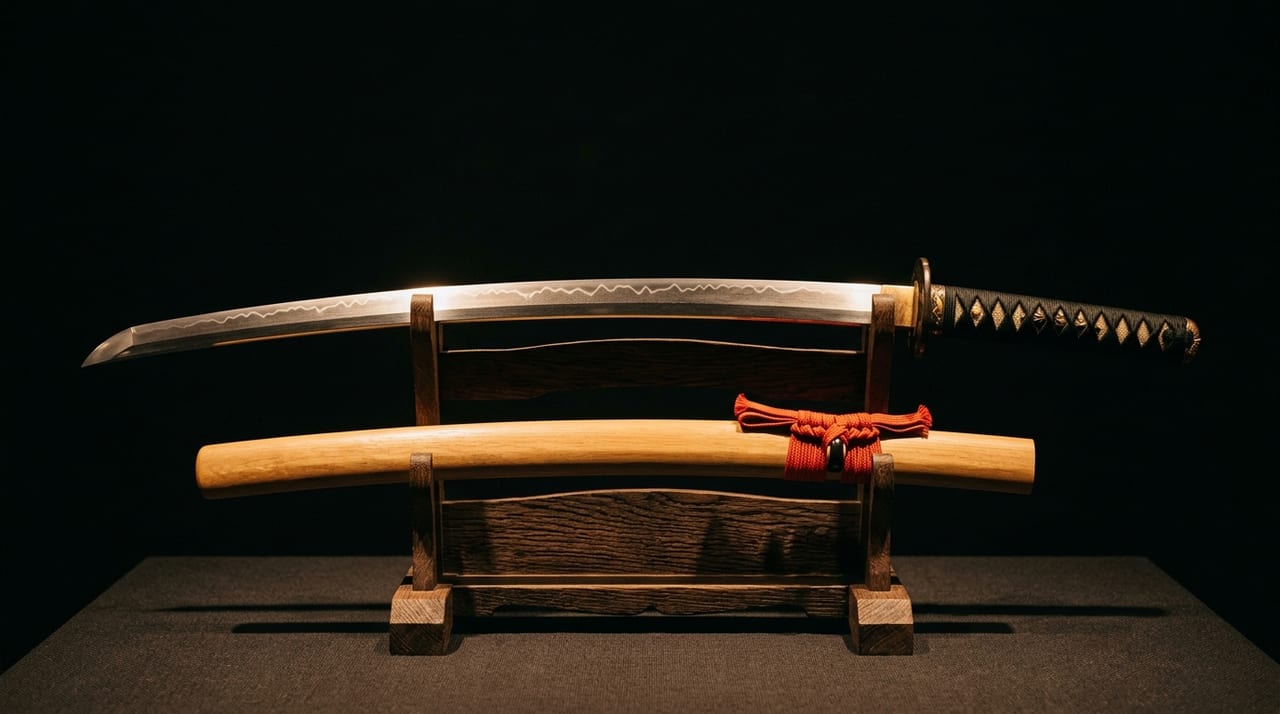
For product descriptions in English, it is important to use the standard terminology of the international fine art market rather than Japanese-style poetic expressions. For example, a tachi in shirasaya is described concisely in English as "Tachi in white wood scabbard." When academic explanation is needed, verifiable descriptions such as "This blade exemplifies Kamakura-period forging, characterized by dense grain patterns" are effective.
For items listed on websites and in catalogs, we recommend standardizing them in the following order:
- Classification: Type of sword (Katana, Tachi, etc.), period of manufacture, maker's name
- Dimensions: Blade length (cm and inches), sori, weight, number of mekugi holes
- Forging characteristics: Type of hamon, condition of jigane, description of forging technique
- Condition: Objective description of scratches and rust
- Fittings: Details of accessories such as koshirae and tsuba
- Provenance: Ownership history, exhibition records
- Certificates: Presence or absence of a kanteisho
Descriptions in Chinese (both simplified and traditional characters) are also important. Wealthy Chinese buyers often view nihontō as investment objects and place equal emphasis on "historical rarity" and "craftsmanship." In China, the storyline of "transformation from weapon to work of art" is favored, so carefully explaining the historical evolution of the sword's role is effective.
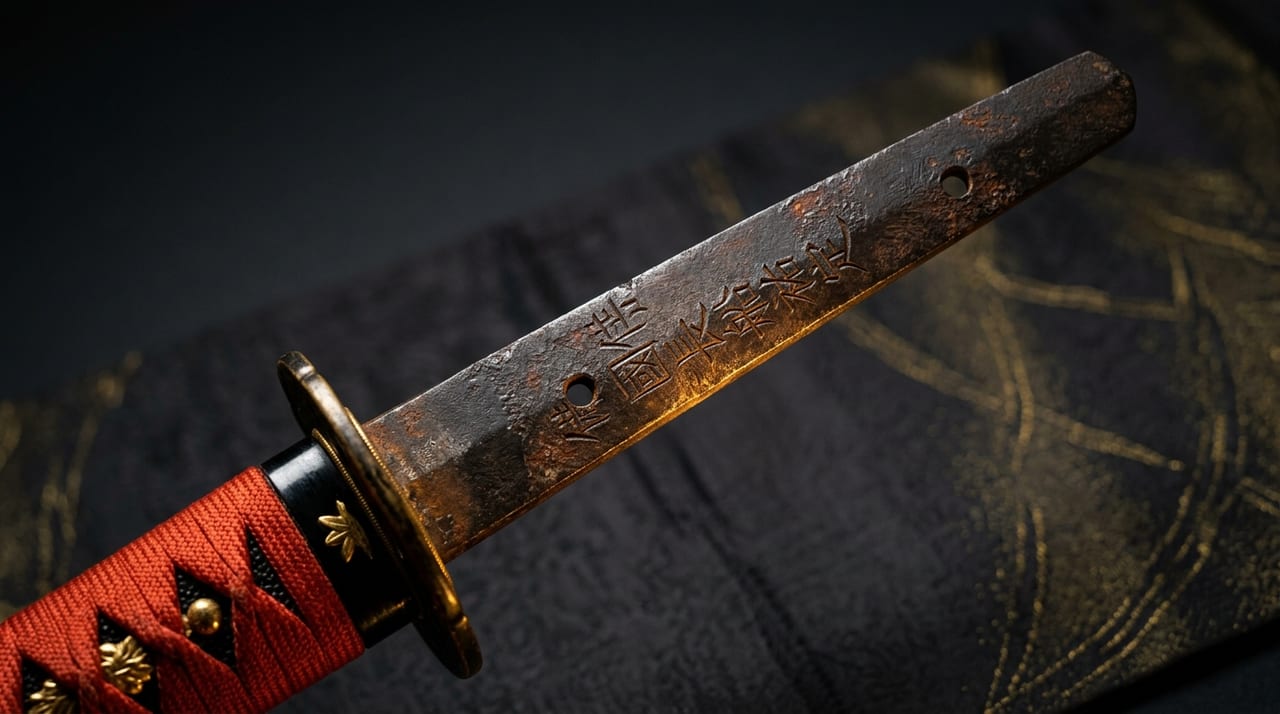
Photography also directly affects investment value. Under professional lighting, photograph the hamon, jigane, nakago, and fittings from multiple angles. Buyers in English and Chinese markets confirm details online repeatedly before deciding to purchase, so a high-resolution image set is essential.
Building Trust with Customers: Providing Transparency and Expertise
Relationships with overseas customers are greatly shaped by the sincerity shown at the time of the first transaction. Of particular importance is honesty in assessing the sword's condition. For a sword described as having "minor scratches," always clearly indicate the location and depth of those scratches with photographs. By carefully explaining imperfections — such as "traces of polishing," "black rust-preventive coating," and "evidence of past restoration" — professionalism is recognized and trust increases.
When aiming to cultivate long-term customers, it is effective to maintain contact after delivery. By notifying existing customers by email about newly acquired swords, regularly providing advice on storage and maintenance methods, and so on, the goal is to establish a position not merely as a product supplier but as a "specialist partner in nihontō."
Payment methods also affect trust. By offering multiple options — international bank transfer, PayPal, credit card payment, and others — buyer anxiety can be reduced. Since individual collectors in Europe and America are wary of fraud, presenting third-party credentials (kanteisho from sword art museums or university research institutions) improves credibility.
Examples of Disputes and How to Handle Them: Practical Knowledge of Risk Management
The first common problem is "erroneous shipment to a country where import is prohibited." The countermeasure is to confirm the latest laws of the importing country before shipping and to verify the recipient's address multiple times. When choosing sea freight rather than air freight, also confirm the laws of any transit countries.
The second is "doubts about the authenticity of a piece." Cases arise in which, after purchase, university research institutions or national museums are consulted and identify "contradictions in the stated period." In such cases, sincerely correcting the description and accepting returns when necessary preserves long-term credibility. Returns represent a short-term loss, but preventing reputational damage online is more important.
The third is "disputes over customs duties and clearance costs." When invoicing, clearly distinguish between "fees paid on the Japanese side" and "customs duties that may arise on the importing country's side." Many problems stem from "unexpected customs duty charges being levied on the buyer." By stating in advance "You may be subject to import duties and taxes," disputes can be prevented before they occur.
The fourth is "losses due to lack of insurance." Damage to swords during sea transport is rare, but the risks of theft and loss exist. Always take out shipping insurance (All Risk Coverage) and notify the buyer accordingly. Providing a copy of the insurance policy increases buyer peace of mind.
Building long-term relationships with customs brokers and trade consultants familiar with the business practices of each region is a preventive measure. We recommend conducting a small-scale test shipment on the first transaction and understanding the entire process before proceeding to full-scale large transactions.
In overseas sales of nihontō, legal compliance and trust-building are the greatest challenges, more so than technical difficulty. Transparency, accurate information provision, and sincere engagement — these are what determine success in the international market.