Kyoto Sword Sacred Sites Pilgrimage Guide
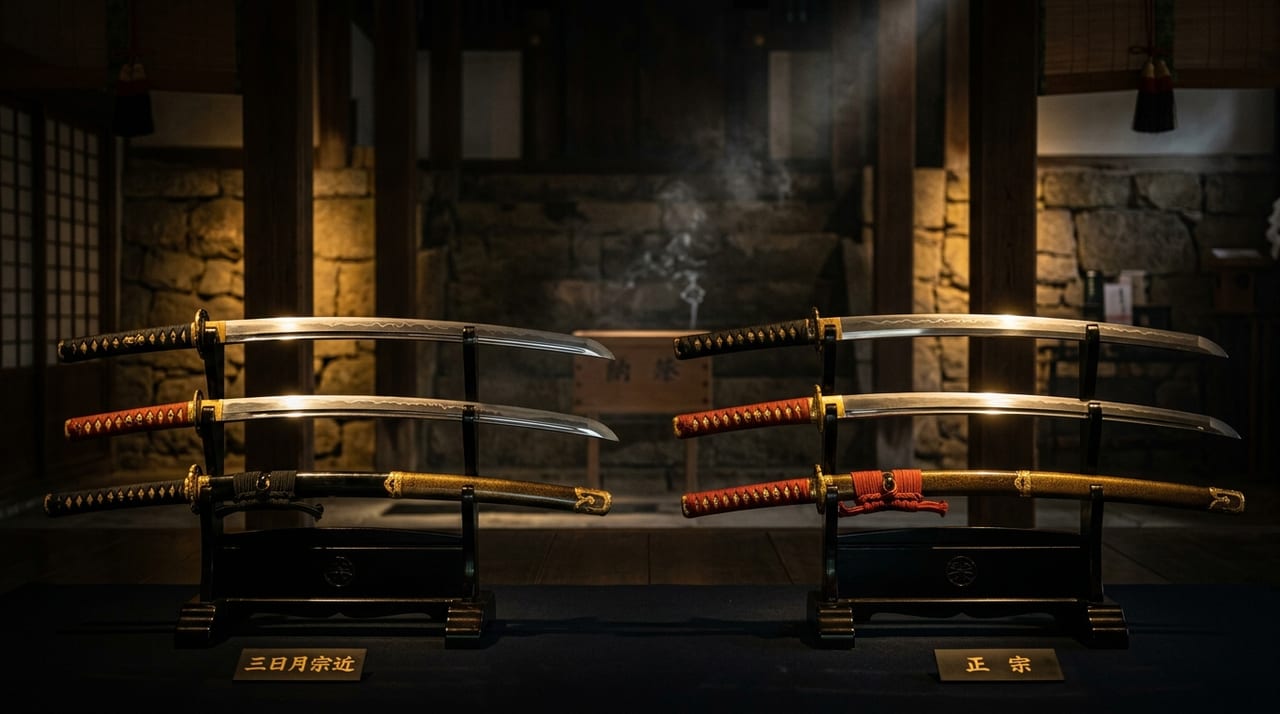 * Image is for illustrative purposes only.
Table of Contents
Introduction—Kyoto, Birthplace of Japanese Sword Culture
The history of Japanese swords is inseparable from Kyoto. In the late Heian period, the heartland of Yamashiro Province—where curved "wantou" swords were born—is present-day Kyoto Prefecture, and schools such as Awataguchi, Rai, and Sanjo were established there. Many of the renowned blades coveted by Sengoku warlords were also forged by Kyoto smiths. Visiting shrines and temples that carry this tradition to the present day—a "sword sanctuary pilgrimage"—becomes the ultimate experience for Japanese sword enthusiasts. In this article, I focus on six particularly significant shrines and temples with deep connections to celebrated blades, explaining the highlights and visiting tips for each.
Awata Shrine—The Smithing Deity and Mikazuki Munechika, Kogitsune-maru
Located about a 15-minute walk from Keihan Electric Railway's "Jingu Maruta-cho" Station, Awata Shrine (in Awatakuchi at the foot of Higashiyama Mountain) is known as the deity of departure and smithcraft. One of its patron deities, Ame no Mahitotsu no Kami, is the deity of metal forging and has long been revered by sword smiths.
This location is special because the legends of Sanjo Munechika—creator of the popular "Mikazuki Munechika" from Touken Ranbu—and "Kogitsune-maru" are deeply rooted in the Awatakuchi area. Kogitsune-maru is said to be a tachi forged by Sanjo Munechika with the help of a white fox, a servant of the Inari deity, and the legend of its creation continues to be passed down. The "Kajijinja" (Smithing Shrine) within the grounds is the protective shrine of sword smiths, and craftspeople dealing in blades and metal tools continue to visit today.
Every October, the "Awata Matsuri" festival features a portable shrine procession continuing from the Edo period and a massive festival lantern procession called "Ōtōro," making it popular among sword enthusiasts. Sword-themed shrine stamps (goshuins) are also distributed, with designs changing yearly. Shrine grounds are open to the public (including Kajijinja). For details, see the Awata Shrine facilities page.
Fujinomori Shrine—Tsurumaru Copy and Pioneer of Sword-Themed Shrine Stamps
Fujinomori Shrine, located in Fukakusa, Fushimi Ward, is an ancient shrine dedicated to Susanoo (the warrior deity) and others. While known as a renowned spot for iris flowers, it is widely recognized among sword enthusiasts as a site associated with "Tsurumaru Kuninaga."
Within the shrine grounds, a donated blade of "Tsurumaru Kuninaga copy" is enshrined, and visitors from across the country have been coming since the Touken Ranbu boom. It is also known as a pioneer of sword-themed shrine stamps, and many visitors continue to come for its original sword-designed goshuins.
A 15-minute walk from Kintetsu "Takeda" Station, or just off at the municipal bus stop "Fujinomori Shrine-mae." The "Fujinomori Matsuri" and "Kakekuma" (horseback riding ritual) held every May are also worth seeing. Shrine grounds are open to the public (treasures are not on public display). Details can be found on the Fujinomori Shrine facilities page.
Kenkun Shrine—Soza Samonji and Nobunaga's Blade
Kenkun Shrine (Takeisao Shrine), located at the summit of Funaoka Mountain and commonly called "Kenkun-jinja," was founded in 1869 (Meiji 2) with Oda Nobunaga as its principal deity. Nobunaga's connection to swords runs deep. While famous for the Kokyoku performance of "Atsumori," which he is said to have danced the night before the Battle of Okehazama (1560), the renowned blade Nobunaga particularly favored was "Soza Samonji."
Soza Samonji is a katana forged by the Sa family, Hizen smiths of the Northern and Southern Courts period, and passed through Miyoshi Masanaga → Imagawa Yoshimoto → Oda Nobunaga. Nobunaga had a gold inlay inscription cut reading "Eioku 3rd Year, 5th Month, 19th Day—The Waist Sword Obtained When Yoshimoto Was Subjugated," commemorating his defeat of Imagawa Yoshimoto. It is currently held by Kenkun Shrine (Kyoto's Kita Ward) and is on deposit at the Kyoto National Museum (designated Important Cultural Property). Kenkun Shrine has become an essential pilgrimage site for sword enthusiasts as a place honoring Nobunaga.
The shrine grounds house a tachi (copy) donated by Nobunaga and treasures related to Nobunaga, some of which are displayed around the annual grand festival (October). The shrine office distributes goshuins and amulets related to Nobunaga and Soza Samonji. Just off at the municipal bus stop "Kenkun Shrine-mae." Shrine grounds are open to the public. For details, see the Kenkun Shrine facilities page.
Kitano Tenmangu—Higekiri (Onikiri-maru) and the Blade of the Deity of Learning
Located in Kamigyo Ward, Kitano Tenmangu is the head shrine of Tenmangu shrines nationwide, dedicated to Sugawara no Michizane. While known as a renowned spot for plum blossoms, it holds important significance for sword enthusiasts as a site associated with the Minamoto clan's renowned blade "Higekiri"—also known as "Onikiri-maru."
Higekiri is said to be a tachi that Minamoto no Mitsunaka had forged to test "sharpness that could cut whiskers," and is regarded as a renowned blade passed down through the Minamoto clan. Anecdotes appear in works such as the Konjaku Monogatari (Tales of Times Now Past) and the Heike Monogatari (Tale of the Heike), and it is also known for the legend of Watanabe no Tsuna cutting off the arm of a demon (Ibaraki Doji) at Ichijo Modoribasashi bridge (the origin of the name Onikiri-maru).
Kitano Tenmangu is positioned as a site associated with the "Onikiri-maru" legend, and its treasure hall houses sacred sword treasures. The treasure hall's opening schedule varies by year, so please check the official website before visiting. On the 25th of each month, "Tenjin-san's Festival Day" features an antique market on the shrine grounds where sword fittings and other items are sometimes sold. Just off at JR Sagano Line "Maruta-cho" Station or municipal bus stop "Kitano Tenmangu-mae."
Toyokuni Shrine—Honebami Toshiro and Hideyoshi's Blade
Toyokuni Shrine, located in front of Yamato Oji in Higashiyama Ward, is a shrine dedicated to Toyotomi Hideyoshi and was rebuilt after the Meiji Restoration on the site of Hideyoshi's mausoleum. Hideyoshi is known for collecting and bestowing many renowned blades during his lifetime, and among them "Honebami Toshiro" is a particularly special blade.
Honebami Toshiro is a tanto (or a naginata that has been repolished) forged by Awataguchi Yoshimitsu, and is said to have been so sharp that it could "consume bone." It passed through the Muromachi Shogunate → Miyoshi family → Matsunaga Hisahide → Oda Nobunaga → Toyotomi Hideyoshi and was donated to Toyokuni Shrine. It is currently held by Toyokuni Shrine and designated an Important Cultural Property. While not normally on public display, the actual blade can be seen during special exhibitions.
The treasure museum adjacent to Toyokuni Shrine's grounds also displays sword fittings, and it is recommended to visit during the special exhibition period around the annual grand festival (August 18). A 10-minute walk from Keihan Electric Railway's "Shichijo" Station.
Daikakuji—Hizamaru (Usumidori) and the Minamoto Clan's Renowned Blade
Daikakuji, located in Saga, Ukyo Ward, is a formal monzeki temple that was originally a detached palace of Emperor Saga. While known as a scenic spot with its vast Osawa Pond, it is a particularly special place for sword enthusiasts as the temple that preserves "Hizamaru"—also known as "Usumidori."
Hizamaru is said to be a tachi owned by Minamoto no Yoshitomo and passed down through Minamoto no Yorimasa and Minamoto no Yoshitsune, and it is a popular blade that also appears as "Hizamaru" in Touken Ranbu. The alternate name "Usumidori" is said to derive from the blade's color. Daikakuji's treasure museum houses many temple treasures, including blades, some of which are displayed during special exhibitions in spring and autumn.
For more information about Daikakuji's treasure museum, see the Daikakuji Treasure Museum facilities page. A 15-minute walk from JR Sagano Line "Saga Arashiyama" Station, or just off at the municipal bus stop "Daikakuji."
Model Routes and Practical Advice for Kyoto Sword Pilgrimages
To efficiently visit all six shrines and temples requires planning for schedule and transportation. Here are recommended routes.
1-Day Route (Focusing on Central City)
- Awata Shrine (morning)
- Kenkun Shrine (late morning)
- Kitano Tenmangu (midday)
- Toyokuni Shrine (afternoon)
These four shrines can be covered in one day, including walking, by combining subway and municipal bus transit.
2-Day Route (Including Saga and Fushimi)
- Day 1: Awata Shrine → Kenkun Shrine → Kitano Tenmangu → Toyokuni Shrine
- Day 2: Daikakuji (Saga, morning) → Fujinomori Shrine (Fushimi, afternoon)
Prior Confirmation of Opening Hours
Treasures and donated blades are often on display only during limited periods. Please check the official websites and social media of each shrine and temple for the latest information before visiting.
Notes on Collecting Goshuins
Sword-designed goshuins are highly popular and may not be available on the day of your visit. It is advisable to check in advance whether the shrine offers pre-written or direct-calligraphy versions.
Access Summary
While Kyoto has well-developed public transportation, Daikakuji and Fujinomori Shrine are somewhat outside the central area. It is recommended to use IC cards (Suica and PASMO are also accepted) and Kyoto city bus one-day passes.
Conclusion—To Kyoto, the Sacred Ground of Swords
The shrines and temples scattered throughout Kyoto that are associated with swords are far more than mere tourist attractions. Each is deeply connected to the history of Japanese swords and serves as a place that carries forward the legends of renowned blades and the memories of blade smiths. Mikazuki Munechika, Kogitsune-maru, Tsurumaru Kuninaga, Soza Samonji, Higekiri, Honebami Toshiro, Hizamaru—by actually visiting the sites associated with these renowned blades, one's understanding and appreciation of swords will deepen further. When searching for blades online, knowing the historical stages on which a blade has walked becomes rich background knowledge for selecting any given blade. TOUKENZA regularly shares information related to blades with such historical connections, so we encourage you to also explore our columns and listings.