The Jisho-Juei War (1180–1185) and Sword Supply: The Surge in Sword Demand and Craftsmen Migration During the Prolonged Genpei War
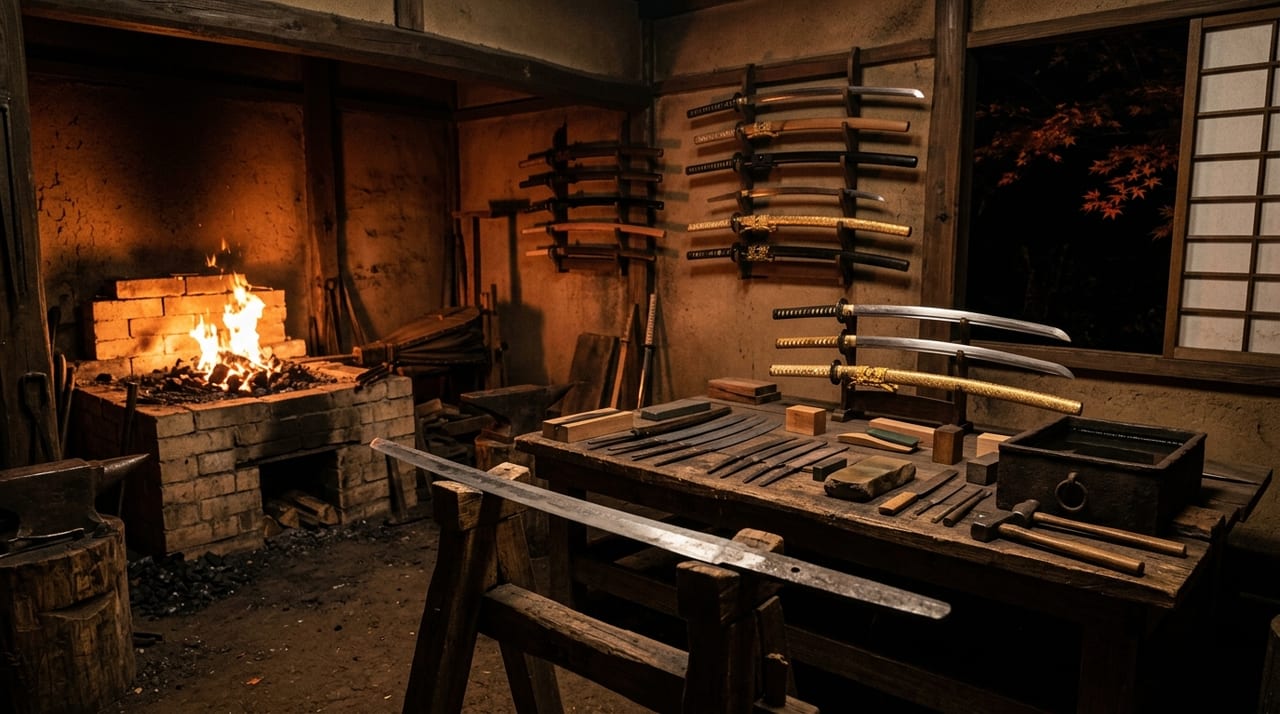 * Image is for illustrative purposes only.
Table of Contents
The Jisho-Juei Rebellion: Japan's First Nationwide Long-Term Internal War
Triggered by the imperial mandate issued to Prince Mochihito in Jisho 4 (1180), various branches of the Minamoto clan rose in arms and fought the Taira clan government supporting Emperor Antoku for six years in what is known as the "Jisho-Juei Rebellion" (the Genpei War). This occupies a unique position in Japanese history. It was the first instance of warfare expanding across the entire archipelago, from the northeast (Ōu) to the southwest (Kyushu and Dan-no-ura), with no precedent in either the duration of conflict or its geographical scale.
The impact this prolonged internal war exerted on sword history cannot be overstated. Earlier large-scale conflicts such as the Shohei-Tengyō Rebellion (939–941) and the Hōgen and Heiji Rebellions (1156, 1159) had all been short-term, geographically limited engagements. By contrast, the six years of the Jisho-Juei conflict created a "weapons supply problem" of an entirely different scale from what had come before, in terms of sustained combat, troop replenishment, and weapons attrition.
Sword Production Systems Before the War: Inventory and Production Capacity Constraints
Sword production in the late Heian period was primarily handled by metalworking guilds in Yamashiro, Yamato, and Bizen. Swordsmiths of this era were typically placed under the patronage of temples, shrines, or the nobility, functioning as "official smiths" for specific aristocrats, warrior clans, or religious institutions. Small-scale production to order, rather than speculative mass production, was the norm.
Late Heian documents provide few clear records of how many swords a single swordsmith could produce in a year.
By Jisho 4 (1180), even combining all the swordsmiths of Yamashiro, Yamato, and Bizen, their existing stockpiles and immediate production capacity were absolutely insufficient to support a nationwide prolonged war.
Explosive Demand: From the Rising to Ichinotani (1180–1184)
After 1180, when Prince Mochihito's mandate reached the provinces, branches of the Minamoto clan successively rose in revolt. Yoritomo consolidated the warlords of Izu and Sagami, while Yoshinaka advanced southward along the Hokuriku Road from Shinano and Echigo. As warrior bands armed themselves throughout the land, demand for swords exploded.
The structure of demand divided into three layers:
- First layer "Military strengthening of existing warriors (regional samurai and prospective retainers)": Samurai from the eastern provinces, whose daily metal goods consisted mainly of iron farming implements, now needed swords, armor, and bows for battle participation
- Second layer "Initial supply to newly raised warrior bands": Warriors and retainers of prominent gokenin like Chiba, Miura, and Hōjō, who participated in Yoritomo's uprising, required weapons distribution
- Third layer "Replacement demand as consumables": Replacement demand for swords broken, bent, or with chipped blades during combat
The third layer was particularly critical in prolonged warfare. Over the six years from 1180 to 1185, major battles (the Fuji River, Kurikara Pass, Ichinotani, Yashima, and Dan-no-ura) involved several thousand to over ten thousand participants in total. The number of swords with chipped and broken blades in these battles must have been enormous, creating relentless demand for either repair or new acquisition.
Movement of Swordsmiths: From Yamashiro and Yamato to Eastern and Southwestern Regions
The most revolutionary change the Jisho-Juei Rebellion brought to sword supply was the "geographical relocation of swordsmiths." Prior to this, swordsmiths had been concentrated around Kyoto (Yamashiro and Yamato) and the Osafune region of Bizen, but the demands of war drew them to move and disperse throughout the country.
Records exist of multiple swordsmiths being invited to Kamakura, which became the Minamoto base, after Yoritomo's bakufu was established (1185). Shintōgo Kunimitsu, regarded as the ancestor of Sōshū (Sagami) smiths, has signed works only from Einin 1 (1293) onward in the late Kamakura period, about 100 years after the Jisho-Juei era. The smith recruitment that became the foundation of the Sōshū tradition is thought to have occurred under Hōjō Tokiyori (the 5th shikken, or regent, mid-13th century), and cannot be directly linked to the Jisho-Juei Rebellion.
In the Kyushu base of the Taira clan, local Kyushu smiths (the Naminohira school active primarily in Satsuma) met the military demands of the Taira. Because Kyushu and western regions remained major theaters of war until Dan-no-ura (1185), swordsmith guilds in Satsuma, Bungo, and Chikuzen begin appearing in historical records.
In the eastern regions, with the establishment of Yoritomo's gokenin system (1180s), swordsmiths recruited as "official smiths" to prominent gokenin settled in Sagami, Musashi, and Hitachi. These movements are believed to have later formed the foundations of the "Sōshū tradition."
The Rise of Bizen Smiths: Meeting Surging Demand and Mass Production
The group that underwent the most dramatic development during this era was the swordsmith community around Osafune in Bizen Province (present-day Okayama Prefecture). The Bizen Osafune smiths had already established their reputation by the late Heian period, but the explosive increase in demand through the Jisho-Juei Rebellion accelerated both their production scale and technical development.
The geographical reason for Bizen Osafune's prosperity is clear. Its location on the Seto Inland Sea route allowed rapid transportation of swords via the San'yō Road and maritime routes to various areas of western Japan. The ability to exploit water power from the Yoshii River basin for iron sand extraction and iron smelting also contributed to reduced production costs.
The concentration of Bizen swordsmiths confirmed through documents and excavated artifacts expanded rapidly after the Jisho-Juei Rebellion. The lineage of smiths such as Kageyasu who were active during the Jisho-Juei period represents the foundational formation phase of this era. Note that Kagemitsu has signed works from the late Kamakura period (1306–1334), and Kanemitsu was a swordsmith of the Northern and Southern Courts period, about 120–150 years after the Jisho-Juei period. The founder of the Osafune school is traced to Mitsutada (late Heian to early Kamakura period).
Technical Influence: Changes in Sword Form Generated by Practical Warfare Demands
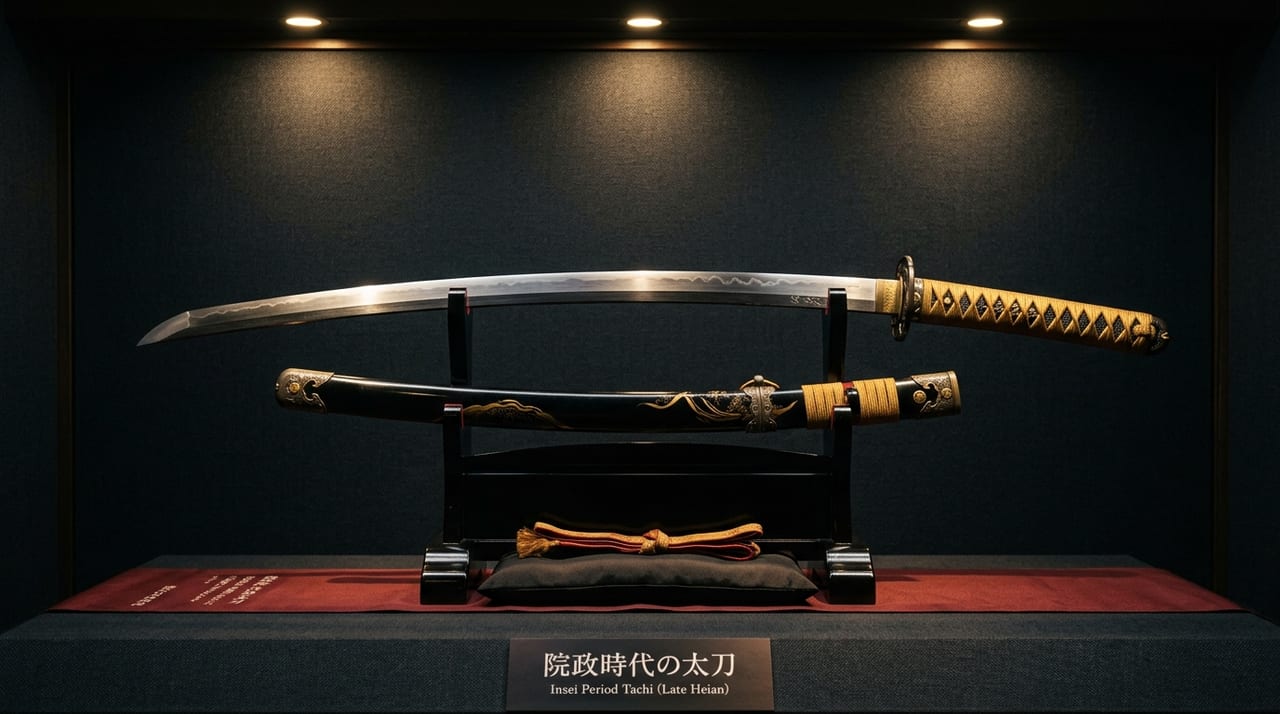
The technical influence the Jisho-Juei Rebellion exerted on sword form should not be overlooked. The tachi of the early Heian period was primarily intended for imperial court ceremonies and aristocratic self-defense, with emphasis placed on beauty and symbolism. However, through prolonged actual combat, demands for practicality—"not breaking, not bending, not chipping"—intensified.
Swords from this era (tachi of the early Kamakura period) display the following characteristics:
- Robust sword form
- Transitional changes from slender blades to ikubi kissaki (boar-neck point)
- Stabilization of choji midare hamon patterns
These represent not merely aesthetic shifts but are interpretable as results of practical experience feedback influencing swordsmiths' technical choices.
Particularly noteworthy is the change in sword "curve" (sori). A transition can be observed from the waist curve of the early Heian period (where the blade's curve centered near its point of balance) to the middle and forward curves of the Kamakura period. One theory suggests this change reflects a tactical shift from "striking downward from horseback" to emphasis on "cutting in foot combat."
Postwar Settlement: The Yoritomo Administration and Institutionalization of Swords
Following Dan-no-ura in 1185, Minamoto Yoritomo's construction of the Kamakura bakufu system brought significant changes to the social positioning of swords.
The system of "hairyōtō" (swords granted as rewards) to gokenin was established, and swords became a political symbol making visible the hierarchy among warriors and patron-retainer relationships. Records exist of Yoritomo himself ordering multiple master smiths to forge swords and personally distributing the finished blades to his gokenin.
This practice of "political communication through swords" became the origin of the later "Muromachi shogunate and sengoku daimyō" culture of presented and granted swords, marking the starting point of a long journey in which the Japanese sword transcended mere weaponry to become "a symbol of power and order."
The Jisho-Juei Rebellion represented a dual turning point in Japanese sword history: a "quantitative explosion in demand" and a "geographical reorganization of supply systems." Without this era, the large-scale swordsmith concentrations like Bizen Osafune, the technical innovations of Sōshū smiths, and the sword culture of Kamakura warrior society would surely have taken entirely different forms.