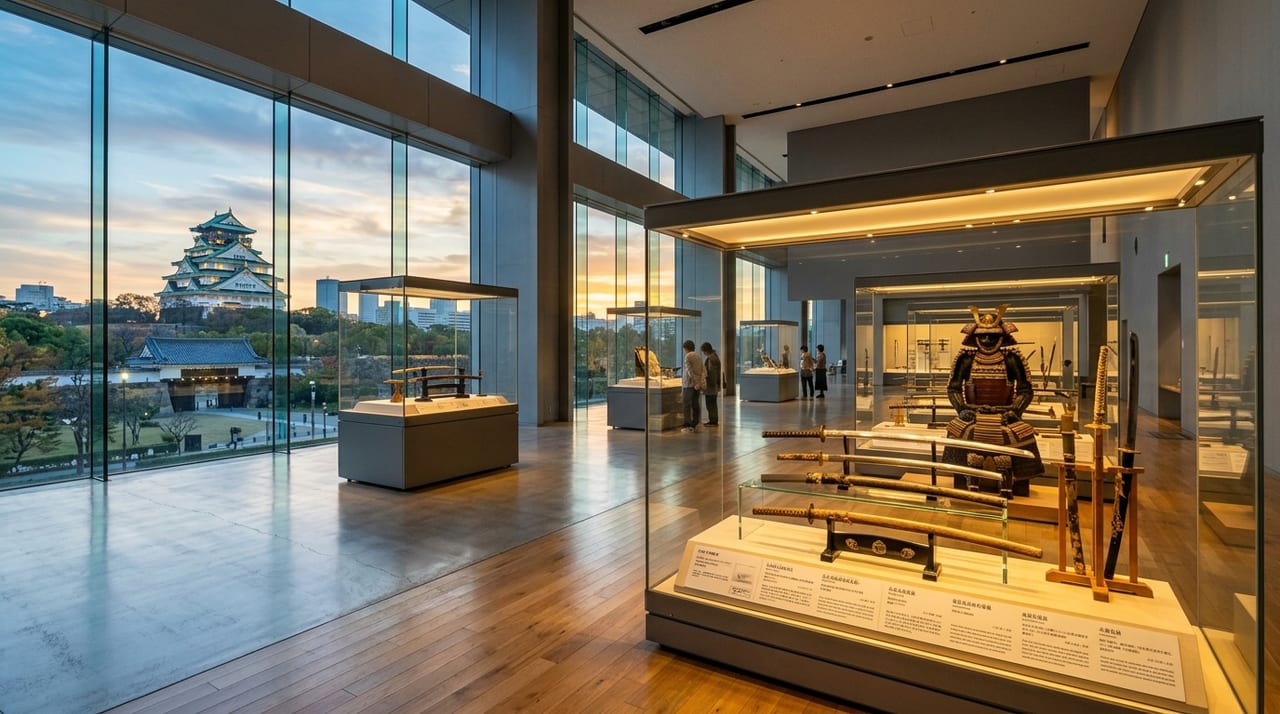
 * Image is for illustrative purposes only.
Chubachi Museum
中鉢美術館
Overview
The Chubachi Museum is a private museum specializing in Japanese swords (nihontō), located in Iwadeyama, Ōsaki City, Miyagi Prefecture (formerly Iwadeyama Town, Tamatsukuri District). Located in a convenient spot about a one-minute walk from JR Rikuu East Line's Yūbikan Station, it is in partnership with the Japan Sword Museum Technical Research Foundation and is responsible for promoting and raising awareness of the sword culture nurtured in the Tōhoku region.
As a Museum Specializing in Ōshū-tō
The defining feature of the Chubachi Museum is its specialization, unparalleled elsewhere, in systematically displaying swords made by smiths of Tōhoku (Ōshū and Dewa). It always displays more than 50 swords, and its mission is to convey to visitors, through Japanese swords (which are internationally recognized as the highest-rated works among Japan's fine arts and crafts), their historical origins and their deep connection with Tōhoku.
The exhibits are composed mainly of the following three lineages:
Mokusa Lineage
The smiths of the Mokusa school (Mokusa-ha), who were active in the area around Hiraizumi in Iwate Prefecture from the late Heian period through the Kamakura period, produced masterpieces that are also regarded as 'the oldest extant signed Ōshū-tō.' Their works, made in the cultural sphere centered on Hiraizumi and Chūson-ji, possess a regional character and a distinctive beauty that differ from those of smiths in the center (Yamato, Yamashiro, Bizen). The Mokusa-lineage tachi in this museum's collection are highly valued by researchers as the oldest extant signed Ōshū-tō.
Tamatsukuri Lineage
The smiths of the Tamatsukuri lineage, who had their field of activity in northern Miyagi Prefecture (around Tamatsukuri District), produced many tachi, naginata, and tantō from the late Kamakura period through the Nanboku-chō period. Their style, which combines the vigor of the north with the refinement of the Kamakura style, is indispensable when discussing the forging culture of Tōhoku. The works in this museum's collection include a series of works signed 'Hōju,' through which the development of this maker can be traced.
Gassan Lineage
The Gassan school (Gassan-ha), whose origins lie around the Dewa Sanzan (Hagurosan, Gassan, and Yudonosan), is known for a distinctive forging surface called 'ayasugi-hada.' This unusual surface pattern, reminiscent of the grain of cedar, is a hallmark of the Gassan school and is still passed on today to modern smiths including Gassan Sadatoshi. The museum holds multiple tachi and katana of the Gassan lineage and displays their technical lineage and their changes over time.
Beyond the three lineages, the museum's galleries also display works by the renowned smiths Masamune and Muramasa, swords from various provinces, and, as unusual materials, foreign swords and Ainu swords. It also attempts to reconsider Japanese swords within a broad cultural context.
Iwadeyama was the castle town of Iwadeyama Castle, which served as Date Masamune's principal residence until the move to Sendai Castle. Together with the nearby Yūbikan (a nationally designated historic site and scenic spot, and the former study hall of Iwadeyama Castle), it also serves as a base for historical walks. It is a must-visit place for researchers and enthusiasts interested in the sword culture of Tōhoku.
Highlights
- Systematic display of Ōshū-tō (three lineages: Mokusa, Tamatsukuri, and Gassan)
- Holds the oldest extant signed Ōshū-tō (Mokusa school)
- Display of the technical lineage of Gassan-school swords with 'ayasugi-hada'
- Also displays works by renowned smiths such as Masamune and Muramasa
- Comparative display of foreign swords and Ainu swords
- Located in Iwadeyama, the former castle town of Date Masamune, adjacent to Yūbikan (nationally designated historic site and scenic spot)
* Opening hours and exhibitions are subject to change. Please check the official website before visiting.