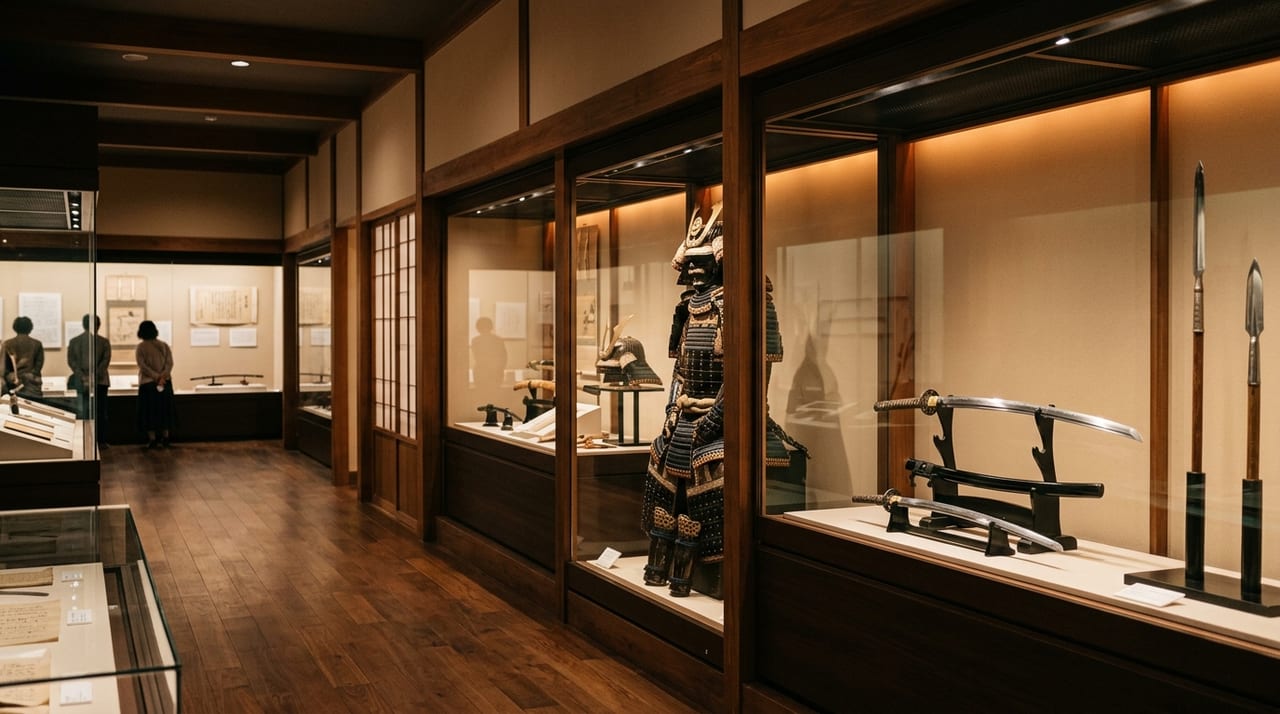
 * Image is for illustrative purposes only.
Ichinoseki City Museum
一関市博物館
Overview
Ichinoseki City Museum was developed following the enactment of a museum construction fund ordinance in 1984, and opened on 10 October 1997. Designed by Yamashita Sekkei Co., the 3,255-square-meter facility stands on a bluff in Genbi-chō, Ichinoseki City, Iwate Prefecture, near the Genbikei gorge.
Mogusa Swordsmiths and Mogusatō
The museum has devoted unusual attention to the Japanese sword among public museums because the Ichinoseki area was the home base of the Mogusa swordsmiths, one of the oldest known sword-forging groups in Japan. Blades forged by the Mogusa smiths, known as Mogusatō, are regarded as indispensable to the story of how the Japanese sword took shape and developed during the Heian period. The permanent exhibition includes a dedicated corner, "Mogusatō and Swords: The Origins of the Japanese Sword," featuring a tachi signed "Mogusa" together with a blade signed by Yamashiro Daijō Fujiwara Kunikane (a smith of the Sendai domain) and a blade signed Ichinoseki Shi Sōmei, dated 1864, tracing the lineage of Ōshū (northeastern) swordsmithing from antiquity into the early modern era.
Important Art Object: Sword Inlaid "Kenmu / Hōju"
The most celebrated item in the collection is the Important Art Object sword bearing the inlaid (gakumei) signature "Kenmu" and "Hōju." Dating from the Nanbokuchō period, it has a blade length of 70.3 cm and a curvature of 1.9 cm. Originally a much longer weapon approaching three shaku, it was later shortened by ōsuriage, with the original date signature "Kenmu" and smith's signature "Hōju" preserved as an inlaid panel on the new tang. It retains the broad body and extended point characteristic of Nanbokuchō-era swords, with grain and temper line showing traits typical of Ōshū blades. Hōju was a workshop active across several generations into the Muromachi period; its founder's father, Bunju, is traditionally credited as the maker of the Minamoto clan's heirloom sword Kesagiri.
National Cultural Property: The Ōtsuki Family Archive
On 27 June 2023, the Ōtsuki Family Archive — 4,048 items, including 415 manuscripts and 2,859 documents and records, held by Ichinoseki City and kept at the museum, tracing the scholarly Ōtsuki family of Rangaku (Dutch Learning) — was designated a National Important Cultural Property, underscoring the museum's significance beyond swordsmithing.
Access and Hours
About 15 minutes by taxi from JR Ichinoseki Station, or by bus to the Genbikei stop, then a 2-minute walk. Open 9:00–17:00 (last entry 16:30), closed Mondays (or the following day if Monday is a holiday). Admission: general 300 yen, high school/university students 200 yen, elementary and junior high school students free.
Highlights
- One of the most sword-focused public museums in Japan, with a dedicated permanent corner, "Mogusatō and Swords: The Origins of the Japanese Sword"
- The Mogusa swordsmiths were among the oldest sword-forging groups in Japan; Mogusatō blades are considered essential to the story of how the Japanese sword took shape
- Holds the Important Art Object sword inlaid "Kenmu / Hōju," an ōsuriage Nanbokuchō-period blade documenting the stylistic evolution of the Hōju workshop
- Blades by Yamashiro Daijō Fujiwara Kunikane (Sendai domain) and Ichinoseki Shi Sōmei (late Edo) trace Ōshū swordsmithing from antiquity to the early modern era
- In 2023 the Ōtsuki Family Archive of 4,048 items, held at the museum, was designated a National Important Cultural Property
* Opening hours and exhibitions are subject to change. Please check the official website before visiting.