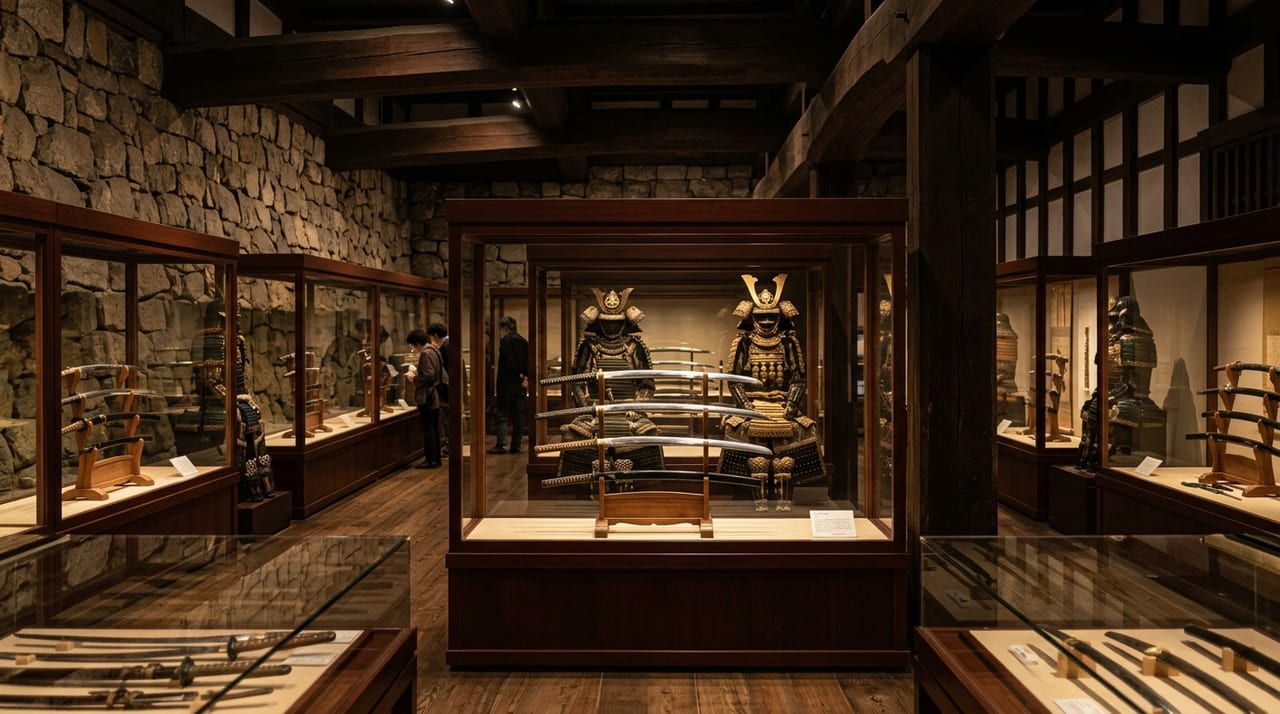
 * Image is for illustrative purposes only.
Tsurugajo (Aizu-Wakamatsu Castle) Museum
若松城天守閣郷土博物館(鶴ヶ城天守閣)
Overview
The Wakamatsu Castle Keep Local History Museum (Tsuruga-jō Keep) is a museum facility installed inside the keep of Tsuruga-jō (Wakamatsu Castle). It collects and exhibits mainly the history and culture of the Aizu Domain (Matsudaira and Hoshina clans). Tsuruga-jō is a historic site remembered, along with the tragedy of the Byakkotai, for the siege during the Boshin War (1868). The museum installed in its keep functions as the core collection base for Aizu's samurai culture and war-history materials.
Throughout the Edo period, the Aizu Domain was a shinpan (related domain) of the Matsudaira and Hoshina clans, in a position to support the Tokugawa shogunate. In the permanent exhibits inside the keep, the 2nd floor introduces the successive lords of Aizu: Ashina, Date, Gamō, Uesugi, Katō, Hoshina, and Matsudaira. The 3rd floor presents Aizu during the turbulent period from the Protector of Kyoto (Kyoto Shugoshoku) to the Boshin War. On the 1st floor, the special exhibition room hosts special exhibitions on various themes.
Against the backdrop of the Byakkotai, the Boshin War, and the history of the Aizu Domain, the museum also attracts strong interest from inbound foreign tourists. From Tokyo Station, take the Tōhoku Shinkansen (about 90 minutes) and the JR Ban'etsu West Line (about 65 minutes), transferring at Kōriyama Station, to reach Aizu-Wakamatsu Station.
Highlights
- Permanent exhibits on the turbulent late-Edo period and the Boshin War — explains Aizu's turbulent period from the Protector of Kyoto to the siege of 1868
- Permanent exhibit of successive lords — introduces the lords of Aizu: Ashina, Date, Gamō, Uesugi, Katō, Hoshina, and Matsudaira
- Tsuruga-jō Keep as an exhibition setting — learn about Aizu's samurai era inside the red-tiled five-story keep
- From Tokyo Station by the Tōhoku Shinkansen and JR Ban'etsu West Line (transfer at Kōriyama Station) — a sightseeing facility in Aizu-Wakamatsu that is also popular with inbound tourists
* Opening hours and exhibitions are subject to change. Please check the official website before visiting.