Introduction to Showa Guntō Collecting 2026 — A Complete Guide to Authentication, Legal Procedures, and Market Prices
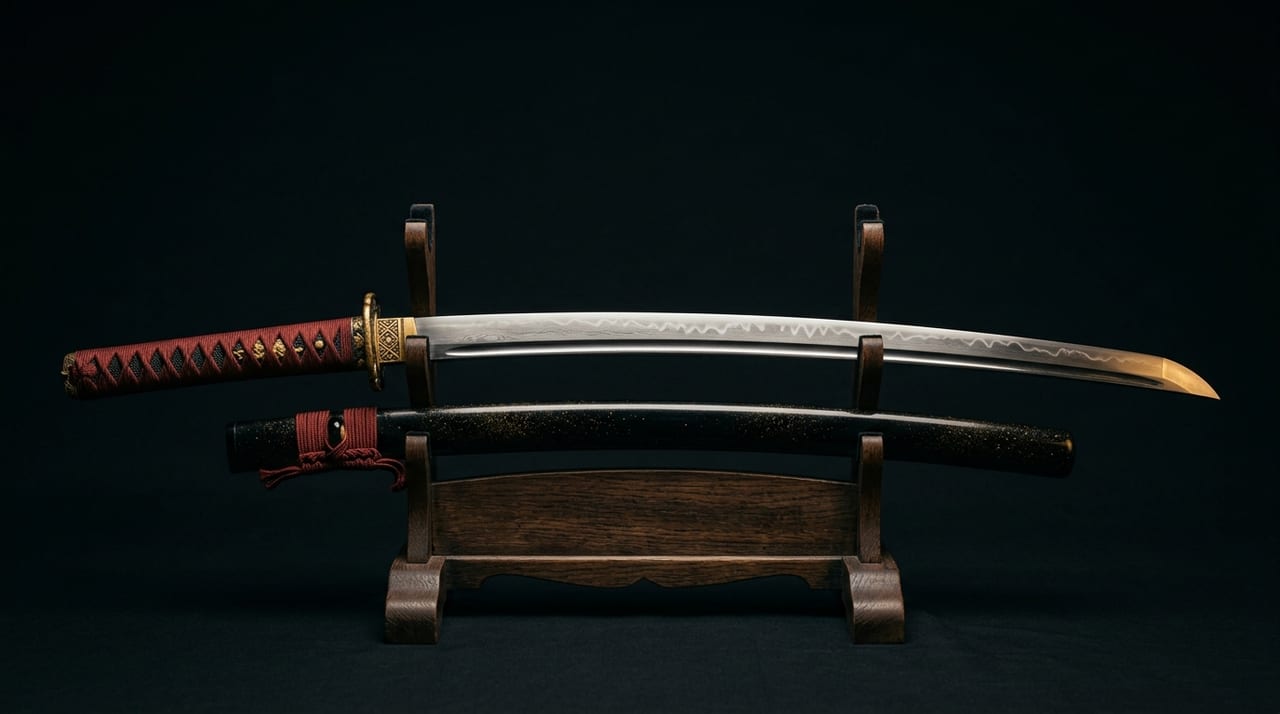 * Image is for illustrative purposes only.
Table of Contents
What Is a Showa Guntō — Fundamental Classifications Every Collector Should Know
"Showa guntō" is a term often used loosely, but for collectors it broadly divides into three categories based on manufacturing method and intended use. Accurately understanding these classifications is the starting point for collecting and investment decisions.
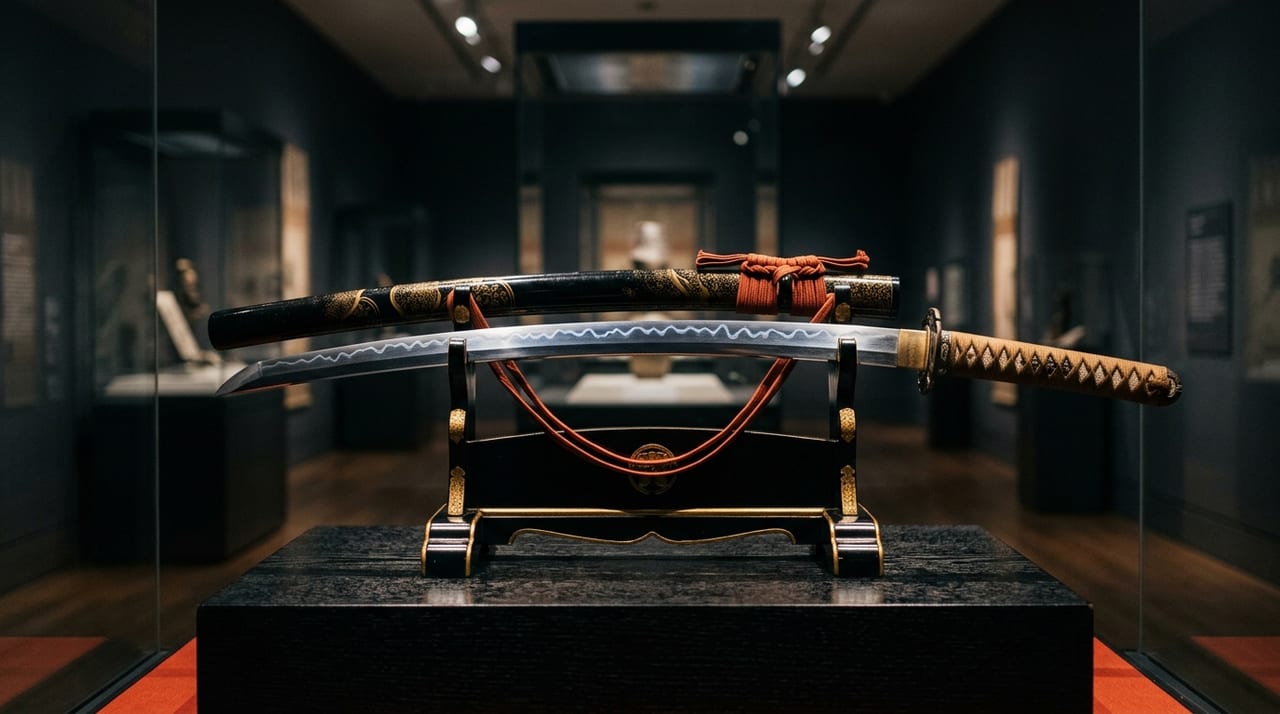
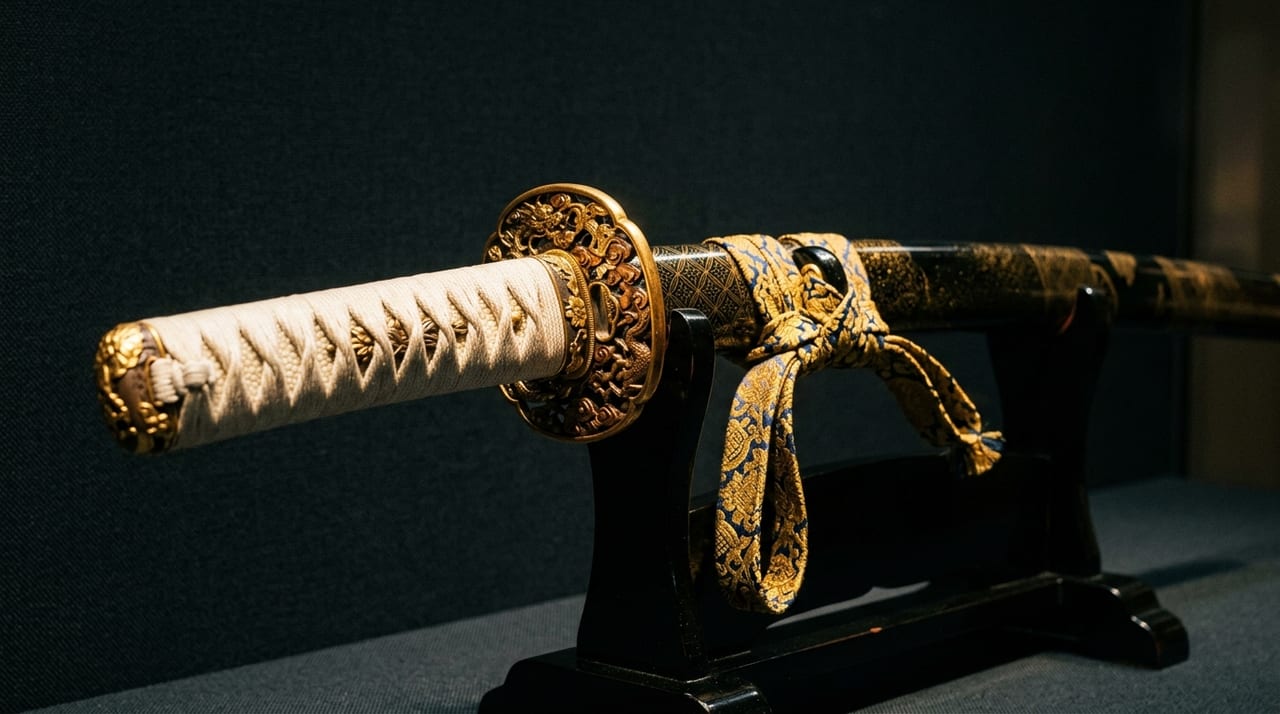
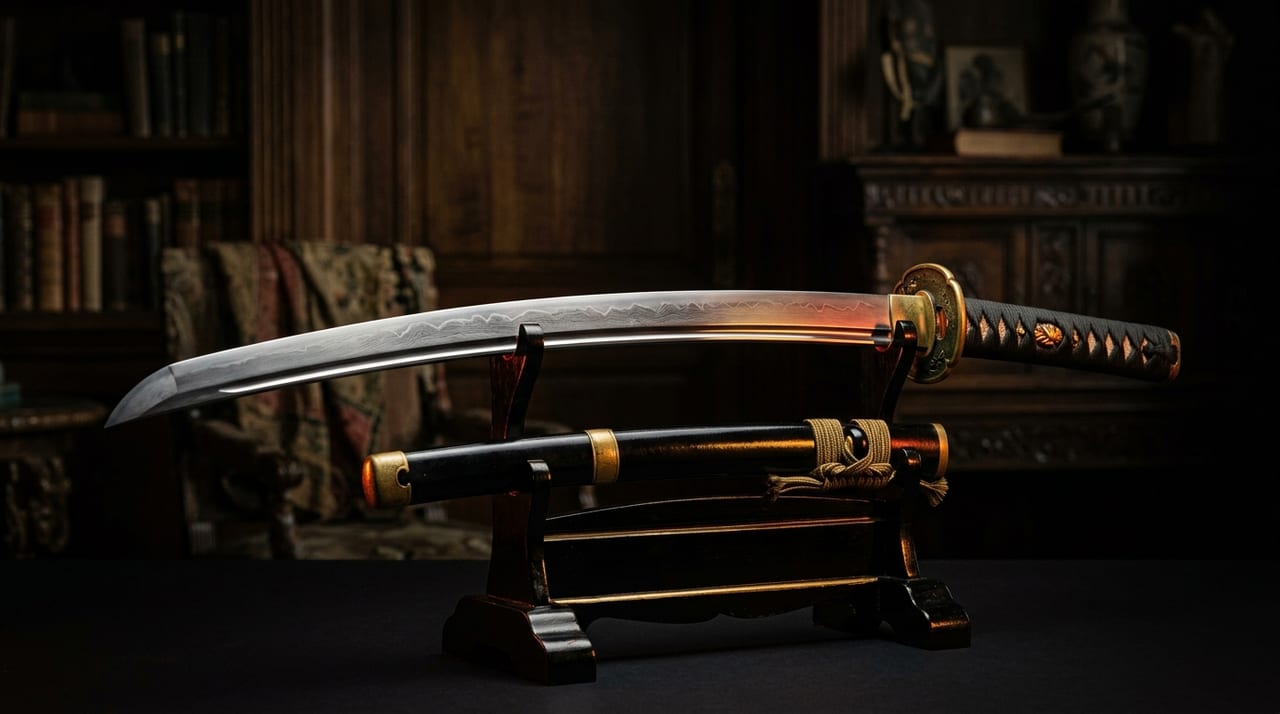
① Traditionally forged Showa swords: Officer swords made by officially commissioned tōkō, the Yasukuni Tōrenjo (Yasukuni sword forging workshop), craftsmen certified by the Guntō Gijutsu Shōreikai (military sword technology encouragement society), and others who used traditional tamahagane and orikaeshi tanren (folding) techniques. These are works produced by tōkō responding to army and navy demand from the late Taishō period through the early Showa period; pieces with fine hamon and jigane hold artistic value and may be eligible for NBTHK appraisal. Prominent officially commissioned tōkō include Gassan Sadaichi (second generation), Miyairi Akihira, and Nanki Shigekuni; swords bearing their mei (signature) are highly valued in the market.
② Industrially manufactured Showa swords (Type 32 / Type 98 koshirae specification): Swords for officers and officer candidates whose blades were formed by machining military-specification carbon steel (SM steel, etc.). They have an appearance that can be difficult to distinguish from traditionally forged swords at first glance, but because they did not undergo orikaeshi tanren, the jigane has no distinctive character and sulfide inclusions are often conspicuous. Artistic value is low, but individual pieces linked to a specific service history or the biography of a particular officer are sometimes evaluated in their historical context.
③ Type 95 guntō (non-commissioned officer sword): A fully industrialized product standardized in 1935 (Showa 10). Characterized by cast-aluminum koshirae (mounting), both blade and mounting were designed for mass production. It holds no artistic value, but there is steady demand from both military history researchers and collectors as a subject for reading stamps and Showa blade serial numbers and studying unit identification.
The purpose of collecting — as fine art, as historical material, or as genealogical research tracing the provenance of a specific unit or individual — determines which category to focus on, and settling this at the outset is important for avoiding unfocused accumulation.
Legal Procedures — Essential Knowledge for Firearms and Swords Control Act (Jūtōhō) Compliance
To possess a Japanese sword (including Showa guntō) within Japan, a registration certificate issued under the Act for Controlling the Possession of Firearms or Swords and Other Such Weapons (Jūtōhō) is required. Registration certificates are issued by prefectural Boards of Education and record the blade length, sori (curvature), mei (signature), and other details; they must be managed together with the sword as a matched pair.
Checking the registration certificate: When purchasing or transferring a sword, always verify the actual registration certificate. Confirm that the registration number, blade dimensions, and mei match the actual sword; if there is any discrepancy, the purchase should be declined. A sword without a registration certificate may be unregistered, and unregistered swords are in principle prohibited from being possessed (Act for Controlling the Possession of Firearms or Swords and Other Such Weapons (Jūtōhō) (e-Gov Legal Search), Article 3, Paragraph 1).
Bringing swords back from overseas: Showa guntō that flowed overseas after the war from foreign missions or bereaved families are increasingly appearing at overseas auctions. Bringing these into Japan requires a customs declaration upon entry (submission of an "import application") and filing a new registration application with the prefectural Board of Education within 30 days of arrival. Failure to complete the procedure can result in confiscation and disposal even of a sword purchased at high cost, so it is strongly recommended to commission a specialized customs agent or sword dealer to handle the process.
Discovering an unregistered sword: If an unregistered sword is found in a family storehouse or warehouse, report the discovery to the police station covering the area where it was found, and then submit to a registration examination at the Board of Education of the prefecture where you live, attaching the "discovered item report certificate" that is issued. If the sword meets registration standards, a registration certificate will be issued; if not, a "notice of ineligibility for registration" will be issued. A sword that cannot be registered may in principle not be possessed; if reported and surrendered to the police it will be disposed of (Tokyo Metropolitan Board of Education, "When You Discover a Firearm or Sword"). Self-disposal or sale without authorization is strictly prohibited.
The Reality of Authentication — Spotting Forged Mei and Altered Swords
The greatest risk for beginners in the Showa guntō market is "altered swords" and "forged-mei swords." Swords whose industrially made blades have had the mei of a famous tōkō freshly inscribed, or whose registration certificates from a different piece have been attached to a different blade, do circulate in the market.
The basic checkpoints for authentication are summarized below.
Observation of jigane and hamon: In traditionally forged swords, itame, mokume, and other surface patterns can be confirmed with the naked eye or a low-magnification loupe. Industrial swords are homogeneous and have virtually no distinctive character in the jigane. The hamon also looks different depending on whether it was hand-fired; electric yaki-ire (quenching) tends to produce monotonous detail in the hamon.
Observation of the nakago (tang): The style of the mei inscription, the pattern of the yasurime (file marks), and the color and texture of the rust are important clues for detecting forgeries. Genuine rust penetrates deeply as uniform black oxidation, clearly distinct in texture from forged rust produced by polishing or artificial coloring.
Commissioned appraisal through NBTHK or NDK (Nihon Tōken Hozon Kai): When in doubt, always commission an appraisal from a public institution. The cost is approximately 5,000–15,000 yen per sword (depending on the type of appraisal), and results are returned within several weeks. Cases of problems arising from skipping this step are unceasing.
Market Price Guidelines
The market for Showa guntō has seen growing demand both domestically and internationally in recent years, with collectors from overseas — North America, Europe, and Southeast Asia — in particular tending to push prices upward. Current approximate prices are as follows.
Traditionally forged officer swords (commissioned tōkō / Yasukuni swords)
- Fine piece with kanteisho (appraisal certificate), clear hamon, no rust: 500,000–2,000,000 yen or more
- Average piece without kanteisho: approximately 150,000–450,000 yen
- Difficult piece with rust, edge damage, etc.: 30,000–120,000 yen
Industrially manufactured officer swords (complete koshirae, good condition)
- Fine piece with complete koshirae: approximately 60,000–180,000 yen
- Blade only: approximately 20,000–60,000 yen
Type 95 guntō (complete)
- With stamps, complete, good condition: 40,000–100,000 yen
- Missing parts, signs of use: approximately 10,000–40,000 yen
At overseas auctions (Hermann Historica, Rock Island Auction, etc.) it is not uncommon for prices to be 1.5 to 2 times the domestic market rate. When purchasing repatriated swords through overseas channels, calculating profitability with the aforementioned import procedure costs factored in is essential.
Purchasing, Storage, and Maintenance — A Practical Checklist
Proper collection management not only maintains the legality of possession but is directly linked to preserving asset value.
- At time of purchase: Verify the actual registration certificate (mandatory) → Conduct specialist or institutional appraisal (approximately 10,000–15,000 yen) → Retain receipts and provenance documents
- Storage: In accordance with the Firearms and Swords Control Act (Jūtōhō), keep in a locked location (stored in a sword bag or sword box in an environment where it cannot be easily removed by outsiders). Informing family members and cohabitants of its whereabouts is effectively a de facto obligation.
- Regular maintenance: Perform maintenance with uchiko (polishing powder) and sword oil (chōji oil) every 3–6 months. Before and after maintenance, check the state of sheathing in the shirasaya (plain storage scabbard) and inspect the habaki (blade collar) for corrosion.
- Insurance: For pieces worth more than 300,000 yen, consider taking out personal property insurance (sword-specific insurance or a general personal property floater).
- At time of sale or transfer: A change of name on the registration certificate requires a notification to the prefectural Board of Education. Repeatedly reselling without filing carries legal risk.
Conclusion — Encouragement and Mindset for Beginners
Showa guntō are living witnesses to modern Japanese history, and the memory of soldiers, tōkō (swordsmiths), and their era is inscribed in each and every sword. Their significance is multilayered — not only as beautiful art objects, but as historical materials and as family heirlooms.
The failure beginners most often fall into is the impulse purchase of a sword with an unknown registration certificate or provenance, lured by a low price. Spending a long time with a single sword that has been properly processed and appraised leads to a more fulfilling collecting experience, both financially and spiritually. Build an ongoing relationship with a trustworthy sword dealer (dealers who are members of the Zen Nihon Tōshō Kai or NBTHK are a good benchmark), and deepen your collection without rushing, while continuing to learn.