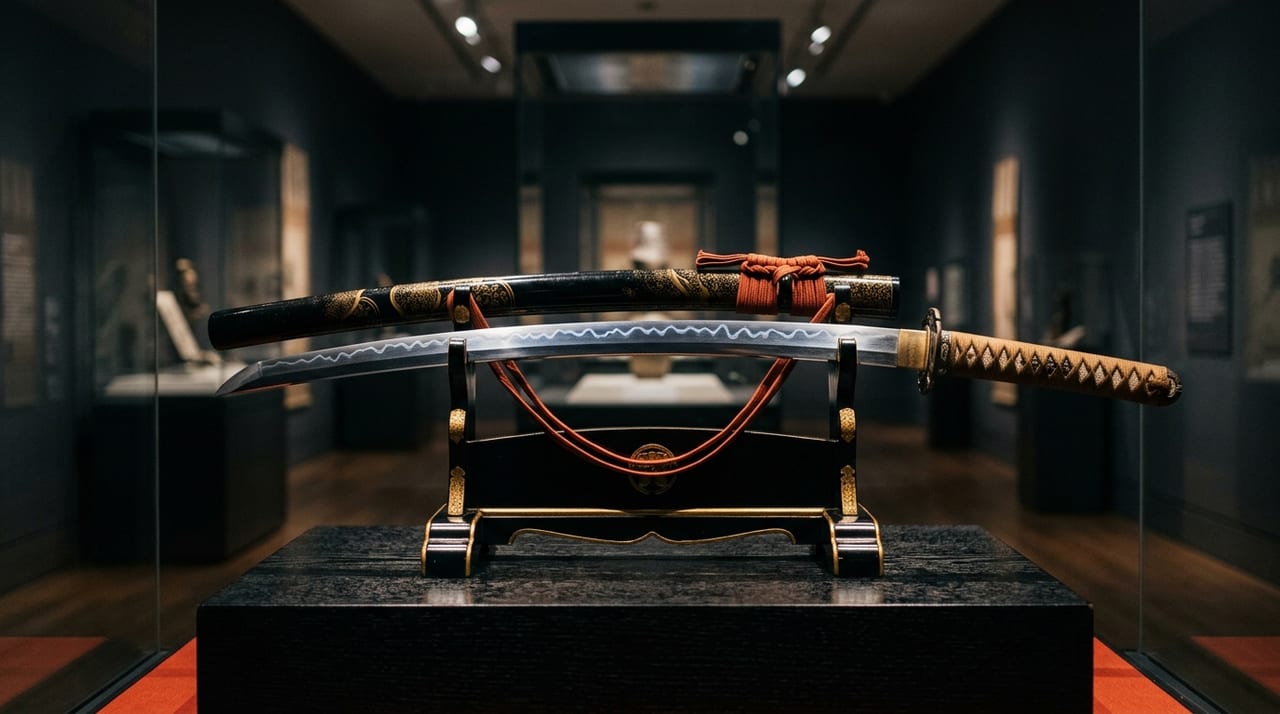
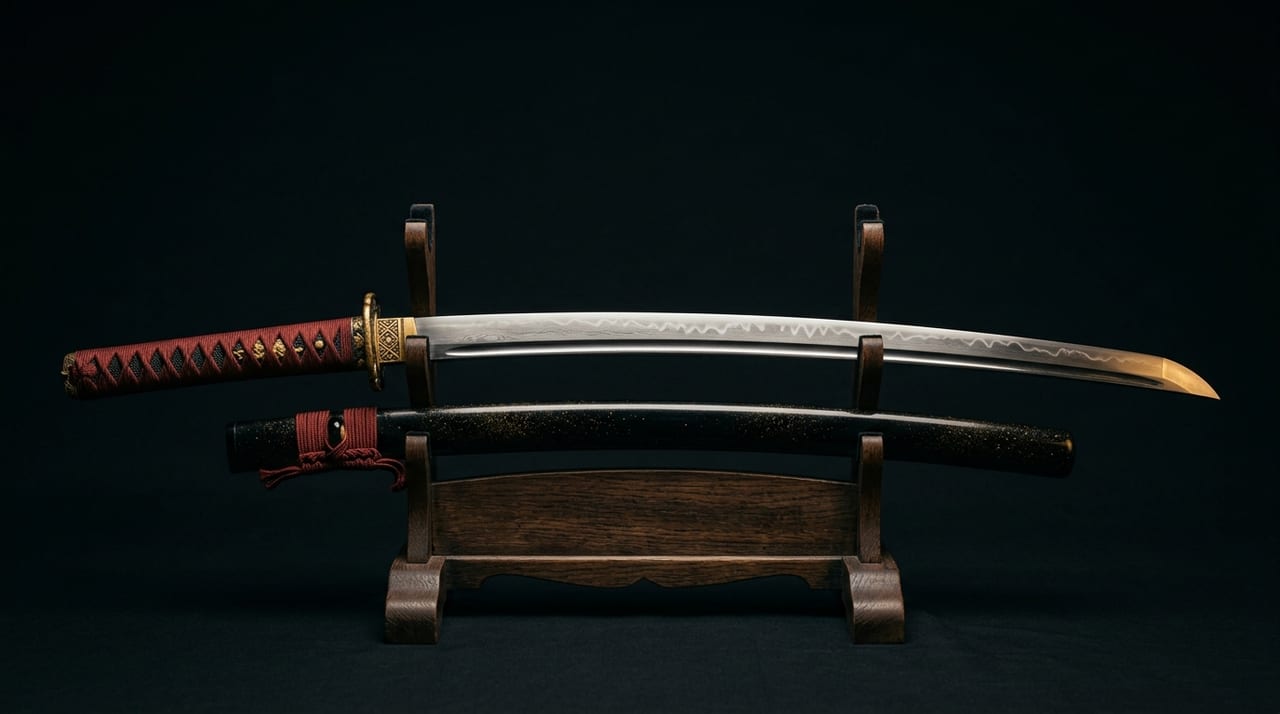
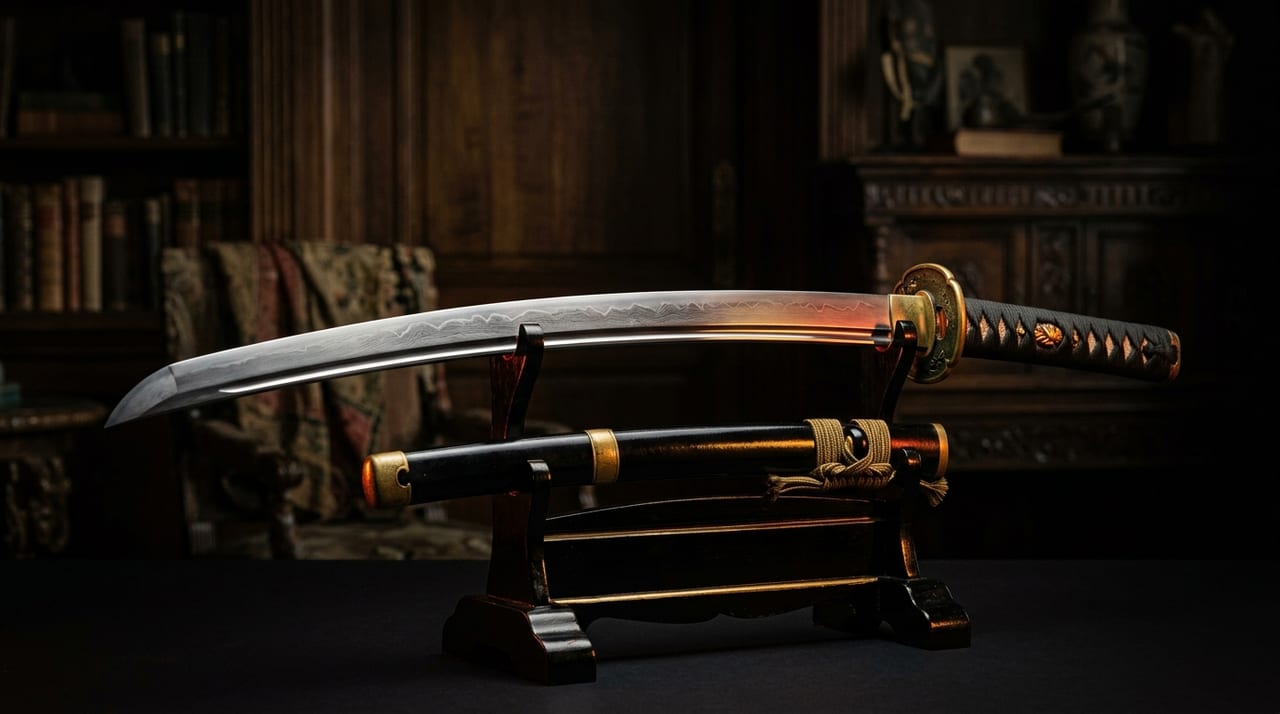
The Complete Guide to Shirasaya — Role, Crafting, and Choosing a Sword's Storage Scabbard
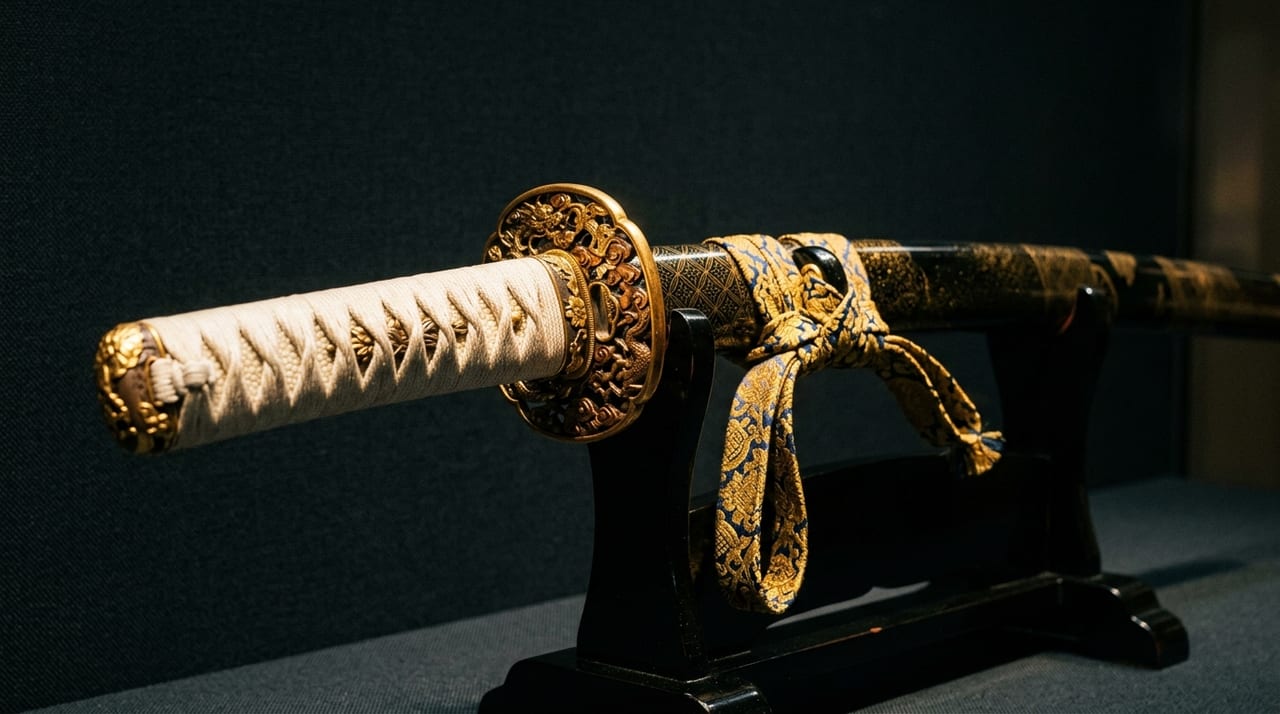 * Image is for illustrative purposes only.
Table of Contents
The Role of Shirasaya — A Dedicated Saya for Protecting the Japanese Sword
Shirasaya is a wooden saya for the long-term storage and protection of a Japanese sword blade. True to its name, it is characterized by a plain appearance finished in uncoated plain wood, without any surface treatment such as lacquer. The word "shira" carries the meaning of "as is" and "untouched."
The fundamental role of the shirasaya lies in "stable long-term preservation of the blade." Compared with koshirae (a saya decorated with metal fittings, lacquer, braided cord, and similar elements, used for ceremonial and practical purposes), the shirasaya is designed exclusively for storage, minimizing excess moisture and contact with metal. This is why the shirasaya is considered superior to even a fine koshirae for protecting the blade.
Historically, the shirasaya came into widespread use from the mid-Edo period onward, when swords lost their practical function as weapons and began to be treated as works of art and family heirlooms. Before that period, it was common practice to store swords in their koshirae, but it had long been known from experience that sealing a blade in a lacquered saya for extended periods would trap moisture and cause rusting. This accumulated practical wisdom gave rise to the shirasaya as a form of storage.
The Science of Material Selection — Why Hōnoki Is Ideal
The deciduous broadleaf tree called "hōnoki" (Magnolia obovata) is most commonly used for shirasaya. There are scientifically grounded reasons why hōnoki is chosen.
- It contains almost no oil. Wood generally contains natural oils, but hōnoki has particularly little, which means the wood's oil is less likely to transfer to the metal surface of the blade. Oil deposits can cause rust and discoloration over time, making this a decisive quality in a storage material.
- Ease of working. Hōnoki is relatively soft and lends itself to precise shaping with a plane or chisel. Shirasaya craftsmen must precisely carve the interior to match the shape of the blade, and workability directly determines the precision of the finished piece.
- A well-balanced combination of moderate hardness and lightness. Both the strength to prevent the blade from shifting during storage and the lightness for ease of handling are required, and hōnoki is superior to other domestic broadleaf species in this balance.
Paulownia (kiri) is also sometimes used as an alternative material. Some sayashi use paulownia because it is even lighter and has superior moisture-regulating properties, but it is softer and thus falls slightly short of hōnoki in long-term durability. Commercially available inexpensive shirasaya sometimes use knotted or insufficiently dried wood, so assessing the material is an important criterion when making a purchase.
Meticulous Design — The Craftsman's Ingenuity in the Two-Part Structure
Shirasaya have a structure consisting of two pieces split lengthwise — the "uwagi" (upper piece) and the "shitagi" (lower piece) — fitted together. The interior is carved with a groove shaped to match the blade, designed so that the sword fits snugly when housed inside.
The joint is held together without adhesive, relying solely on a precise fit and a slight frictional force. This allows the shirasaya to be smoothly separated with a gentle tap or twist when removing the sword, making it easy to take the blade in and out for maintenance and appreciation. If the fit is too tight, there is a risk of scratching the blade when inserting and removing it; conversely, if the gap is too large, the mune (back of the blade) and shinogi (ridge line) may be damaged. Setting just the right amount of play is where the sayashi's skill is truly demonstrated.
The tsuka (hilt) section is also made of plain wood, with a groove precisely carved to house the nakago (tang — the base of the blade that fits inside the hilt). A mekugi hole is also made in the tsuka, and inserting a wooden mekugi secures the blade. Whereas the mekugi of koshirae is made of bamboo or metal, the mekugi of a shirasaya is made of plain wood as a matter of course, a consideration that minimizes stress on the blade.
The Sayashi's Skill — The Precision Work of the Craftsman
The making of shirasaya is carried out by specialist craftsmen called "sayashi." In the modern era this is strongly a traditional craft, and it is an extremely rare profession with only a few dozen craftsmen across the country who carry on its techniques.
Production begins by selecting a thoroughly dried square piece of hōnoki. Insufficiently dried wood will warp later, so wood that has been air-dried for several years is ideal. The block is then split lengthwise into two pieces, and a groove matching the blade's shape is precisely carved into the interior while the blade is held against it. Since the sori (curvature), width, thickness, and shinogi shape of every blade differ from one another, the groove is made as a one-off piece tailored to that specific sword.
In the trial-fitting stage, the upper and lower pieces of wood are put together to verify that the blade seats correctly. The ideal state is one in which the blade slides in smoothly without being forced, yet with no gap. The exterior is then shaped with a plane to refine the overall form, and a mekugi hole is drilled in the tsuka section. For the finish, the surface is smoothed with fine sandpaper, and a thin coat of wax is applied as needed to stabilize the surface.
A shirasaya made by a skilled sayashi will continue to protect the blade stably for decades. A crudely made shirasaya, on the other hand, may deform on the inside within just a few years, causing contact with the blade and leading to scratches and rust. "Never cut corners on the shirasaya" is an iron rule shared among sword enthusiasts.
Using Koshirae and Shirasaya in Tandem — Storage and Practical Use
When storing or housing a sword as a work of art, shirasaya is the standard. Koshirae is used for practical purposes such as display, appreciation, and iai practice, and returning the sword to its shirasaya for storage is considered an iron rule of blade protection. This is especially true for long-term storage (several years or more), as leaving the sword in a lacquered saya tends to trap moisture, and components in the lacquer can adversely affect the metal surface.
The fact that many famous swords designated as jūyō bunkazai (Important Cultural Property) are stored in shirasaya demonstrates the correctness of this approach. In museum and art gallery storage facilities as well, it is standard practice to prepare a shirasaya for storage separately from the koshirae used for display.
Shirasaya are often accompanied by inscriptions in ink known as "sayagaki." These are brush-ink notations written on the surface or interior of the saya recording the tōkō's name, dimensions, provenance, and appraisal findings, and they constitute an important record conveying the history of the sword. The sayagaki on an old shirasaya can sometimes hold research value equal to that of the sword itself.
Storage Environment and Regular Inspection — The Practice of Long-Term Preservation
Since the shirasaya itself is made of wood, maintaining an appropriate storage environment is essential. The ideal storage humidity is 50–60%, and horizontal or angled storage using a sword box or sword stand is recommended. Locations with severe temperature and humidity fluctuations should be avoided, such as direct sunlight, near heating appliances, or near air-conditioning vents.
| Humidity Condition | Effect / Response |
|---|---|
| Excessive dryness (below 30% humidity) | Causes the wood to crack and shrink |
| Ideal storage humidity (50–60%) | Horizontal or angled storage using a sword box or sword stand is recommended |
| Excessive moisture (above 70% humidity) | Causes mold and rot |
Even when the blade is not removed from the shirasaya for an extended period, it is recommended to take it out approximately once a year to inspect the condition of the blade (rust, scratches, residual oil from wiping) and to perform maintenance as needed. During inspection, basic etiquette requires placing the shirasaya on a sword stand or cloth rather than directly on the floor, and not touching the blade with bare hands.
If the shirasaya itself becomes soiled, limit cleaning to a light wipe with a tightly wrung cloth. Washing with water or using chemicals will damage the wood and cause warping. As an old shirasaya may go out of shape and cause friction with the blade, it is advisable to bring it to a sayashi every ten to twenty years to have it remade or adjusted.
The Sword's First Garment — The Value of Shirasaya
The shirasaya is an understated object, yet it is one of the most important implements for the long-term preservation of the Japanese sword. What is embodied in this unfinished wooden saya — bearing no lacquer and no metal fittings — is the ultimate expression of functional beauty: protecting the blade just as it is. A sword housed in a high-quality shirasaya can display the same radiance to admirers hundreds of years from now as it does today.
For sword collectors and enthusiasts, investing in the quality of a shirasaya is the most reliable investment in blade protection. When acquiring a fine sword, the first step is to check the condition of the shirasaya, and if necessary to commission a trusted sayashi to make a new one — this is the first step toward a long relationship with the sword. In the understated work of the shirasaya, the true essence of sword culture lies deeply hidden.