Regional Branches of the Shoami School: How Kyoto, Edo, Nagoya, Kaga, and Sendai Shoami Differ
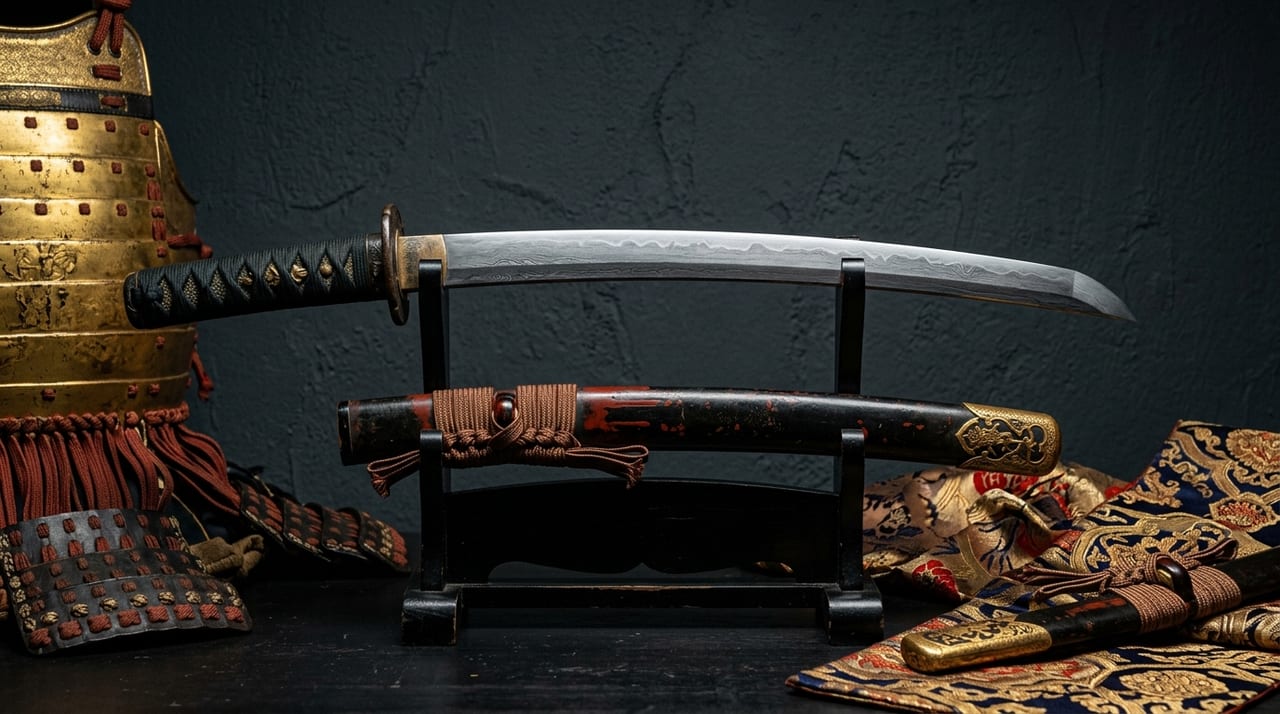 * Image is for illustrative purposes only.
Table of Contents
The Shoami School: A Nationwide Collective of Craftspeople Sharing a Name Lineage
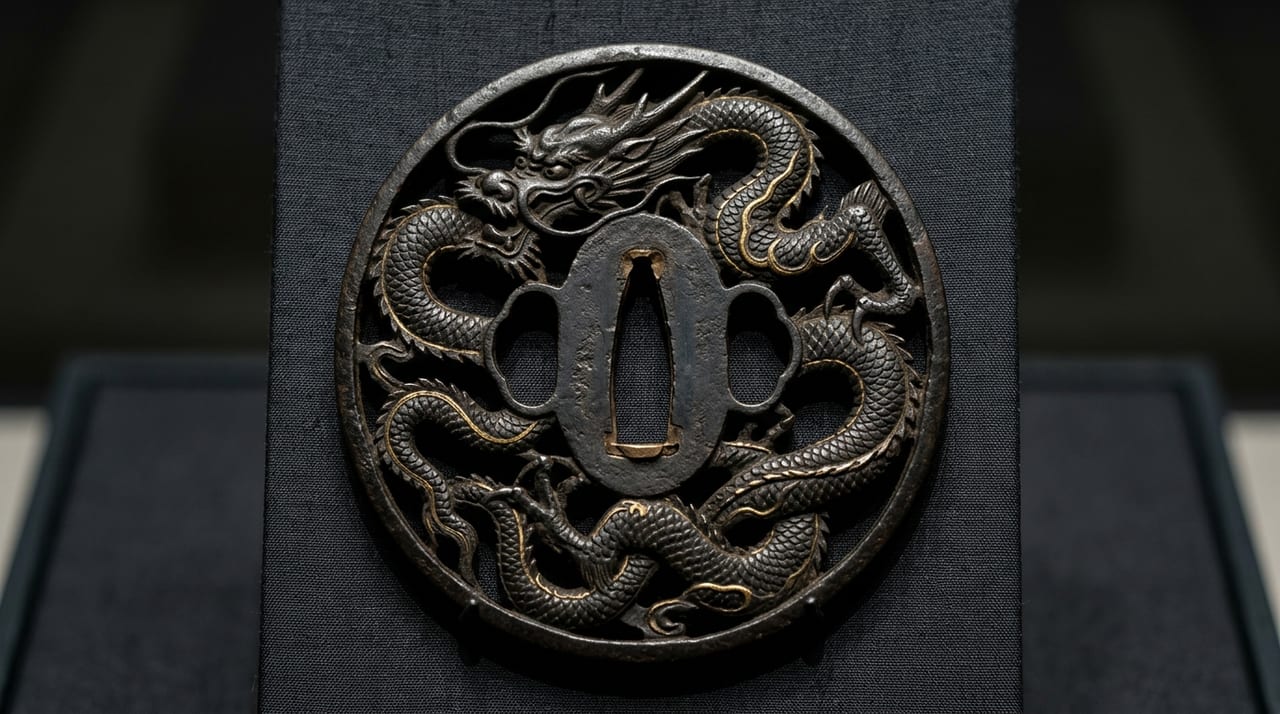
"Shoami" is not the name of a specific family, but rather a professional "name lineage" of tsuba makers—a system in which techniques and names are passed down from master to apprentice. This name lineage began in Kyoto in the late Muromachi period and branched into various regional schools throughout the Edo period.
There are several theories about the origin of the name Shoami, but the most widely accepted is the following. "Sho" carries the meaning of "correct and excellent," while "Ami" derives from a title used among craftspeople associated with Jishu (the Pure Land Buddhist sect). During the Muromachi period, craftspeople bearing the name "Ami" were widespread in the performing and decorative arts, with Kanami and Zeami of Noh theater being prime examples. For sword furniture makers to bear this title was also evidence of cultural status beyond that of ordinary craftspeople.
A common characteristic of the Shoami school was the production of practical tsuba featuring open-work decoration on iron, offered at a wide range of prices. However, regional preferences in materials, open-work styles, and carving characteristics varied considerably. Even within the same region, there were marked quality differences between fine pieces made as official commissions for feudal lords and mass-produced standard pieces, making it essential to evaluate works along both axes of region of origin and grade. The characteristics by region may be summarized as follows.
| Region | Characteristics |
|---|---|
| Kyoto (Kyo) | High-quality iron base with refined open-work. Influenced by the Umetada school during the Momoyama period, it evolved toward three-dimensional decorative expression not relying solely on open-work |
| Edo | Standardized quality "kata-mono" mass-produced pieces were the mainstream. Fine works display the concise and sharp aesthetic of "Edo-mae" design |
| Nagoya | Served as official supplier to the Owari Tokugawa clan, featuring a balance between refined iron finishing and open-work, with a solid and sincere form |
| Kaga (Kanazawa) | Characterized by decorative finishing combining shakudō and gold inlay, depicting delicate floral motifs such as plum, chrysanthemum, and paulownia, which have deep cultural ties to Kaga |
| Sendai | Served as official supplier to the Date clan, with thicker iron bases creating a substantial, heavy form featuring bold carving lines |
Kyoto (Kyo) Shoami: The Technical Pinnacle and the Confluence with Momoyama Culture
Kyoto Shoami (Kyo-Shoami) produced tsuba of the highest caliber from the Muromachi through early Edo periods. Its greatest strength was the sustained maintenance of refined aesthetic sensibility and high technical skill befitting a cultural center. Of particular note is the interaction with the Umetada school during the Momoyama period. The Umetada school, represented by Umetada Myōju (1558–1631), brought a new age of chasing technique, and the Shoami school absorbed this wave of innovation to develop three-dimensional decorative expression not relying solely on open-work.
Among the characteristics of Kyo-Shoami, the high quality of the iron base is foremost. The refined base iron has a fine grain pattern and retains deep color after hardening. The open-work is refined; even apparently simple aoi and paulownia open-work reveals craftsmen's individual differences in edge finishing and back-side treatment. Many pieces employ combined techniques using relief carving, hair-line carving, and one-sided carving; works through the mid-seventeenth century are especially highly regarded. The fact that many of the extant masterpieces attributed to Shoami are ascribed to Kyo-Shoami from this period vividly demonstrates its high standards.
Edo Shoami: Mass Production Responding to Samurai Demand and the Aesthetics of Iki
As the Edo shogunate was established (1603), a branch of the Shoami school also took root in Edo (present-day Tokyo), which became the political and military center. Edo, with its large samurai population including daimyo, hatamoto, and lower-ranking warriors, became the largest market for sword fittings, with demand far exceeding other regions.
The works of Edo Shoami were predominantly standardized quality pieces adapted for mass production, with typical open-work patterns used repeatedly. Among researchers, it is noted that the majority consist of standardized pieces called "kata-mono." However, fine pieces are in a category of their own. Custom pieces made to order for hatamoto and daimyo families show the "Edo-mae" expression born from Edo artisan culture—a concise and sharp aesthetic that eschews excessive ornamentation. The marked difference between mass-produced pieces and fine works itself speaks to the industrial scale of Edo Shoami.
Nagoya Shoami: The Weighty Beauty of Service to the Owari Tokugawa
The Shoami of Owari (the Nagoya region) served as official supplier to the Owari Tokugawa clan (one of the Three Tokugawa Houses) and produced high-quality tsuba befitting their prestige. They are characterized by a good balance between iron finishing and refined open-work, with a somewhat weighty and sincere form distinct from the elegant refinement of Kyoto. Some researchers liken this quality to Owari's food culture, describing it as having "the depth of red miso." Rich yet never cloying—a heaviness unique to Owari, distinct from Edo's iki and Kyoto's elegance. Official tsuba often feature aoi open-work consciously reflecting the Owari clan's three-leafed aoi crest, which is interesting in showing how the connection with the clan is directly reflected in the design.
Kaga (Kanazawa) Shoami: The Refinement and Decoration Nurtured by a Million-Koku Domain
The Shoami of the Hokuriku region, centered on Kaga domain (the Maeda family's one-million-koku holding), developed within Kaga's distinctive sphere of craft culture. A regional aesthetic preference for refined decorative beauty—such as Kaga yuzen dyeing, Kaga maki-e lacquer, and Kutani ware—was deeply rooted, and Kaga Shoami tsuba were strongly influenced by this tradition.
The greatest distinguishing feature of Kaga Shoami is their more active incorporation of decorative finishing compared to other Shoami schools. Many pieces combine shakudō and gold inlay in measured proportions, transcending the framework of purely iron open-work. Designs frequently employ floral motifs with deep ties to Kaga, such as plum, chrysanthemum, and paulownia, with delicate, fine carving lines. The quality of the iron base itself is also maintained at a high level; being "decorative Kaga" while losing no integrity in the materials—this is what sets Kaga Shoami apart from other decorative tsuba.
Sendai Shoami: Service to the Date Clan and the Rusticity of the Northeast
The Sendai Shoami, serving the Date clan (Sendai's 620,000-koku holding), developed a distinctive style within the geographic and cultural particularity of the Northeast. The Date clan, renowned since the one-eyed Date Masamune for their high interest in culture, invited craftspeople from Kyoto and Edo while also fostering local artisans.
Sendai Shoami are characterized by somewhat thicker iron bases with an overall substantial, weighty construction. The carving lines possess a forcefulness rather than the refinement of Kyoto or Edo, with an expression that might be called "rusticity" rooted in the Northeast's natural character. Designs sometimes incorporate themes connected to the Date clan, such as sparrows among bamboo reflecting their crest, making the regional character where clan identity and artisan skill merge abundantly clear.
Identifying Shoami Works: Key Points for Determining Origin and Period
When determining the region of origin and period of a Shoami work, one must consider multiple elements comprehensively.
- The maker's signature: Each regional Shoami school has distinctive signature characteristics. It is known that the way the vertical strokes and sweeping strokes of the character "sho" in "Shoami" are terminated varies by region, and experienced researchers can sometimes determine the region of origin from the signature alone.
- Iron base quality and color: Kyo-Shoami are considered the highest quality, though Kaga and Nagoya also exhibit high quality. Edo standard pieces often have coarser base iron, and the surface pattern (small plate grain, large plate grain, flowing grain, etc.) also provides clues for regional identification.
- Open-work pattern style: Regional differences appear in the typical cutting style of patterns, edge treatment, and back-side finishing. For Kaga, the presence or absence of inlay is an important indicator of origin.
- Dimensions and shape trends: Edo Shoami typically follow market standard dimensions, while official pieces for provincial domains often feature custom dimensions; the shape itself sometimes tells the provenance.
Summary: Unity in Diversity
The diversity of the Shoami school symbolizes the richness of Japanese sword furniture culture. Under the single name "Shoami," entirely different aesthetic sensibilities coexist: Kyoto's elegance, Edo's sophistication, Owari's weightiness, Kaga's refinement, and Sendai's rusticity—this is the greatest charm of the Shoami school.
The way a single name lineage spread throughout the archipelago and formed unique styles while adapting to local culture, demand, and material circumstances is an excellent example of how Edo-period craft culture was rooted in local regions while being connected to nationwide distribution networks. When one holds a single Shoami tsuba in hand, it contains the condensed essence of the production region's character and the aesthetic sensibility of the samurai society that sustained it.