Researchers and Preservation Efforts on Showa Guntō: The Work of Specialists Who Unearth the Value of Forgotten Swords
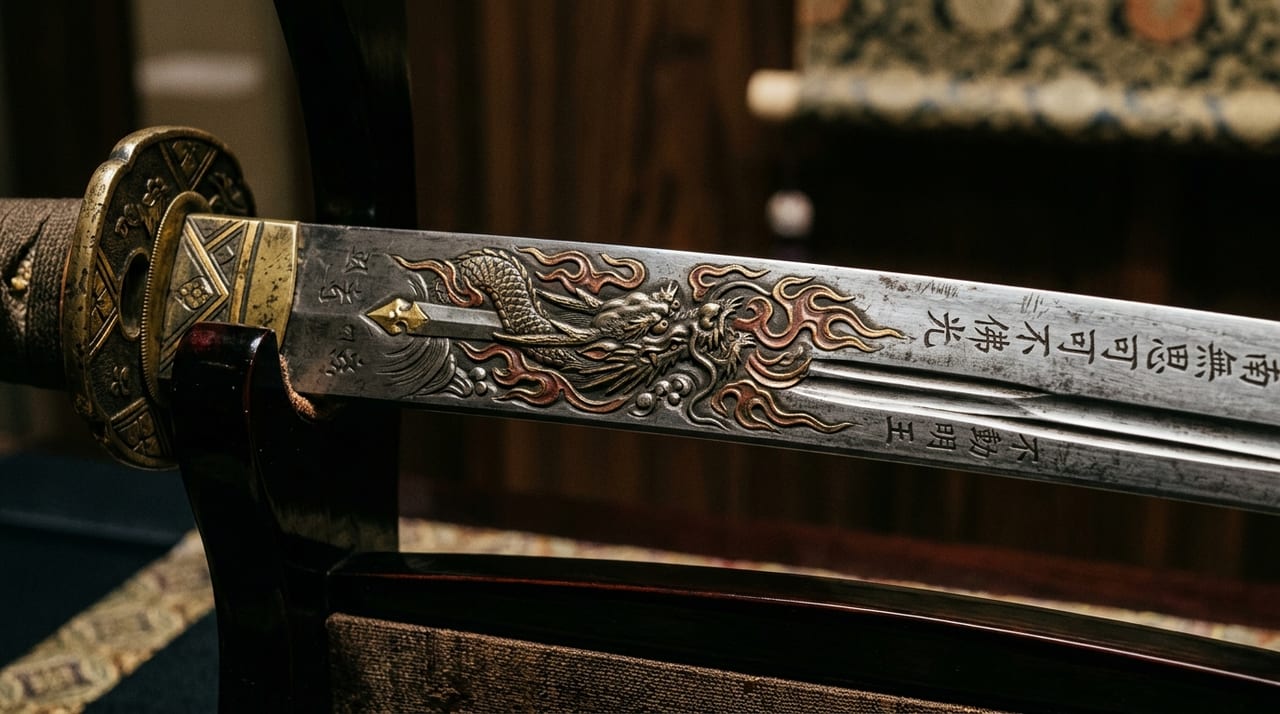 * Image is for illustrative purposes only.
Table of Contents
Academic Challenges Facing Showa Guntō Research
Research on Showa guntō differs greatly in character from traditional Japanese sword studies.
In traditional sword studies, the primary sources are sword-specialist texts such as kanteisho, swordsmith registers, meibutsu records, and oshigata collections. In guntō research, however, Army Ministry official documents, arsenal records, officers' personal diaries, and battlefield testimony records are added as indispensable primary sources. Many of these records were treated as military secrets, and a considerable number were destroyed or dispersed during the confusion following the end of the war. The starting point of research is the painstaking search for surviving materials at the National Archives of Japan, the National Institute for Defense Studies, and the Yasukuni Shrine Library.
Researchers come from extremely diverse backgrounds. Not only individuals with backgrounds in art history and sword appraisal, but also specialists in military history and modern history, as well as researchers who conduct material analysis from the perspectives of metallurgy and materials engineering, have entered the field. Collaboration among specialists from these multiple disciplines makes it possible to conduct research that comprehensively elucidates manufacturing techniques, historical circumstances, and cultural significance.
Furthermore, Showa guntō research involves ethical complexity. Guntō are inseparable from the context of the Pacific War, and research and exhibition constantly demand a balance between historical respect and objective analysis. When holders are bereaved families or descendants of former soldiers, considerations that go beyond studying these objects as mere "things" are required.
Foundational Literature and Access to Primary Sources
To enter this field, it is essential to master the foundational literature and sources.
As foundational texts in this field, the following two works stand out.
| Source | Content |
|---|---|
| Nakagawa Taikō, Yasukuni Jinja no Nihonto | An essential research work that systematically organizes the production records of the Yasukuni Tanrensho, lists of tōshō, production quantities, and types of dedicated swords |
| Kōgei Shuppan, Showa-to Taikan | A pictorial record compiling Showa-era guntō with abundant photographs and detailed commentary; still widely used today as a practical reference for specification identification and individual appraisal |
As primary sources, the Army Ministry documents held at the National Archives of Japan are important. Official records document the circumstances behind the establishment of guntō specifications, the revision histories of the Type Showa 9 and Type Showa 13, and regulations for issuing swords to officers. The examination records of NBTHK also hold practical value for verifying the authenticity of Yasukuni swords and commissioned swords forged using traditional techniques.
In recent years, the development of digital archives has advanced rapidly. Access to materials that were once difficult to view has improved through the database of the National Institute for Defense Studies Library and the National Diet Library Digital Collections, greatly broadening the base of research.
Repatriated Swords: Return from the Battlefield and the Role of Researchers
The appraisal, documentation, and reception of Showa guntō returning from abroad is one of the most concrete practical challenges facing contemporary researchers.
After the end of the Pacific War, a large number of guntō were taken to the United States, the United Kingdom, Australia, and other countries as war trophies by Allied soldiers. The estimated number runs to tens of thousands of swords, which are still scattered today in the homes of veterans' families, at antique markets, and in auction houses. Researcher and enthusiast organizations in the United States continuously conduct location surveys and cataloguing of Japanese swords in America, which leads to the discovery of swords available for repatriation.
Many bereaved families hold the wish to "return to Japan the guntō my grandfather brought back from the battlefield." In such cases, researchers, sword dealers, and museums serve as coordinators, handling appraisal, transport procedures, and the arrangement of receiving institutions. There are also cases where the Zen Nihon Tōshōkai or regional sword research societies serve as contact points, providing introductions to appropriate preservation destinations and information to bereaved families.
Since cultural property repatriation is linked to diplomatic and cultural policy contexts as well, it often takes on the aspect of historical reconciliation beyond a simple commercial transaction. Researchers' involvement in this process is also an important opportunity to return academic knowledge to society at large.
Current State of the Yasukuni Shrine Museum and Challenges for Preservation Activities
The Yasukuni Shrine Museum is the principal holding institution for swords produced at the Yasukuni Tanrensho, and is an indispensable reference for researchers.
Some of the dedicated swords and imperial inspection swords produced at the tanrensho are stored and displayed, serving as "benchmark works" for Yasukuni swords against which individual appraisals are compared. They are not on permanent display, but are opened to the public at special exhibitions held several times a year, providing opportunities to receive direct commentary from specialists.
On the preservation front, serious challenges are being confronted. The deterioration of koshirae — including saya, tsuka, and sageo — is pronounced. Unlike metal parts, organic materials such as lacquer, wood, silk, and rayskin deteriorate significantly with age, and even among surviving Showa guntō, complete koshirae are becoming rare. Efforts to restore these while maintaining their original condition as much as possible are taking place across the country, through collaboration between cultural property restoration specialists and sword researchers.
Expansion of the Global Research Network
Research on Showa guntō is not confined to Japan; an international community has formed.
In the United States, JSSUS (Japanese Sword Society of the United States) plays a central role in guntō research, functioning as a bridge connecting collectors in America with researchers in Japan through its journal and seminars. Specialized collectors and researchers in the field of Showa guntō also exist in the United Kingdom, Germany, and France, contributing to the accumulation of international knowledge through the publication of academic papers and pictorial records.
Advances in digital technology are bringing new possibilities. The following scientific methods, which supplement traditional visual appraisal, are being introduced.
- Precise recording of blade geometry through three-dimensional scanning
- Analysis of steel composition through X-ray fluorescence analysis
- Identification of hamon patterns using AI
These technologies may offer clues for linking mumei Showa swords that have no records to their makers and periods of production.
Research on Showa guntō is a multifaceted academic field where modern and contemporary Japanese history, military history, cultural property protection, and international relations intersect. To give proper recognition to these "forgotten swords" not merely as antiques but as witnesses of the Showa era, and to pass them on to the next generation — that is the shared mission of the researchers and preservationists involved in this field.