The Showa Legacy in Modern Swords: How Postwar Revival and Living National Treasure Smiths Forged an Unbroken Chain of Tradition
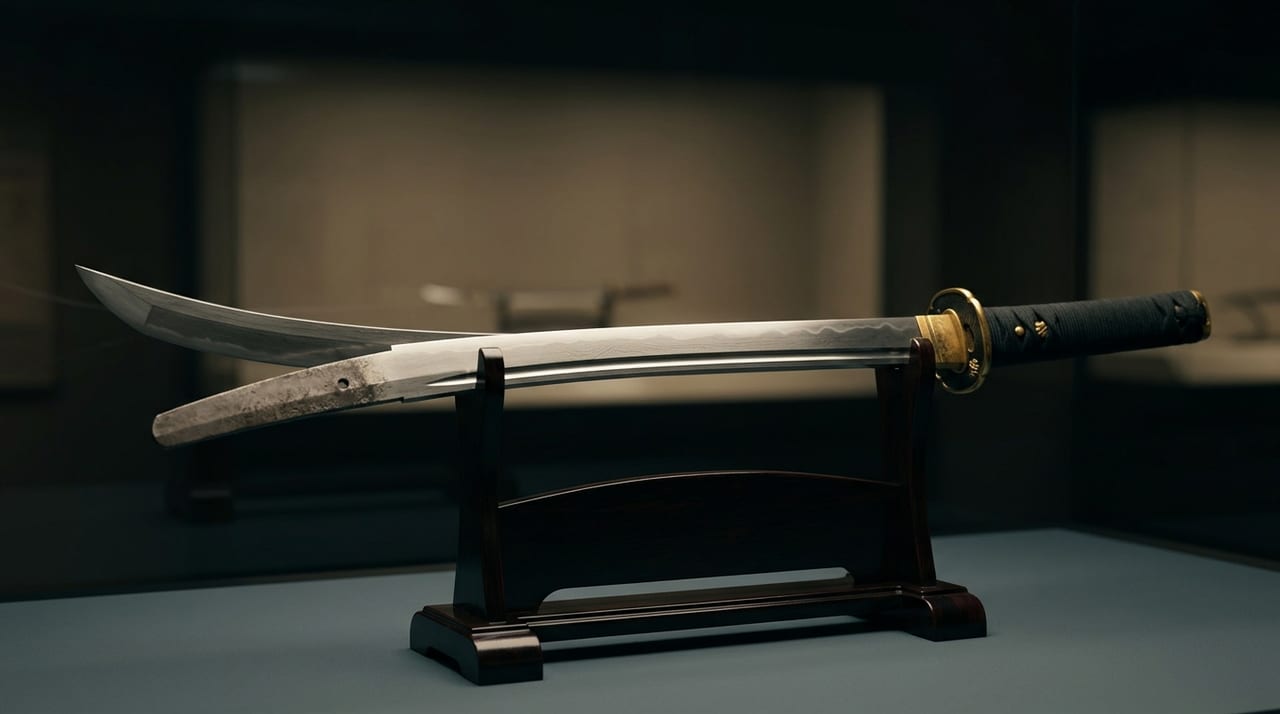 * Image is for illustrative purposes only.
Table of Contents
Fear of Technological Rupture—Until the Lifting of the Ban in 1953
From the end of World War II in 1945 to the legalization of new sword manufacturing in 1953, for approximately eight years swordsmiths were unable to legally forge new blades. The "Sword Manufacturing Prohibition Ordinance" issued by the GHQ included even artistic swords in its scope, forcing many swordsmiths to change professions out of necessity. Many smiths survived by forging agricultural tools and implements as blacksmiths, while others turned to charcoal burning or farming.
This period came to be called the "blank period in Japanese sword manufacturing technology," and many involved harbored a sense of crisis that "traditional techniques might be severed." Forging techniques are built upon embodied knowledge that is difficult to articulate in language, and closing a workshop risked the death of the craft itself.
Yet in reality, the preservation and transmission of techniques continued below the surface. Elderly swordsmiths secretly passed on their craft to younger apprentices, and records of used whetstones and clay formulations for quenching were carefully preserved. Some swordsmiths maintained their forges under the pretext of manufacturing knives and agricultural tools, never relinquishing the feel of forging in their hands. While maintaining outward silence, it was those who continued to build bridges to the next generation before the flames that became the foundation for the postwar revival of Japanese sword culture.
1953—The Swordsmiths' New Beginning
When new sword manufacturing was legalized in the same year the Firearms and Swords Law was enacted (1953), elderly swordsmiths returned to their forges and resumed wielding their hammers. But the problem extended beyond personnel. Because the supply of tamahagane had been cut off, many swordsmiths were forced to use substitute materials—railway steel and specialty machine steel. While these materials were uniform and easy to work with, they could not produce the fine forging patterns or jihada unique to tamahagane, and blade enthusiasts sometimes criticized them as "not authentic."
In 1957, the Japanese Art Sword Preservation Society (NBTHK) organized the "Japanese Sword Masterpiece Exhibition," where the quality of modern swords produced after resumption was publicly evaluated. This exhibition served as encouragement to contemporary swordsmiths while also highlighting the challenge of establishing unified quality standards. The excellent works selected through judging served as proof to society that techniques had indeed been properly transmitted, and instilled in younger swordsmiths a fierce competitive spirit and pride.
The Revival of Tatara and the Reproduction of tamahagane
The greatest technical challenge in the revival of modern sword forging was securing tamahagane. During wartime and the postwar chaos, traditional tatara iron production had effectively ceased, and the number of "murage"—master craftsmen who knew the technique—had dwindled due to aging.
In November 1977, full-scale operations of the "Nihonto Hozon Tatara" began in the Okuizumo region of Shimane Prefecture. This project, led by NBTHK, was an unprecedented attempt to recreate traditional tatara iron production using only iron sand and charcoal, unprecedented even from the perspective of cultural property protection. The production of kera (iron lumps) through the traditional method of burning the forge for three days and nights, and the subsequent selection of tamahagane for swordsmiths, were supported by craftwork entirely different from modern industrial iron smelting.
From that point on, tamahagane has been produced annually through operations. The revival of the Nihonto Hozon Tatara extends far beyond mere material supply. Because tamahagane has uneven carbon content, the "tsukurikomi" technique—in which the material is separated through forging into kawagane (skin iron) and shingane (core iron) and then combined—remains viable. This technique is the foundation for producing the characteristic Japanese sword qualities of being "flexible yet unbreakable, unyielding, and sharp," and authentic Japanese swords cannot exist without tamahagane. The Nihonto Hozon Tatara continues operations one to two times annually and supports stable supply to domestic swordsmiths.
Living National Treasure Swordsmiths—Giants Born in the Showa Era
Among the swordsmiths active during the Showa period, several were designated as Holders of Important Intangible Cultural Properties (Living National Treasures) in the postwar era. All of them had overcome the ordeal of military sword manufacturing and the blank period of the prohibition, and their designation represented an evaluation of both technical excellence and their commitment to transmission across generations.
- Gassan Sadakazu (2nd Generation) (designated 1971)—An Osaka swordsmith who lived from the Meiji through the Showa periods. He maintained the Gassan school's distinctive "ayasugi-hada"—complex skin patterns reminiscent of ripples on water. He is known for resisting the uniformity and mass-production demands of military sword manufacturing by adhering to traditional forging methods, and this spirit has been passed on to the current Gassan Sadatoshi.
- Miyairi Yukihira (designated 1963, died 1977)—A Nagano swordsmith. Building upon Shinshū tradition, he worked on recreating ancient blade steel and actively participated in tatara revival, serving as a symbolic figure of the Showa blade world. Until his later years, he devoted himself to training disciples, and his techniques were inherited by Miyairi Kozaemon Yukihira.
- Sumitani Masamine (designated 1971)—Born in Mattō, Ishikawa Prefecture (now Hakusan City). He is highly regarded for establishing his own "complex layering" forging technique—a method of stacking multiple layers of steel with different carbon contents—which elevated the technical standards of postwar modern swords at one stroke. Sumitani's sword-forging philosophy was grounded in the conviction that "beauty and cutting ability spring from the same source," and he transmitted this philosophy along with the technique to his disciples.
The techniques developed by these master smiths during the difficult Showa period serve as a living textbook for contemporary swordsmiths.
The Chain of Master and Apprentice—The Lineage of Technique Continuing from Showa to Reiwa
The greatness of Living National Treasure swordsmiths lies not solely in the beauty of their works. The true strength of contemporary Japanese sword culture is formed by the "chain of master and apprentice"—the disciples they trained, and the disciples trained by those disciples, continuing in succession.
In Japanese traditional crafts, techniques cannot be transmitted through writing. The temperature of the forge is read through "hiiro" (fire color), the timing of quenching is judged by "water sound," and the condition of the steel is felt through the weight and rebound of the hammer. These can only be learned by standing before the forge for years beside a master. The Living National Treasure swordsmiths of the Showa period transmitted this embodied knowledge to the next generation through one-on-one master-apprentice relationships.
The techniques passed on in Showa forges are transmitted to contemporary workshops through the training relationship between master and apprentice. Within a single blade, the hand memories of multiple generations are layered together.
Contemporary Evaluation of Showa Traditional Forged Swords
Swords manufactured through traditional methods during the Showa period receive high evaluation in the contemporary blade market. Not only works by Living National Treasures, but also works by "jumei tōkō" (swordsmiths with Meiji-Taisho skill who were active in Showa) regularly achieve auction prices exceeding several million to over ten million yen.
The basis for this evaluation lies not in "age" but in both technical perfection and historical context. The stance of swordsmiths who continued forging without compromise—while resisting the mass-production demands of military swords or navigating the blank period of prohibition—resonates deeply with contemporary enthusiasts.
Furthermore, while the number of extant works by Showa-era Living National Treasures is limited, their records are well-maintained, making provenance verification easier. Through preservation society inspection records and exhibition catalogs, it is often possible to trace details from the year of forging to the steel used and quenching techniques, providing high research value.
The techniques and spirit that Showa-era traditional swordsmiths sacrificed to preserve form the backbone of contemporary Japanese sword culture. Their legacy continues to exist as works in the hands of enthusiasts both domestic and abroad, and lives on as disciples in contemporary forges. When gazing upon a single blade, contemporary observers must not forget that the struggles and pride of the Showa era are reflected in that edge. For more detailed information on sword-smith history and techniques, visit the Japanese Sword Column List.