The Personnel Shortage and Succession Problem in the Sword Industry — Structural Challenges Facing Craftsmen, Sword Dealers, and Researchers, and the Path to Solutions
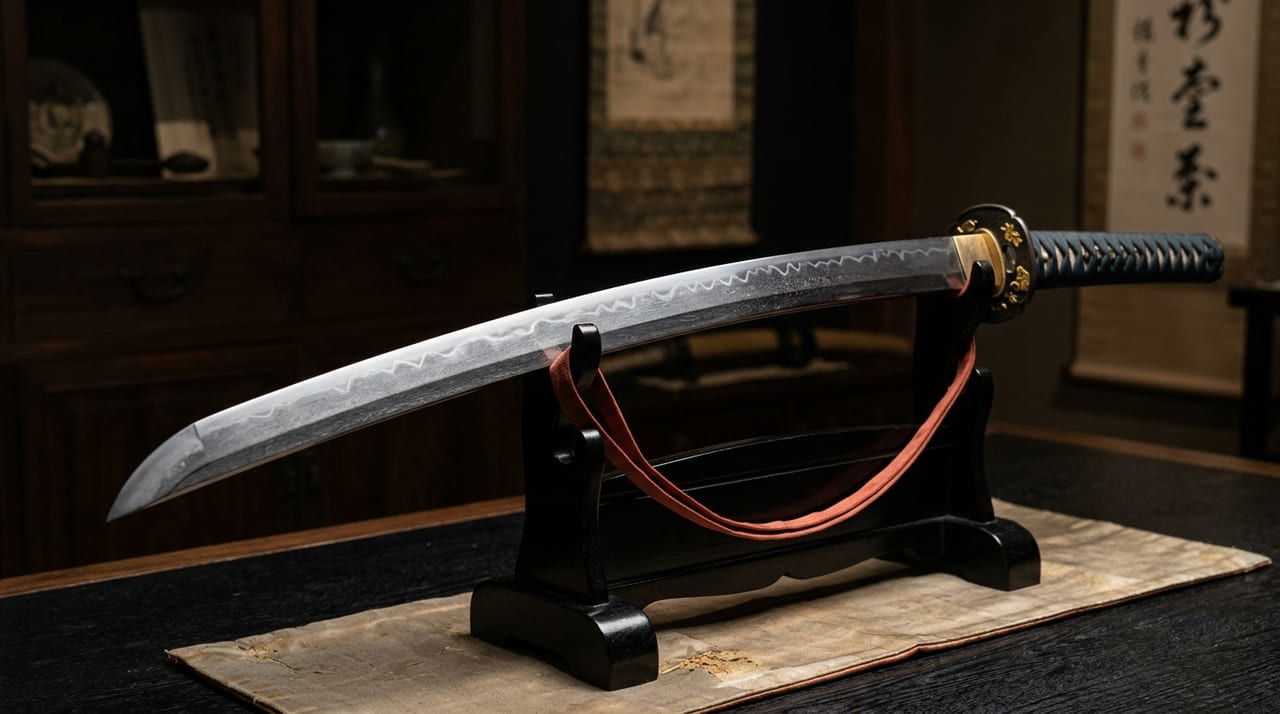 * Image is for illustrative purposes only.
Table of Contents
The Full Picture of the Personnel Crisis Facing the Sword Industry
The world of nihontō is at once the crystallization of a spiritual culture boasting centuries of tradition and a microcosm of the serious industrial challenges facing modern Japan. The entire ecosystem woven together by these diverse specialists — tōshō, togishi, sayashi, metal craftsmen, sword dealers, and researchers — is right now facing a severe personnel shortage.
The number of active tōshō who continue to make swords under the sword manufacturing approval (Bijutsu Tōken-rui Seizaku Shōnin Kisoku (e-Gov Law Search)) is limited, and even among togishi, those with the advanced skills to carry out cultural property restoration are few. What this situation reveals is not merely a shortage of craftsmen, but a crisis of discontinuity in technical knowledge accumulated over many generations.
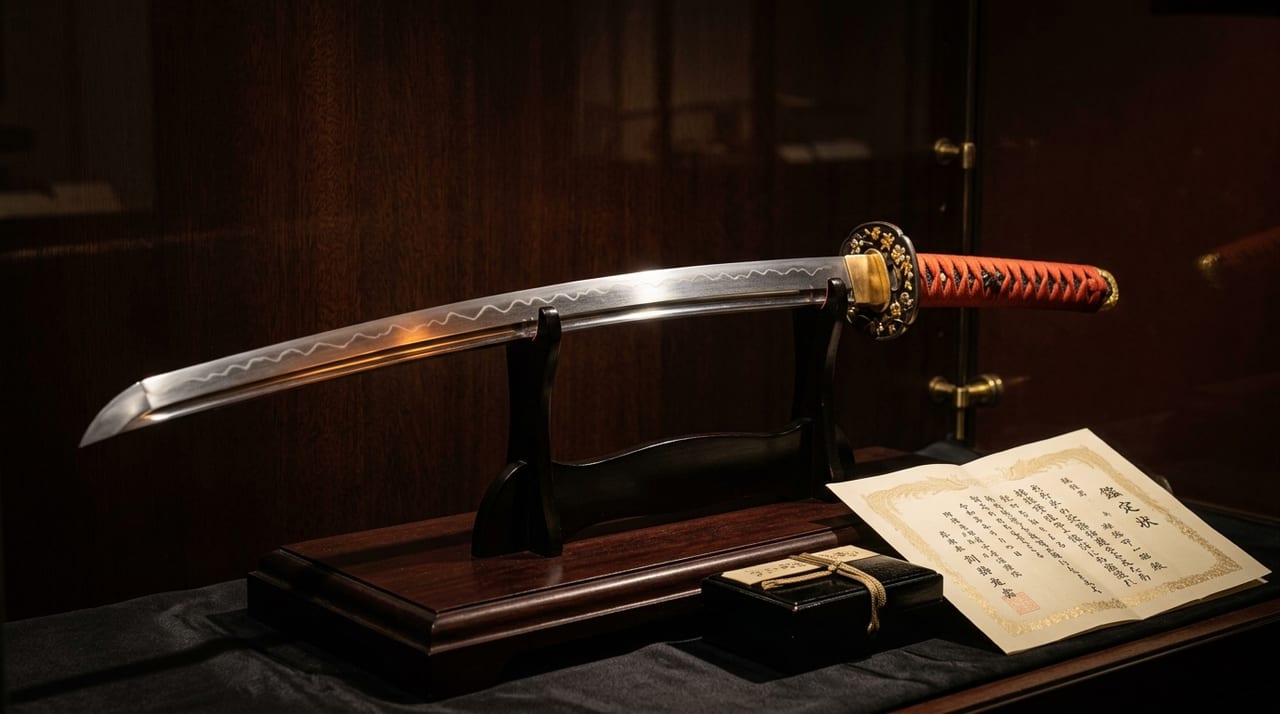
This thinning of personnel is not someone else's problem for enthusiasts and collectors who need to buy, sell, or have nihontō appraised. If the number of specialists responsible for the interconnected processes of sword-making, polishing, and appraisal declines, even finding someone to assess authenticity or handle restoration requests will become difficult, and as a result the foundation for passing nihontō on to the next generation as cultural property will erode. The kanteisho issued by appraisal bodies such as NBTHK continues to serve as an essential reference for confirming provenance and authenticity at a time when such specialized knowledge is becoming scarce.
Tōshō, Togishi, and Sayashi: Structural Problems in the Craftsmen's World
The decline in tōshō stems from the unique nature of the apprenticeship system. Obtaining sword manufacturing approval requires, among other things, completing more than five years of training under a tōshō who has already received approval, and after becoming independent it takes further years to achieve a stable income. Producing a single sword can take one to three months, and mastering the craft requires more than ten years. The Bijutsu Tōken-rui Seizaku Shōnin Kisoku sets no annual upper limit on the number of swords that may be made (Bijutsu Tōken-rui Seizaku Shōnin Kisoku (e-Gov Law Search)). However, prefectural examination standards specify the minimum number of tanren days per sword (15 days or more for tachi, katana, and naginata; 10 days or more for wakizashi, tantō, etc.), which in practice limits the number that can be produced (Aomori Prefecture "Bijutsu Tōken-rui Seizaku Shōnin" Examination Standards). This limit on the number that can be produced structurally caps the potential income.
Behind the decline in young people wishing to become apprentices lies economic instability. Income during the apprenticeship period is extremely limited, and the reality of having to supplement living expenses through parental support or side jobs while continuing training keeps potential candidates away. At the same time, the tōshō who would take on apprentices are themselves caught in the contradictory situation of being unable to afford to support apprentices financially.
The world of the togishi is even harsher. The judgment to understand the characteristics of natural whetstones quarried from sites across the country and to use them appropriately according to the condition of the blade is acquired only through more than ten years of practice. Moreover, the amount of high-quality natural whetstone being quarried decreases year by year, and the dwindling supply of whetstones casts a shadow over the transmission of skills.
Peripheral craftsmen such as sayashi and tsukamaki-shi who handle polishing and the making of saya and tsuka are also facing a shortage of successors, just like tōshō and togishi. Because completing a nihontō and then preserving it as a work of art requires the coordination of multiple specialized processes — polishing, making a shirasaya, and producing koshirae — the disappearance of craftsmen responsible for any single process will have repercussions for all the others. In recent years there has been a tendency for the period from commission to completion to grow longer, and a situation is emerging where owners who need restoration or delivery quickly have limited options.
The Succession Problem in Sword Dealers and Sword Distribution
The world of sword dealers faces a similar crisis. Many long-established sword shops have been run by the children or grandchildren of the founders, but that pattern of "succession" is beginning to break down. Cases where successors choose careers in other industries are increasing, and there is no end to long-established shops closing.
The knowledge required of a sword dealer is vast: period assessment (appraisal), reading mei registers, assessing authenticity, gauging market value, legal knowledge (the Firearms and Swords Control Act (Jūtōhō) and the Act on Protection of Cultural Properties), judging the need for restoration, and building long-term relationships of trust with customers. Training specialists capable of handling all of these requires a great deal of time and practical experience. There is no curriculum at universities or vocational schools for training "sword dealers," and on-the-job training is the only means of development.
It cannot be overlooked that when a shop closes, the relationships with customers that the owner built up over many years, and the connoisseurship experience needed to assess authenticity, are simply lost along with it. There are also cases where swords and reference materials held as inventory are dispersed and records of provenance are broken off.
For those considering a purchase, these changes in distribution structure are not unrelated. When assessing a trustworthy sword dealer or appraisal institution, the following are points worth confirming.
- Whether the issuer of the kanteisho and its content (period, province, tōkō mei, etc.) are clearly stated
- Whether an explanation of previous owners and provenance is provided to the extent known
- Whether an explanation of the condition and restoration history of accessories such as the polish and koshirae can be obtained
- Whether advice on post-purchase consultation and storage methods can be received
Building a long-term relationship with a trustworthy sword dealer through these confirmations ultimately helps support the transmission of connoisseurship knowledge across the entire industry.
The Problem of Training Researchers and Curators
The personnel crisis in the world of sword research is equally serious. University departments in Japan dedicated to researching and teaching about nihontō are extremely limited, and academic posts for researchers specializing in swords are scarce. Curator positions responsible for nihontō at museums and art museums across the country number only in the tens, and the situation where they are insufficient as a destination for newly graduated researchers continues.
Academic research on swords requires knowledge spanning multiple fields including metallurgy, history, art history, archaeology, and folklore, and training personnel with such composite expertise is not easy. The venues for returning research results to society (academic journals, exhibitions, educational programs) are also limited, and the difficulty of seeing a clear career path as a researcher has led to a decline in those aspiring to the field.
Supplementing this situation, there are cases where the steady recording and research activities of private researchers, collectors, and enthusiast associations not affiliated with universities or museums play a certain role in the accumulation of knowledge. That said, these activities are largely sustained by individual passion, and they do not function as an organized system for training successors. How to train people who can bridge academic knowledge and the hands-on experience of connoisseurship remains a challenge going forward.
Industry-Wide Efforts and Prospects for the Future
In response to this crisis, the sword industry and various public and private parties are exploring countermeasures. The public interest incorporated foundation NBTHK (Society for the Preservation of Japanese Art Swords) is responsible for technical certification and public awareness, and through sword exhibitions and appraisal meetings held across the country it is cultivating new fan bases.
What has attracted attention in recent years is the spread of experiential events. Sword-forging observation tours, polishing experience workshops, and sword appreciation seminars are now being held throughout the country, and young people's opportunities to encounter sword culture have increased. Young people in their 20s and 30s who became interested in nihontō through video games and manga are being noticed as potential new practitioners, and people from this demographic who aspire to become tōshō or togishi have in fact begun to emerge.
The use of digital technology is also expanding possibilities. Precise recording of blades using 3D scanning technology, the digitization of mei registers and appraisal documents into databases, and the development of online knowledge-sharing platforms are all contributing to the visualization of tacit knowledge.
The growing interest from overseas sword enthusiasts is also one of the changes of recent years. While the increased opportunity for sword fans both at home and abroad to purchase and collect nihontō represents a new source of demand for tōshō and sword dealers, concerns have also been raised about valuable cultural properties flowing out overseas. How to strike a balance between demand and cultural property preservation will likely remain a persistent challenge for the industry going forward.
For individual readers, there are options to support the industry such as purchasing from a trustworthy sword dealer with an understanding of the content of the kanteisho, or attending sword exhibitions and appraisal meetings. The accumulation of each of these individual actions becomes the foundation for craftsmen, sword dealers, and researchers to pass on their skills and knowledge to the next generation. The personnel problem in the sword industry is a cultural crisis that goes beyond a mere industrial challenge. To prevent this precious cultural flame from being extinguished, concerted efforts by the industry, government, and society as a whole are needed now more than ever.