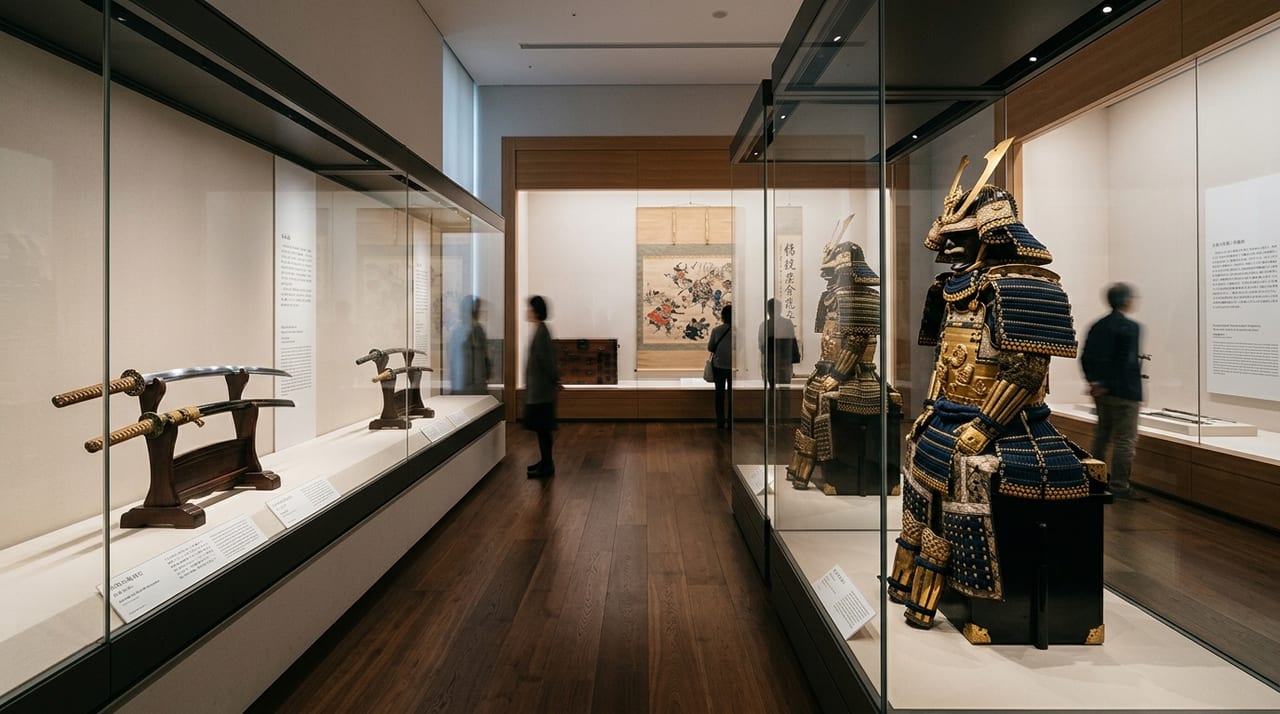
 * Image is for illustrative purposes only.
Tokugawa Museum (Mito Tokugawa Family)
徳川ミュージアム(水戸徳川家)
Overview
Treasures of the Mito Tokugawa Family, One of the Three Houses (Gosanke)
The Tokugawa Museum (Mito Tokugawa Family) is a private museum that houses and displays fine arts and crafts handed down through the Mito Tokugawa family, one of the Three Houses (gosanke). Opened in 1977 (Shōwa 52), it conveys to the present day the best of the samurai culture that the Mito Tokugawa family accumulated throughout the Edo period. The Mito Tokugawa family is a distinguished house descended from the Tokugawa shogunal family, continuing from its first lord, Yorifusa. It is especially known for the second lord, Mitsukuni (Mito Kōmon), and his promotion of learning and his compilation of the "Dai Nihonshi." The collection comprises some 30,000 treasures associated with successive lords, centered on the belongings of Tokugawa Ieyasu (Sunpu owakemono). Within the grounds, the Shōkōkan Bunko also holds around 30,000 old documents collected for the compilation of the "Dai Nihonshi."
The Finest of the Sword Collection
In the sword collection, the greatest highlight is the Shokudaikiri Mitsutada, famed as the beloved sword of Date Masamune. This tachi is attributed to Mitsutada, founder of the Bizen Osafune school, and its name comes from the anecdote that Masamune cut down a retainer along with a candlestand. It was burned in the Great Kantō Earthquake of 1923, and for a long time it was thought to have been destroyed. In 2015, however, it was confirmed to be held in the storehouse of the Tokugawa Museum, and it is now displayed in its fire-damaged state. As the model for the character Shokudaikiri Mitsutada in Tōken Ranbu (Sword Dance), it has drawn visitors from across the country. With donations received, a replica was made by swordsmith Miyairi Norihiro, and since 2018 it has been displayed alongside the fire-damaged original. Beyond the Shokudaikiri Mitsutada, the Mito family also held a tachi called "Kodegashiwa," passed down in the family, which was damaged in the Great Kantō Earthquake; a replica of it was also made by swordsmith Gassan Sadatoshi.
Ieyasu's Belongings and Samurai Garments
The core of the collection consists of the belongings passed from Tokugawa Ieyasu to the Mito family (Sunpu owakemono). The clothing items Ieyasu gifted, including the white-ground tsujigahana-dyed dōfuku with aoi crests and hinoki-leaf and flower patterns, along with other garments such as kosode, jinbaori, and gusoku shitagi (armor undergarments), are designated Important Cultural Properties. Through clothing and furnishings, visitors can experience the aesthetic sensibility and formal dignity of samurai society in the Edo period.
Special Exhibitions and Cultural Activities
The museum holds special exhibitions several times a year, presenting focused displays of its collection according to themes. Items associated with Mito Kōmon (Mitsukuni) and materials related to Mito-gaku and Kairakuen are also among the exhibition subjects, introducing Mito's historical culture from multiple angles. The museum grounds include an adjoining Japanese garden, where seasonal plantings welcome visitors. Visiting together with Kairakuen and Kōdōkan allows you to experience Mito's samurai culture and scholarly traditions comprehensively.
Highlights
- Shokudaikiri Mitsutada (fire-damaged tachi) ── A tachi by Bizen Osafune Mitsutada, famed as the beloved sword of Date Masamune. This historic blade, burned in the Great Kantō Earthquake of 1923, is displayed in its present state. Fans come from across the country as the model for a character in Tōken Ranbu
- Replicas of Shokudaikiri Mitsutada and "Kodegashiwa" ── Made with donations by Miyairi Norihiro (Shokudaikiri Mitsutada) and Gassan Sadatoshi (Kodegashiwa). Displayed alongside the fire-damaged originals since 2018
- Belongings of Tokugawa Ieyasu (Sunpu owakemono) ── Including Important Cultural Property garments such as the tsujigahana-dyed dōfuku, cherished items passed from Ieyasu to the Mito family
- Items associated with Mito Kōmon (Mitsukuni) and Mito-gaku materials ── Documents and books related to the compilation of the "Dai Nihonshi," and valuable primary sources that convey the traditions of Mito's learning and culture
* Opening hours and exhibitions are subject to change. Please check the official website before visiting.