 * Image is for illustrative purposes only.
Kanagawa Prefectural Historical Museum
神奈川県立歴史博物館
Overview
Museum Overview and Historic Building
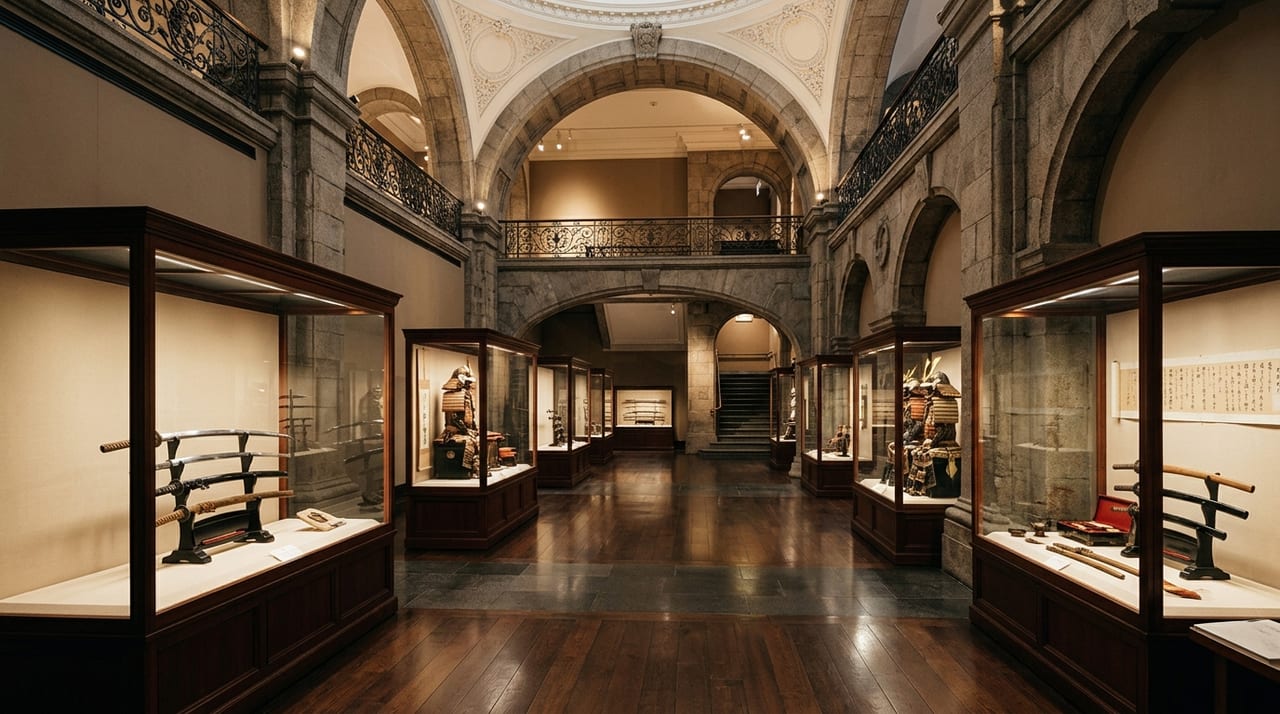
The Kanagawa Prefectural Historical Museum is a prefectural history museum housed in the former head office of the Yokohama Specie Bank, completed in 1904 (Meiji 37). The solid Baroque-style stone building is designated a national Important Cultural Property, so the museum building itself functions as a cultural asset. Located in Bashamichi, Naka Ward, Yokohama, the museum presents the history of Yokohama since the port opened and the history, culture, and folk traditions of all of Kanagawa Prefecture, and holds approximately 66,000 items of materials. The building has stood since 1904 (Meiji 37) and is a masterpiece of the Western architectural styles the Meiji government actively adopted. Its value to the urban landscape is very high, and it remains a symbol of Yokohama's modernization that many citizens still treasure today.
Sagami Province Sword Culture and the Sōshū Tradition
The former province of Kanagawa is Sagami Province (Sagami no kuni), a land with deep ties to swords since ancient times. As the power base of the Kamakura shogunate, Sagami played a central role in the development of the Japanese sword from the Kamakura to the Muromachi period. In particular, the sword technique known as the Sōshū tradition (Sōshū-den) was perfected by master smiths of the late Kamakura to Nanboku-chō periods, including Masamune, Yukimitsu, and Sadamune. Its bold style, marked by intense hamon (temper line) and jigei (ground lines), is one of the Five Great Traditions of Japanese swordsmithing, along with Yamashiro, Yamato, Bizen, Sōshū, and Mino, and it is still rated among the highest achievements in Japanese sword making. Masamune is known as the smith who brought the Sōshū tradition to maturity. In the Edo period, the Honami family, appraisers to the Tokugawa shogunate, also placed the Sōshū tradition at the highest rank. The Kanagawa Prefectural Historical Museum conveys the history of Sagami Province, the land that gave birth to the Sōshū tradition.
Collection Including Armor
The museum's medieval permanent exhibition, “Toshi Kamakura to Chūsei Bito” (Kamakura as a City and Medieval People), presents the history and culture of medieval eastern Japan, organized around the changes in military government. The collection includes the nationally designated Important Cultural Properties Iroiodoshi haramaki (armor with laced plates), Nijūhachiken shihō shirohoshi kabuto-hachi (helmet bowl with white star, 28-ken square), and Nijūyonken shihō shirohoshi kabuto-hachi (helmet bowl with white star, 24-ken square). It also holds the sodehan kudashibumi (document with sleeve seal) of Minamoto no Yoritomo, the tora no inbanjō (tiger seal document) of the Odawara Hōjō clan, as well as swords and crafts.
Kamakura Warrior Culture and the Development of the Japanese Sword
Kamakura, where the Sōshū-tradition swords were made, is about 30 minutes by train from the museum. The qualities that the warriors of the Kamakura shogunate sought in swords valued cutting sharpness and toughness in actual combat over earlier ornate decoration. The technical innovations of the Sōshū smiths, who met this demand, set the direction of Japanese swords that followed. In particular, the bold hamon with abundant nie (fine crystalline grains) that Masamune developed, and the complex patterns called jigei that appear in the jigane (steel body), are regarded as among the highest achievements of the Japanese sword in both technique and beauty.
Modernization of Yokohama and the Sword
After the port of Yokohama opened in 1859 (Ansei 6), it became the gateway through which Western civilization flowed into Japan. During the turbulent period from the end of the Edo shogunate through the Meiji Restoration, swords lost their everyday role as personal arms with the Haitōrei (Sword Abolition Edict) of 1876 (Meiji 9), and began to take on new meaning as art objects, crafts, and spiritual symbols. In the port city of Yokohama, Western interest in Japanese art grew, and many swords and sword fittings were sold to foreign collectors.
Special Exhibitions and Scholarly Activities
In addition to its permanent exhibition, the museum regularly holds special exhibitions based on its curators' research, as well as collection displays drawn from its holdings. Joint research with universities and research institutions in Kanagawa is active, and the museum also serves as a center for the study of warrior culture in Sagami and Musashi Provinces. It continues to publish catalogues and research bulletins, which are highly valued as scholarly resources for researchers and enthusiasts. The digitization of its collection is also progressing, and efforts are underway to make materials available online so that researchers in distant places can access them. As an educational program, the museum actively accepts field trips from local elementary and junior high schools and is working to pass on and promote Japanese sword culture to the next generation.
Highlights
- Historical museum on the home ground of the Sōshū tradition── A prefectural museum that conveys the history of Sagami Province, which produced Masamune, Yukimitsu, and Sadamune. Visitors can learn the historical background of the land that gave rise to the Sōshū tradition, one of the Five Great Traditions of Japanese swordsmithing
- Toshi Kamakura to Chūsei Bito (Kamakura as a City and Medieval People)── The medieval theme of the permanent exhibition. It presents the history and culture of medieval eastern Japan, organized around the changes in military government
- Former Yokohama Specie Bank head office, an Important Cultural Property── The Baroque-style stone building, completed in 1904 (Meiji 37), is itself a cultural asset. It is a distinctive space where visitors can experience Meiji-era Western architecture and Japanese warrior culture at the same time
- Important Cultural Property armor and helmets── Iroiodoshi haramaki, Nijūhachiken shihō shirohoshi kabuto-hachi, Nijūyonken shihō shirohoshi kabuto-hachi, and other nationally designated Important Cultural Properties in the collection
- About 66,000 items in the collection── A wide range of holdings, including the Minamoto no Yoritomo sodehan kudashibumi, the tiger seal document of the Odawara Hōjō clan, swords, and ukiyo-e prints
* Opening hours and exhibitions are subject to change. Please check the official website before visiting.