 * Image is for illustrative purposes only.
Katori Jingū Treasure House
香取神宮宝物館
Overview
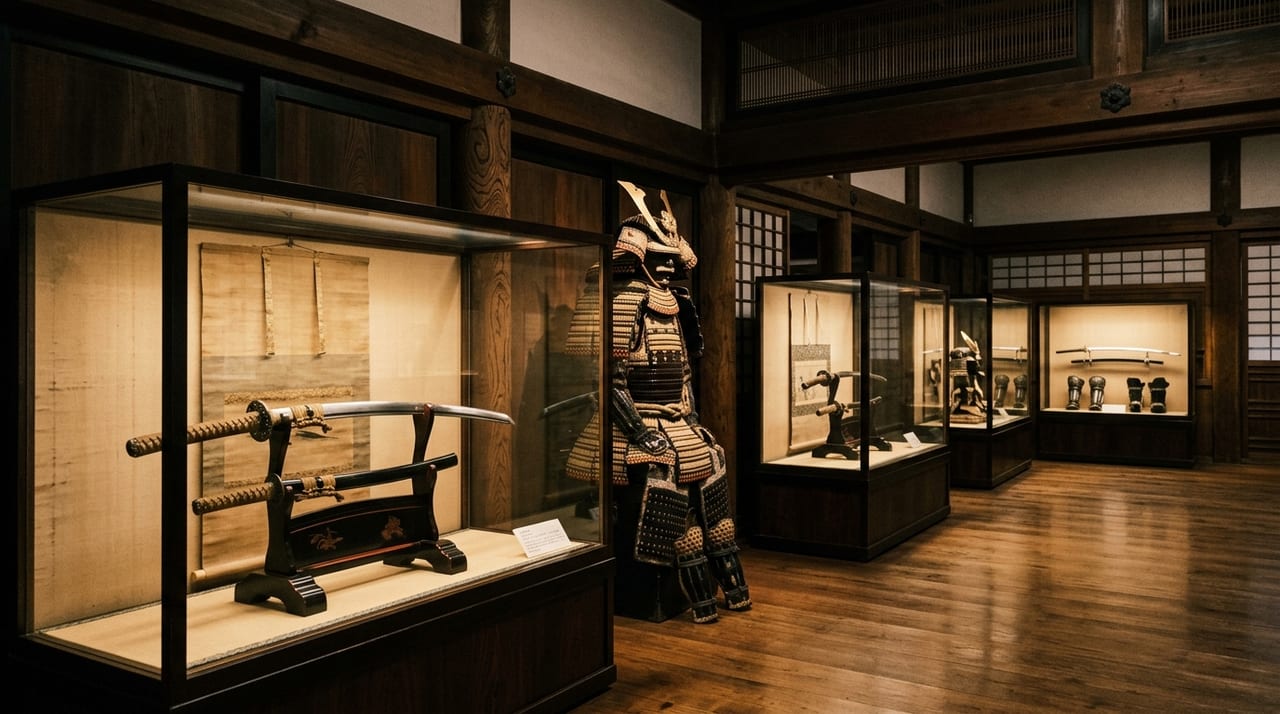
Katori Jingū is a shrine in Katori City, Chiba Prefecture, that enshrines Futsunushi-no-Ōkami, a warrior deity. Together with Kashima Jingū in Ibaraki Prefecture, it has been revered since ancient times as “Kashima and Katori,” the highest object of veneration for warriors and martial artists. Katori Jingū holds more than 200 treasures and cultural properties, counting only those of prefectural designation or higher, and has displayed some of them in its treasure house.
The greatest reason Katori Jingū holds a distinguished place in Japanese sword culture is its inseparable connection to the Tenshin Shōden Katori Shintō-ryū. This school was founded in the mid-Muromachi period by Iizasa Chōisai Ienao and is considered one of the oldest sword schools still in existence, and the source of many later schools of swordsmanship. The grave of its founder, Iizasa Chōisai, lies near the precincts of Katori Jingū.
The treasure house holds the National Treasure Kaijū Budō mirror, the Important Cultural Properties Sōryū mirror and Ko-Seto yellow-glazed komainu, and ancient sacred treasures designated by Chiba Prefecture, including a tachi inscribed Toshitsune. The treasure house has been closed since October 2023 for renovation work, and the reopening date has not been decided.
The majestic main shrine and precincts rise within a deep forest between the Tone River and the Suigō wetlands. They convey to visitors the dignity of a sacred place of martial arts. It is a representative sword-related sacred site of Chiba Prefecture, where one can experience both the history of swordsmanship and the culture of offering swords to the shrine.
Highlights
- Associated with the Tenshin Shōden Katori Shintō-ryū: one of the oldest sword schools still in existence, a sacred site of swordsmanship founded in the Muromachi period
- Enshrines the warrior deity Futsunushi-no-Ōkami: alongside Kashima Jingū, the highest object of veneration for warriors and martial artists
- National Treasure Kaijū Budō mirror: a white bronze mirror from the Tang dynasty, and the only National Treasure craft object in Chiba Prefecture
- Important Cultural Properties and prefectural sacred treasures: the Sōryū mirror, the Ko-Seto yellow-glazed komainu, and ancient sacred treasures including a tachi inscribed Toshitsune
- Majestic cedar forest and main shrine: a sacred precinct of martial arts surrounded by giant cedars several hundred years old
- Nature of the Tone River and marshlands: a rich natural environment spreading across the Suigō region of Chiba and Ibaraki
* Opening hours and exhibitions are subject to change. Please check the official website before visiting.