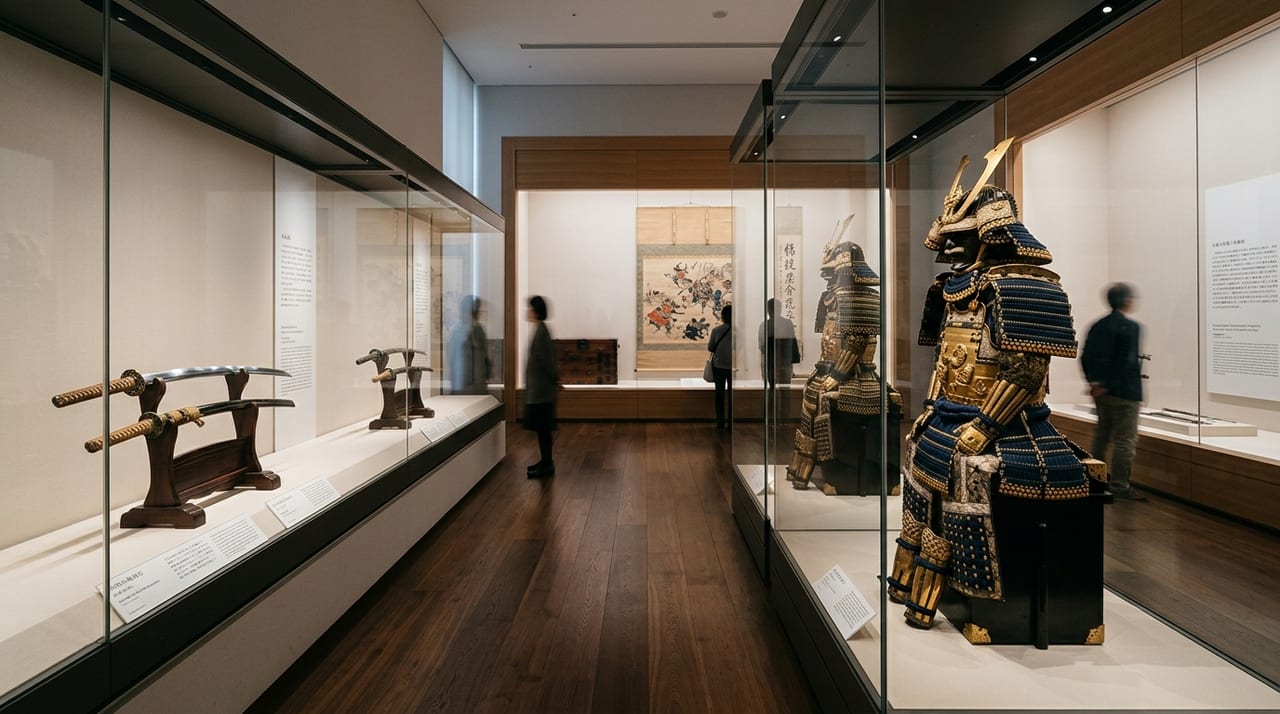
 * Image is for illustrative purposes only.
Musashi Mitake Shrine Treasure Hall
武蔵御嶽神社宝物殿
Overview
History
Musashi Mitake Shrine stands on Mt. Mitake in Ome, Tokyo, and enshrines Zaō Gongen. Its founding is traditionally dated to the 7th year of Emperor Sujin, and Gyōki is said to have invoked Zaō Gongen here in 736. After Ōnakatomi no Kunikane restored the decayed shrine buildings in 1234, it became known as a site of mountain asceticism, and warriors dedicated many weapons and armor to it. The Treasure Hall preserves these offerings.
Swords in the Collection
The Treasure Hall holds offerings from the Heian to Edo periods, including armor, swords and a decorated saddle. The principal tachi handed down at the shrine are: - Gilt long-rim tachi (ritual name "Oki-no-in", Kamakura period): Important Cultural Property, also called the "Gongen no Tachi" because it was regarded as an incarnation of the principal deity Zaō Gongen - Black-lacquered scabbard tachi signed Hōju: Important Cultural Property - Tachi signed Hōju (inscription of the Shōchū era): Important Art Object. Long said to be an offering of Hatakeyama Shigetada, but its inscription dates more than a century after his death, so the tradition is regarded as legendary
Highlights
The hall houses the National Treasure red-laced great armor (late Heian period), said to have been dedicated by Hatakeyama Shigetada in 1191, and a National Treasure saddle dedicated by Emperor Shijō in 1234. An equestrian statue of Hatakeyama Shigetada stands in front of the hall.
Access
Take the JR Ome Line to Mitake Station, then a Nishi-Tokyo Bus and the Mitake cable car. The hall is open from 9:30 to 16:00 on Saturdays, Sundays and public holidays. These may change, so please check official information before visiting.
Highlights
- Home to the Important Cultural Property gilt long-rim tachi (Gongen no Tachi) and the Hōju tachi, plus the National Treasure red-laced armor
* Opening hours and exhibitions are subject to change. Please check the official website before visiting.