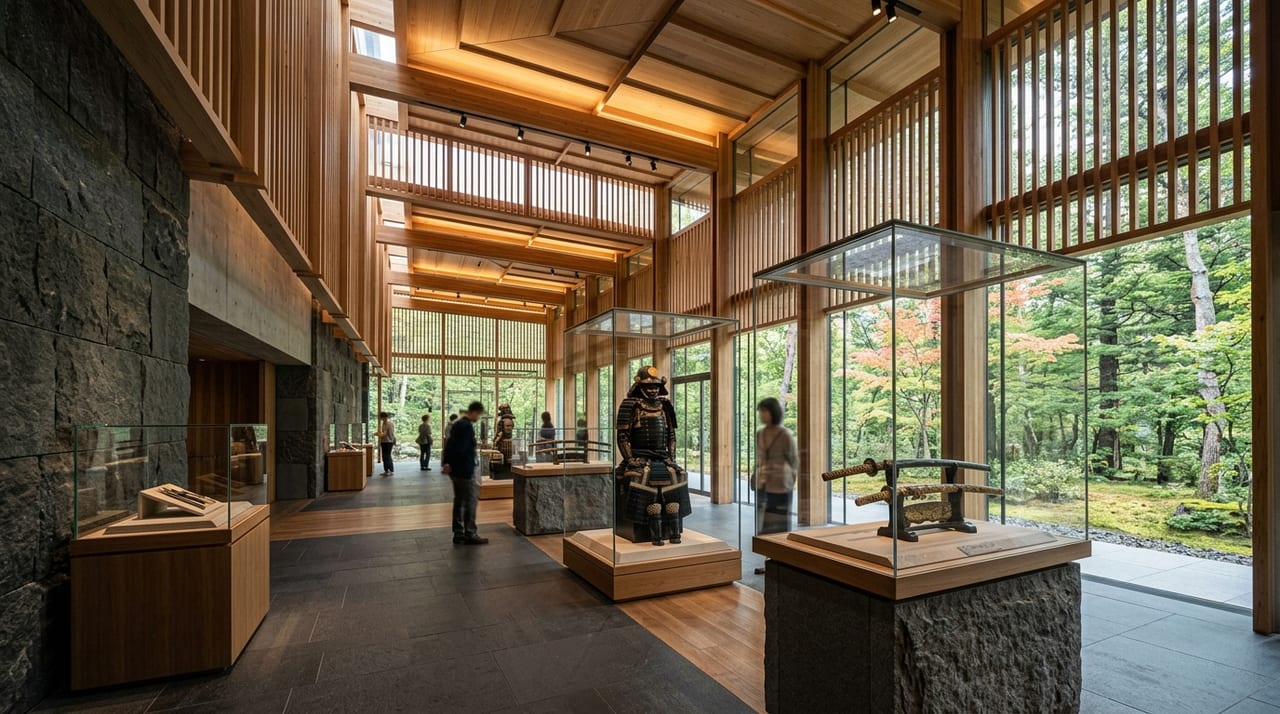
 * Image is for illustrative purposes only.
Meiji Jingū Museum
明治神宮ミュージアム
Overview
The Meiji Jingū Museum is a museum that opened in October 2019 (Reiwa 1) within the precincts of Meiji Jingū in Shibuya-ku, Tokyo, which enshrines Emperor Meiji and Empress Dowager Shōken. The architect Kengo Kuma was in charge of the design, and the wood-and-stone design that blends into the shrine's natural forest is highly praised. As a facility that systematically displays items associated with Emperor Meiji and Empress Dowager Shōken held by Meiji Jingū, including swords, court robes, furnishings, photographs, and calligraphy, it is one of the most important museums conveying the imperial culture of modern Japan.
The reason the museum holds a special place in its sword collection lies in the swords that have been dedicated to Meiji Jingū. Sword dedications have continued since the shrine's founding, and were especially active during the rebuilding of the shrine buildings in 1958 (Shōwa 33). In 2022 (Reiwa 4), swords forged in a dedicated forging session commemorating the 110th memorial anniversary of Emperor Meiji were also dedicated. The Meiji era was a time of dramatic upheaval, including the 1876 Sword Abolition Edict (Haitōrei) that prohibited carrying swords. Meanwhile, the Emperor and the imperial family, as spiritual guardians of sword culture, were deeply involved in passing down the tradition of Japanese swords through dedicated swords and commissioned swords (go-chūmon-tō) made by renowned smiths.
Dedicated swords have been shown in exhibitions such as 'Swords of Meiji Jingū' (December 2025 to March 2026).
Combined with sightseeing in the Harajuku and Omotesandō area, it is a location with excellent access, convenient for stopping by on the way to visiting Meiji Jingū.
Highlights
- Swords dedicated to Meiji Jingū — dedications have continued since the shrine's founding, and were especially numerous during the 1958 rebuilding of the shrine buildings
- Architecture designed by Kengo Kuma — a design of wood and stone that blends into the shrine's forest, with high architectural value as well
- A unique location within the Meiji Jingū precincts — a sword experience in a sacred space surrounded by the shrine's forest
- Combined sightseeing with Harajuku and Omotesandō — a cultural experience in central Tokyo with excellent access, combined with a visit to Meiji Jingū
* Opening hours and exhibitions are subject to change. Please check the official website before visiting.