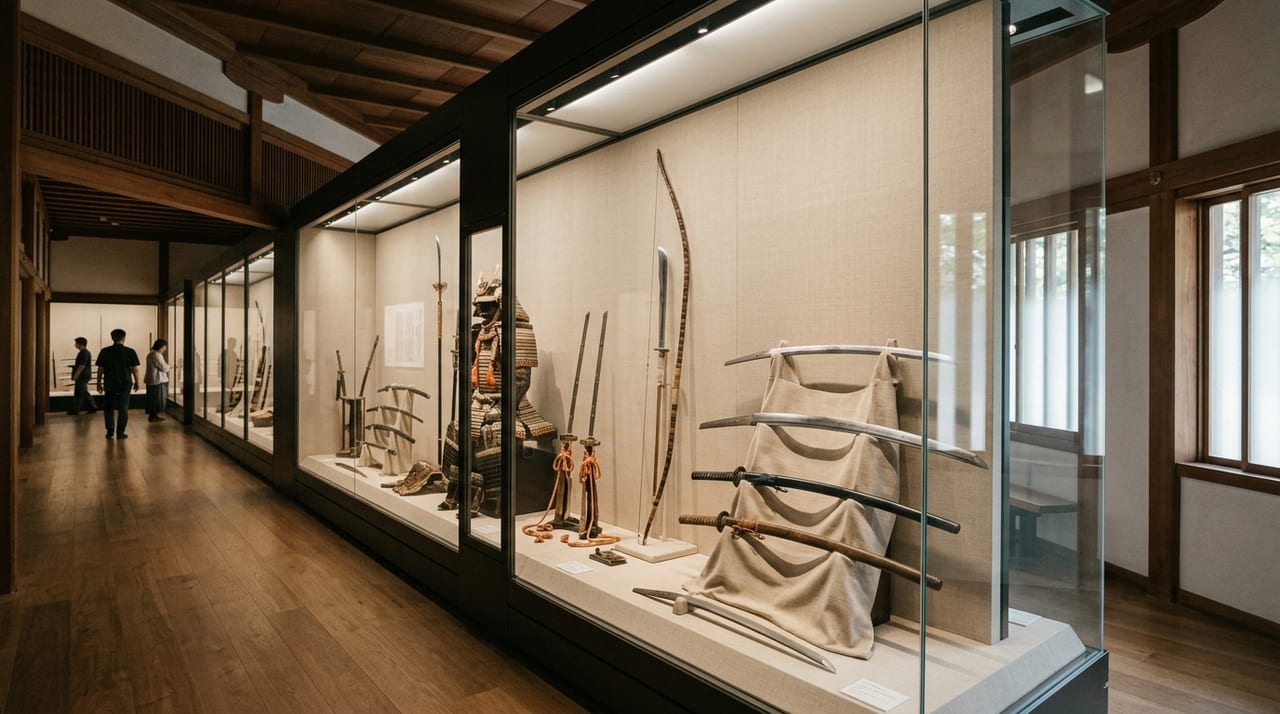
 * Image is for illustrative purposes only.
Tsurugaoka Hachimangu Treasure Hall (Hōmotsuden)
鶴岡八幡宮 宝物殿
Overview
Shrine and Treasure Hall (Hōmotsuden)
Tsurugaoka Hachimangū began in Kōhei 6 (1063), when Minamoto no Yoriyoshi enshrined the deity of Iwashimizu Hachimangū in Kyoto. In Jishō 4 (1180), Minamoto no Yoritomo relocated the shrine to its present site and developed it. It is a shrine that symbolizes Kamakura, the city of the warrior government. It enshrines Hachiman, the god of war, and across three generations of the Minamoto family it drew veneration as the guardian of the warrior government. Afterward, it continued to receive generous patronage from successive warrior regimes, including the Kamakura shogunate, the Hōjō clan, the Ashikaga clan, and the Edo shogunate, and many swords, armor, and treasures were offered to it.
National Treasure Swords
Among the swords transmitted at the shrine, the most noteworthy is the National Treasure tachi signed Masatsune. It is a Kamakura-period work by Masatsune, a master smith of the Ko-Aoe school of Bitchū Province. It has a graceful tachi form with a high koshi-zori, pronounced fumbari, and a small kissaki, and it is highly regarded as the finest among Ko-Aoe works. Its state of preservation is also extremely good. It was offered by Tokugawa Yoshimune, the eighth shogun, in Genbun 1 (1736), and it is a supreme treasure worthy of Kamakura, the birthplace of warrior government.
Armor and Offerings
The collection also includes swords offered by successive warrior families, such as the Important Cultural Property tachi signed Nagamitsu (offered by Tokugawa Ieshige) and the three tachi offered by Hōjō Ujitsuna in Tenbun 7 (1538). Many masterpieces associated with Minamoto no Yoritomo and the Hōjō, as well as works offered in the Muromachi and Edo periods, are also preserved, offering a panoramic view of the changing faith and aesthetic sense of the warrior class from the Kamakura period through the Edo period. Since the exhibits may vary depending on the season, please check the official website before visiting.
Combining with Sightseeing in Kamakura
Tsurugaoka Hachimangū is at the core of sightseeing in Kamakura, and the precincts have many highlights, including the Dankazura (cherry-tree-lined path) along Wakamiya Ōji, the Maidono, and the Honmiya (Upper Shrine). The base of the great ginkgo tree in the precincts was also transplanted and remains, although the tree, said to have been 800 years old or even over 1,000 years old, toppled in 2010. Nearby are the Kamakura Museum of National Treasures, which concentrates National Treasures and Important Cultural Properties from temples and shrines in Kamakura, and Shirahata Shrine within the precincts, so you can explore in depth Kamakura's history, where warrior and Buddhist cultures intersect. For sword enthusiasts, Kamakura is one of the sacred sites worth spending a full day exploring.
Highlights
- National Treasure tachi signed Masatsune: a Kamakura-period masterpiece by Masatsune, master smith of the Ko-Aoe school. An elegant tachi with a high koshi-zori and pronounced fumbari, widely regarded as the finest of the Ko-Aoe works. A famous blade offered by Tokugawa Yoshimune in Genbun 1 (1736)
- Important Cultural Property tachi signed Nagamitsu and other offered swords: the Nagamitsu offered by Tokugawa Ieshige and the three tachi offered by Hōjō Ujitsuna in Tenbun 7 (1538), along with swords offered by successive warrior families
- History as the guardian of Kamakura, the warrior capital: a sacred site revered by successive warrior governments, including Minamoto no Yoritomo, the Hōjō, the Ashikaga, and the Edo shogunate. Holds many offerings to Hachiman, the god of war
- Historic highlights of the precincts: the cherry-tree-lined Dankazura, the Maidono, the Honmiya (Upper Shrine), Shirahata Shrine, and more. Immerse yourself in the historical atmosphere of Kamakura, the birthplace of warrior government
- Combining with the nearby Kamakura Museum of National Treasures: visiting together with the museum, which concentrates National Treasures and Important Cultural Properties from temples and shrines throughout Kamakura, lets you cover Kamakura's cultural heritage in a single day
* Opening hours and exhibitions are subject to change. Please check the official website before visiting.