 * Image is for illustrative purposes only.
Nikkō Tōshōgū Treasure Museum
日光東照宮宝物館
Overview
Tōshōgū and the Tokugawa Authority
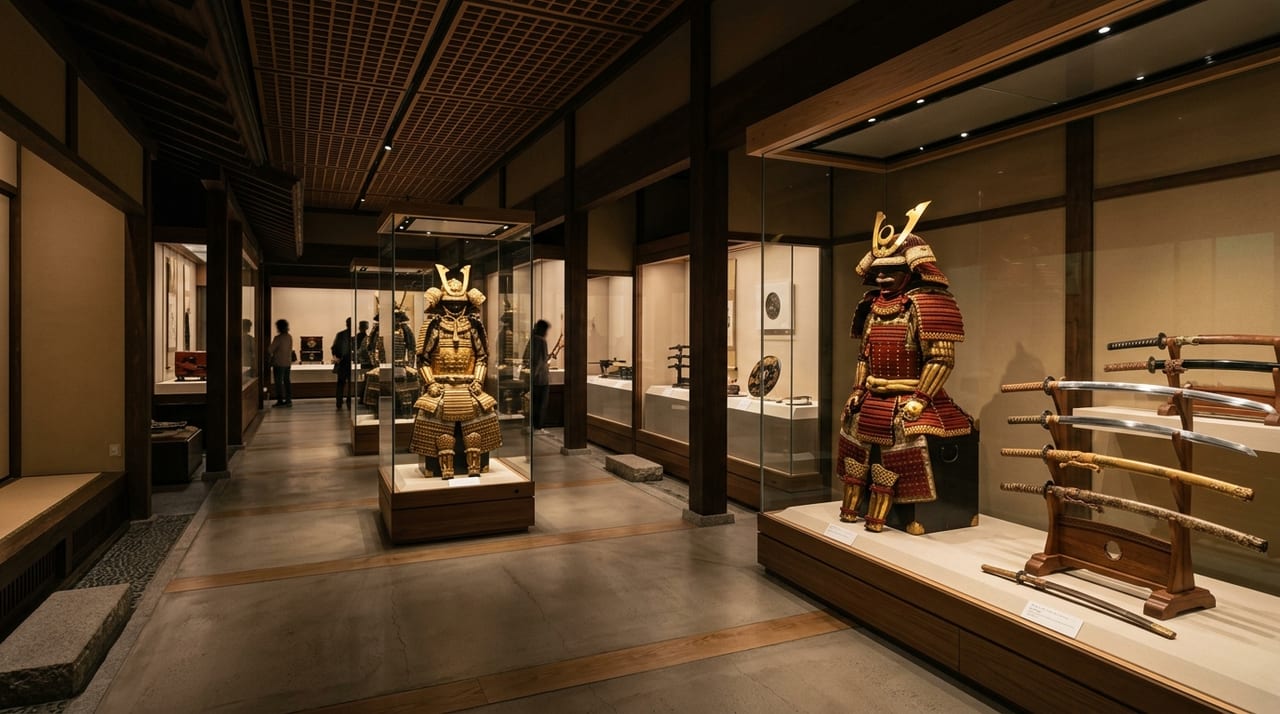
Nikkō Tōshōgū was founded in 1617 (Genna 3) as a shrine enshrining Tokugawa Ieyasu, the first shōgun of the Edo shogunate. The present magnificent complex of shrine buildings was constructed in 1636 (Kan'ei 13) by the third shōgun, Iemitsu. As the deified mausoleum of Ieyasu, who unified the realm and brought an age of peace, it remained throughout the Edo period the most important sacred site symbolizing the authority of the shōgunal house. The site is also known worldwide as a treasure house of carvings, including the Three Monkeys ('see no evil, speak no evil, hear no evil') and the Sleeping Cat. A Treasure Museum has also been established here, where one can view the finest swords, armor, and arts and crafts dedicated to Tōshōgū.
Tokugawa Ieyasu's Swords and Armor
At the core of the Treasure Museum are swords, weapons, and armor associated with Tokugawa Ieyasu. As a survivor of the Sengoku period, Ieyasu collected fine swords throughout his life, and his discerning eye was known as a practical, utilitarian aesthetic characteristic of the 'Mikawa warriors.' The swords attributed to Ieyasu's personal use include both sturdy, heavily built pieces designed for real battle in the Sengoku period and dignified pieces with elegant fittings that heralded the arrival of an age of peace. They reflect the trajectory of Ieyasu's life as he transformed from warlord to statesman. Swords dedicated by the imperial court, the Tokugawa shōgunal house, and daimyō houses are also included, and Tōshōgū's collection serves as a first-rate source for the warrior culture of the period when the Edo shogunate was established.
Armor and Memories of the Sengoku Period
In the armor collection, the gusoku attributed to Ieyasu's personal use is particularly noteworthy. The Treasure Museum displays the 'Nanbandō Gusoku' (Important Cultural Property), which is said to have been worn by Ieyasu. The gold-leaf-applied 'Kindami Gusoku', said to have been worn by Ieyasu around the age of nineteen (around the time of the Battle of Okehazama), is held by the Kunōzan Tōshōgū Museum (Shizuoka). Sengoku-period armor combines functionality that withstands actual combat with decorative qualities that display the wearer's rank, and it occupies an important place in the history of Japanese crafts.
Comprehensive Nikkō Sightseeing
Nikkō Tōshōgū is registered as a World Cultural Heritage Site together with Rinnō-ji and Nikkō Futarasan Shrine as the 'Nisha Ichiji' (Two Shrines and One Temple), and the Treasure Museum is located within this complex. By touring the Treasure Museum alongside viewing the sculptures, paintings, and architecture of the shrine buildings, one can experience the full picture of Tōshōgū as a comprehensive work of art from the early Edo period. Sightseeing can be combined with natural sites such as Lake Chūzenji and Nikkō Senjōgahara, and many visitors come throughout the four seasons.
Highlights
- Swords attributed to Tokugawa Ieyasu — the finest blades collected over his lifetime by the man who achieved the unification of the realm. From battle-ready Sengoku blades to elegantly mounted swords of the age of peace, the warrior's sense of beauty and practical outlook are condensed
- Dedicated swords — swords donated by the imperial court, the shōgunal house, and daimyō houses. Works by the highest-level swordsmiths and fittings makers that demonstrate the authority of the Edo shogunate are assembled
- Sengoku and early Edo armor — an armor collection including gusoku attributed to Ieyasu's personal use. Momoyama to early Edo armor art that combines practicality in battle with decorative quality
- Viewing within a World Cultural Heritage site — a cultural setting where you can experience Japan's comprehensive art alongside world-famous architectural sculpture, including the Three Monkeys, the Sleeping Cat, and the Yōmeimon gate
- Deified space of Tōshōgū — within the distinctive religious context of a mausoleum that enshrines Tokugawa Ieyasu as a god, you can experience the spiritual and symbolic meaning that swords and armor hold
* Opening hours and exhibitions are subject to change. Please check the official website before visiting.