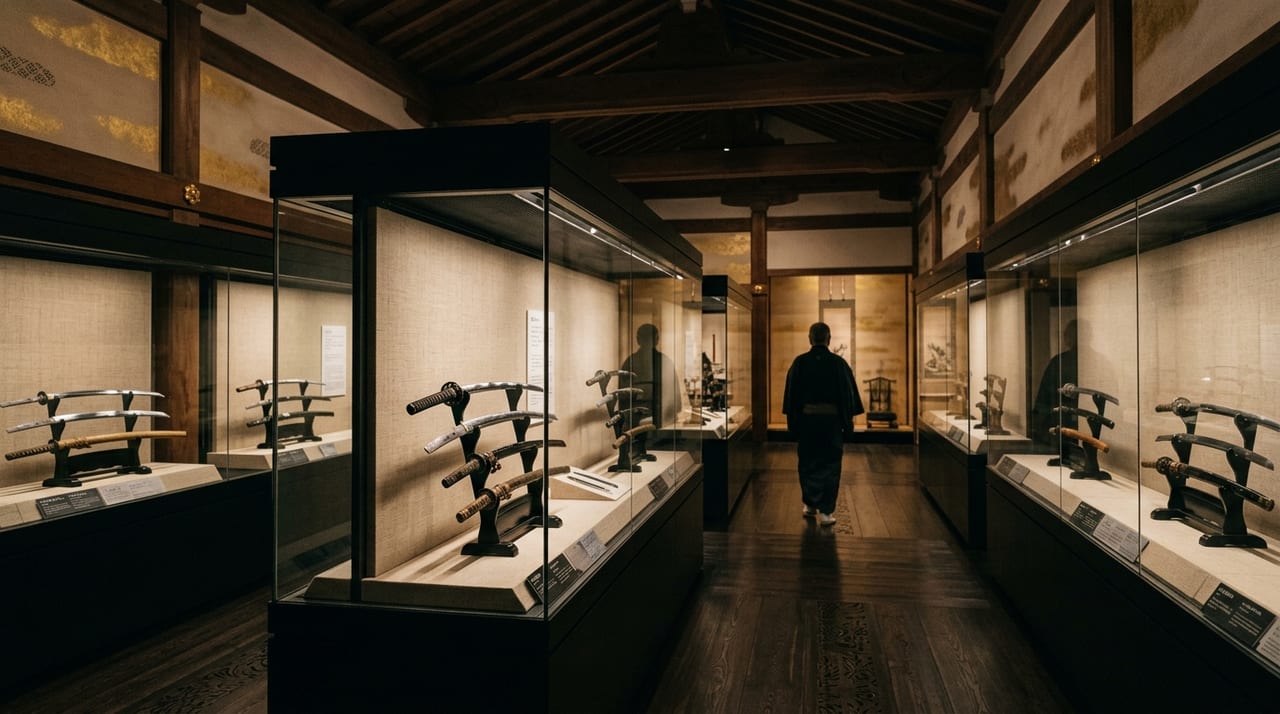
 * Image is for illustrative purposes only.
Nikkō Futarasan Shrine Treasure House
日光二荒山神社宝物館
Overview
Futarasan Shrine and the History of Nikkō-san
Nikkō Futarasan Shrine (Futarasan-jinja) is an ancient shrine said to have been founded by Shōdō Shōnin in 767 (Jingo-keiun 1). It is one of the “two shrines and one temple” of Nikkō-san (Tōshō-gū, Futarasan Shrine, and Rinnō-ji), and it is included among the constituent properties of the UNESCO World Heritage site “Shrines and Temples of Nikkō.” The enshrined deities are three: Ōnamuchi no Mikoto, Tagorihime no Mikoto, and Ajisukitakahikone no Mikoto, and the shrine is known as a deity of matchmaking, childbearing, agriculture, and transportation. Since ancient times Nikkō-san has drawn faith as the largest sacred mountain in the Kantō region. In the Heian period it received the reverence of Kantō warrior clans, and in the Kamakura period it developed greatly under the protection of the shogunate. In the Edo period, Tōshō-gū, enshrining Tokugawa Ieyasu, was built adjacent to it, and many worshippers visited from across the country. The Treasure House is not at the main shrine within Nikkō-san, but on the grounds of Futarasan Shrine Chūgūshi on the shore of Lake Chūzenji (said to have been founded by Shōdō Shōnin in 784 (Enryaku 3)).
History and Treasures of Dedicated Swords
The swords held by the Treasure House number 179, including 2 National Treasure tachi and 16 Important Cultural Properties (10 tachi, 1 ken, and 5 naginata). They include the National Treasure great tachi inscribed “Bishū Osafune Tomomitsu, Jōji 5, 2nd month” (Nanboku-chō period, 1366), as well as Important Cultural Properties such as the hyōgo-gusari tachi mounting with black lacquer and yamagane hirumaki binding and the naginata mounting with gilt-bronze fittings and hirumaki binding. The collection also includes sacred treasures that convey the history of mountain faith and Nikkō-san, such as Important Cultural Property artifacts excavated from the Mount Nantai (Nantaisan) summit ruins, and Nanboku-chō period gilt-bronze mikoshi and gilt-bronze horse trappings (Important Cultural Properties).
The Culture of Dedicating Tachi and Katana
The custom of dedicating swords to shrines (hōnō-tō) in Japan arose from a faith in which swords, as symbols of the power of the gods and as yorishiro (objects that receive a deity), were offered to the gods. The custom of dedicating famous swords to shrines to pray for martial fortune before and after battle became widely established in warrior society from the Heian period onward, and many swords have been dedicated to Futarasan Shrine at Nikkō. The swords of the Treasure House help us understand Japanese swords not merely as works of art, but as objects of faith and as proof of a warrior’s vow. Dedicated swords of various forms, including tachi, ken, and naginata, have been transmitted, and the diversity of these forms also conveys the richness of Japanese sword culture.
Joint Visits with Nikkō Tōshō-gū and Rinnō-ji
The main shrine of Futarasan Shrine is in close proximity to Tōshō-gū and Rinnō-ji within Nikkō-san, so the two shrines and one temple can be visited on foot. To reach Chūgūshi, where the Treasure House is located, you climb Irohazaka from within Nikkō-san toward the shore of Lake Chūzenji. The Tōshō-gū Treasure House also holds many swords and armor associated with the Tokugawa family. By visiting the Tōshō-gū and Futarasan Shrine Treasure Houses together, one can understand the sword faith of Kantō warrior culture in three dimensions. Within the World Heritage area are concentrated National Treasures and Important Cultural Properties such as the Shinkyō bridge and Yōmeimon gate, and a visit that combines sword culture with architectural art offers an opportunity to experience the essence of Japanese culture. Nikkō is also easily reached by Shinkansen (to Utsunomiya) and limited express (Tōbu Nikkō Line). As a sightseeing destination reachable as a day trip from Tokyo, it draws many visitors from Japan and abroad.
Sword Exhibitions and Seasonal Events
The Treasure House also holds special exhibitions. From June 2023 (Reiwa 5) to February 2025 (Reiwa 7), the special exhibition “Meitō Goshinpō” (Famous Swords and Sacred Treasures) was held, displaying famous swords and sacred treasures designated as National Treasures and Important Cultural Properties. Through its fusion with the natural setting of Nikkō (the cedar avenues, waterfalls, and mountains), worship at Futarasan Shrine offers visitors a spiritual experience beyond mere sightseeing, and it is an ideal setting for understanding swords as “objects of warrior faith.” For sword enthusiasts visiting Nikkō-san, a journey through the three facilities of Tōshō-gū, Futarasan Shrine, and Rinnō-ji is a unique way to grasp the overall picture of Japanese warrior faith. The cherry blossoms in spring and the autumn foliage are especially beautiful, and during the best seasons for visiting, many sword fans and enthusiasts of Japanese culture come from Japan and abroad. The entire precincts, including the subsidiary and affiliated shrines of Futarasan Shrine, form a rich space that lets one experience the depth of sword faith. It is a precious place to understand Shintō culture, warrior culture, and spiritual culture as one through swords.
Highlights
- National Treasure and Important Cultural Property swords── Of the 179 swords in the collection, 2 are National Treasure tachi and 16 are Important Cultural Properties (10 tachi, 1 ken, 5 naginata). These include the National Treasure great tachi inscribed “Bishū Osafune Tomomitsu, Jōji 5, 2nd month” (1366)
- Culture of dedicated swords and faith── Learn the warriors’ culture of dedicating swords in prayer for martial fortune through original artifacts. A perspective that understands swords as objects of faith rather than as works of art
- Dedicated swords in many forms, including tachi, ken, and naginata── Important Cultural Properties such as the hyōgo-gusari tachi mounting with black lacquer and yamagane hirumaki binding and the naginata mounting with gilt-bronze fittings and hirumaki binding, so that not only the blades but also the mountings have been transmitted
- Located at Chūgūshi on the shore of Lake Chūzenji── On the grounds of Futarasan Shrine Chūgūshi, reached by climbing Irohazaka from the main shrine within Nikkō-san. It is also the climbing entrance to Mount Nantai (Nantaisan)
- Artifacts from the Mount Nantai summit ruins (Important Cultural Property)── Houses sacred treasures excavated from the Okunomiya at the summit of Mount Nantai, which convey the history of mountain faith
* Opening hours and exhibitions are subject to change. Please check the official website before visiting.