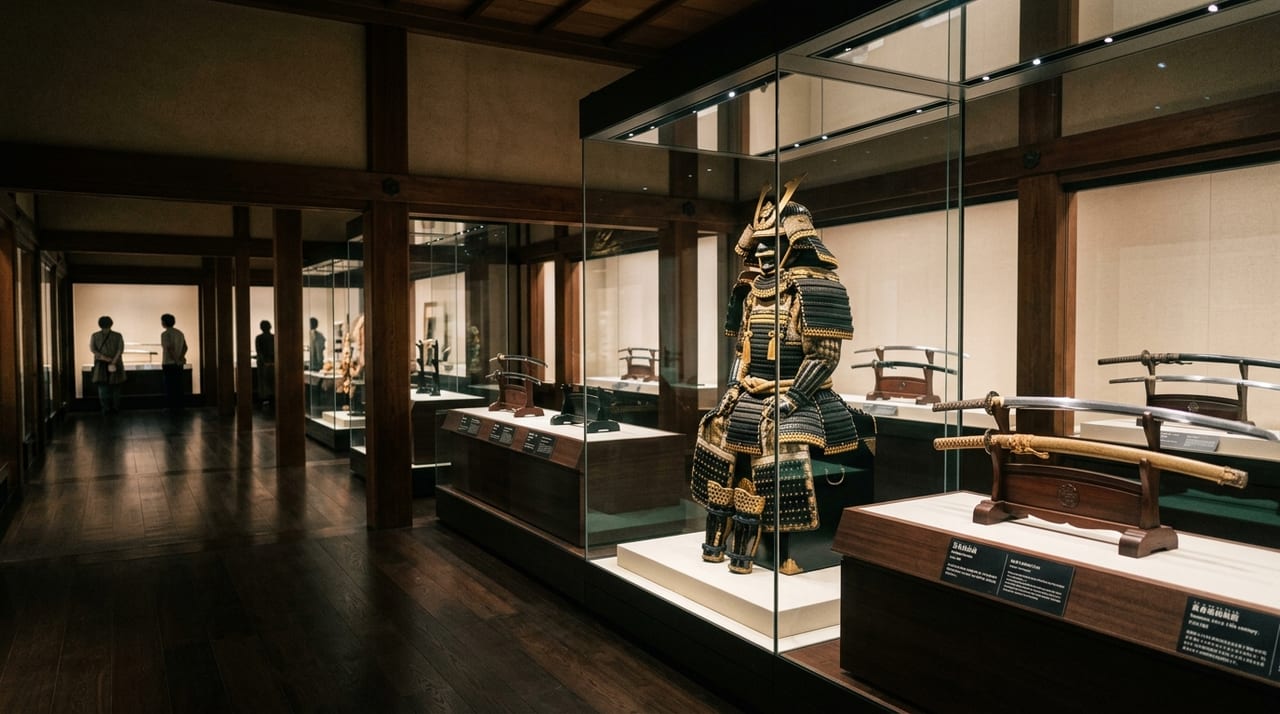
 * Image is for illustrative purposes only.
Kamakura Museum of National Treasures
鎌倉国宝館
Overview
The Kamakura Museum of National Treasures is a history and art museum operated by the City of Kamakura, and it has the unique location of being situated within the precincts of Tsurugaoka Hachimangū. Since its opening in 1928 (Shōwa 3), it has served to protect and display National Treasures and Important Cultural Properties owned by temples and shrines in Kamakura and the surrounding area. Founded in light of the experience of losing regional cultural properties in the Great Kantō Earthquake of 1923 (Taishō 12), the museum was established as a facility to protect cultural properties from disasters and display them together under one roof.
Tsurugaoka Hachimangū is a shrine to a martial deity that Minamoto no Yoritomo revered as the guardian deity of the Kamakura shogunate, and the museum holds on deposit the National Treasure “Ancient Sacred Treasures of Tsurugaoka Hachimangū” (Koshinpō-rui), which the shrine owns. This includes a tachi decorated with apricot-leaf motifs in mother-of-pearl on ikakeji lacquer, a flat quiver (hira-yanagui) with the same decoration, black-lacquered arrows, and a vermilion-lacquered bow. It also holds the National Treasure “Magaki ni Kiku Raden Makie Suzuribako” (a writing box with chrysanthemums and brushwood fence in mother-of-pearl and maki-e). The collection extends to sculpture, painting, crafts, calligraphy, ancient documents, and archaeological materials. In the permanent exhibition hall, regional Buddhist sculptures are displayed without glass cases, and the special exhibition hall hosts about six exhibitions a year.
The Sōshū-den tradition is a school of sword-making that flourished in Kamakura, the home of the Kamakura Museum of National Treasures, and it produced swordsmiths such as Masamune, Sadamune, and Sōshū Hiromitsu, who had a great influence on later generations.
The precincts contain many historic sites associated with the Minamoto and Hōjō clans, and touring them together with the museum's exhibits allows visitors to understand the history of the Kamakura shogunate in three dimensions. It is also possible to combine a visit with the Great Buddha of Kamakura and the temple group of the Kamakura Gozan, such as Kenchō-ji and Engaku-ji.
Highlights
- Location within Tsurugaoka Hachimangū precincts — a museum opened in 1928 (Shōwa 3) within the precincts of the shrine to the Minamoto's martial deity
- Kamakura, birthplace of the Sōshū-den — the home of the sword-making tradition that produced Masamune and Sadamune
- National Treasure “Ancient Sacred Treasures of Tsurugaoka Hachimangū” (Koshinpō-rui) — deposited items including a tachi decorated with apricot-leaf motifs in mother-of-pearl on ikakeji lacquer, a flat quiver (hira-yanagui), black-lacquered arrows, and a vermilion-lacquered bow
- Buddhist sculpture without glass cases — view Buddhist sculpture from the Kamakura area up close in the permanent exhibition hall
- About six special exhibitions a year — showing sculpture, painting, crafts, and ancient documents passed down in the City of Kamakura and nearby shrines and temples
- Combined tour with the Kamakura Gozan and the Great Buddha — can be visited together with Kenchō-ji, Engaku-ji, and the Great Buddha of Kamakura
* Opening hours and exhibitions are subject to change. Please check the official website before visiting.