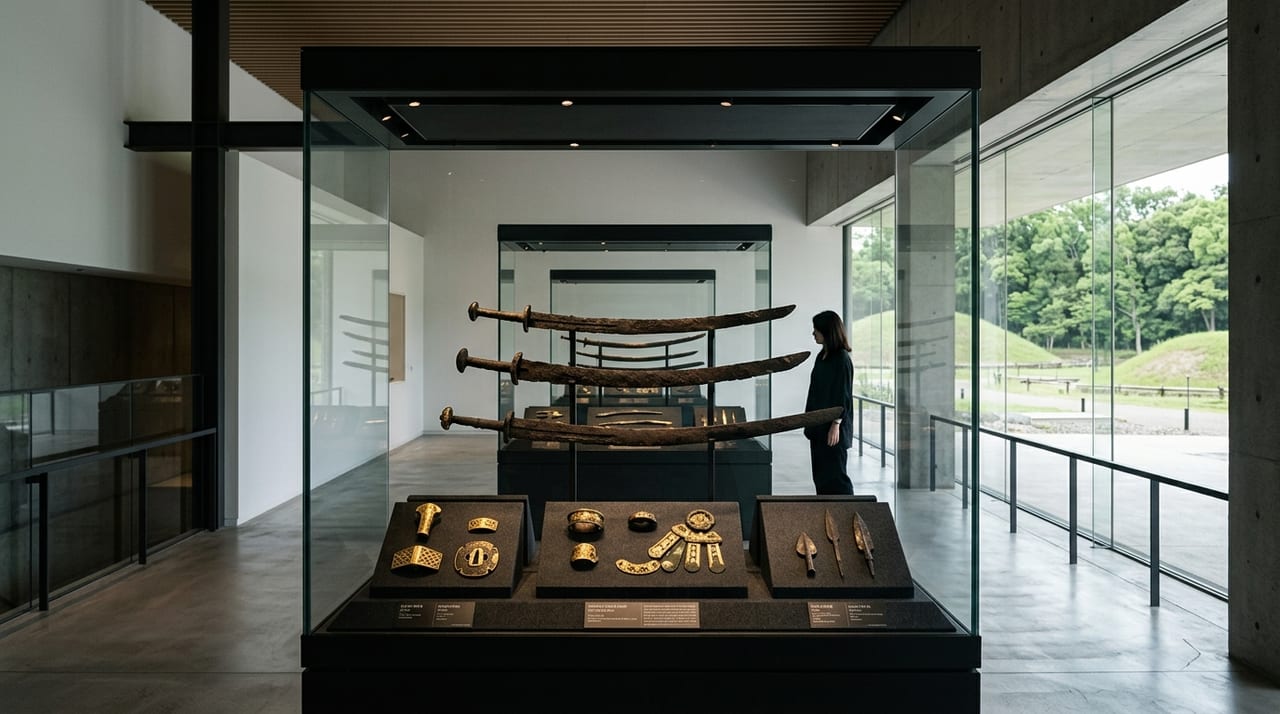
 * Image is for illustrative purposes only.
Sakitama Historic Site Museum
埼玉県立さきたま史跡の博物館
Overview
The Sakitama Historic Site Museum is a museum built beside the Sakitama Kofun Cluster, an important archaeological site of the Kofun period. As the facility that houses and displays the Kinsakumei Tekken (iron sword with gold-inlaid inscription), an important discovery in ancient history, it draws strong attention from sword enthusiasts and historical researchers.
The museum's greatest treasure is the Kinsakumei Tekken, designated a National Treasure. This iron sword was excavated in 1968 during investigations of Inariyama Kofun (late 5th century). It measures 73.5 cm in total length and bears a gold-inlaid inscription of 115 characters on both faces. As a 5th-century inscription that names Wakatakeru no Ōkimi (Emperor Yūryaku), it played a decisive role in clarifying the Kofun period, for which written sources are scarce.
Inariyama Kofun and the other tumuli of the Sakitama Kofun Cluster were built from the late 5th to the mid-7th century by powerful clans of the Kantō region (said to be a branch of the Musashi no Kuni no Miyatsuko). The museum stands within the historic park of the tumulus cluster and permanently displays a large number of archaeological artifacts excavated here, including weapons, horse gear and personal ornaments. Among them, the weapons of the Kofun period are highly valued as indispensable material for learning the origins of sword culture.
Walking through the lush historic park, visitors can encounter some of Japan's oldest written records and the origins of the Japanese sword. It is one of the most important sacred sites for swords and ancient history in the Kantō region.
Highlights
- National Treasure Kinsakumei Tekken: a 5th-century iron sword bearing a gold-inlaid inscription of 115 characters, the most important written record of the Kofun period, naming Emperor Yūryaku
- Complete Inariyama Kofun excavation finds: comprehensive display of the grave goods of a 5th-century clan, including weapons, horse gear, magatama beads and personal ornaments
- Sakitama Kofun Cluster Historic Park: nine preserved tumuli, including keyhole-shaped and round burial mounds, and one of the largest tumulus clusters in the Kantō region
- Large 73.5 cm iron sword: shows the status of weapons in the Kofun period and the sword's position as a prestige object
- Sakitama Kofun Park in Gyōda City: a green historic park surrounded by cherry blossoms in spring and autumn foliage in fall
* Opening hours and exhibitions are subject to change. Please check the official website before visiting.