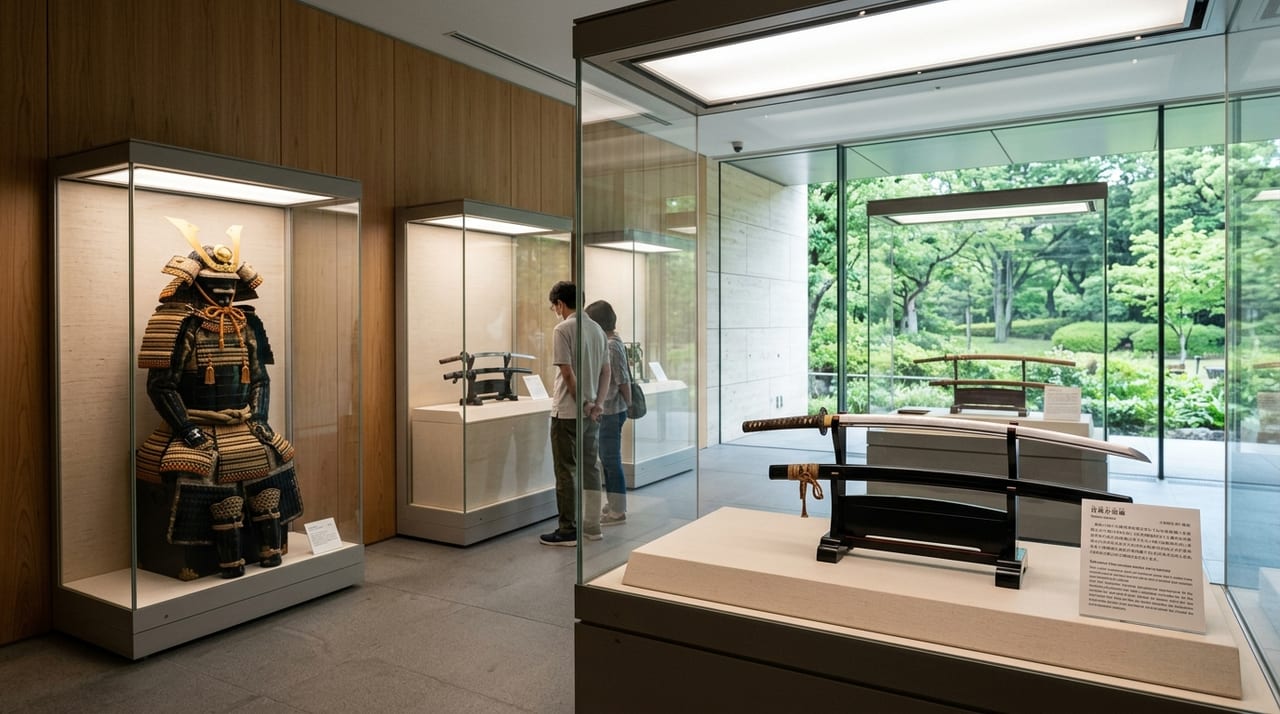
 * Image is for illustrative purposes only.
Saitama Prefectural Museum of History and Folklore
埼玉県立歴史と民俗の博物館
Overview
Museum Overview
Opened in 1971 (Shōwa 46) as the Saitama Prefectural Museum, the museum was renamed to its current name in 2006 (Heisei 18). It is a prefectural general museum. Located in the green surroundings of Ōmiya Park in Saitama City, the museum comprehensively presents the history, culture, and folklore of Musashi Province (present-day Saitama Prefecture and parts of Tokyo and Kanagawa Prefecture), and displays history from the Palaeolithic period to modern times. Its collection boasts a wide range of material, including archaeological materials, historical materials, folk materials, swords, armour, textiles and dyed works, and paintings.
Sword Culture of Musashi Province
Musashi Province holds a special place in the history of Japanese swords. From the Muromachi period onward, it was known as a sword-producing region. In the Edo period especially, master smiths gathered from across the country around Edo (Tokyo), and sword schools known as "Edo shintō" and "Edo shinshintō" were formed. Musashi Province was also the home base of the Tokugawa shogunate, and it was a place where famous swords from across the country accumulated. The Saitama Prefectural Museum of History and Folklore holds a National Treasure tachi by Kagemitsu, a Kamakura-period smith of Bizen Osafune (tachi inscribed 'Bizen no Kuni Osafune-jū Saemon-no-jō Kagemitsu, sakusha Shinji Saburō Kagemasa' and dated the 7th month of Karyaku 4 (written 'Karyaku 2-2')), and a National Treasure tantō (tantō inscribed 'Bishū Osafune-jū Kagemitsu' and dated the 3rd month of Genkō 3, commonly known as "Kenshin Kagemitsu").
Features of the Sword Collection
The museum's swords include an Important Cultural Property katana (unsigned katana attributed to Sukezane) deposited by Ryūmon-ji, and a katana by Fujieda Tarō Teruyoshi, which is designated as a Saitama Prefectural Cultural Property. The National Treasure tachi and tantō are not always on display. The museum also has a substantial collection of sword fittings, armour, and military equipment, allowing visitors to experience the attire and martial culture of early-modern warriors in a comprehensive way.
Warriors' Lives and Swords
In the museum's permanent exhibitions, the history of warriors in the medieval and early-modern periods is presented in history galleries such as "Musashi Warriors" and "Living in Turbulent Times." Rather than simply displaying famous swords, the exhibition design lets visitors understand, within their historical context, what role swords played in warriors' daily lives, etiquette, and spiritual culture. This design serves a broad audience, from beginners to specialists. Life in Edo-period villages is also introduced.
Ōmiya Park and Surroundings
The museum is located within Ōmiya Park and is also adjacent to Ōmiya Hikawa Shrine. Ōmiya Hikawa Shrine is an ancient shrine revered across the Kantō region as Musashi Ichinomiya. Visiting both the shrine and the museum allows visitors to experience the history and culture of Musashi Province as a whole. Ōmiya Park also contains facilities such as the Ōmiya Park Small Animal Zoo and Ōmiya Baseball Stadium, making it well suited to family visits. Its location within walking distance of JR Ōmiya Station gives good access from both the Tokyo and Saitama metropolitan areas, and it is convenient for visitors from farther away.
Special Exhibitions and Educational Activities
Special exhibitions and planned exhibitions are held throughout the year. Educational programs for schools are also well developed, and collaboration with history education at elementary and junior high schools in Saitama Prefecture is active. The museum also functions as a specialized institution for archaeological and folklore research on Musashi Province, and it supports material viewing and research for scholars.
Highlights
- National Treasure tachi and tantō — The museum holds the National Treasure tachi inscribed 'Bizen no Kuni Osafune-jū Saemon-no-jō Kagemitsu, sakusha Shinji Saburō Kagemasa' and dated the 7th month of Karyaku 4 (written 'Karyaku 2-2'), and the National Treasure tantō inscribed 'Bishū Osafune-jū Kagemitsu' and dated the 3rd month of Genkō 3 ("Kenshin Kagemitsu"). Both are works of Kagemitsu of Bizen Osafune (not always on display)
- Important Cultural Property and prefecturally designated swords — The Important Cultural Property "unsigned katana attributed to Sukezane," deposited by Ryūmon-ji, and a katana by Fujieda Tarō Teruyoshi, a Saitama Prefectural Cultural Property
- Warrior history — History galleries such as "Musashi Warriors" and "Living in Turbulent Times" present the history of warriors from the medieval to the early-modern period. The museum also holds the Mogami dōmaru armour laced with light-blue (hanada) cords, a Saitama Prefectural Cultural Property
- Horse-gear and armour cultural properties — Materials conveying the region's warrior culture, including the mother-of-pearl inlaid saddle and the saddle with Genji-guruma crest deposited by Hisaizu Shrine (both Saitama Prefectural Cultural Properties)
- Proximity to Ōmiya Hikawa Shrine (Musashi Ichinomiya) — The ideal course for experiencing the history and culture of Musashi Province in depth, combining a visit to one of the Kantō region's most important ancient shrines with the museum
* Opening hours and exhibitions are subject to change. Please check the official website before visiting.