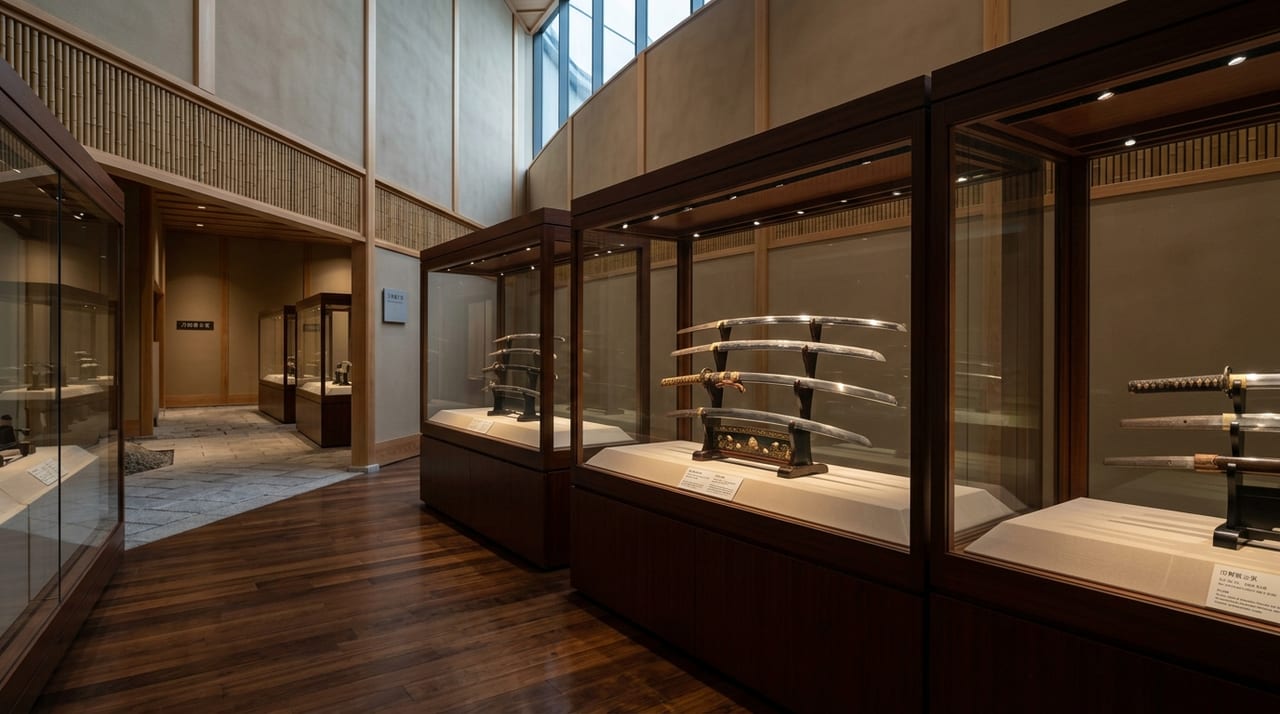
 * Image is for illustrative purposes only.
Nezu Museum
根津美術館
Overview
Overview of the Museum
The museum opened in 1941 (Shōwa 16) on the basis of the East Asian art collection assembled over a lifetime by the first Nezu Kaichirō (1860–1940), a businessman who served as president of the Tōbu Railway. The collection comprises about 7,400 objects, including 7 National Treasures, 87 Important Cultural Properties and 94 Important Art Objects. Centered on Japanese and Chinese art, its high quality is highly regarded internationally.
Sword Fittings
The collection also includes Japanese swords and their fittings. The museum holds about 1,200 sword fittings from the Mitsumura Collection of roughly 3,000 pieces assembled by Mitsumura Toshimo.
Notable National Treasures
Among the National Treasures, Ogata Kōrin's “Irises” screen (Kakitsubata-zu Byōbu) is especially famous and is displayed each year in April and May, timed to the blooming of the kakitsubata irises. Visitors can also see “Waterfall at Nachi” (Nachi-taki-zu, National Treasure) and other treasures of East Asian art that transcend genre.
Architecture
The current main building, newly built in 2009, was designed by architect Kuma Kengo. Its exterior, which makes use of bamboo and natural materials, brings a quiet Japanese sensibility to the refined urban landscape of Omotesandō. The long approach through a bamboo grove from the entrance to the galleries is an outstanding device that leads visitors from everyday life into the world of art. The lighting throughout the building has been carefully calculated to display the works in the optimal environment.
Tea Houses and Garden
The Japanese garden of about 17,000 m² lies in a prime location in Minami-Aoyama, Tokyo, yet opens into a separate world reminiscent of deep mountains and secluded valleys. The pond-and-stroll garden has tea houses scattered throughout, along with highlights such as stone Buddhist images and a colony of kakitsubata irises. The garden café NEZUCAFÉ lets visitors enjoy light meals and drinks surrounded by greenery. Strolling the garden after viewing the art and lingering over a drink at the café is a distinctive cultural experience unique to the Omotesandō and Minami-Aoyama area.
Highlights
- Sword fittings collection — about 1,200 pieces from the Mitsumura Collection assembled by Mitsumura Toshimo
- Museum architecture by Kuma Kengo — refined exterior using bamboo and natural materials; the bamboo-grove approach at the entrance is an outstanding device leading visitors from everyday life into the world of art
- Japanese garden of about 17,000 m² — a deep-mountain atmosphere in central Minami-Aoyama; tea houses, stone Buddhist images and a colony of kakitsubata irises dot the pond-and-stroll garden. The garden café NEZUCAFÉ is also popular
- A hall of East Asian art with 7 National Treasures — Ogata Kōrin's “Irises” screen (National Treasure), “Waterfall at Nachi” (National Treasure) and other masterpieces that transcend genre
* Opening hours and exhibitions are subject to change. Please check the official website before visiting.