Introduction to Tsuba Appreciation — Materials, Shapes, and Design Highlights to Know When Viewing a Tsuba for the First Time
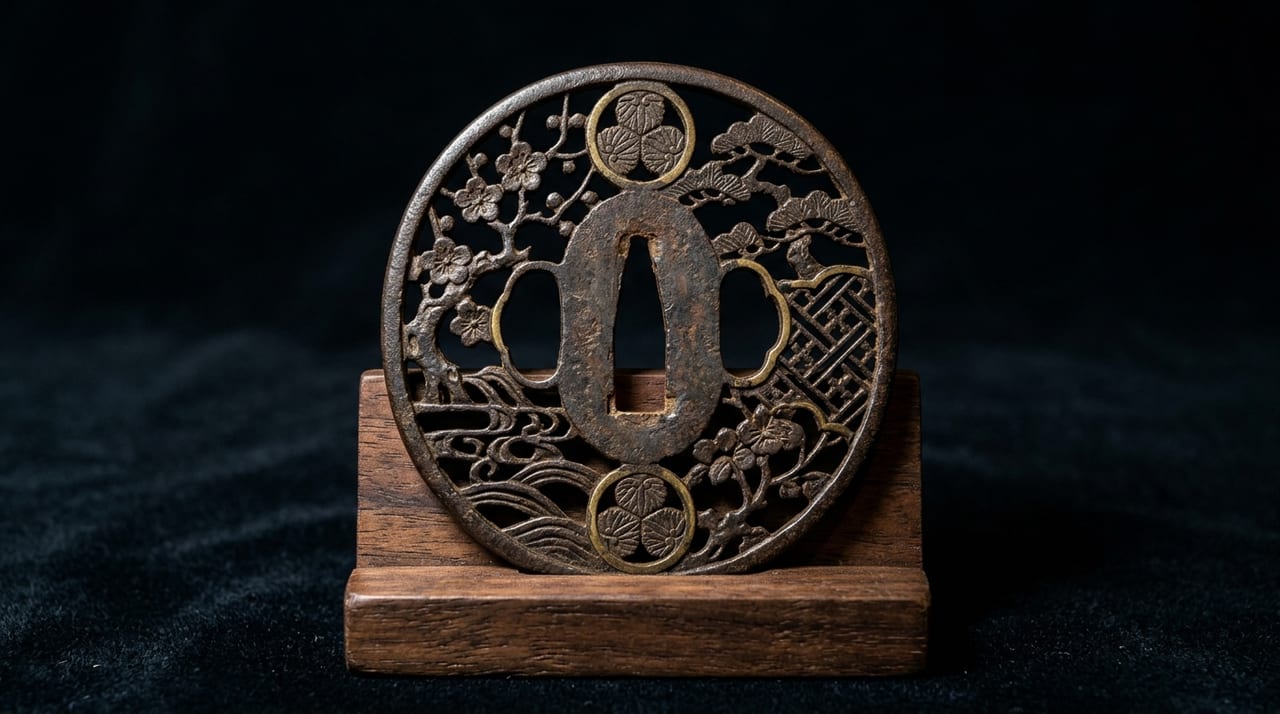 * Image is for illustrative purposes only.
Table of Contents
What Is a Tsuba — Its Place in Japanese Sword Fittings
A tsuba is a circular or oval hand guard inserted between the tsuka and the blade of a Japanese sword. In combat it served the practical purpose of preventing an opponent's blade from sliding into the tsuka, and in times of peace it also developed as a craft object expressing the aesthetic sensibility, family crests, and religious beliefs of samurai. Even in modern Japanese sword appreciation, the tsuba stands as an important object of study alongside the sword itself, and there are many dedicated collectors (tsuba collectors).
Tsuba have their own distinct system of appraisal independent from the sword itself. By developing the ability to read materials, construction methods, designs, schools, and mei, the pleasure of tsuba appreciation expands enormously. This article explains the key points to look for, step by step, for those handling a tsuba for the first time.
First, Look at the Material — Iron or Metalwork?
Tsuba materials fall broadly into two categories: iron tsuba (tetsu-tsuba) and metalwork tsuba (kinkō-tsuba).
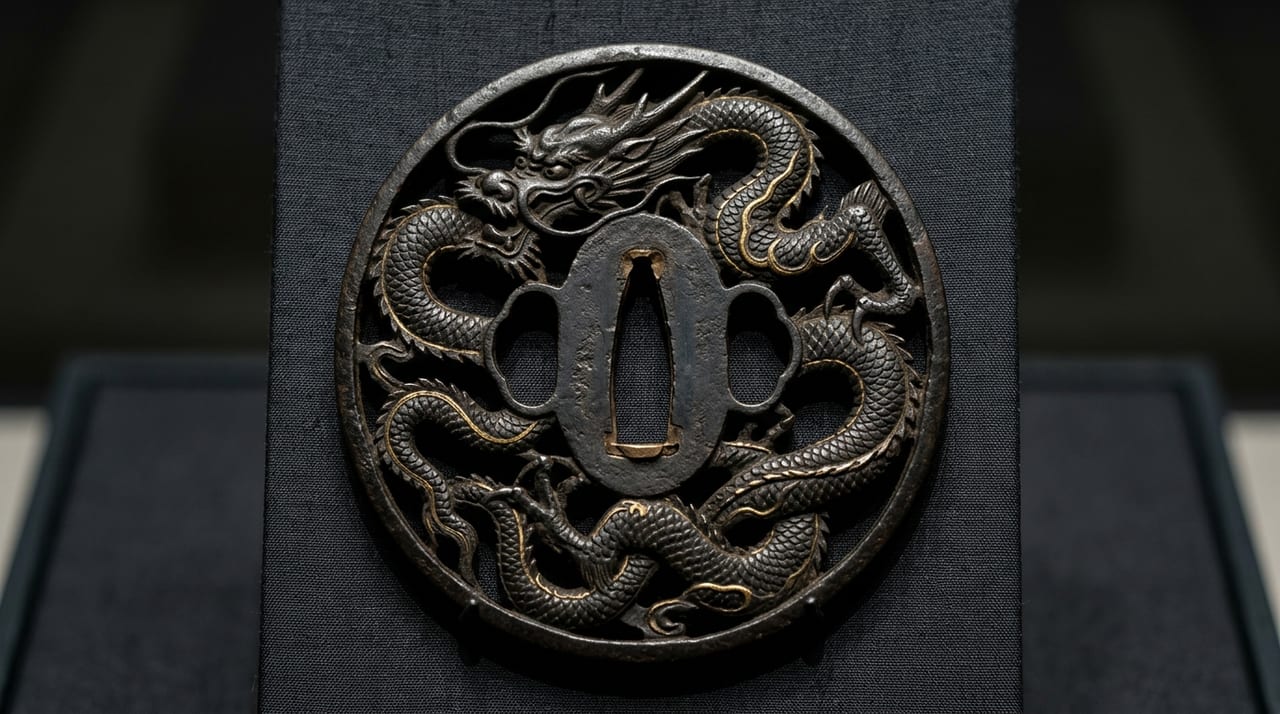
Iron tsuba are, as the name implies, made of iron, and the rust color of the jigane and the surface texture (hadame) are the key points of appreciation. The surface expression of the jigane varies by place of origin and school: Owari tsuba are known for the crisp jihada of black iron, Higo tsuba for the rugged quality of the iron surface and the solemnity created by nunome-zōgan, and Kyō tsuba for the precision of their workmanship. Iron tsuba decorated with sukashi (openwork carved through the jigane) are called sukashi-tsuba, and distinct sukashi styles have been handed down in Owari, Kyō, and Higo.
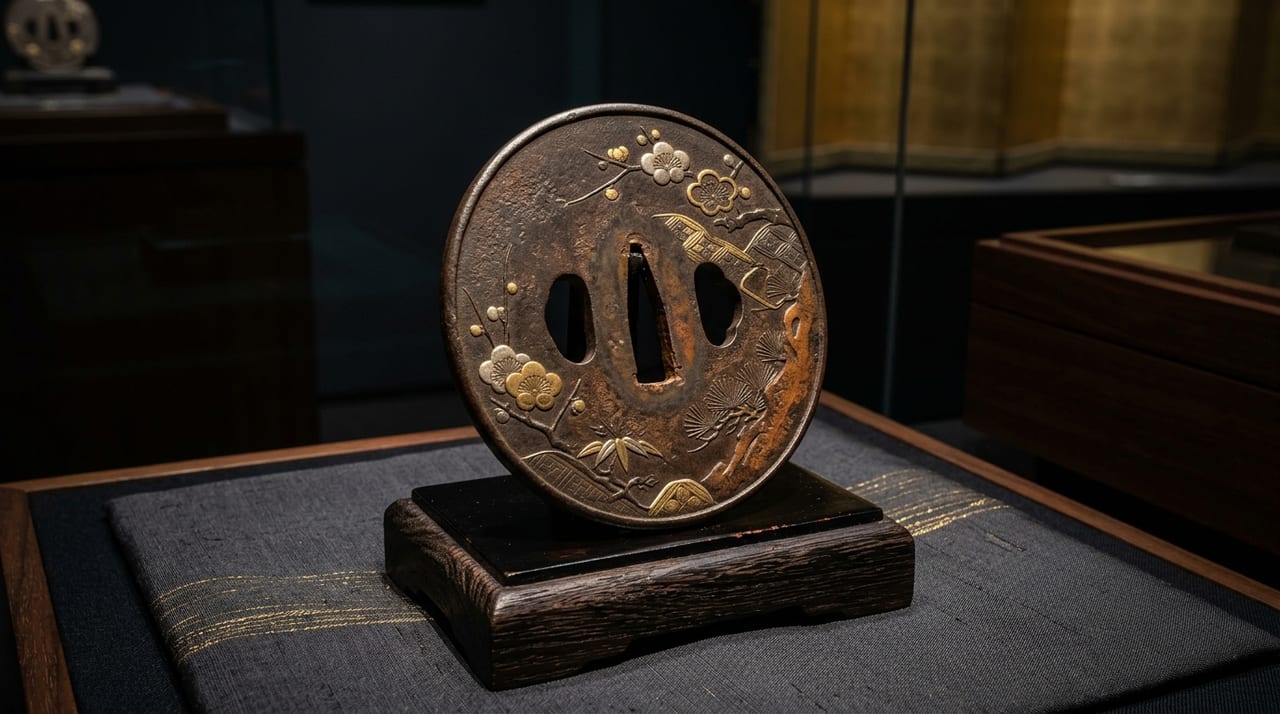
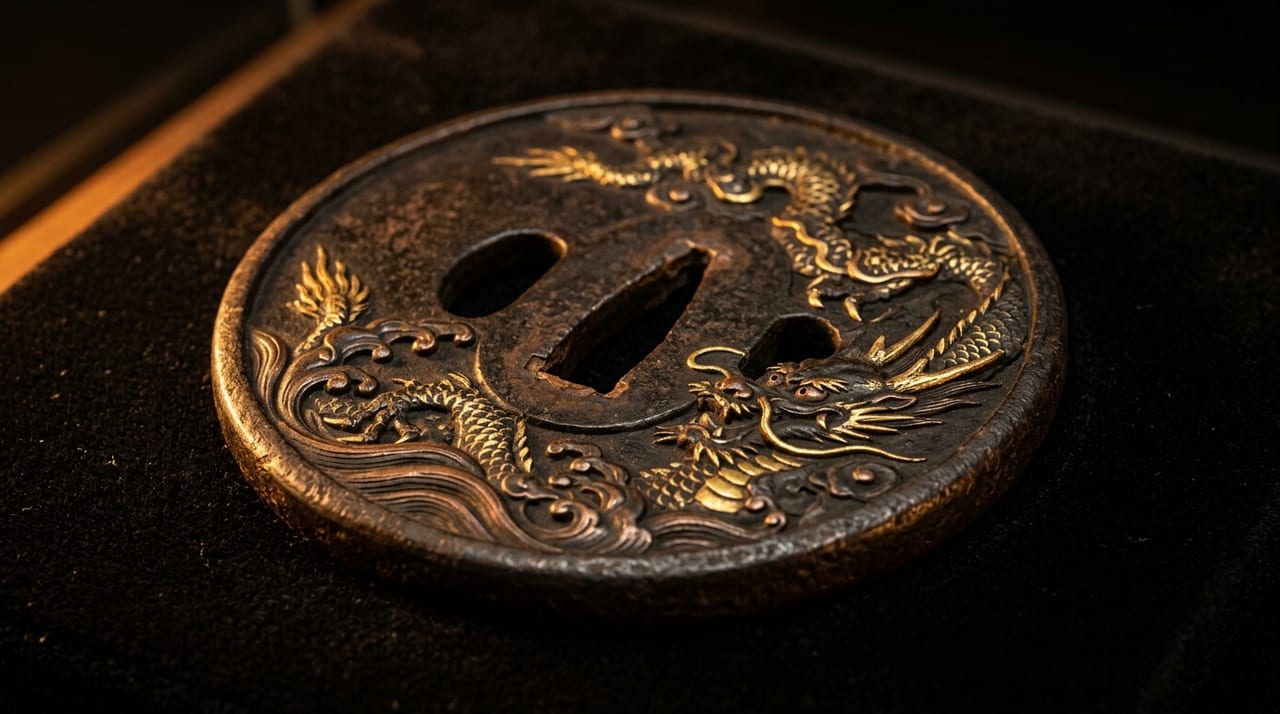
Metalwork tsuba are made from soft metals such as copper, brass, shibuichi, and shakudō, and are decorated with elaborate ornamentation using techniques such as chōkin, zōgan (inlay), and takaniku-bori. The Gotō family (Gotōke) is cited as a representative school, founded in the mid-Muromachi period (first generation Yūjō, from 1440) and serving as official metalwork craftsmen to the shogunal household through the late Edo period (17th generation). Metalwork tsuba were widely used on the formal dress swords of the samurai class, and the intricate designs of plants, figures, birds, and animals are the subject of evaluation.
Looking at the Shape — Outline and Rim
There are also many variations in the outline (silhouette) of a tsuba. The main ones include marugata (circular), nari-katachi (oval), aoigata (hollyhock form), mokkōgata (wood-melon form), and fundōgata (weight form). Older tsuba from before the Sengoku period tend toward simple shapes that prioritize practicality, while from the Edo period onward there is a tendency for more elaborate outlines that place emphasis on design.
The shape of the rim area, called the mimi, is also one of the highlights. Types include the marumi (rounded cross-section), the kirimi (angular), and the kiriotoshimi (inward-sloping), and the way the mimi is finished alone can dramatically change the overall impression of the tsuba.
Reading the Design and Sukashi
The core of a tsuba's decorative expression lies in its design (ishō). The sukashi designs found on iron tsuba include the following representative patterns.
- Plant motifs (paulownia, chrysanthemum, cherry blossom, autumn leaves, pine, bamboo, plum)
- Animal motifs (dragon, crane, rabbit, butterfly, fish)
- Geometric motifs (mitsudomoe, shippō, kikkō)
- Object motifs (fan, gunbai, ritual implements)
- Family crest designs (tsuba shaped after the kamon of specific samurai families)
In metalwork tsuba, pictorial designs created through chōkin and zōgan are common, and elaborately crafted works depicting scenes from nōgaku, tales, and famous places can also be found. Designs are not mere decoration; they often reflect the beliefs, lineage, and aesthetic sensibility of the owner, and it is precisely in reading this background that the pleasure of tsuba appreciation lies.
Checking the Mei
Some tsuba have a mei cut into them, while others are mumei. The mei is often cut near the nakago-ana (tang hole) on the front (omote) or back (ura) of the tsuba. It may record the school name, tōkō name, and year of production, and serves as an important clue in appraisal.
However, since tsuba with spurious mei added in later generations (gōmei, ganmei) also circulate in some numbers, it is dangerous to judge value by the presence of a mei alone. It is safer to examine the character style of the mei, the movement of the nomi (chisel), and how naturally it blends with the metal surface, and to consult the evaluation documents (hozonshō, tokubetsu-hozonshō) of a reputable appraisal institution. NBTHK issues kanteisho (appraisal certificates) not only for sword blades but also for tōsōgu (including tsuba), making them a useful benchmark when collecting.
Storing and Caring for a Tsuba You Have Acquired — What Not to Do
Tsuba do not require the meticulous care that a sword blade does, but improper handling can diminish their value. The first cardinal rule is: do not leave it touched with bare hands. Perspiration and oil from fingers cause red rust on the jigane of iron tsuba and cloud the iro-age (coloring finish) of metalwork tsuba. After viewing, wipe lightly with a soft cloth and store in a paulownia wood box or similar container in a location with stable humidity.
The next rule is: do not carelessly remove rust. The deeply black jihada of an iron tsuba is stable black rust (oxide layer) cultivated over many long years, and this in itself forms the core of its appreciation value. If you polish away red rust with sandpaper or chemicals, the surface texture of the jigane and the patina of age are lost all at once and can never be restored. If treatment becomes necessary, it is safer to consult a sword dealer or specialist rather than attempting self-treatment.
The zōgan areas of metalwork tsuba are particularly delicate, and even rubbing firmly with a cloth can cause thin gold wire zōgan to lift or chip. Try to avoid direct contact with decorated surfaces as much as possible, limiting yourself to dusting them off.
Checkpoints When Choosing Your First Tsuba
When actually purchasing a tsuba, it is good to check the following points in order.
- Condition — Check for the progression of red rust, missing zōgan, and the presence of cracks or chips. For sukashi-tsuba, hold the thin sukashi sections up to the light to check for breaks and repair marks
- Presence of alterations — The nakago-ana is often widened to fit the sword being mounted, and the insertion of a sekigane (filler fitting) is normal; however, one that has been cut extremely wide is a factor that reduces appraisal value
- Kanteisho — For items above a certain price range, confirm whether a certificate from a reputable appraisal institution exists and whether the details recorded on the certificate match the actual piece
- Sense of market value — Compare multiple sales examples of works from the same school and of similar quality, and make your own judgment on the appropriateness of the price before deciding
For your first piece, I would recommend choosing a design you could gaze at for a long time without tiring, rather than fixating on the prestige of mei or school. A tsuba is a small universe that fits in the palm of your hand, and finding that one piece you love becomes the greatest driving force for learning.
For Deeper Tsuba Appreciation
When appreciating tsuba, it is important where possible to hold the actual piece and feel its weight and thickness. The expression of the rust on the jigane, the depth of the sukashi, the change in color of the zōgan — these carry a wealth of information that photographs cannot convey. In museum display cases you can normally see only one side, but given the opportunity, try to examine both faces, the sides, and the shape of the nakago-ana as well.
As specialist publications, "Nihon Tsuba Taikan" (Nezu Museum) and the illustrated catalogues of individual schools are useful references. Sword markets and sword dealers throughout Japan also offer opportunities to pick up and compare actual pieces, and as of 2026 they continue to be the best learning environment for deepening one's knowledge.