Practical Guide to Appreciating the Hamon — How to Direct Light, Tilt the Blade, and Use Your Tools
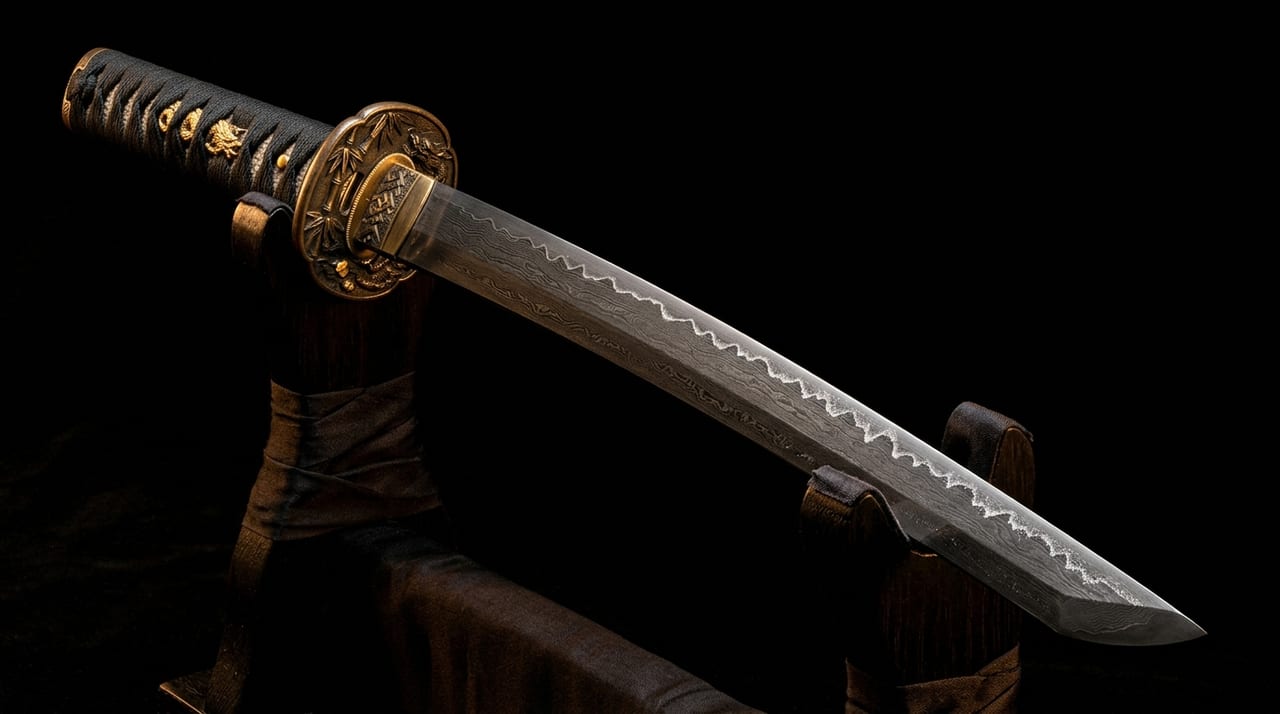 * Image is for illustrative purposes only.
Table of Contents
The Basics of Hamon Appreciation — Why "How It Looks" Matters
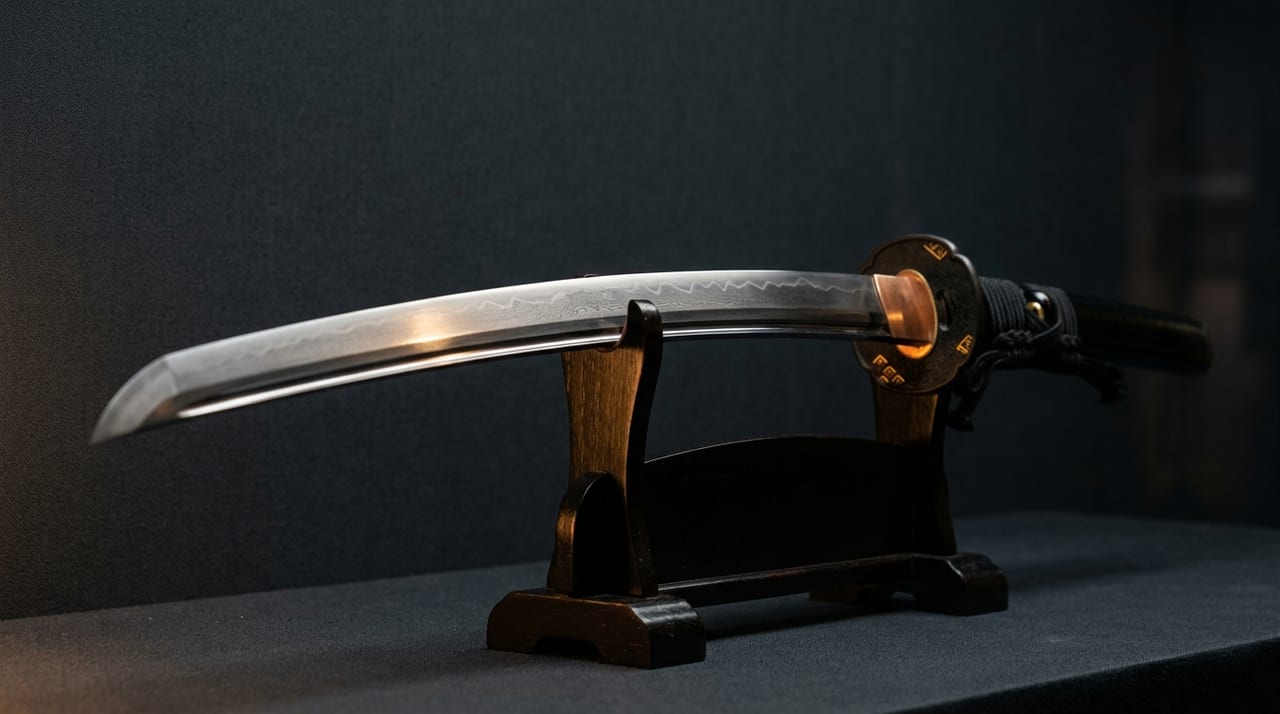
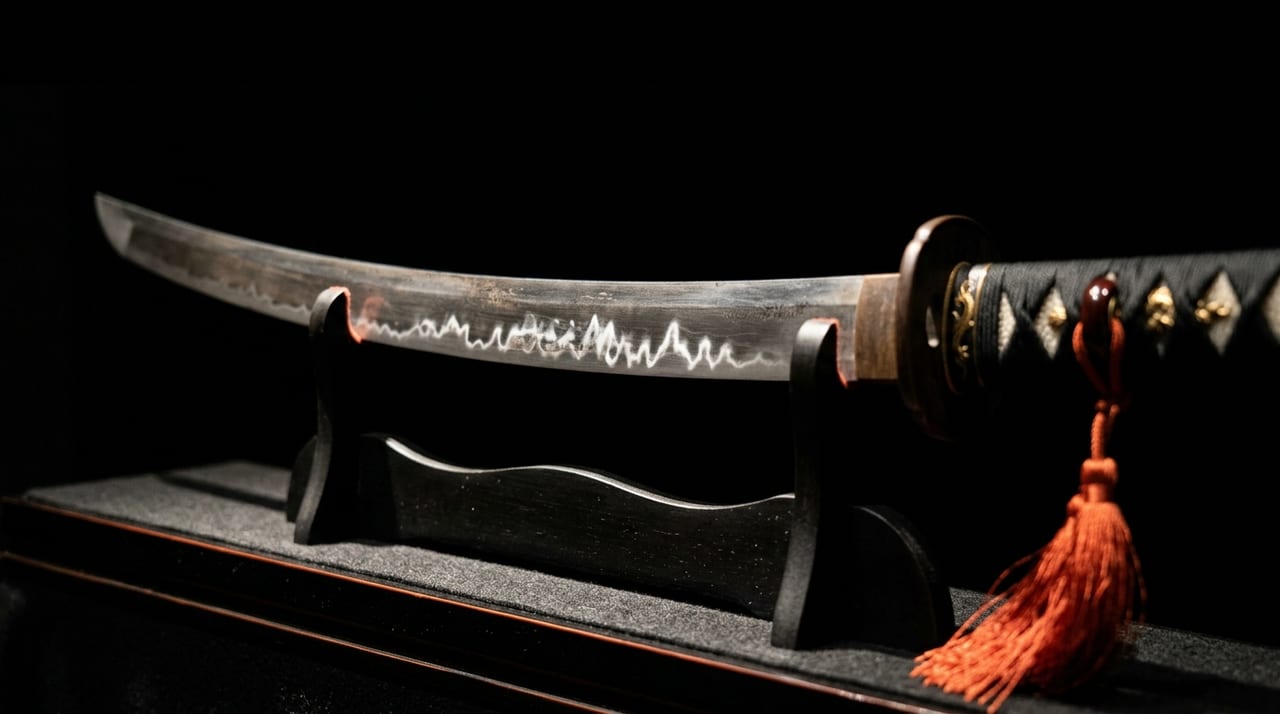
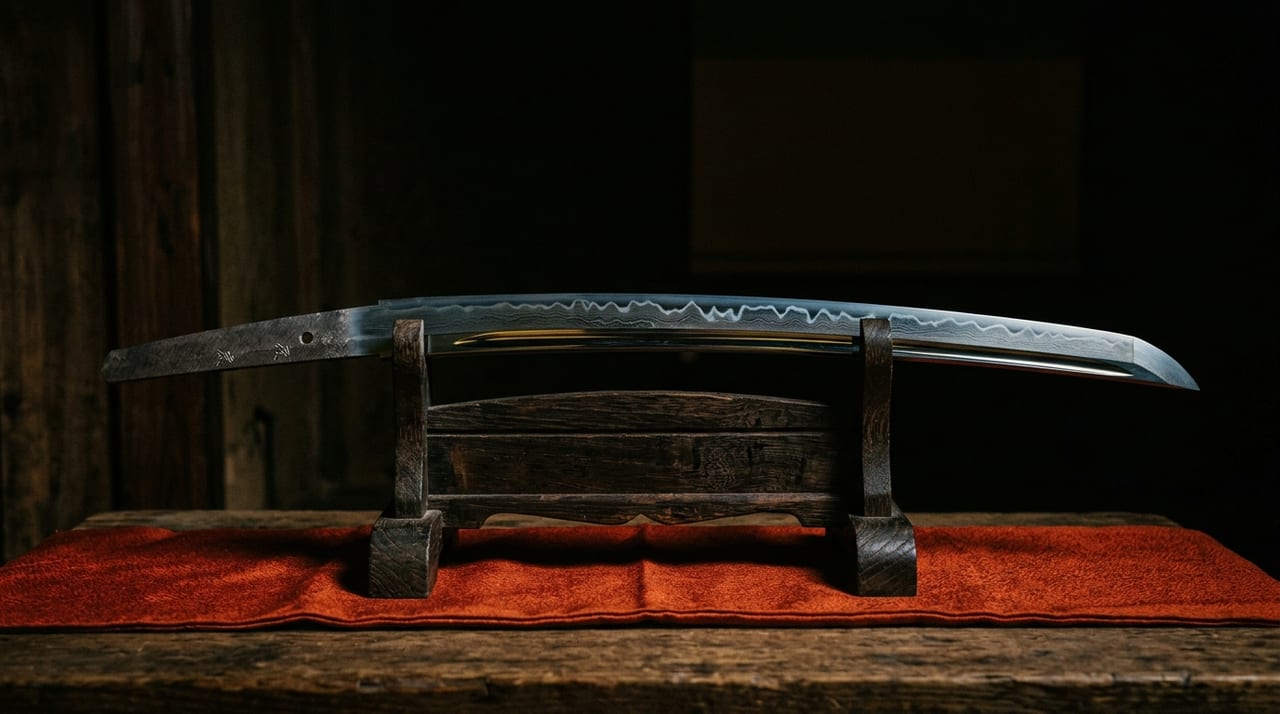
The hamon is the heart of Japanese sword appreciation, and at the same time the most difficult feature to observe. This yakiba pattern, which concentrates the individuality of schools, periods, and tōkō, will not reveal its true character without the right light source and angle. The hamon seen through the glass case of a museum is an entirely different thing from the hamon that a togi master or appraiser actually examines. This article systematically explains the practical procedures for correctly observing the hamon, from the selection of tools to the setup of the light source.
Choosing a Light Source — Differences Between Fluorescent Lamps, Incandescent Bulbs, and Spotlights
The ideal light source for observing the hamon is an incandescent bulb close to a point source or a high color-rendering LED spotlight (Ra90 or above). Fluorescent lamps and surface-emitting LED panels diffuse their light, causing the boundaries of the hamon to appear blurred. To distinguish the nie and nioi particles in the hamon, an environment in which light strikes strongly from a single direction is essential.
The ideal observation environment is as follows.
- Height of the light source: Position it 30–50 cm above the blade and illuminate at approximately 45 degrees from an angle
- Distance from the light source: 50–100 cm is standard. Getting too close makes localized reflections overly intense.
- Background: Using dark navy or black cloth as a backdrop makes the entire hamon from the hamachi to the kissaki easier to see.
- Blocking outside light: Natural light from windows changes direction, so observe with the curtains closed.
How to Tilt the Blade — The Meaning of "Taosu" and "Okosu"
When the angle of the light source is fixed, tilting the blade forward and back causes the appearance of the hamon to change dramatically. These operations are called "taosu" (tilting away) and "okosu" (tilting toward).
Taosu (tilting toward the shinogi): The hamon stands out white and clearly, and the activity within the blade (yo, ashi, kinsuji, sunagashi, etc.) becomes vivid. This angle is effective for confirming the outline of the hamon.
Okosu (tilting toward the kiriha): The textured quality of the nie and nioi particles stands out, making it easier to confirm the fine activity within the blade. This angle is suited for observing features characteristic of Sōshū-den such as "nie-kuzure" and kinsuji/inazuma.
Appraisers repeat taosu and okosu many times for a single blade while observing it. If one views at a fixed angle alone, it is easy to miss details.
Handling Uchiko and Nuguigami — Precautions to Know Before Appreciation
Uchiko is used to remove oil from the blade, but using uchiko solely for appreciation purposes is not recommended. The particles of uchiko have an abrasive action and, if used repeatedly, may damage the condition of the togi. For storage purposes, once or twice a month is considered appropriate.
The appropriate procedure before appreciation is as follows.
- Wipe the oil from the blade with clean nuguigami (hōshogami) (without applying force, moving in one direction along the ha)
- After observing the hamon, apply a thin coat of oil again to protect the blade
- Do not touch the blade with bare hands (the salt in sweat and fingerprints cause rust)
When observing a display piece or a borrowed sword, follow the instructions of the owner or facility and never wipe the oil or apply uchiko without permission.
Using a Loupe or Microscope — Seeing the Nie Particles
The nie in the hamon is the reflection of light by particles of the metal structure (martensite), and to the naked eye it appears as a glittering like scattered sand. To observe these particles in greater detail, a 10–20× loupe is effective.
Key points for observation with a loupe:
- Hold the loupe close to your eye and bring the blade into focus while adjusting the distance
- Block the light source with your body so that reflections do not enter the loupe
- Check whether the nie particles are uniform and whether the boundaries of the particles are clear
- The way light scatters differs between "coarse nie" and "fine nioi," so observe with this distinction in mind
At magnifications above 20×, one can also begin to distinguish the shape of nie clusters, the presence or absence of "nijūba," and the way sunagashi runs within the blade.
Observation Points by Hamon Type
The observation points to focus on differ depending on the type of hamon.
Suguha: The straightness of the boundary and the uniformity of the nie are the subjects of evaluation. Check whether the edge is undulating and whether "ko-midare" is mixed in.
Chōji: The alignment in the size and shape of each chōji and the presence or absence of "chōji-ashi" at the base of the chōji are important. With the blade in the taosu position, trace the outline of each chōji.
Gunome: The uniformity of wave height and spacing is the appreciation point. How one reads the boundary with "gunome-kuzure" is where advanced practitioners show their skill.
Hitatsura: Nie spreads across the entire blade interior and the boundary becomes ambiguous. This hamon is observed especially at the "okosu" angle, tracing the spread of the nie.
Practice to Improve Appreciation — The Importance of Repetition and Comparison
The ability to appreciate the hamon is refined through repeated practice alongside the accumulation of knowledge. When observing at a museum, it is effective to visit the same sword multiple times and compare it under differing exhibition lighting conditions.
To improve at hamon appreciation, there is no better shortcut than combining knowledge with hands-on observation, and developing the habit of consciously controlling the three elements of "light, angle, and distance."