The Forging Technique of Honjyo Masamune—The World of "Nie" and "Ji-tetsu" Embodied by the Pinnacle of the Soshu Tradition
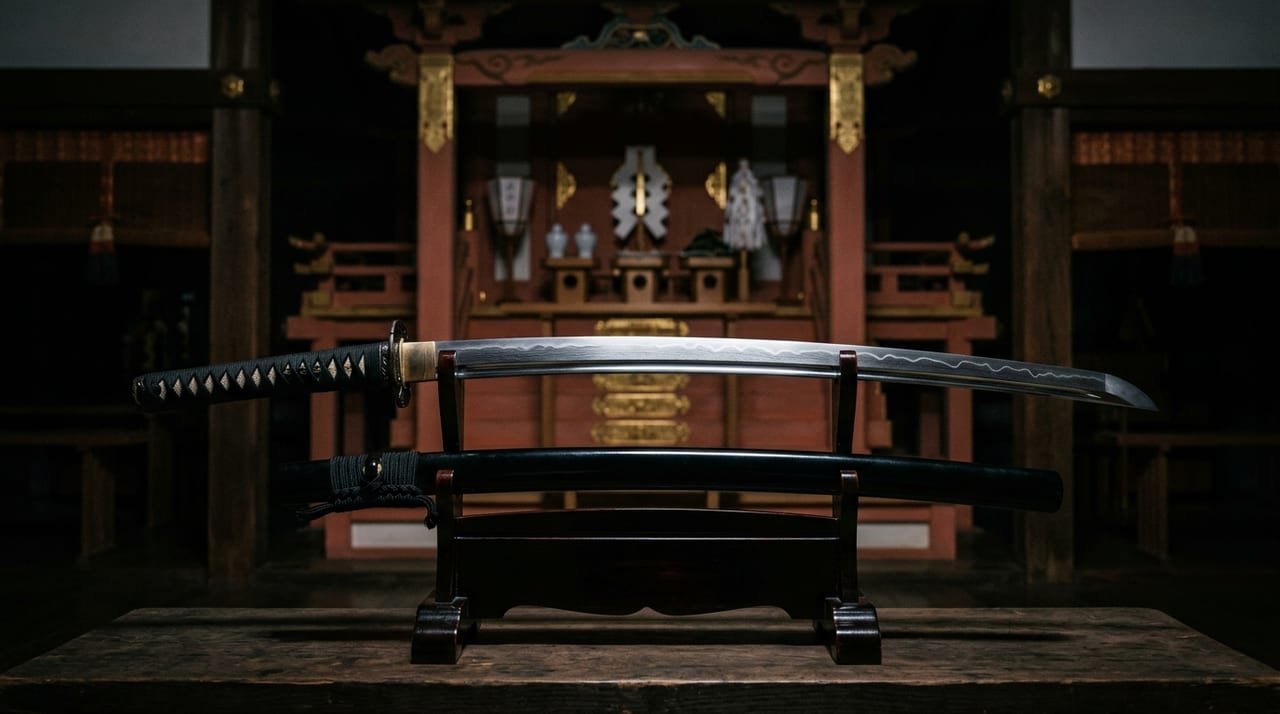 * Image is for illustrative purposes only.
Table of Contents
Honjyo Masamune—An Iconic Representation of the Soshu Tradition
"Honjyo Masamune" is known worldwide as one of the most celebrated Japanese swords in existence. Crafted by Masamune (Okazaki Masamune, late Kamakura to early Nanboku-chō period), it is regarded as his supreme masterpiece, and its name transcends a single blade to serve as a symbol of the technical perfection of Japanese swordcraft itself.
Yet few can answer specifically why Honjyo Masamune is considered Masamune's supreme masterpiece. In this article, drawing from records left by sword researchers and authenticators, we will explain the specific technical characteristics of Honjyo Masamune's forging.
The Soshu Tradition—The Technical System Established by Masamune
To understand Masamune, one must first understand the "Soshu Tradition," a technical system that developed in Soshu (present-day Kamakura, Kanagawa Prefecture). Among the five major Japanese sword traditions (Yamato, Yamashiro, Bizen, Soshu, and Mino), this tradition possesses the most dramatic expressive power.
Technical characteristics of the Soshu tradition:
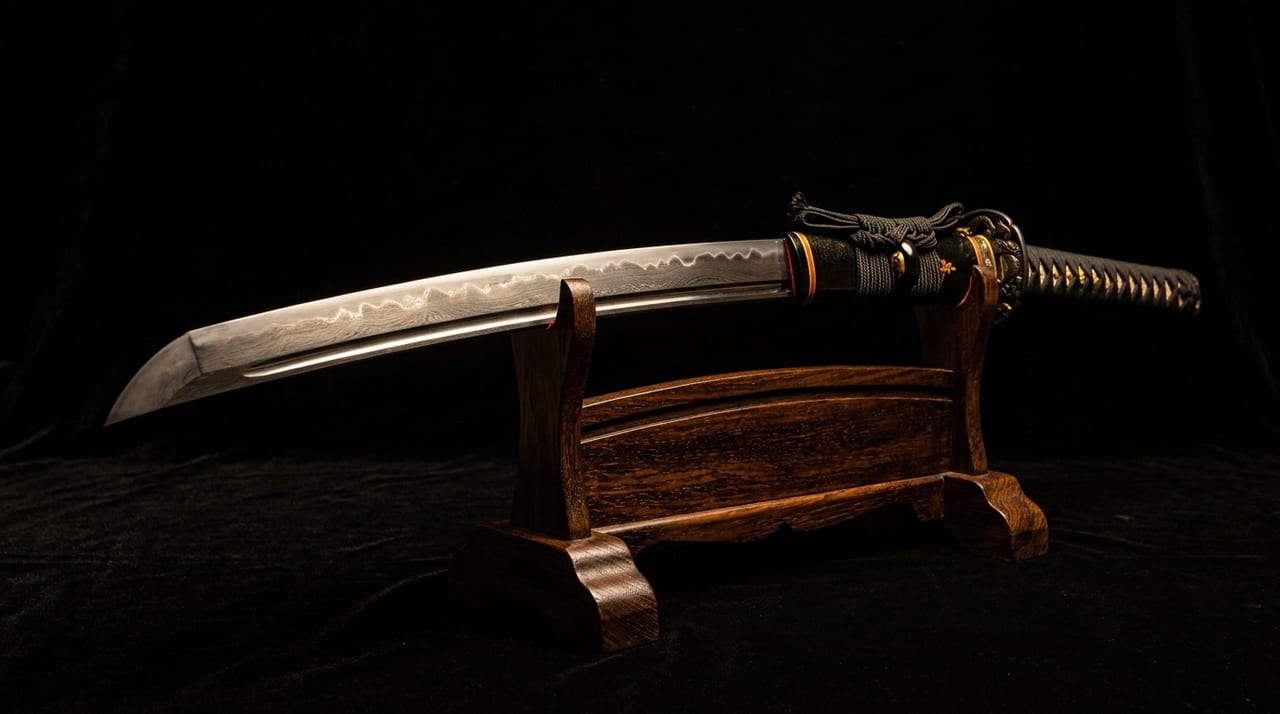
- Strong nie: During quenching, crystalline structures of steel become large enough to be visible to the naked eye, creating a granular, sandy texture. When light strikes it, it shimmers with a glittering quality
- Chikei and kin-suji: Dark lines (chikei) and bright thin lines (kin-suji) that flow through the steel base, produced by the precision of folding and forge-welding
- Hitatsura: A special hamon where the entire blade from edge to spine appears thoroughly hardened. Characteristic of Masamune and Sadamune
- Omidare (large turbulent pattern): A dramatically undulating hamon. The hallmark of the Soshu tradition
Honjyo Masamune's Hamon—Documentary Records and the Testimony of the Imperial Household
In Japanese sword research, the most frequently cited technical descriptions of Honjyo Masamune come from authentication records of the Hon'ami family, the foremost sword appraisers of the Meiji to early Showa periods, and inventories of imperial holdings created before 1947 (the blade was long housed in Edo Castle as part of the shogunal collection).
From these records, we can reconstruct the blade's hamon characteristics:
Hamon type: A large midare pattern centered on gunome. Some sources mention working approaching hitatsura in certain areas Quality of nie: Particularly strong even among Soshu tradition blades, with "nie-kuzure" (nie breakdown) extending from the hamon boundary into the jigane itself. This is not a technical flaw but rather an intentional expression by Masamune Bōshi (hamon in the point): Turbulent and expansive, with deep kaeri (returning curve). Typifying the Soshu tradition's point design
Honjyo Masamune's Jigane—The Crystallization of Fold-Forging Mastery
Jigane (steel base) is the "skin" of the blade, and the precision of fold-forging is directly reflected in this element. Records concerning Honjyo Masamune's jigane include the following:
Jihada (steel surface) type: Primarily itame pattern, with areas of flow intermixed with tight structure. A characteristic complex composition unique to the Soshu tradition Density of chikei: Chikei flowing through the itame pattern is particularly active, displaying motion throughout the blade that appears "alive." This quality and abundance of chikei represents one of the greatest distinguishing features separating Masamune from other smiths Presence of kin-suji: Multiple kin-suji are visible at specific light angles, testifying to the precision of forge-work
Regarding the quality of jigane, authentication records from the Hon'ami family, who appraised numerous confirmed works by Masamune, allegedly contain evaluations to the effect that "the steel base is bright and displays countless vibrant patterns unparalleled elsewhere."
The Secret of Masamune's Forging Technique—The Use of Tamahagane
As the technical foundation allowing Masamune to establish the Soshu tradition, researchers point to "the selection and treatment of tamahagane (jewel steel)."
The late Kamakura period in which Masamune worked coincided with an era when sand-iron smelting techniques (tatara ironworking) had reached high sophistication. By precisely managing the carbon concentration differential between kawagane (outer steel) and shingane (core steel), Masamune achieved both strength and flexibility at an unprecedented level.
The strong nie characteristic of the Soshu tradition in particular results from precision in hardening temperature, cooling speed, and water temperature control during the quenching process. Even with identical materials and identical operations, these minute differences create the gulf between "ordinary nie" and "Masamune's nie."
Honjyo Masamune's Position Within the Soshu Tradition—Comparison with the Ten Disciples of Masamune
The "Masamune Juttetsu (Ten Disciples of Masamune)" refers collectively to ten smiths credited with inheriting Masamune's techniques, including Samonji, Rai Kunitsugu, and Hasebe Kunishige.
When these smiths' works are compared with Honjyo Masamune (the work of Masamune himself), the following differences emerge:
| Comparison Item | Masamune's Own Work | Works of the Ten Disciples |
|---|---|---|
| Strength of nie | Maximum level, with nie-kuzure present | Nie is strong but tends toward uniformity |
| Activity of chikei | Abundant motion throughout the entire blade | Visible in specific areas |
| Appearance of hitatsura | Frequent | Inherited by figures such as Samonji but difficult to replicate |
| Overall presence | Overwhelming | Approaches the master but distinctly secondary |
This comparison illustrates the high technical achievement of Honjyo Masamune—a confirmed work of the master himself.
Important Notes on Authentication—Distinguishing Between "Den Masamune" and Authenticated Works
The contemporary sword market contains numerous blades marked "Den Masamune" (attributed to Masamune). When an NBTHK authentication certificate reads "attributed to Masamune," it means "presumed to be the work of Masamune, though not definitively confirmed."
Diagnostic criteria for authentic Masamune:
- Quality of nie: Large, orderly particles with high density. A complex mix of "ara-nie" (coarse nie) and "ko-nie" (fine nie)
- Movement of chikei: Not static but "living chikei" that changes with viewing angle
- Midare-komi of the bōshi: Deep, expansive disruption with prominent kaeri
- Rust coloration of the tang: The tang of an authentic Masamune displays a distinctive blackish-brown patina from centuries of natural oxidation
Honjyo Masamune reportedly passed to a GHQ officer at the end of World War II, and its current whereabouts remain unknown. Therefore, "direct authentication" of the blade is impossible; scholars must rely solely on existing records and photographic documentation (limited in number). This absence has paradoxically elevated Honjyo Masamune's legendary status.
Conclusion—Honjyo Masamune as the Culmination of the Soshu Tradition
The greatest legacy of Honjyo Masamune's forging technique to posterity was the establishment of "the beauty of nie" as a new aesthetic category in Japanese swordcraft. Before this, the Bizen tradition's nioi-deki and Yamashiro tradition's straight blade predominated, but Masamune's Soshu tradition opened a new dimension—an "aesthetics of power"—through its dramatically undulating hamon and vibrantly living jigane.
Now that Honjyo Masamune is lost, we cannot directly observe this perfected technique. Yet through the works of the Ten Disciples who inherited Masamune's methods, and through the works of restoration artists such as Suishinshi Masahide and Taikei Naotane in the Edo period, we can glimpse fragments of this mastery. Honjyo Masamune stands as an "invisible summit"—the legacy of Japan's finest technician in swordcraft.