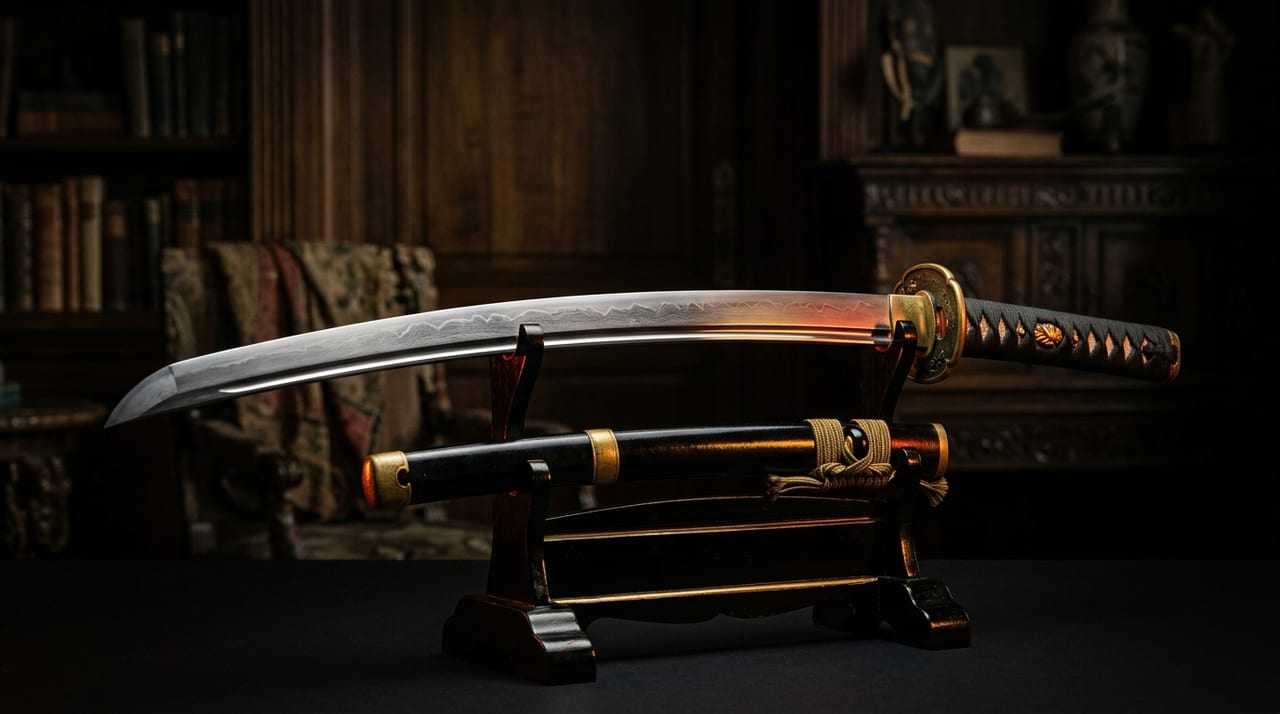
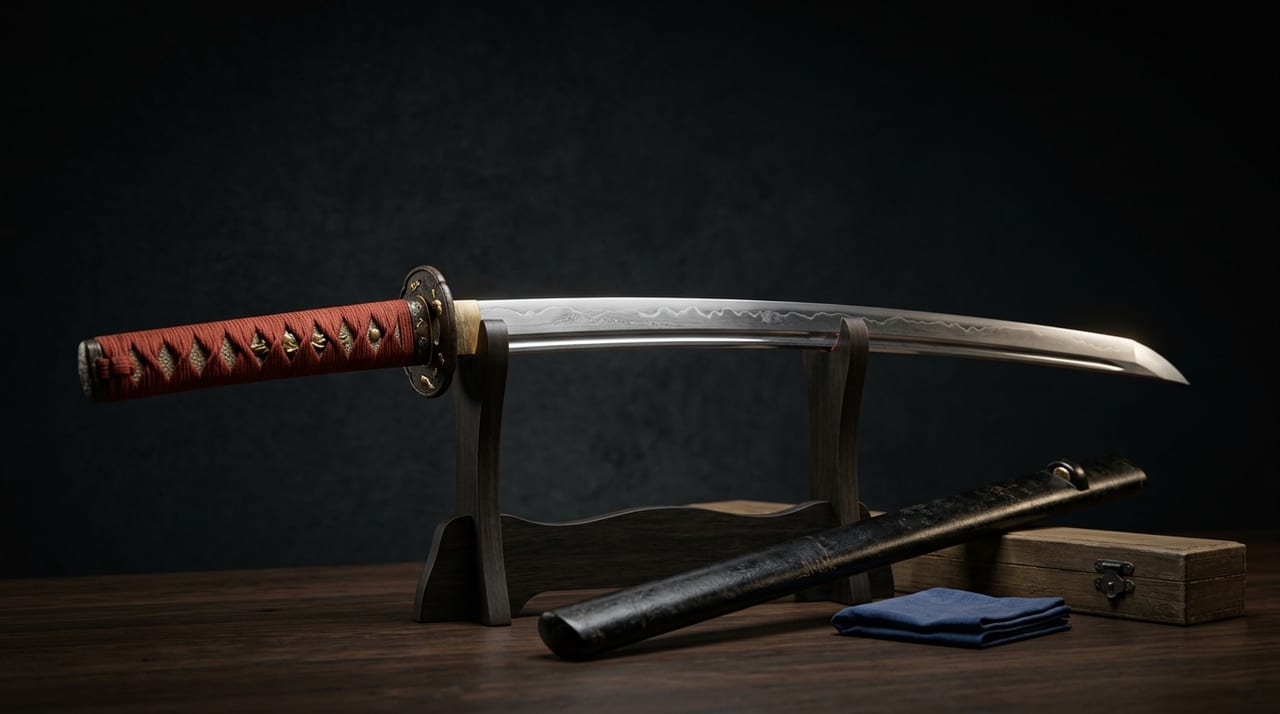
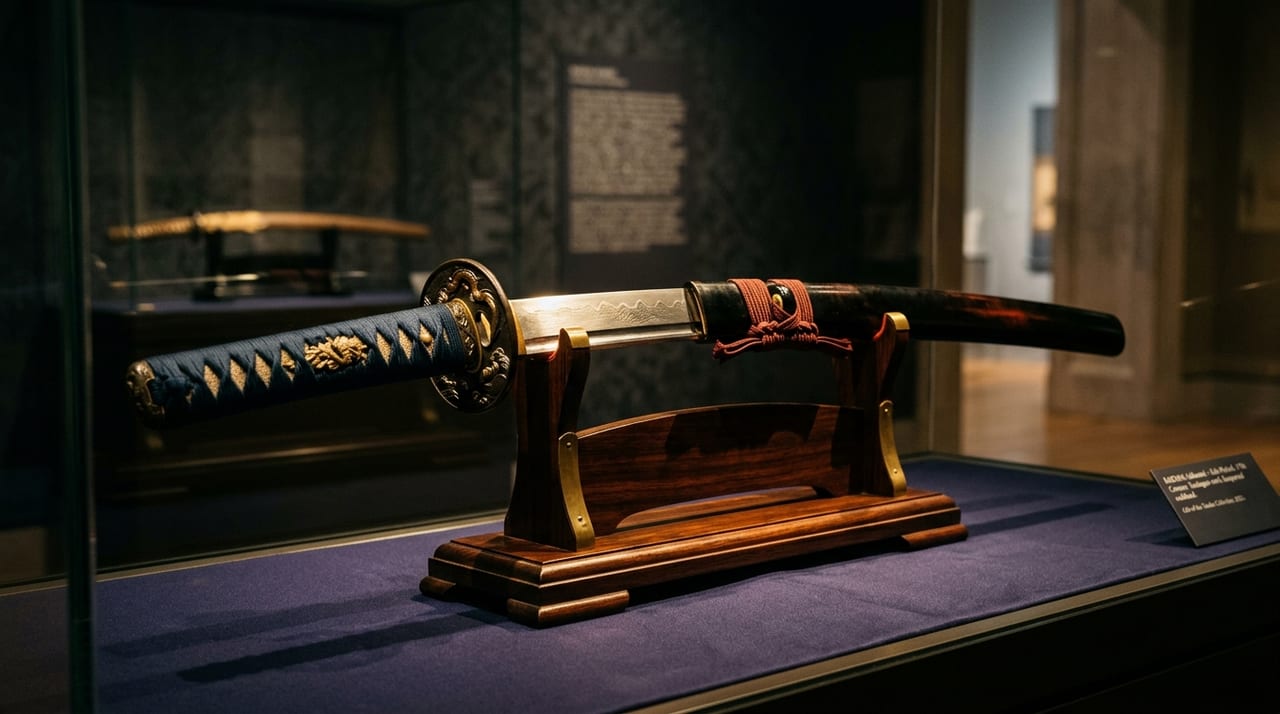
What Awase-saya and Awase-koshirae Are: What Happens When a Saya Does Not Fit the Blade
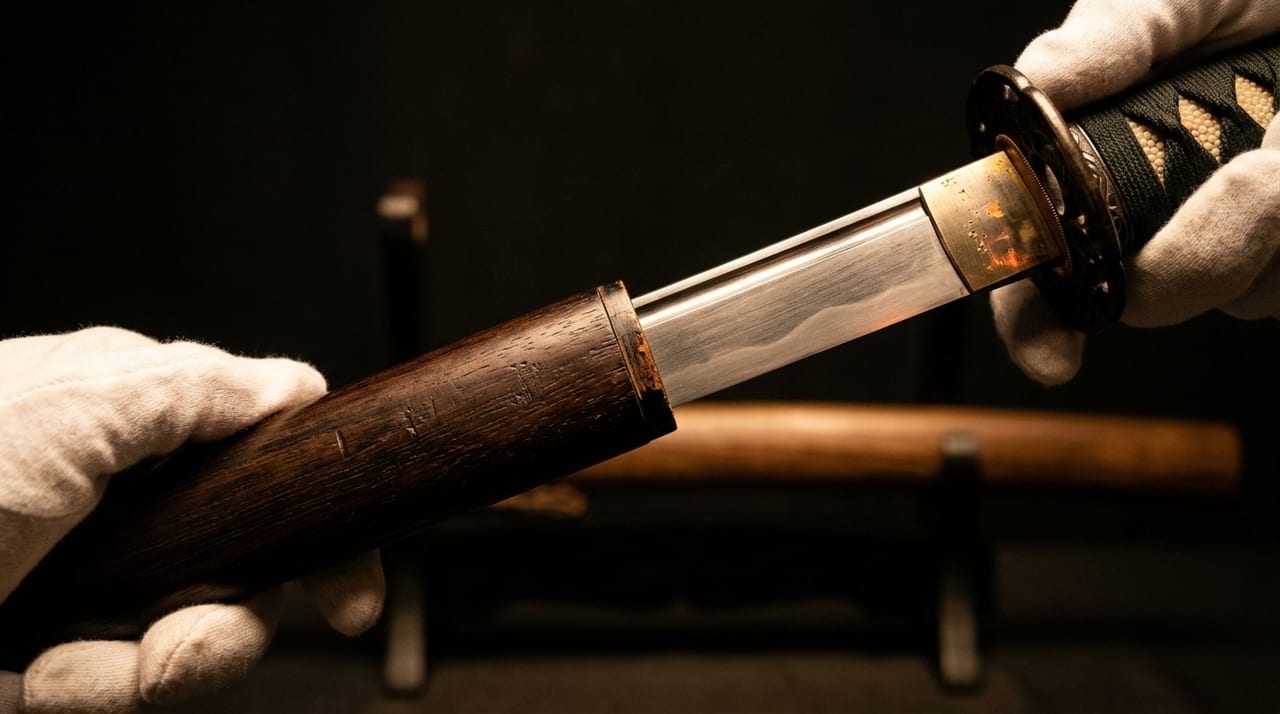 * Image is for illustrative purposes only.
Table of Contents
When purchasing a sword, the terms "awase-koshirae" and "awase-saya" sometimes appear in product descriptions. It is easy to assume that if the appearance looks fine there is no problem, but understanding the specific issues that arise when a saya does not fit the blade — and the effects on long-term storage — is essential knowledge for a collector choosing a sword. This article explains the meaning of awase-saya and awase-koshirae and describes in detail what actually happens.
What "awase-koshirae" and "awase-saya" mean
The word "awase" refers to a condition in which the koshirae (mounting) or saya (scabbard) of a different sword has been repurposed or reused to give the sword a presentable appearance, rather than having been made originally for that sword. Sword dealers often call this "awase no koshirae"; there is no officially unified standard definition, but the term is used within the industry to mean roughly this.
Koshirae is the collective term for the complete set of tōsōgu (sword fittings): the saya (scabbard), tsuka (hilt), tsuba (hand guard), menuki, fuchi-kashira, kozuka, kōgai, and other fittings. Koshirae made to suit the era and purpose for which a sword was forged are sometimes called "hon-koshirae" and are built to dimensions specific to that sword. Awase-koshirae, by contrast, merely "functions as a presentable appearance," and its internal dimensions are not necessarily precisely matched to the blade.
The same thinking applies to awase-saya. A saya is carved from a wooden blank one by one for each sword, based on multiple measurements: the blade's sori (curvature), length, motohaba, sakihaba, and thickness. When a saya previously used for another sword is repurposed as-is, even if the visual fit does not look obviously wrong, the contact between the interior of the saya and the blade differs from what it should be.
Problems that arise when the saya does not fit
When the fit between the saya and the blade is compromised, several specific problems occur. The main ones are as follows.
- Saya-nari (saya rattle): A phenomenon in which the blade moves slightly inside the saya, producing a sound during drawing and sheathing or while being carried. It tends to occur when the saya is too long or when the shape of the interior cavity does not match.
- Looseness of the tsuka: Not only the saya, but also the interior of the tsuka (the tsuka-wood) is carved to match the shape of the blade's nakago (tang). With awase-koshirae the dimensions of the tsuka-wood may not match, and the nakago may not be held securely, causing wobbling.
- Hike (contact scratches): Fine abrasion marks made when the kissaki (point) or the flat of the blade touches the koiguchi or the interior wall of the saya during drawing or sheathing. When the saya does not fit precisely, the blade is more likely to contact the koiguchi, increasing the risk.
- Progression of rust: Where the blade does not fit snugly inside the saya, air and moisture can penetrate. Minute gaps inside the saya cannot be detected by visual inspection, and rust may advance without the owner's knowledge.
- Catching during drawing and sheathing: When the sori (curvature) of the blade and the interior shape of the saya do not match, the action of sheathing and drawing does not proceed smoothly, and unnecessary stress is placed on the blade and the koiguchi.
These problems vary in severity. In mild cases there may be little practical inconvenience, but when storing a sword as a collector's piece over a long period, or when actual use — such as iai — is intended, the effects can be significant enough that they cannot be ignored.
Points to check when purchasing
When purchasing a sword with awase-saya or awase-koshirae, it is important to review the product description and the actual condition of the item carefully. The following points are worth checking.
- Whether the product description explicitly states "awase-saya" or "awase-koshirae," or whether it includes descriptions such as "hon-koshirae tsuki" (original koshirae included) or "tōsho-koshirae" (period koshirae)
- Whether the description mentions the presence or absence of saya-nari and the quality of fit when the blade is seated in the saya
- Whether there is any note about looseness or tightness of the tsuka
- Whether a shirasaya (plain storage scabbard) is separately included
- Whether the junction between the blade and the koiguchi can be confirmed from photographs
If none of these points are addressed in the description, it is safer to inquire before purchasing. Especially when buying online, where it is not possible to handle the item in person, ascertaining the details of its condition in advance is what protects the sword.
The relationship with shirasaya and the approach to storage
Closely connected to the problem of awase-koshirae and awase-saya is the shirasaya (plain storage scabbard). A shirasaya is a saya made exclusively for storing a sword: it has no decoration, is carved from hō (magnolia) wood to match the shape of the blade, and is joined with rice paste. According to the Japan Sword Culture Promotion Foundation (a public interest incorporated foundation), hō wood contains a moderate amount of natural oils that protect the blade, and the structure allows the saya to be opened for wiping if rust appears on the interior.
While koshirae is finished as an outward presentation piece, it is considered unsuitable for long-term storage. This is because the materials and finish of a koshirae's saya are made with appearance in mind rather than preservation, and storing a sword with its koshirae attached tends to allow cumulative moisture and contact damage to the blade. This is why many sword dealers recommend using a shirasaya for everyday storage even when a sword comes with koshirae.
If you acquire a sword that comes only with an awase-saya, the basic approach to preserving the blade over the long term is to first consider having a new shirasaya made. A shirasaya is made one by one by a craftsman to match the dimensions of each blade, and storing the sword in a properly fitted shirasaya prevents unnecessary friction against the blade and the ingress of moisture through gaps.
Repairs, rebuilding, and assessing the current condition
Even with awase-koshirae, it is possible to bring the sword to a condition that is acceptable for practical use and appreciation. Repair work such as re-carving the tsuka-wood, adjusting the mekugi holes, and reshaping the interior of the saya can in some cases improve the fit. It is also possible to have only a new saya made while retaining the existing fittings, an option that may be chosen when the koshirae fittings have value.
However, repairs and rebuilding take time and money. Grasping the current condition at the time of purchase is indispensable for judging how much work to undertake afterward. If the product description includes notes such as "requires repair" or "saya match only," it is wise to estimate the additional costs before proceeding.
On the other hand, for items consisting solely of koshirae without a blade (intended purely for display), or swords intended for exhibition or as interior décor, the completeness of the outward appearance may be prioritized over how well the saya fits. Evaluating the current condition against criteria appropriate to the intended use leads to a satisfying choice.
For detailed coverage of the work of craftsmen who make koshirae and shirasaya, see The Work of the Sayashi. For dealing with problems that arise during storage, see also Japanese Sword Troubleshooting. The role of the shirasaya and how to choose one are covered in The Complete Guide to Shirasaya.