The Difference Between Fukuro-yari and Nakago-yari — Two Methods of Attaching the Blade Tip to the Shaft and Key Points for Appreciation
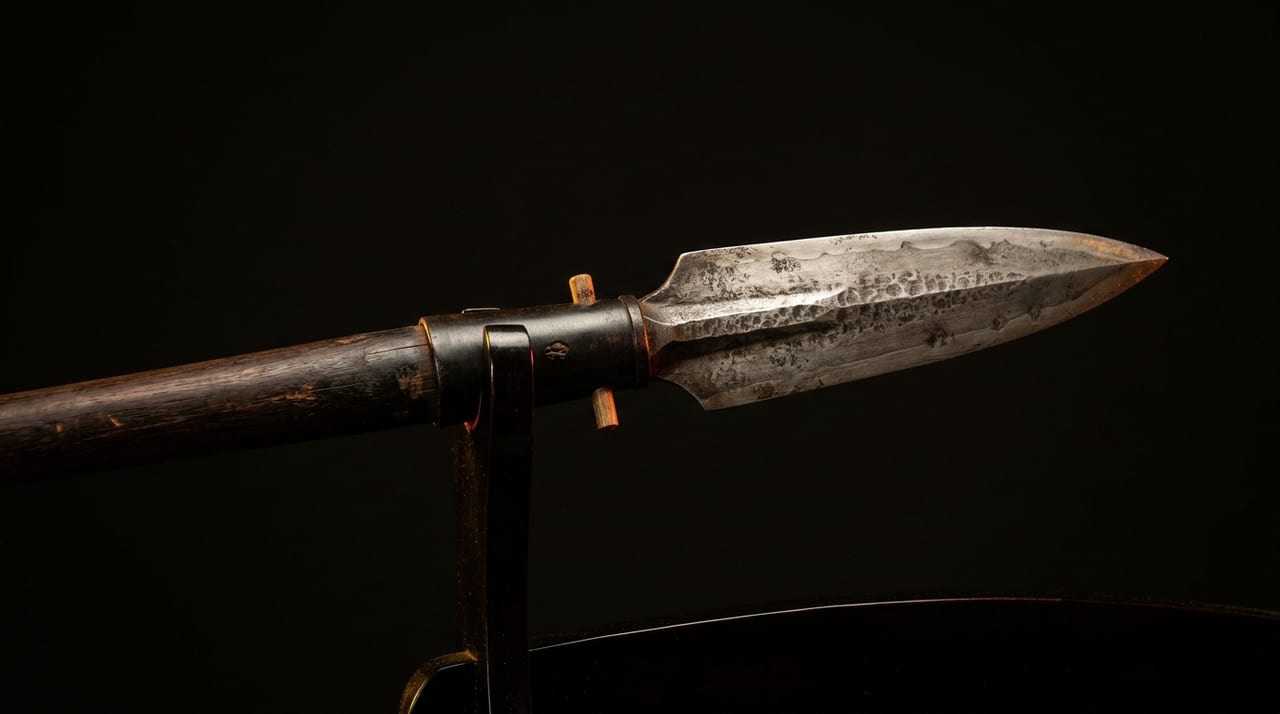 * Image is for illustrative purposes only.
Table of Contents
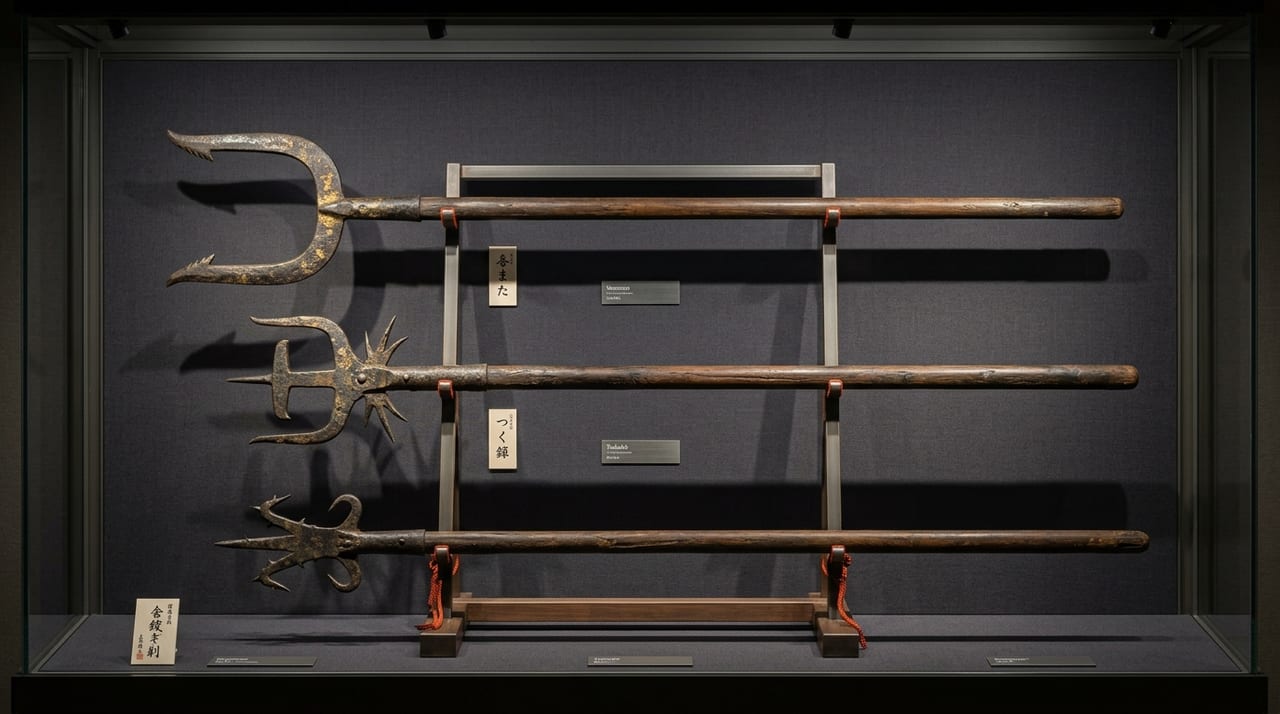
When discussing the types of yari (Japanese spears), attention tends to focus on the shape of the blade tip (sankaku, katakama, jumonji, etc.), but the structural difference in how the blade tip is attached to the shaft is also an indispensable perspective for understanding spears. Broadly speaking, there are two approaches: the "fukuro-yari," in which the base of the blade tip is shaped like a sleeve (tube) and is fitted over the shaft, and the "nakago-yari," in which the nakago (tang) of the blade tip is inserted into the shaft and fixed in place. This article organizes the differences in these attachment methods and how they relate to how one views a spear.
Two Methods of Connecting the Blade Tip to the Shaft
A yari consists of a blade tip (the cutting part) and a shaft (the long pole), and if the blade tip were to come loose in the middle of battle, it would be useless. For this reason, various methods of firmly securing the blade tip to the shaft have been devised regardless of shape or era.
The attachment methods can be broadly divided as follows.
- Fukuro-yari: the base of the blade tip is shaped like a sleeve (tube), and it is fitted over and fixed to the end of the shaft
- Nakago-yari: the base of the blade tip has a nakago, which is inserted into the shaft and secured with mekugi and similar fittings
Fukuro-yari uses a structure in which the shaft is inserted into the tube; nakago-yari uses a structure in which the nakago is inserted, as with a Japanese sword. Which method is used affects both how the blade tip is made and how the nakago is read and appreciated.
Nakago-yari Can Be Appreciated with the Same Approach as a Japanese Sword
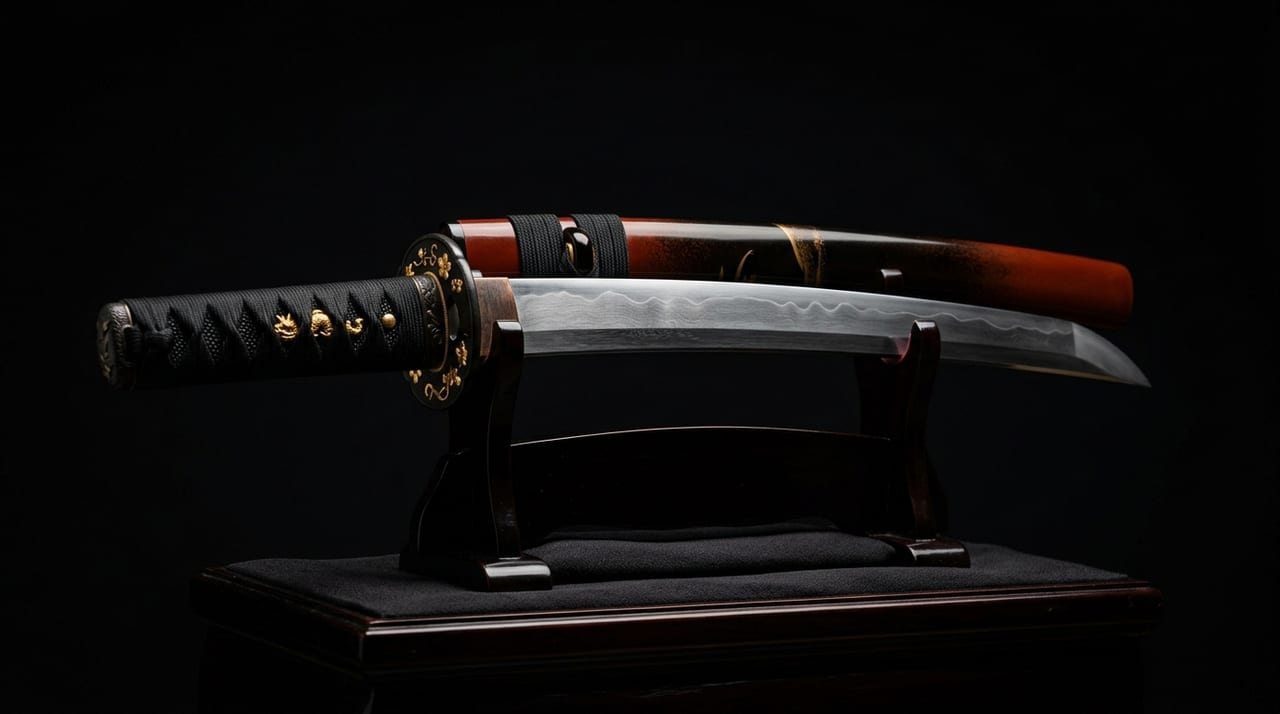
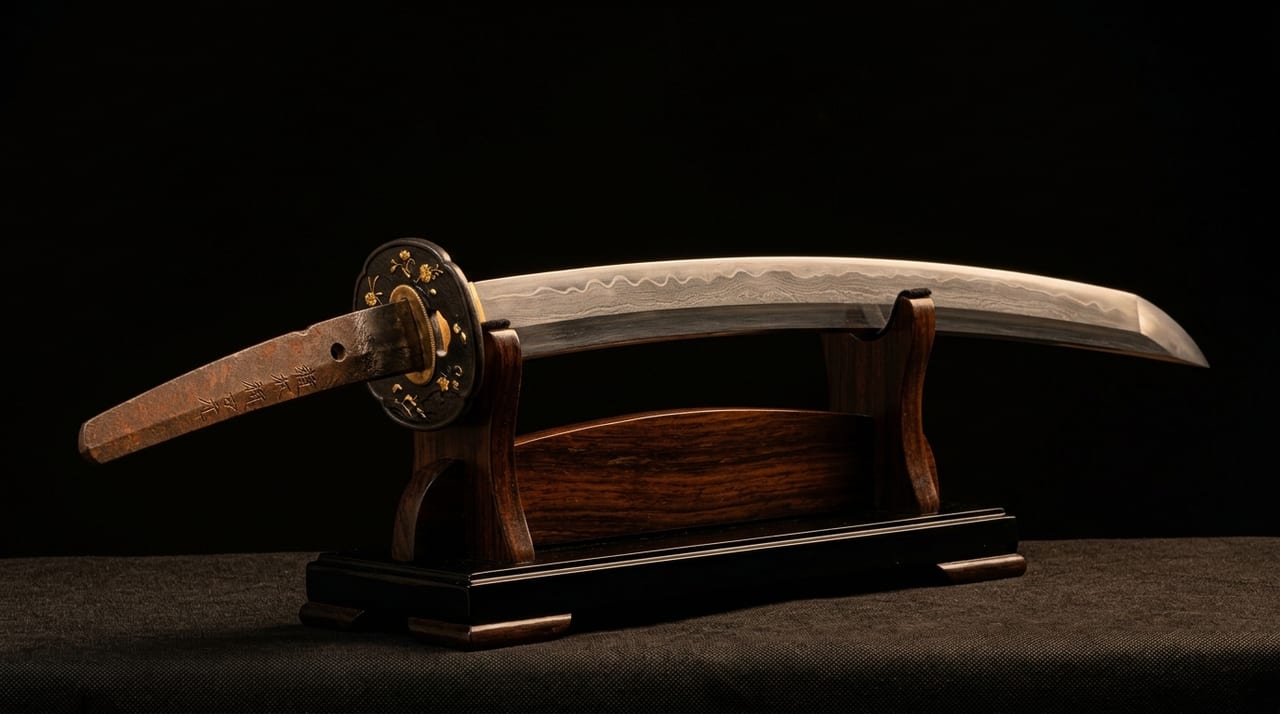
The blade tip of a nakago-yari, like a Japanese sword, has a nakago. As a result, the key points for appreciating a sword — jigane (the steel of the blade surface), hamon, the shape of the nakago, and the mei — apply almost directly.
Some blade tips have a mei inscribed on the nakago, allowing one to appreciate them in connection with the maker. The basics of reading the nakago have much in common with the case of a sword. If you are unfamiliar with reading the nakago, reading How to Read the Nakago first will also prove useful when examining the blade tips of yari.
For the classification of blade tip shapes themselves, see Types and Classification of Yari for reference.
Structure and Characteristics of Fukuro-yari
In a fukuro-yari, the base of the blade tip is made in a tubular shape. The end of the shaft is fitted into this tube and fixed in place. Unlike nakago-yari, which inserts the nakago, the part that corresponds to the nakago of a sword is difficult to see.
Because of this structural difference, the key points for appreciation also change.
- Nakago-yari: check the shape of the nakago, yasurime, mei, and mekugi holes
- Fukuro-yari: check the shape of the tube (sleeve), the boundary between the blade tip and the sleeve, and the overall balance
Because fukuro-yari look different from the Japanese sword convention of inscribing the mei on the nakago, searching for a mei on the nakago by the same standard may yield no result. Since the structure is different, one must also shift the approach to appreciation.
Practical Differences Arising from Structural Differences
The difference in attachment method also affects the character of the implement. As a general rule, the following is considered to be true.
- Nakago-yari can securely fix the blade tip to the shaft with mekugi and similar fittings, and is easy to make as an extension of a sword
- Fukuro-yari, because of its sleeve-over-shaft structure, must be made with consideration for compatibility with the thickness and material of the shaft
However, actual yari vary widely in construction depending on era, region, and intended use, and simple judgments such as "fukuro-yari is superior" or "nakago-yari is inferior" cannot be made. The basic approach is to observe and judge the construction of each individual spear.
Key Points for Appreciation and Preservation
When appreciating and preserving yari blade tips, being aware of the attachment method helps to organize how they should be handled.
- For nakago-yari blade tips, pay attention to the condition of the nakago when removed from the shaft. Because it rusts easily, maintenance during storage is essential
- For fukuro-yari, moisture is thought to accumulate inside the sleeve, so care should be taken with the storage environment
- For both types, do not touch the blade portion with bare hands, and follow the basic maintenance practices such as wiping
The basics of Japanese sword maintenance apply in many respects to yari blade tips as well.
To Avoid Confusion with Terminology
Terminology related to yari varies slightly in naming and classification depending on the source. The terms fukuro-yari and nakago-yari also represent a different axis from the classification by blade tip shape (sankaku, katakama, jumonji, etc.). Knowing only the name of the shape does not tell you the attachment method. It is important to check the blade tip shape and the attachment method separately, and to understand a single spear by combining both.
When reading product descriptions or illustrated catalogs, the following order makes it easier to organize the information.
- The shape of the blade tip (what type of yari)
- The attachment method (fukuro or nakago)
- The nagasa and overall dimensions
- Whether there is a mei or kanteisho
By reading and separating information in this order, the technical terms that appear in descriptions of yari can be understood one by one in their proper context.
Summary
There are two approaches to how yari blade tips are attached: the fukuro-yari, which fits over a sleeve, and the nakago-yari, which inserts the nakago. Nakago-yari can be appreciated using the same perspective as a Japanese sword, while fukuro-yari requires a different perspective that focuses on observing the shape of the sleeve. By looking not only at the shape but also at the structure, one's view of a yari changes dramatically.
TOUKENZA's online catalog allows you to browse listed swords with photographs. Look not only at the blade but also at the nakago and the overall construction, and try searching for a piece that catches your eye.
Because yari are seen far less often than swords, knowing the structure makes an enormous difference in how one sees them.