The Kenmu Restoration and Sword Culture: How Emperor Go-Daigo's Anti-Shogunate Movement Transformed Blade Production in the Age of Courts
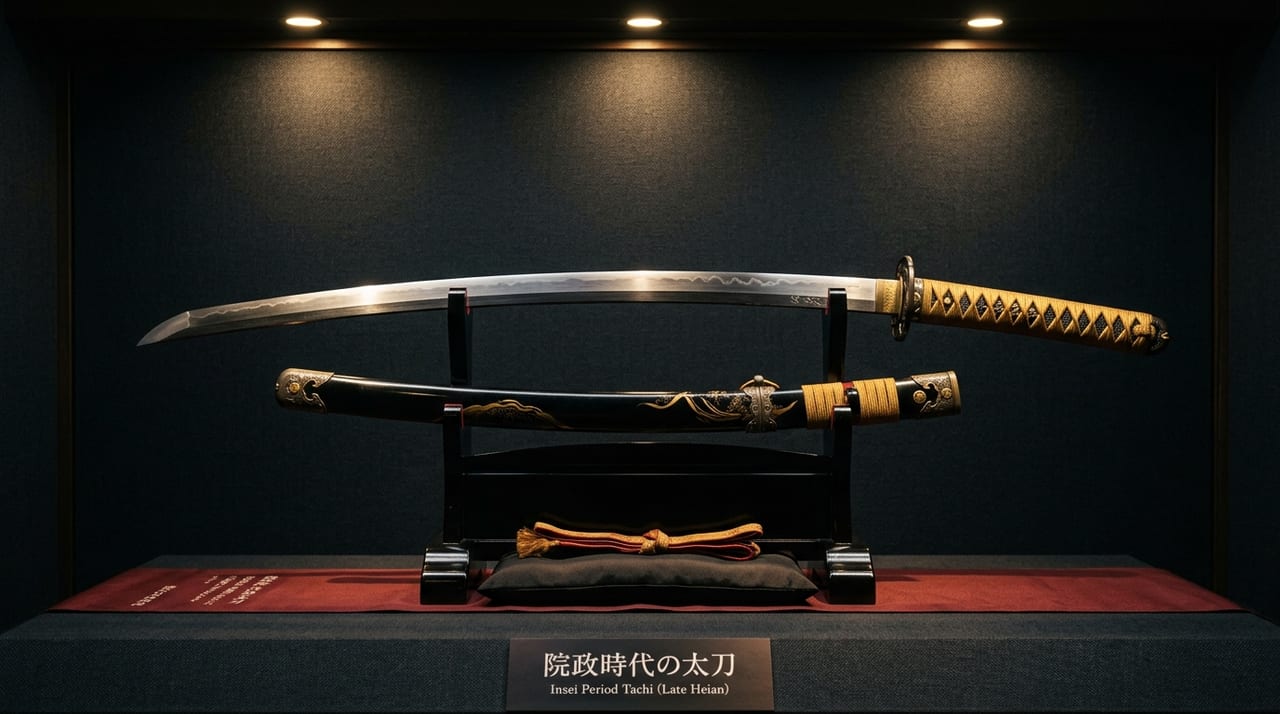 * Image is for illustrative purposes only.
Table of Contents
What was the Kenmu Restoration? — The Fall of the Kamakura Shogunate and the Void in Military Governance
In 1333, Emperor Go-Daigo, with the cooperation of Ashikaga Takauji and Nitta Yoshisada, overthrew the Kamakura Shogunate and began direct imperial rule known as the "Kenmu Restoration." Putting an end to military governance, this unprecedented attempt at direct imperial court rule collapsed in just over three years. However, this brief period became an extremely important turning point in the history of Japanese swords as well.
The period from 1333 to 1336, when the Kenmu Restoration began, was a transitional period in which the blade styles of the late Kamakura period were dismantled and new blade forms of the Nanboku-chō period began to emerge. While losing the shogunate as a stable major patron, sword smiths of this era faced a sudden increase in weapon demand due to internal conflict.
The new government faced criticism for favoring the aristocracy regarding the distribution of rewards to samurai who had contributed to overthrowing the shogunate, and discontent among the samurai class rapidly increased. The progression of this discontent leading to Ashikaga Takauji's defection and eventually to civil war between the Northern and Southern courts is a background that cannot be overlooked in terms of the sudden expansion of sword demand. In exchange for political stability, the production and distribution of military equipment was pushed into a new phase.
Changes in Blade Form Around the Kenmu Period — Transition from Late Kamakura to Nanboku-chō
Blades from the late Kamakura period (late 13th to early 14th century) had relatively well-proportioned forms. The curvature was predominantly of the hip-curve type, and the point was often in a small, rounded shape called ikubi kissaki. This was also a result of practical combat demands after the Mongol invasions (1274 and 1281) demanding sturdier blades.
This trend changed rapidly beginning with the Kenmu Restoration period (1333-1336). The success of Emperor Go-Daigo's overthrow of the shogunate and the civil war between the Northern and Southern courts that began immediately after (from 1336) brought larger-scale and longer-lasting warfare, imposing new functional requirements on blades.
The most striking change was the enlargement of blade size. From the Kenmu period into the early Nanboku-chō period, blade length increased, and large blades exceeding 90 centimeters called odachi and nodachi began to be mass-produced. This indicates that as warfare transitioned from mounted combat to group combat on foot, weapons with longer reach gained advantage on the battlefield.
Parallel to this enlargement, the point also changed from ikubi to more elongated forms called naka-kissaki and o-kissaki. This is thought to represent adaptation to a fighting style emphasizing the power of slashing attacks, symbolizing the transition from the gentle forms of the late Kamakura period to the powerful and grand style of the Nanboku-chō period.
Sword Smiths and Changes in the Supply System During the Kenmu Period
As a military government with the Hōjō Tokusō family at its head, the Kamakura Shogunate maintained a system for supplying blades to its retainers. Official sword smiths, beginning with Masamune of Sagami, existed and high-level techniques were transmitted under the shogunate's patronage.
The Kenmu Restoration transformed this system completely. Sagami sword smiths who lost the shogunate's patronage sought new patrons, with some joining Ashikaga Takauji's forces and others siding with Emperor Go-Daigo. Sword smiths such as Kaneshige, Hiromitsu, and Akihiro, who were active from the Kenmu period into the early Nanboku-chō period, refined their techniques with new daimyo and military commanders as their primary clients during the confusion following the shogunate's collapse.
The Osafune school of Bizen maintained a relatively stable production system even during this period of transition. This was because Bizen was seldom a direct battlefield in the civil conflict, allowing it to continue supplying blades to military commanders throughout the country. The Osafune school of the Kenmu period expanded its workshop scale and established mass-production systems to meet the sudden increase in demand.
The dispersal of Sagami-den sword smiths to various regions became an opportunity to transmit the Sagami style of work, emphasizing techniques with features such as ji-nie, kinsuji, and sunagashi, to sword smith groups throughout the country. While the degree of adoption varied by region, many sword studies point out that the technical characteristics of the Sagami tradition spread nationwide from this period onward.
Analysis of the Kenmu Restoration's Influence on Blade Styles
The Kenmu period was not an era that directly brought innovation in blade styles, but rather functioned as a "catalyst" for change. The civil war between the Northern and Southern courts that began after the collapse of Emperor Go-Daigo's government was the primary cause of major transformations in blade form, but the starting point of this change can be found in the Kenmu Restoration period.
What is important in sword history about the Kenmu period is that three groups — the military, the aristocracy, and temples and shrines — existed simultaneously as demand sources for blades. As each faction sought to secure sword smiths for themselves during the confusion following the shogunate's collapse, blade demand became dispersed and diversified throughout the country. This led to the rise of regional sword smith communities and the development of distinctive blade styles in various areas during the Nanboku-chō period.
Kenmu Period Blades in Artifacts — Evaluation as Cultural Properties
Many extant blades from around the Kenmu period are highly valued as National Treasures or Important Cultural Properties. The group of works attributed to Masamune of Sagami are known as representative of this period, with blades such as Honjō Masamune and Yoshimoto Samonji being transmitted works said to have been made around the time of Emperor Go-Daigo's reign.
While the short-lived political experiment known as the Kenmu Restoration ended in failure, in the history of blades it continues to be re-evaluated as an important turning point marking the transition from Kamakura-era order to Nanboku-chō diversity.
What to Know When Viewing and Collecting Blades from the Kenmu and Nanboku-chō Periods
There are several prerequisites to keep in mind when actually handling or considering purchasing blades from this era.
- Shortening (suriage) is common: Large odachi and nodachi mass-produced from the Kenmu period through the Nanboku-chō period were often reworked in later periods by shortening the tang (nakago) to make them easier to handle. In the process of this reworking, many blades lost their original signatures (mei).
- Unsigned blades are not uncommon: To determine the period and school of blades without signatures or with only partial signatures due to shortening, "period appraisal" is used, examining comprehensively the surface quality of the steel (jigane), the action of the hamon, and the overall characteristics of the form.
- Role of appraisal certificates: As supporting documentation for such professional determinations, appraisal certificates issued by the Japanese Art Sword Preservation Society (NBTHK) serve as important reference information. The more uncertain the period and provenance of a blade, the more significant third-party appraisal becomes.
This era, extending from the Kenmu Restoration through the turbulence of the Northern and Southern courts period, was politically a time of confusion, but for blades it was also an epoch in which styles were fundamentally transformed. In the form and steel of each individual blade, the tumultuous historical context of that era remains inscribed even today.