Successor Training for Nihontō Craftsmen — Apprenticeship Requirements for Sword-Making Approval, Selected Conservation Techniques, and the Scope of Government Subsidies
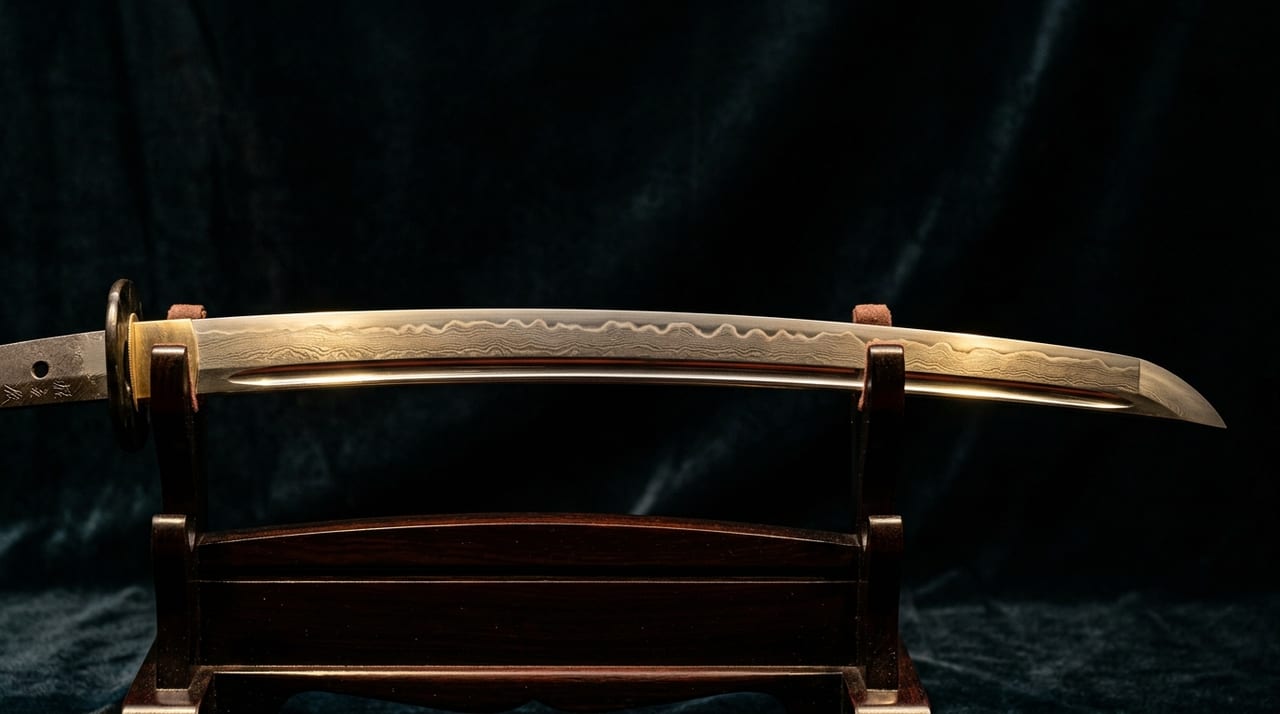 * Image is for illustrative purposes only.
Table of Contents
Successor Training Viewed Through Official Systems
Nihontō is sustained by many specialized craftsmen, including tōshō (swordsmiths), togishi (polishers), saya-shi (scabbard makers), shirogane-shi (white metal fittings craftsmen), and tsuka-maki-shi (hilt-binding craftsmen). In every trade, skills have been passed down through apprenticeship from master to disciple, but the relationship with official systems differs depending on the craft. When thinking about successor training, it helps to first distinguish "which system supports whom, and to what extent."
This article covers only systems that can be verified through statutes and official sources. The national systems related to nihontō are summarized below.
| System | Target | Relationship to Successor Training | Basis |
|---|---|---|---|
| Approval for the manufacture of swords | Persons who make swords of artistic value (per sword) | Requirements for initial approval include at least five consecutive years of practice under an approved tōshō and a training course administered by the Commissioner of the Agency for Cultural Affairs | Firearms and Swords Control Act (Jūtōhō) Article 18-2 · Regulations on the Approval of Artistic Sword Manufacture Article 2 |
| Important Intangible Cultural Property | Holders and holder organizations certified by the Minister of Education, Culture, Sports, Science and Technology | The Commissioner of the Agency for Cultural Affairs may take measures such as training successor practitioners, and the national government may subsidize a portion of preservation costs | Act on Protection of Cultural Properties Articles 71 and 74 |
| Selected Conservation Technique | Traditional techniques indispensable for the preservation of cultural properties (including tamahagane production) | The Commissioner of the Agency for Cultural Affairs may take measures such as training successor practitioners, and government treasury subsidies are available to holders and conservation organizations | Act on Protection of Cultural Properties Articles 147, 150, and 152; for treasury subsidies, see Agency for Cultural Affairs materials |
| Traditional Craft Products | Categories designated by the Minister of Economy, Trade and Industry | Nihontō is not included in the designated categories | Act for the Promotion of Traditional Craft Industry (Ministry of Economy, Trade and Industry (METI) "Traditional Craft Products") |
The basis for each system, and what can and cannot be said about it, are examined in turn below.
Tōshō: Training Required for Sword-Making Approval
The framework for training tōshō is directly stipulated by law. Article 18-2 of the Act for Controlling the Possession of Firearms or Swords and Other Such Weapons (Jūtōhō) stipulates that anyone who intends to manufacture swords of artistic value must obtain approval from the Board of Education of the prefecture where they reside for each sword they intend to make (or, in cases specified by Cabinet Order, from the Commissioner of the Agency for Cultural Affairs) (Act for Controlling the Possession of Firearms or Swords and Other Such Weapons (Jūtōhō) (e-Gov Law Search)).
According to Article 2, Paragraph 1 of the Regulations on the Approval of Artistic Sword Manufacture, a sword by a tōshō seeking initial approval is approved by the Commissioner of the Agency for Cultural Affairs when the person responsible for manufacture meets the following conditions (Regulations on the Approval of Artistic Sword Manufacture (e-Gov Law Search)).
- Having devoted themselves exclusively to honing their skills for at least five consecutive years under a tōshō who has previously received approval, and having acquired sufficient skills as the person responsible for manufacture
- Having had the above certified by the master tōshō and guaranteed by two or more registered examination committee members
- Having completed the training on sword manufacture conducted by the Commissioner of the Agency for Cultural Affairs
From the second sword onward, swords by a tōshō who has already received approval are approved by the prefectural Board of Education (Article 2, Paragraph 2). In other words, the training of successor tōshō is, in institutional terms, built on the process of "an approved tōshō taking on an apprentice, overseeing at least five consecutive years of training, and certifying the results," together with the training course administered by the Commissioner of the Agency for Cultural Affairs. From the master's perspective, this means taking on the responsibility of certifying the apprentice's acquisition of skills.
Approval is not a qualification or license; it is obtained for each individual sword. The path from apprenticeship to approval is covered in detail in How to Become a Tōkō, and the relationship between approval, registration, and public exhibitions is covered in The Structure of the Tōshō System.
What to Confirm Before Becoming an Apprentice
What the approval regulations stipulate is limited to the number of years of training, and the certification, guarantee, and training course. They do not stipulate conditions such as living expenses, accommodation during training, or the timing of independence. Because these matters are decided between master and apprentice, visiting the workshop before entering will help reduce misunderstandings about the following points.
- Whether the tōshō who will be the master manufactures swords under a manufacture approval (the approval regulations require training "under a tōshō who has previously received approval")
- Whether the master or apprentice bears the cost of living expenses and accommodation
- What the master's approach is regarding the steps at the end of training (certification by the master, guarantee by two or more registered examination committee members, and the training course from the Commissioner of the Agency for Cultural Affairs)
- What the master's approach is regarding technical and sales-channel involvement after independence
- Whether it is possible to hear about the training experience from current apprentices or from those who have previously become independent
For people from other countries training in Japan, the issue of residence status also arises. What can be confirmed from the statutes and materials of the Immigration Services Agency of Japan is summarized in What It Takes for Foreigners to Pursue Becoming a Tōshō in Japan.
Tamahagane Production: Succession as a Selected Conservation Technique
For the techniques used to produce sword materials, there is the Selected Conservation Technique system under the Act on Protection of Cultural Properties. The Minister of Education, Culture, Sports, Science and Technology designates as a Selected Conservation Technique any traditional technique or skill indispensable to the preservation of cultural properties that requires preservation measures, and certifies its holders or conservation organizations (Article 147). The Commissioner of the Agency for Cultural Affairs may take measures such as creating records and training successor practitioners for Selected Conservation Techniques (Article 150), and the national government may provide guidance, advice, and other assistance to holders, conservation organizations, and others (Article 152) (Act on Protection of Cultural Properties (e-Gov Law Search)).
Among techniques related to nihontō, tamahagane production falls under this system.
- The Agency for Cultural Affairs' list of conservation organizations for selected conservation techniques (April 2019 materials) lists the public interest incorporated foundation NBTHK (Society for the Preservation of Japanese Art Swords) as the conservation organization for "tamahagane production."
- "Tamahagane production (tatara (traditional smelter) blowing)" was designated as a Selected Conservation Technique on May 11, 1977, and the designation was revoked on June 22, 2024 following the death of the holder. It was re-designated in the Council for Cultural Affairs report of July 19, 2024, and Horio Kaoru was certified as the holder (Agency for Cultural Affairs, "Report of the Council for Cultural Affairs (Designation of Selected Conservation Techniques and Certification of Holders, etc.)," July 19, 2024).
The same report explains the reason for designation as follows: "In order to fully ensure the protection of artistic sword manufacture, it is necessary to take preservation measures for tamahagane production (tatara (traditional smelter) blowing) to secure the supply of tamahagane." The holder's biography records participation as a trainee at the introductory, intermediate, and advanced levels in the tatara operation practical training sessions of "Nittoho Tatara" conducted by NBTHK, showing that even on the materials side there is a system for training the next generation of practitioners at the operational level.
Whether the techniques of togishi (polishers), saya-shi (scabbard makers), tsuka-maki-shi (hilt-binding craftsmen), and others are designated as Selected Conservation Techniques can be verified by technique name in the Agency for Cultural Affairs' Database of Nationally Designated Cultural Properties.
Government Subsidies: Limited to Certified Persons and Organizations
The following is the scope of government subsidies for successor training that can be confirmed from official sources.
Government treasury subsidies for Selected Conservation Techniques: According to Agency for Cultural Affairs materials, holders of and conservation organizations for Selected Conservation Techniques receive "national treasury subsidies for cultural property preservation technique conservation projects." Holders receive approximately 1,100,000 yen per person per year as expenses for training successor practitioners and honing their techniques and skills (with additional subsidies when particularly necessary for successor training), and conservation organizations receive subsidies for the costs of conducting projects for training successor practitioners and honing techniques and skills (Agency for Cultural Affairs, "Report of the Council for Cultural Affairs (Designation of Selected Conservation Techniques and Certification of Holders, etc.)," July 17, 2026).
Subsidies for Important Intangible Cultural Properties: Article 74 of the Act on Protection of Cultural Properties stipulates that the Commissioner of the Agency for Cultural Affairs may take measures such as training successor practitioners for the preservation of Important Intangible Cultural Properties, and that the national government may subsidize a portion of the costs required for preservation to holders, holder organizations, and others. Holders (commonly known as Living National Treasures) are certified by the Minister of Education, Culture, Sports, Science and Technology (Article 71, Paragraph 2) (Act on Protection of Cultural Properties (e-Gov Law Search)).
In both cases, the recipients are limited to certified holders, holder organizations, conservation organizations, and similar bodies. It is important to note that these are not systems that subsidize the living expenses of ordinary tōshō apprentices or trainees of togishi (polishers), saya-shi (scabbard makers), and others.
The Traditional Craft Products and Traditional Craftsman Systems Do Not Apply to Nihontō
The system widely known for supporting successor training in traditional crafts is the one based on the Act for the Promotion of Traditional Craft Industry. Traditional craft products are craft goods designated by the Minister of Economy, Trade and Industry (METI), and there are 244 designated categories. Nihontō and sword-type blades are not among them. The bladed items that are designated are seven categories of forged edged tools from Echizen, Shinshū, Sakai, Tosa, Banshū Miki, Echigo Sanjō, and Echigo Yoita (Ministry of Economy, Trade and Industry (METI) "Traditional Craft Products", list of designated categories).
Therefore, tōshō, togishi (polishers), and koshirae (mounting) craftsmen are not eligible for support under the Act for the Promotion of Traditional Craft Industry or for certification as traditional craftsmen through their nihontō work. The procedure stipulated by the national government for tōshō is the manufacture approval obtained for each sword made (Regulations on the Approval of Artistic Sword Manufacture (e-Gov Law Search)).
Toward Successor Training Going Forward
Within the scope confirmed in this article, what national systems directly stipulate regarding successor training in nihontō are: the requirements for tōshō manufacture approval (apprenticeship, certification, guarantee, and training course) and measures and subsidies for persons and organizations certified as Important Intangible Cultural Properties or Selected Conservation Techniques. Much of the day-to-day training depends on the relationship between master and apprentice, and on whether a craftsman's work is economically viable.
For those aiming to become successors as well as for the craftsmen who accept them, knowing precisely what the systems do and do not stipulate is the starting point.