The Cutting Edge of AI in the Nihontō Industry — How AI Is Transforming Appraisal, Authentication, and Content Creation in the Sword Business
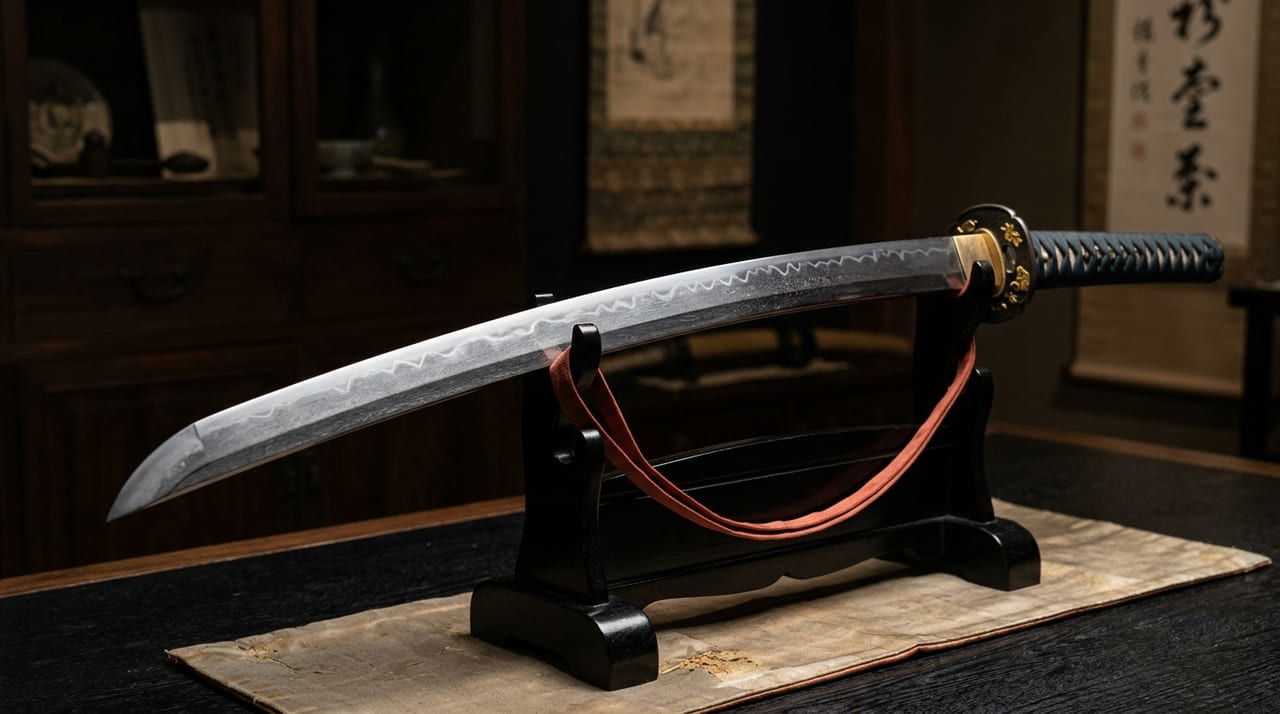 * Image is for illustrative purposes only.
Table of Contents
A Wave of AI Is Washing Over the Nihontō Industry
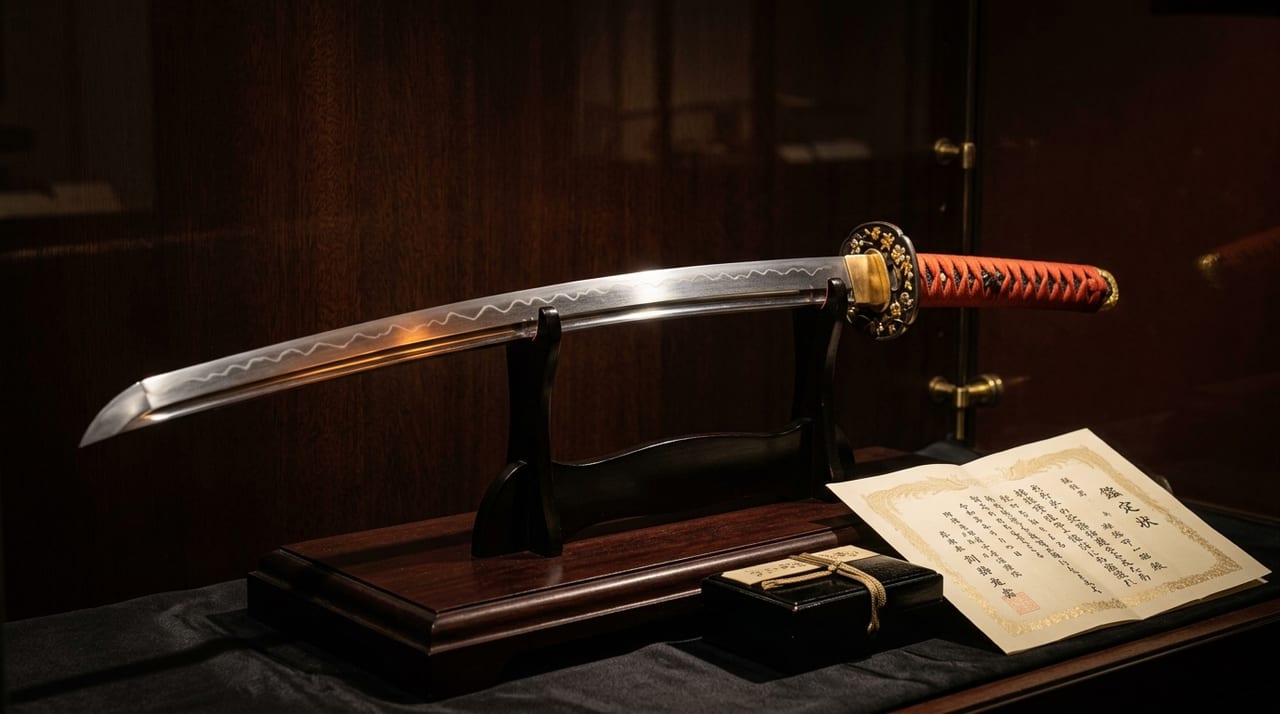
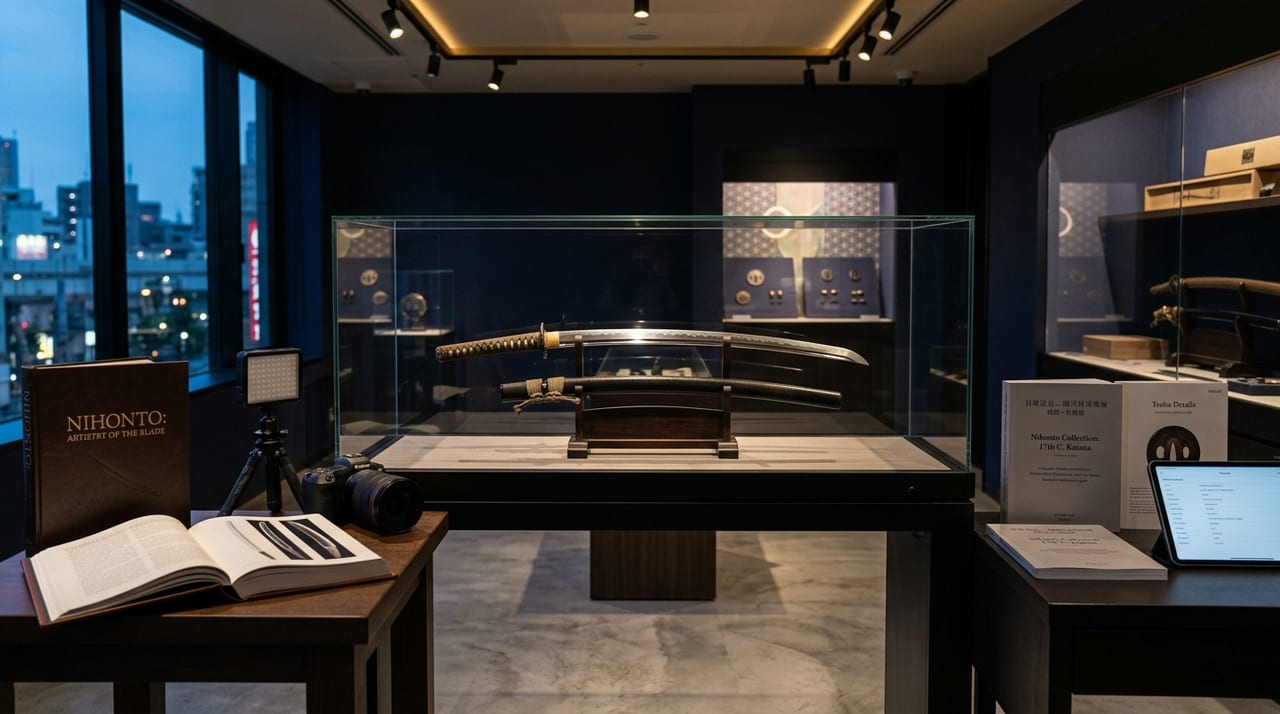
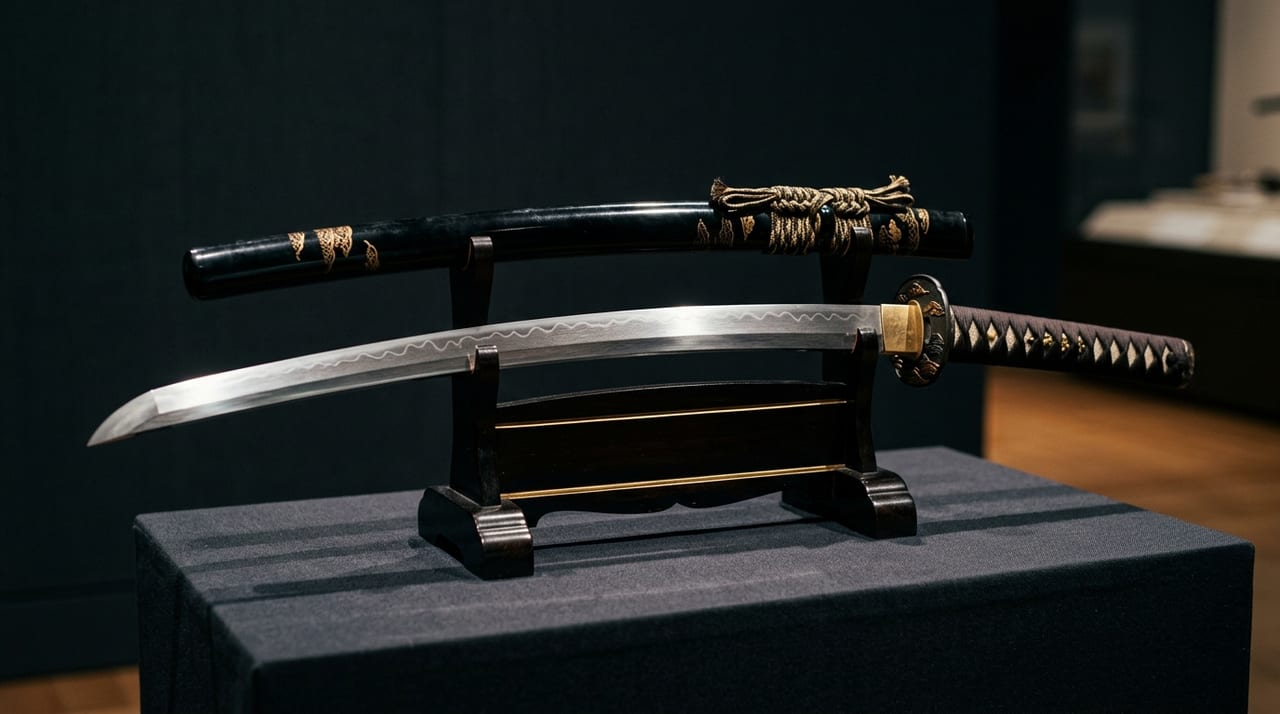
As the latter half of the 2020s unfolds, artificial intelligence (AI) is quietly but surely making inroads into the world of nihontō. Image-recognition AI has begun to be used as an assistive tool for high-level tasks that once could only be performed by seasoned appraisers — tasks such as hamon identification, period estimation, and attribution. Meanwhile, generative AI is also finding use in sword content translation, product description writing, and the automatic generation of captions for social media.
At the forefront of AI adoption are specialist sword trading companies that are aggressively expanding their e-commerce presence overseas. For dealers who have long grappled with the dilemma of translation cost versus quality as they push into English-, Chinese-, and German-speaking markets, multilingual support via generative AI is becoming a realistic option. The ongoing trend of a weak yen, which is driving growth in inbound tourism demand and overseas mail-order demand, is also one factor encouraging such investment.
The Current State of AI-Assisted Authentication via Image Recognition
The most-watched application is the automatic classification of hamon. Efforts at multiple research institutions are under way to train machine-learning models on large numbers of hamon images and determine whether a pattern is suguha or irregular, and whether it is chōji or gunome.
At several universities and research institutions, the digital measurement of jigane patterns and their application to learning models are being studied, and related academic papers have begun to appear from the mid-2020s onward. A common thread running through much of this research is the conclusion that, in response to the question of whether AI can identify a tōkō, it is useful for narrowing down candidates in an assistive capacity, but a human expert is necessary for the final determination.
A commercially notable early example is the image-search system being adopted by overseas auction houses. A feature that searches past hammer-price records for similar examples based on photographs of swords submitted for auction, and then displays a reference price range, is seen as both improving convenience for bidders and contributing to some degree of market-price transparency.
Generative AI's Impact on Content Creation and Multilingual Expansion
One of the major headaches for specialist sword dealers is producing accurate product descriptions in foreign languages. Sword terminology contains many concepts unique to Japanese, and standard machine translation tends to lose the original nuance. Representative examples include the following.
- nie
- nioi
- mune
- nakago
In response to this challenge, the use of prompt design that takes sword-specific terminology into account, as well as fine-tuned models, has begun. Some dealers have started trying to generate English product descriptions using NBTHK kanteisho language as reference data.
The use of AI to generate Japanese-language content for inbound visitors is also increasing. The practice of generating compelling social-media text from a prompt such as "briefly summarize the highlights of this sword" has begun to be adopted, mainly at relatively large sword shops. However, it appears to be common practice not to publish the generated text as-is, but rather to have a staff member with specialized knowledge verify the factual content before use.
Concrete Examples of AI Appraisal System Adoption
AI is also beginning to be used in an assistive capacity for calculating appraisal prices. Price-prediction models trained on past hammer-price data output an expected market price range from input variables such as period, school, condition, and kanteisho grade.
However, there are serious limitations in this area. The nihontō market has low liquidity, and individual variation is large even among works by the same tōkō from the same period. Moreover, much of the hammer-price data is not publicly available, placing fundamental limits on the quality and quantity of training data. At present the technology remains at the stage of being used as a rough reference for price ranges, and careful operation is required before applying it to formal authentication or appraisal (see also The Difference Between NBTHK and Nihontō Hozon).
Risks and Ethical Challenges — The Paradox of Forgery Defense
AI adoption also harbors the paradoxical challenge of increased forgery risk. Researchers have already pointed out the risk that AI-generated "plausible-looking mei" and "typical hamon patterns" could be misused in the production of forgeries (for the practical details of false mei, see Types of False Mei and Authentication).
By combining high-resolution 3D scanning with generative AI, it is becoming technically possible to create outwardly sophisticated reproductions. The industry is looking toward using AI-based "microstructure analysis" (fine-pattern analysis of the jigane) to distinguish genuine swords from fakes. The possibility that authentication and AI use could end up in a kind of cat-and-mouse relationship has also been pointed out.
The Perspective of Craftsmen and Togishi — Concerns About "Jobs Taken by AI"
Among tōshō and togishi, wariness toward AI remains strong. The words of one togishi — "You cannot identify a hamon from photographs alone. The way you angle the light produces a completely different appearance" — succinctly illustrate the limits of digitization.
The essential value of the nihontō industry lies in the seasoned "eye" and "hand." It appears to be widely shared within the industry that while AI is effective as an assistive tool, the ultimate responsibility for authentication should continue to rest with human experts. What AI brings to the nihontō industry is not only an opportunity for greater efficiency and the development of new markets, but also a prompt to reconsider the value of human connoisseurship.
Looking Ahead — Integration with Digital Ledgers
Looking further ahead, a concept of "digital kanteisho" for nihontō has also been raised in industry discussions. The idea is to combine AI analysis data with a digital provenance ledger using blockchain technology in order to improve provenance traceability. It appears that exploratory discussions of such next-generation authentication and record systems continue within the industry.
The digital transformation of the nihontō industry is still in its early stages. Yet there is no doubt that the time has come for the industry as a whole to seek a path toward using AI as a powerful tool in the service of both cultural property protection and market integrity. Actual swords listed for sale can also be browsed in TOUKENZA's online catalog, so by all means take a look and get a feel for today's nihontō market, where traditional craftsmanship and digitization intersect.