Kanteisho and Guarantee Certificates for Nihontō — The Difference Between NBTHK and Nittōho, and How Beginners Should Choose
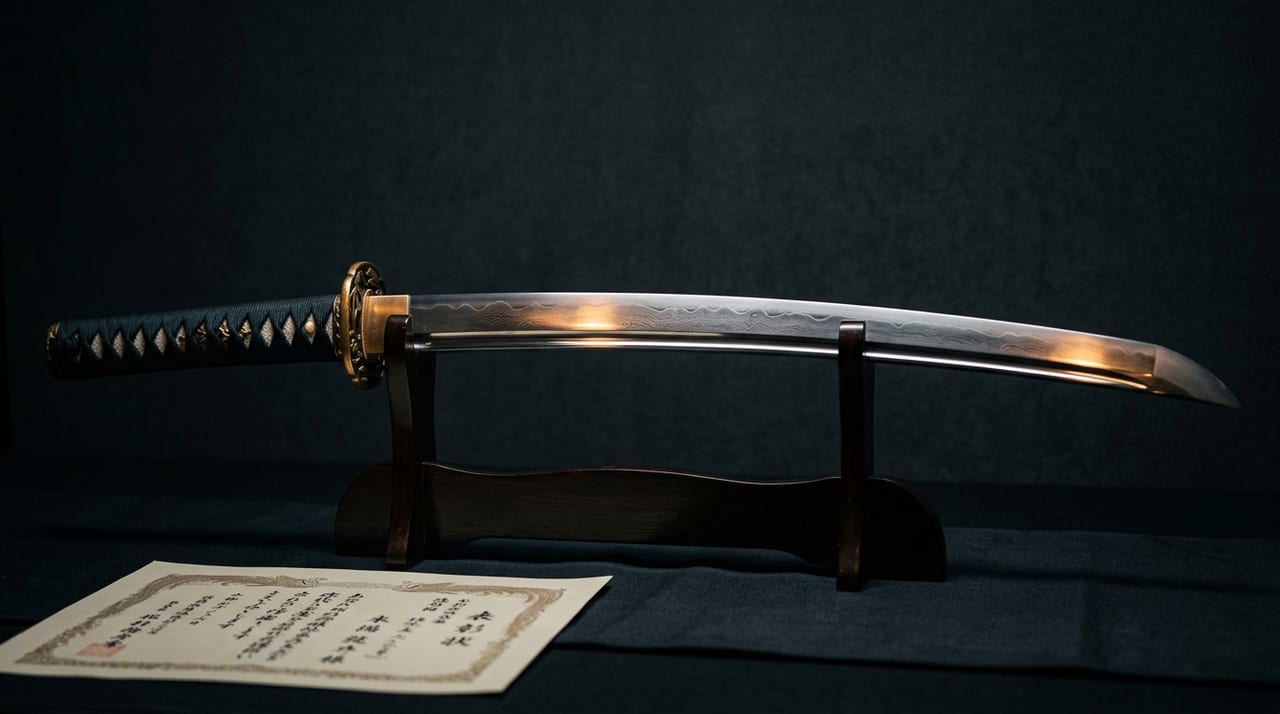 * Image is for illustrative purposes only.
Table of Contents
Why a Kanteisho Is Needed for Nihontō
When purchasing, selling, or inheriting a nihontō, the kanteisho (or hozon kanteisho) is the document that objectively certifies the sword's authenticity and value. A sword accompanied by a legitimate kanteisho carries a high level of credibility at auctions and consignment sales, and forms the basis for price negotiation. Conversely, a sword without a kanteisho may see its price drop significantly, or transactions may be refused altogether.
There are two principal institutions in Japan that issue authoritative kanteisho. They are the Kōeki Zaidan Hōjin Nihon Bijutsu Token Hozon Kyokai (NBTHK: Nihon Bijutsu Token Hozon Kyokai) and the Kōeki Zaidan Hōjin Nihon Tōken Hozonkai (Nittōho). Each institution has its own appraisal criteria and grading system, and the appropriate institution to choose differs depending on the intended use and purpose.
NBTHK's Appraisal System — Four Grades from Hozon to Tokubetsu Jūyō
NBTHK, founded in 1948, is the largest sword preservation organization in Japan, and its kanteisho enjoy the highest international credibility. Kanteisho are classified into the following four grades.
| Grade | Details |
|---|---|
| Hozon Tōken | An entry-level appraisal that certifies the sword is not a forgery. The fee is approximately a few thousand yen per sword (examination fees vary by period), making it suitable for beginning collectors and lower-priced swords. |
| Tokubetsu Hozon Tōken | A higher grade than Hozon Tōken, with an added assessment of quality, period, and kaji. It is the most widely circulated grade in the secondary market and is traded in an accessible price range. |
| Jūyō Tōken | Awarded to swords recognized as having high artistic and historical value. Determined by a strict vote of the examination committee; only a few percent of all submitted swords receive this designation. |
| Tokubetsu Jūyō Tōken | The highest grade, awarded only to exceptional swords positioned just below kokuhō (National Treasure) and jūyō bunkazai (Important Cultural Property). Tokubetsu Jūyō Tōken is the gold standard for collectors of exceptional swords, and there are cases of hammer prices in the hundreds of millions of yen at overseas auctions. |
Nittōho's Appraisal System — Regional Examinations and a Practical Orientation
Kōeki Zaidan Hōjin Nihon Tōken Hozonkai (Nittōho), established in 1958, has branches in every prefecture and is characterized by a community-based examination structure. The examination is structured in two grades — Hozon Tōken and Tokubetsu Hozon Tōken — which is fewer grade types than NBTHK, but the advantage is that examinations are frequently held in regional areas, making it easier to submit swords for appraisal.
Nittōho kanteisho have a certain level of recognition in the domestic market, but overseas collectors and high-value auctions often require NBTHK. When buying or selling swords through local sword dealers or enthusiast clubs, or for verification purposes during inheritance or registration, Nittōho's hozon kanteisho is often sufficient.
Fees are set at a level equal to or slightly lower than NBTHK, making it a highly convenient option for collectors living outside major cities.
How to Choose a Kanteisho — Deciding Based on Purpose and Budget
Which institution's appraisal to choose depends on the sword's intended purpose and price range.
- For those considering international transactions or high-value sales, NBTHK should be chosen. International auction houses such as Bonhams and Christie's require or strongly recommend NBTHK kanteisho. Having a Tokubetsu Jūyō Tōken or higher designation dramatically increases appeal to overseas buyers.
- For domestic circulation or entry-level collecting, Nittōho is adequate in many situations. Particularly for swords priced under 1,000,000 yen, Nittōho's Hozon Tōken kanteisho is often sufficient in practical terms when considering the cost-effectiveness of appraisal fees.
- For investment purposes or exceptional swords of jūyō bunkazai caliber, the Tokubetsu Jūyō Tōken or Jūyō Tōken designation from NBTHK should be the target. Examination fees are by no means inexpensive, but market valuation changes dramatically with the grade.
It is also important to develop the habit of confirming whether an existing kanteisho is already present. For swords held as part of one's own collection rather than for resale, there are cases where improving the storage environment should take priority over obtaining an additional kanteisho.
How to Read a Kanteisho — Key Information and Points for Interpretation
An NBTHK kanteisho contains the following principal information.
- The sword type (tachi, katana, wakizashi, tantō, etc.) and length (nagasa and nakago length) are stated.
- A stamp and date indicating the appraisal grade (Hozon Tōken, Tokubetsu Hozon Tōken, Jūyō Tōken, Tokubetsu Jūyō Tōken) are affixed.
- The mei (inscription) — stated as "mumei" in the case of an unsigned sword — and the attribution (worded as "attributed to [name]" or "considered to be [name]") are indicated.
Nittōho kanteisho follow the same basic structure, but differ in the level of detail recorded and in format. When multiple kanteisho are attached, the one with the highest grade serves as the practical indicator of value.
The problem of forged kanteisho also exists, so to verify authenticity it is recommended to contact each institution directly or to conduct verification through a trusted sword dealer.
Re-examination and Upgrade Applications — How to Pursue a Higher Grade
If a sword in one's possession already has a Hozon Tōken or Tokubetsu Hozon Tōken kanteisho, it is possible to challenge for a higher grade examination (Jūyō Tōken or Tokubetsu Jūyō Tōken). NBTHK holds Jūyō Tōken examinations several times a year, and if research into the period advances after obtaining Tokubetsu Hozon Tōken and new evaluations emerge, there is an opportunity for upgrading.
When submitting for an upgrade, the condition of the sword and the quality of the polish are important criteria. Unless the utsuri of the jihada and the activities of the hamon are clearly visible, the examiners' evaluation cannot be maximized. The strategy of undergoing a re-polish by a togishi before submitting for re-examination is effective for enhancing long-term asset value.
Summary — The Kanteisho Is a Sword's Résumé
A nihontō kanteisho is not merely a certificate; it is a "résumé" that records the sword's value, attribution, and condition. When purchasing a sword for the first time, the prudent first step in sword collecting is to start with a sword bearing an NBTHK Hozon Tōken or Tokubetsu Hozon Tōken, and to broaden one's horizons toward Jūyō Tōken and Tokubetsu Jūyō Tōken as the collection develops.
By understanding the presence and grade of a kanteisho, fair price negotiation in the market becomes possible, and smooth procedures can be expected at the time of future sale or inheritance. From the perspective of passing on nihontō culture as well, obtaining and preserving an appropriate kanteisho can be considered the responsibility of the owner.