How to Become a Tōkō — Apprenticeship, 5 or More Years of Training, the Commissioner's Training Course and a First Production Approval
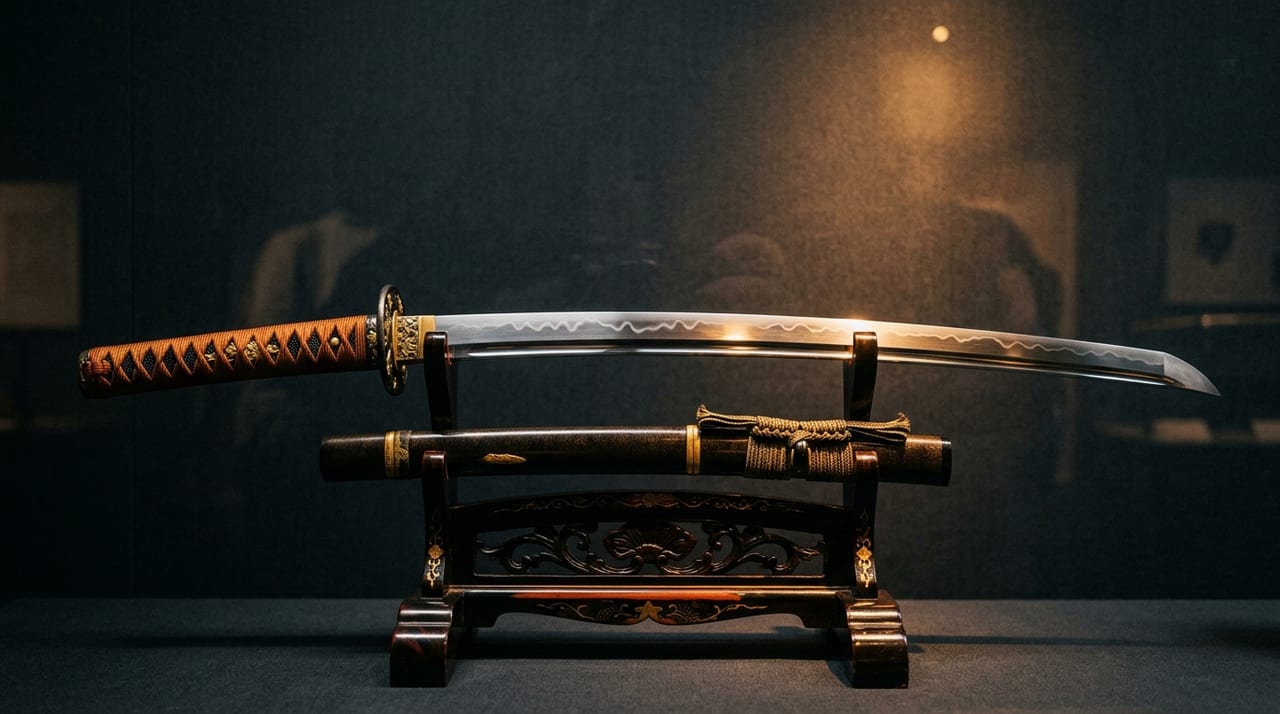 * Image is for illustrative purposes only.
Table of Contents
The Path to Becoming a Tōkō: An Overview
If you decide you want to become a tōkō (a craftsman who forges Japanese swords), there is no exam to take and no license to obtain. What the law requires is a production approval for every sword you make; the first approval is given by the Commissioner of the Agency for Cultural Affairs, and from the 2nd sword on by the Board of Education of the prefecture where you live (Act for Controlling the Possession of Firearms or Swords and Other Such Weapons (e-Gov Law Search), Article 18-2; Enforcement Order of the Act for Controlling the Possession of Firearms or Swords and Other Such Weapons (e-Gov Law Search), Article 42). In practice, becoming a tōkō can be described as "training until you are able to receive a first production approval." The Zen Nihon Tōshōkai (All Japan Swordsmith Association) says that in recent years it has come to receive many inquiries about apprenticeships (Zen Nihon Tōshōkai, "For Those Who Want to Become a Swordsmith").
The path generally follows this order (Rules on Approval of the Production of Art Swords (e-Gov Law Search), Article 2).
- Find a place to train (a master) and become an apprentice
- Devote yourself continuously for 5 years or more to refining your technique under a tōshō who has received production approval before
- Take the training on sword production conducted by the Commissioner of the Agency for Cultural Affairs
- Obtain your master's certification and a guarantee from 2 or more registration examiners, and receive your first production approval
- From the 2nd sword on, make swords with the approval of the Board of Education of your place of residence, and have each finished sword registered
The system as a whole, including how approval and registration differ from open exhibition awards and Living National Treasures, is summarized in How the System for Tōshō Works. Here we go through the steps one by one from the point of view of the person who wants to become a tōkō.
The Requirements Set by the Approval Rules
The requirements for a first approval are set out in Article 2, paragraph 1 of the Rules on Approval of the Production of Art Swords. In addition to the swords to be made having value as works of art, the following are required of the smith in charge of production (Rules on Approval of the Production of Art Swords (e-Gov Law Search), Article 2, paragraph 1).
- Having devoted themselves continuously for 5 years or more to refining their technique under a tōshō who has received approval before (including a tōshō who has been in charge of making a sword that received approval), and having acquired sufficient skill to be in charge of production, as certified by that tōshō
- A guarantee from 2 or more registration examiners
- Having taken the training on sword production conducted by the Commissioner of the Agency for Cultural Affairs
The starting point of these requirements is that the person who becomes your master must be "a tōshō who has received approval before." The Zen Nihon Tōshōkai explains that these 5 years are measured against a standard of "roughly 8 hours a day, 5 days a week," and that 5 years of weekends only would not be accepted (Zen Nihon Tōshōkai, "For Those Who Want to Become a Swordsmith").
Finding a Master — The Hardest Stage
The Zen Nihon Tōshōkai says that the most important and most difficult part of aiming to become a swordsmith is finding a master to train under. Many swordsmiths are not financially well off, and because of the weight of the responsibility most are reluctant to take on apprentices, so without luck or someone to introduce you it is hard to get an apprenticeship. It is usual for aspiring apprentices to look for a master themselves, but the Zen Nihon Tōshōkai's Successor Training Support Committee offers advice on apprenticeships through the following process (Zen Nihon Tōshōkai, "For Those Who Want to Become a Swordsmith").
- Take part in the training course for aspiring apprentices (the Bijutsu Tōken Sakutō Gijutsu Jitchi Kenshūkai, or Practical Training Course in Art Sword Making)
- After the course, if you wish to and an instructor recommends you, do a trial apprenticeship of several days with a swordsmith
- Receive an introduction to a possible master
- Interview and negotiate with the master you wish to train under
Taking part in the course does not guarantee an apprenticeship; whether you are taken on depends on negotiation between you and the master. The Zen Nihon Tōshōkai recommends that, before attending the course, you research each swordsmith's style and award history yourself and think about which swordsmith you would like to train under, and that you look at works at exhibitions and talk to swordsmiths. On age, it recommends having graduated from high school, while noting that many swordsmiths are university graduates or have worked in other jobs, and it suggests that anyone over 30 should think it over carefully once more.
On women and foreign nationals, the Zen Nihon Tōshōkai states that "it is not that the system prevents them from becoming swordsmiths," but writes that it would be no exaggeration to say there are no swordsmiths who will accept them as apprentices. The requirements of the Approval Rules contain no provisions on sex or nationality either. Residence status and other matters for people from abroad who train in Japan are covered in Aiming to Become a Tōshō in Japan as a Foreign National.
Life and Costs During Training
According to the Zen Nihon Tōshōkai's guidance, the arrangements and costs during training differ from master to master. Fully live-in apprenticeships like those of the past are almost nonexistent; most apprentices rent an apartment or similar nearby and commute, and pay their own living expenses such as rent and food. Some masters charge around 30,000 to 50,000 yen a month for materials, use of facilities and the like, while most charge no tuition fee. The Association asks that an apprenticeship be thought of not as getting a job but as something like attending a vocational school to learn a skill (Zen Nihon Tōshōkai, "For Those Who Want to Become a Swordsmith").
On training while working a part-time job, it says this depends on the master, but cautions that even if you devote all 5 years to training alone it is not easy to complete the training course, and that working part-time puts you at a disadvantage in time from the very start. The goal, it says, is not to complete the training course but to become self-supporting as a full-time swordsmith.
The Training Conducted by the Commissioner of the Agency for Cultural Affairs
The Zen Nihon Tōshōkai explains that the training required by the Approval Rules is the "Bijutsu Tōken Tōshō Gijutsu Hozon Kenshūkai" (Training Course for the Preservation of Art Sword Tōshō Techniques) organized by the Agency for Cultural Affairs. According to the Association, participation in this course is allowed for those who have completed 4 years of training; it covers the techniques and knowledge of sword-making in general over 8 days; it is not easy to complete without basic skill; and it effectively plays the role of a practical test (Zen Nihon Tōshōkai, "For Those Who Want to Become a Swordsmith"). As one of its activities, the Association cooperates in holding this course, for example by sending instructors (Zen Nihon Tōshōkai, "Overview").
There are other training courses with similar names, so take care not to confuse them.
- The Zen Nihon Tōshōkai's "Bijutsu Tōken Sakutō Gijutsu Jitchi Kenshūkai" (Practical Training Course in Art Sword Making): an opportunity for people considering an apprenticeship to experience a swordsmith's work and hear from people currently in training (Zen Nihon Tōshōkai, "For Those Who Want to Become a Swordsmith")
- The NBTHK's "Sakutō Gijutsu Jitchi Kenshūkai" (Practical Training Course in Sword-Making Techniques): a course held once a year as in-service education for tōshō, aimed at young tōshō and apprentice tōshō; participants are, as a rule, up to 45 years old (NBTHK, "Training Courses in Practical Sword-Making, Polishing, Mounting Techniques and Kaji-togi")
The training the Approval Rules list as a requirement for a first approval is "training on the production of swords conducted by the Commissioner of the Agency for Cultural Affairs" (Rules on Approval of the Production of Art Swords (e-Gov Law Search), Article 2, paragraph 1).
After the First Approval
Once approval is given, an approval certificate is issued. From the 2nd sword on, as someone who has received approval before, you make swords with the approval of the Board of Education of the prefecture where you live. Because approval is given sword by sword, you apply each time you make one (Firearms and Swords Control Act (Jūtōhō), Article 18-2, paragraph 1; Rules on Approval of the Production of Art Swords (e-Gov Law Search), Article 2, paragraphs 2 and 3).
For a finished sword, the owner applies to the Board of Education of the prefecture where they live, and the sword is registered based on an appraisal by registration examiners (Act for Controlling the Possession of Firearms or Swords and Other Such Weapons (e-Gov Law Search), Article 14). The Tokyo Metropolitan Board of Education lists, as one of the certificates from a public body that can be used for registration, the "Art Sword Production Approval Certificate" and the "Art Sword Production Completion Report" issued by the Agency for Cultural Affairs or a prefectural Board of Education (tōshō only) (Tokyo Metropolitan Board of Education, "When You Find a Firearm or Sword").
Places to present your work include open exhibitions such as the NBTHK's "Gendai Tōshoku Ten" (Contemporary Sword Craftsmanship Exhibition). Its sword-making division accepts entries from non-members of the Society too (NBTHK, "Gendai Tōshoku Ten (Sword-Making Division)"). Where awards and mukansa status fit in is covered in How the System for Tōshō Works.
The Cost of Making One Sword and of Setting Up Independently
The Zen Nihon Tōshōkai puts the cost of making one sword at roughly 600,000 to 800,000 yen, and gives the following breakdown (Zen Nihon Tōshōkai, "For Those Who Want to Become a Swordsmith").
| Item | Guideline given by the Zen Nihon Tōshōkai |
|---|---|
| Tamahagane (raw material) | 30,000–60,000 yen |
| Charcoal | 200,000–300,000 yen |
| Polishing (togi) | 250,000–400,000 yen |
| Habaki | 80,000–200,000 yen |
| Saya | 80,000–120,000 yen |
| Sword bag | 2,000–5,000 yen |
| Application for production approval | 800 yen |
| Registration | 6,300 yen |
On top of this, there are utility costs and the cost of tools such as files and whetstones. As for the cost of setting up independently and building a workshop, it says that putting up a new building of 3 ken × 4 ken and acquiring a minimum full set of machinery and other tools comes to around 15,000,000 yen, and that savings are possible by keeping construction costs down or buying used machinery. Setting up in a residential area, it says, would probably be impossible without the understanding of the neighbors, because the work is loud and a considerable amount of charcoal dust and the like flies about.
Summary — What to Check on the Path to Becoming a Tōkō
- There is no license or qualification exam for tōkō. What you need is a production approval for each sword, and the first approval is given by the Commissioner of the Agency for Cultural Affairs
- A first approval requires 5 or more continuous years of refining your technique under a tōshō who has received approval before, a guarantee from 2 or more registration examiners, and the training conducted by the Commissioner of the Agency for Cultural Affairs (Rules on Approval of the Production of Art Swords (e-Gov Law Search), Article 2)
- The hardest part is finding a master; the Zen Nihon Tōshōkai's Successor Training Support Committee serves as a point of contact for the training course, trial apprenticeships and introductions (Zen Nihon Tōshōkai, "For Those Who Want to Become a Swordsmith")
- Living expenses during training are basically your own responsibility, and the Association also gives guideline figures for the cost of making one sword and of setting up independently
The path to becoming a tōkō begins with being accepted by a master. Before you apprentice, it is worth checking both the rules of the system and the realities of training.