The Satsuma Domain's System for Protecting Swordsmiths — The Shimazu Clan's Retained Tōkō, the Mystery of "Nanban-tetsu," and the Lineage of Naminohira Craftsmen
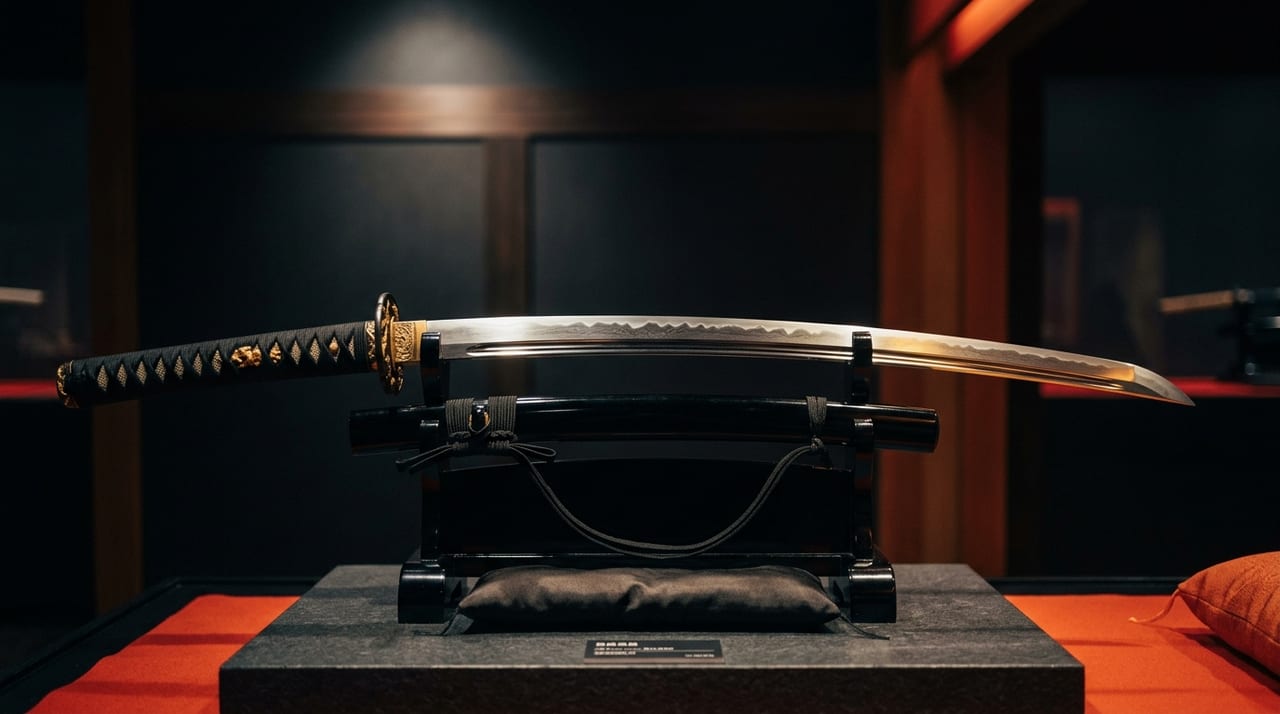 * Image is for illustrative purposes only.
Table of Contents
The Satsuma Domain's Sword Policy — The Unique Protective System Born of a "Land That Honors Martial Valor"
The Satsuma Domain (present-day Kagoshima Prefecture), situated at the southernmost tip of Kyushu, is known as a domain that throughout the Edo period maintained a strongly martial culture that revered armed valor. Even after their defeat at the Battle of Sekigahara, the Shimazu clan continued as a great domain of 770,000 koku, maintaining their own distinct cultural and military system. Behind this lay the pressing reality that, as an outside lord (tozama daimyo), they constantly had to be mindful of their tense relationship with the shogunate while continuously raising the morale and capabilities of their domain.
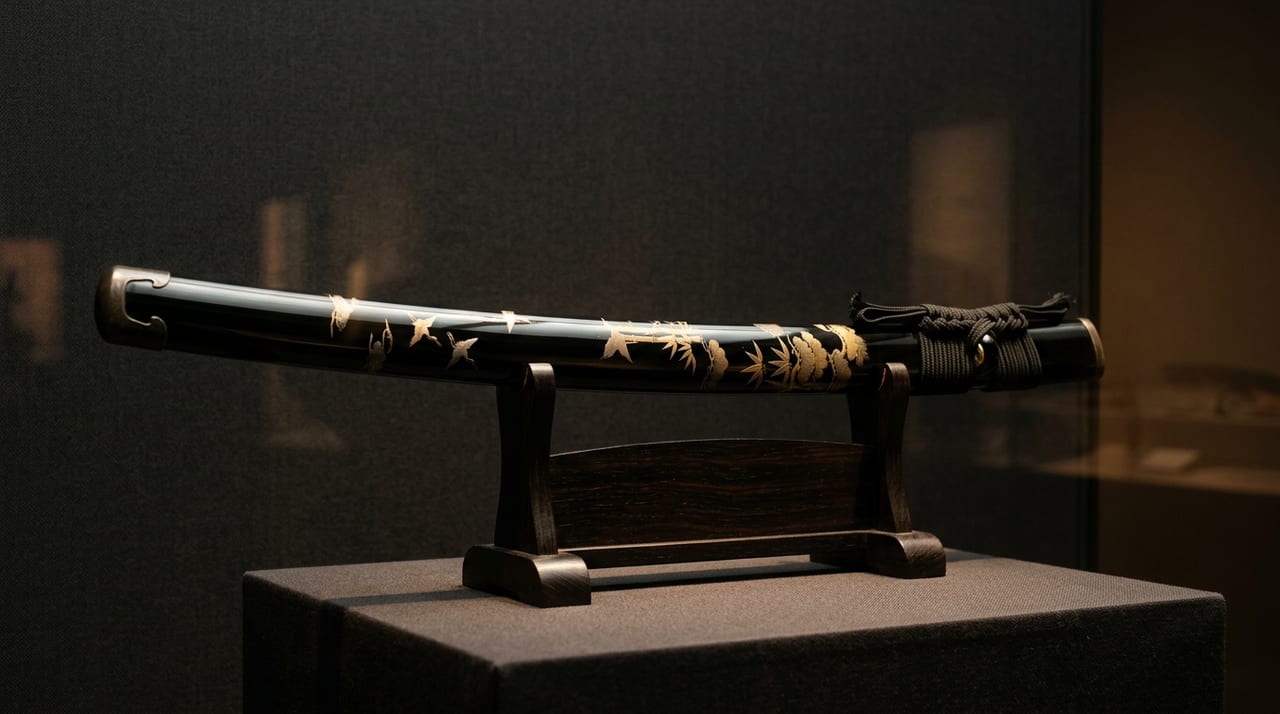
As part of this, the Satsuma Domain established a systematic program for the protection and cultivation of tōkō (tōshō). This system was not merely a matter of "corralling craftsmen" but rather a substantive mechanism for quality control of swords — which underpinned the domain's military strength — and for transmitting technical skills, deeply intertwined with the core of domain governance.
The Satsuma Domain's emphasis on military readiness is also evident in the breadth of its samurai class. In Satsuma, where the proportion of the warrior class was reportedly higher than in other domains, the stratum of those who wore swords daily was thick, and demand for swords capable of practical use never ceased. The sheer scale of this demand no doubt also helped propel the idea of systematic, domain-sponsored protection of tōkō. When we today take a Satsuma sword in hand, bearing in mind this background of "the domain as a whole supporting sword culture," it comes into view not merely as an antique but as a document conveying the history of the region itself.
The System of Okakae Tōkō — The Tōshō Group Organized by the Shimazu Clan
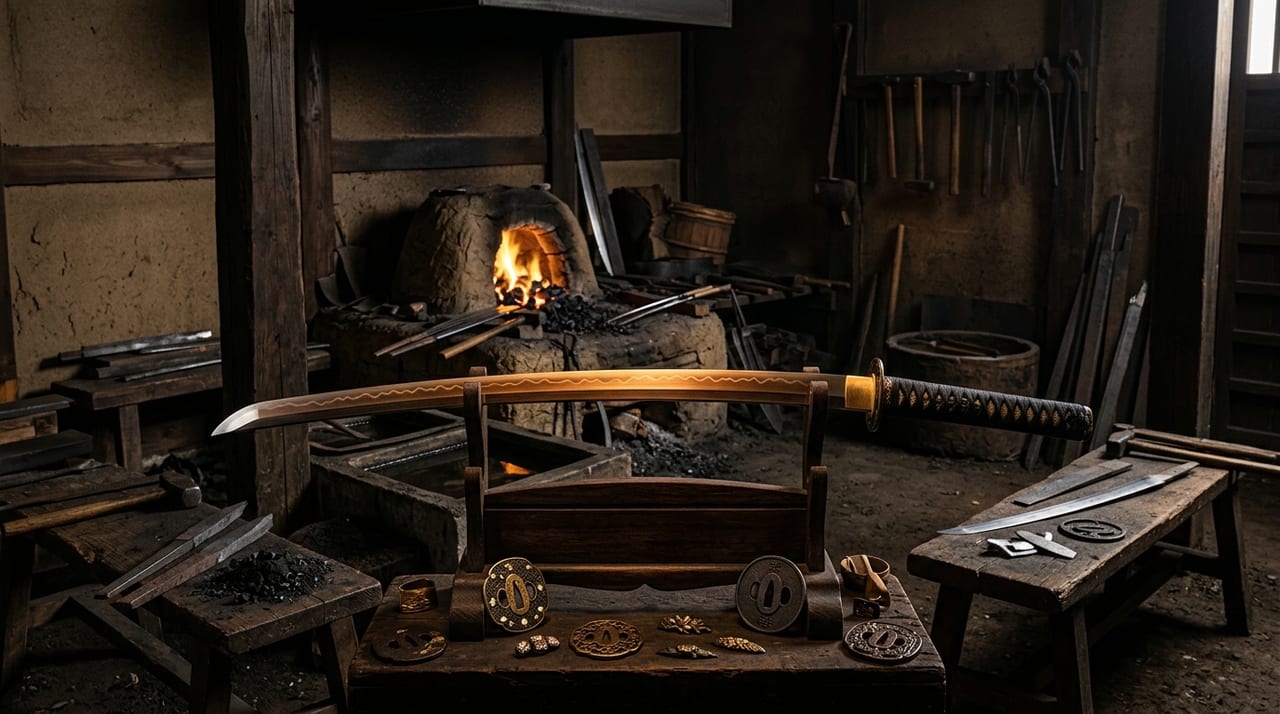
The Satsuma Domain's system of okakae tōkō (retained tōkō) granted tōshō a stipend and imposed on them certain production obligations as exclusive craftsmen of the domain. Under this institutional patronage, tōkō were able to hone their skills in a stable environment, and a sword culture unique to Satsuma gradually took shape.
The tōkō who resided in Satsuma throughout the Edo period established a distinctive style known as Satsuma-tō (Satsuma swords), and while influenced by the central schools of Yamashiro, Yamato, and Bizen, achieved their own independent development. Among them, the most notable are the tōkō of the Naminohira school. The Naminohira school traces its origins to a tōkō who migrated from Yamato (Nara) and from the late Heian period onward formed its own distinct lineage in Satsuma. Their work is also called Satsuma shintō, and its distinctive hamon and jigane have long been highly regarded among sword enthusiasts.
Works by retained tōkō most often bear a mei — the tōkō's name carved into the nakago of the blade. The calligraphic style and manner of cutting the mei vary from tōkō to tōkō, and even within the same tōkō can change according to the period of production, making them an important clue in appraisal. That said, it is difficult to determine authenticity or period of production from the mei alone, and a comprehensive judgment must be made together with the overall quality of the blade, including the jigane and hamon. The kanteisho issued by NBTHK presents such expert judgment as the assessment of a third-party organization.
The Mystery of "Nanban-tetsu" — Overseas Trade and Sword Materials
An essential element of Satsuma Domain's unique context is the use of nanban-tetsu. Satsuma functioned as a conduit for overseas trade via the Ryukyu Kingdom, and records remain that imported iron materials were used in sword production.
Nanban-tetsu is a collective term for foreign-produced iron that appears in documents of the time, and is said to refer to iron materials brought from Portugal, the Netherlands, China, and elsewhere. Its composition and production method differ from that of domestic tamahagane, and it has been noted that, depending on how it was forged, it may have exerted a distinctive influence on the characteristics of swords.
However, debate continues in modern research over the reality of swords made with nanban-tetsu, and no definitive view has been established regarding their actual prevalence or their effect on quality. To be precise, this is a subject that should be discussed with the caveat that "swords made with nanban-tetsu may have existed, but the degree of prevalence and the effect on quality are unknown."
When you encounter this term in the context of purchasing or viewing a sword, it is advisable to treat the claim that nanban-tetsu was used not at face value but simply as one tradition or hypothesis. What ultimately substantiates the value of a sword is not whether nanban-tetsu was used, but the overall quality of the blade — its jigane, hamon, and shape — and the results of appraisal by specialist bodies such as NBTHK.
The Style of Naminohira Tōkō — An Aesthetic Unique to Satsuma
The sword work of the Naminohira school is said to exhibit the following characteristics:
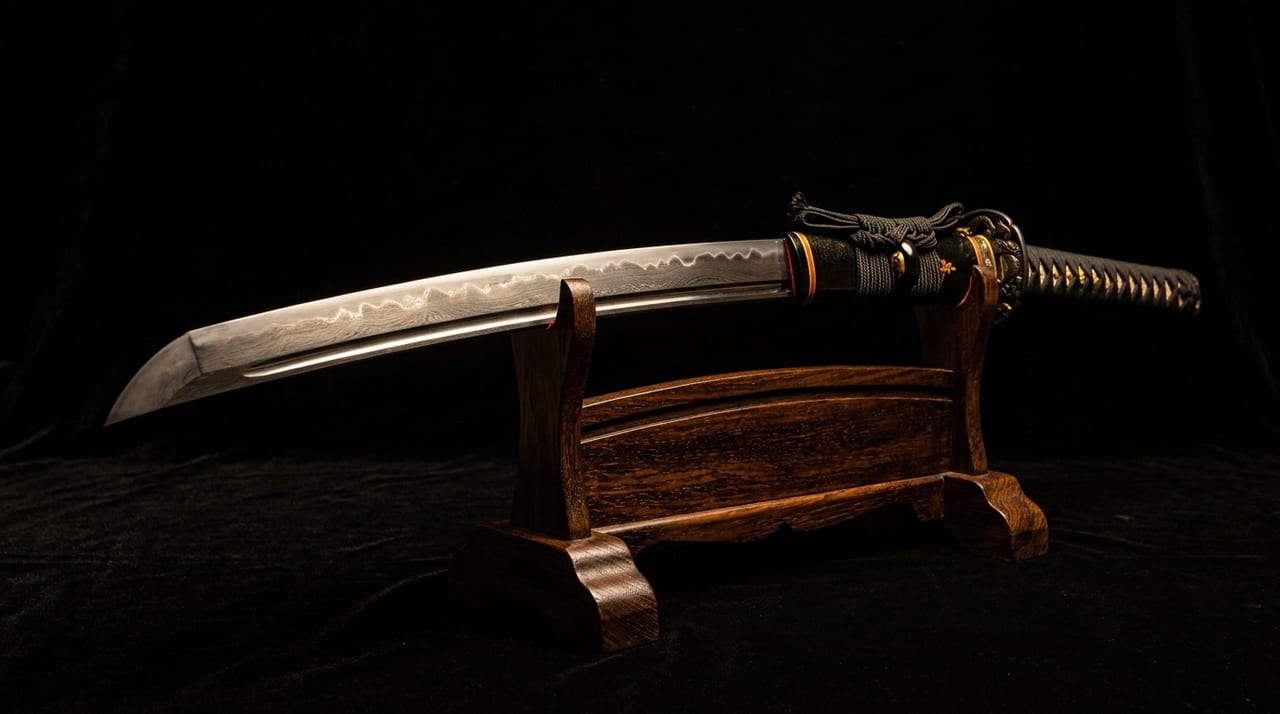
- jigane: A tendency toward mokume grain with coarse patches, giving a distinctive texture
- hamon: Relatively calm yet refined temper lines such as suguha and small gunome
- bōshi: Hakikake is frequently seen
These characteristics can be interpreted as a result of Satsuma's geographical circumstances — its distance from Yamato (Nara) and its own routes for procuring iron materials. It is precisely because Satsuma was active in trade with the continent and the southern seas that the swords came to embody an aesthetic sensibility that could not have emerged elsewhere.
Points to Note When Viewing
If you have the opportunity to hold and view a work of the Naminohira school in person, attending to the following points will make its characteristics easier to appreciate.
- Direct light at the blade while varying the angle to observe the play of texture in the jigane
- Compare the height and calmness of the undulation of the hamon, and the crispness of the nioiguchi
- Observe how the bōshi (the hamon near the kissaki) turns back, and whether hakikake is present
These approaches are fundamentals applicable not only to the Naminohira school but to sword appreciation in general, so comparing them with works from other regions of production should make the individuality distinctive to Satsuma swords stand out all the more.
Transmission to the Present — Evaluation and Study of Satsuma Swords
Satsuma swords (including those of the Naminohira school) were sometimes viewed as lower in standing than the central brands (Bizen, Sōshū, Yamashiro) in Edo-period sword evaluation. In modern times, however, a steady reassessment has been underway from the perspective of appreciating the diversity of regional swords.
Works are housed in institutions such as the Kagoshima Prefectural Museum and the Shōko Shūseikan, preserved and transmitted as the distinctive craft culture nurtured by the Satsuma Domain's sword protection policy. Among sword researchers and enthusiasts, many praise the sword work of the Naminohira school as "a masterpiece of regional swords embodying the spirit of Satsuma," and its historical and artistic value will no doubt be further reassessed going forward.
On the practical side, those who own or purchase Satsuma swords should pay attention to storage conditions and regular maintenance. Avoiding environments with large swings in humidity and direct sunlight, and gently wiping off sweat and skin oils — which cause rust — with a soft cloth when they adhere: following these basic handling practices leads to keeping the blade in good condition for a long time. If in doubt about maintenance, it is safer to consult a sword shop or a professional togishi rather than applying oil on your own judgment.
For a more detailed exploration of the Naminohira tōkō surveyed in this article — centered on their lineage of approximately 900 years and the tachi Sasanuki, a jūyō bunkazai passed down by Satsuma — see Sasanuki and the Naminohira School — The Tachi, a Jūyō Bunkazai Passed Down by Satsuma.