Satsuma Swordsmiths: The Shimazu Clan's Retained Smiths and Satsuma Shinto Aesthetics
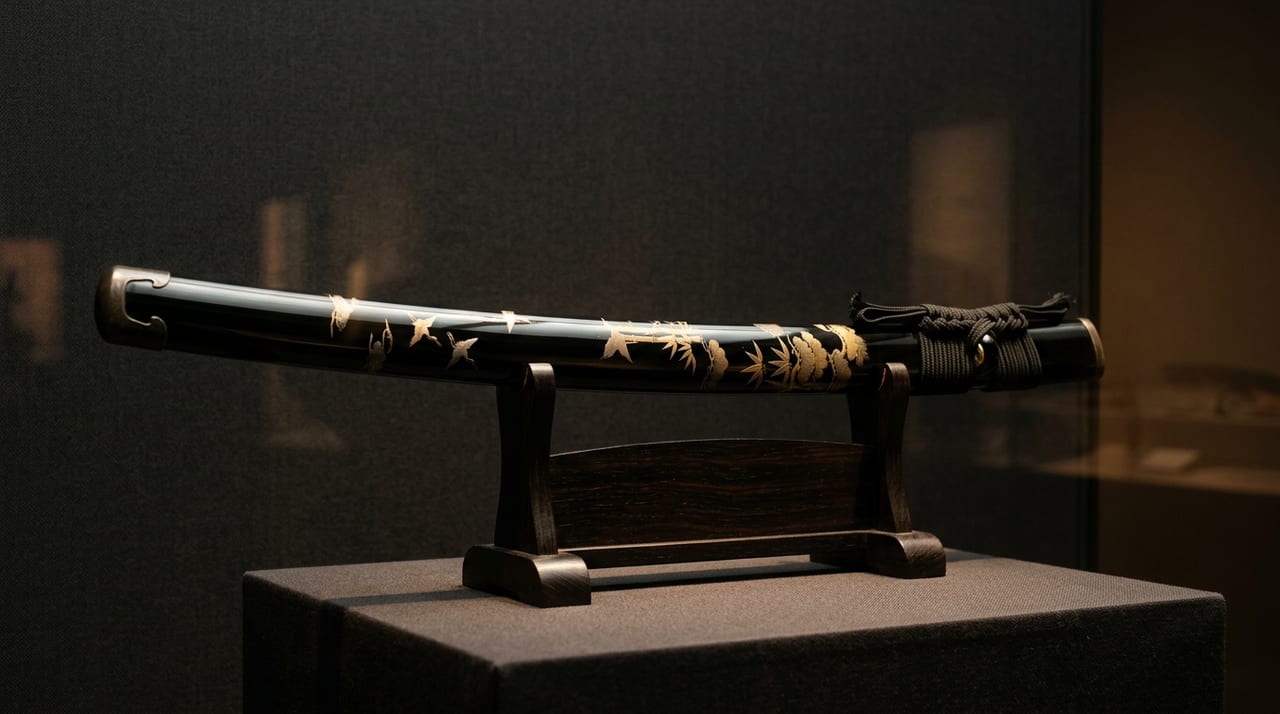 * Image is for illustrative purposes only.
Table of Contents
The Uniqueness of Satsuma Swords—The Samurai Culture of Japan's Southern Tip
Satsuma was a special region located near the southern tip of the Japanese archipelago, and throughout the Edo period it remained under the unique control of the Shimazu clan (Satsuma Domain). Even under the isolation policy, Satsuma continued to conduct trade and obtain foreign information through the Ryukyu Kingdom, maintaining a unique culture, economy, and military power distinct from other domains in Japan. As a major tozama daimyo domain not under direct shogunate control, Satsuma kept the costs of sankin kotai low while securing its own industries and financial base, ultimately becoming one of Japan's strongest domain armies by the late Edo period.
This high degree of independence also extended to culture. The proportion of samurai in Satsuma's population was exceptionally high compared to other domains (some sources suggest about thirty percent of the entire population held samurai status), and the spirit of the samurai and practical combat training were passed down without loss even into the late Edo period. This spirit had a direct bearing on sword culture, creating a foundation for the development of a distinctive style that directly answered the tastes and demands of the Shimazu clan—the "Satsuma shinto (newly-made swords)."
Technical Characteristics of Satsuma Shinto—Practical Combat Performance and the Spirit of the South
The most important characteristic of Satsuma shinto is "a strong orientation toward practical cutting performance." The Shimazu clan maintained military-dominated politics from the Sengoku through the Edo period, always emphasizing the practical combat abilities of the samurai. This domain ethos was reflected in orders to sword smiths, and Satsuma sword smiths had a strong tendency to prioritize blade performance over artistic embellishment.
The technical distinctiveness of Satsuma shinto can be organized into three points.
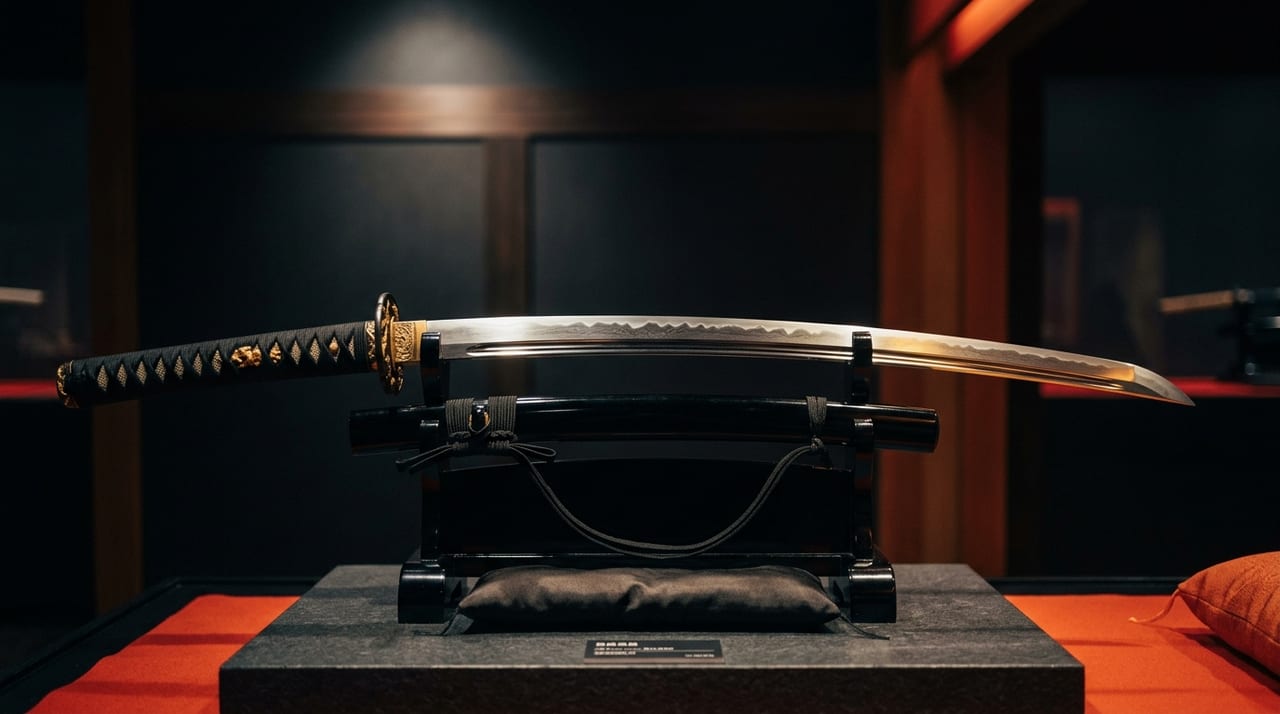
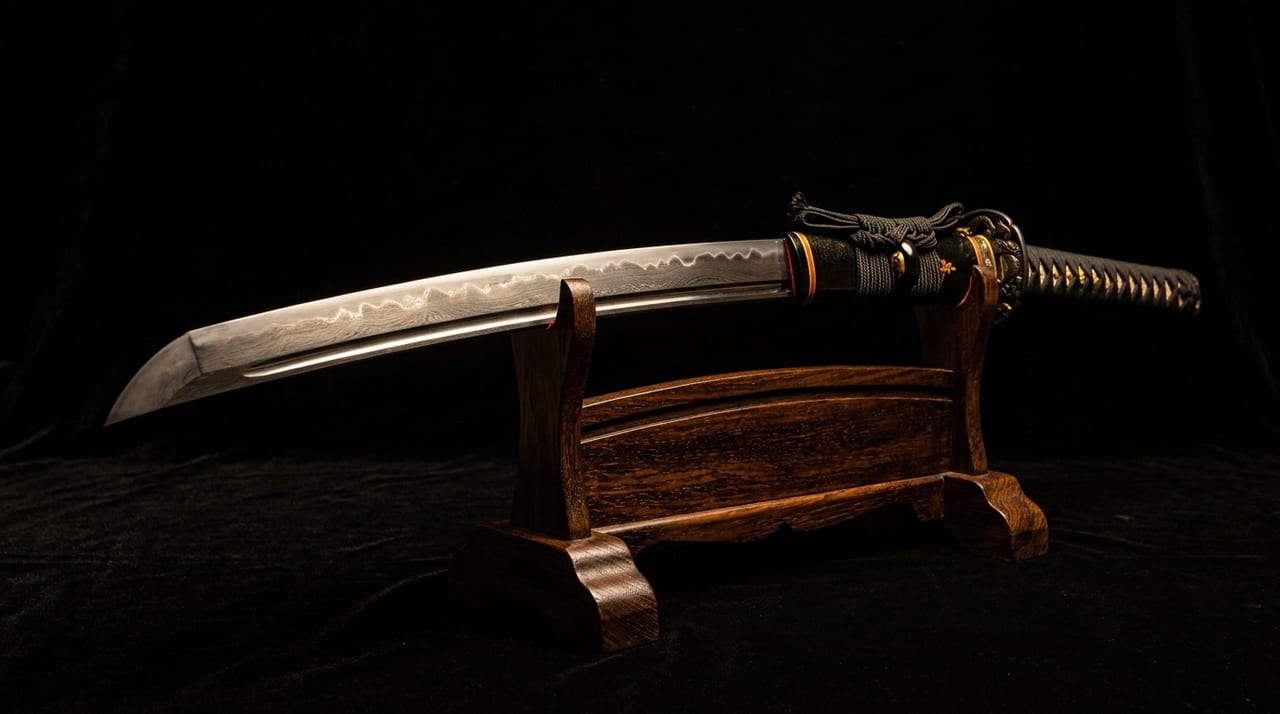
- Coarse jihada, strong nie, and bold irregular hamon: Nie is the crystalline structure of metal particles that appears at the boundary of the hamon, and strong, large-grained nie indicates both a bold impression and high blade strength. This is a unique interpretation influenced by the Soshu tradition (a powerful style that developed in Sagami from the late Kamakura through the period of the Northern and Southern Courts) while also reflecting the spirit of southern Kyushu—boldness and sincerity.
- Satsuma hada: A distinctive jihada grain pattern that has a coarse texture with slightly flowing ōitame, thought to result from differences in the sources of sand iron and charcoal used and the iron-making process; among experts it is used as one of the indicators for identifying the production center.
- Marumune (rounded spine): Most normal swords have either a flat spine called "hiramune" or a triangular-section spine called "mitsumune," but in Satsuma a rounded spine called "marumune" was preferred. Marumune is said to have practical advantages in distributing pressure on the hand when gripping the sword and reducing fatigue even with prolonged use, making it an important identifying characteristic of Satsuma swords.
Major Satsuma Sword Smith Lineages—The Lines of Naminohira, Masakuni, Motohira, and Masayuki
Representative lineages of Satsuma sword smiths include the Naminohira school and various Sasshu shinto schools.
- Naminohira school: The oldest sword smith lineage in Satsuma, an illustrious clan that began its activities from the late Heian through the Kamakura period. According to tradition, the founder descended from Yamato Province, and after establishing roots in Satsuma, the school developed branches throughout Kyushu. The characteristics of the Naminohira school lie in straightforward Yamato tradition hamon and ancient, elegant jihada; among its surviving works from the period of the Northern and Southern Courts through the Muromachi period are pieces designated as National Treasures and Important Cultural Properties. It is a long-lasting lineage that continuously produced sword smiths until the Edo period and represents the foundation of Satsuma's sword history.
- Various Sasshu shinto schools: A collective term for sword smiths who flourished as retainers of the Shimazu clan after the Edo period began, with master smiths such as Masakuni, Motohira, and Masayuki being representative.
- Masakuni: Sword smiths of the Masakuni lineage bore the name "Masakuni" through successive generations, creating tanto and full fittings as official smiths for the Shimazu clan. The first-generation Masakuni is said to have flourished around the time of the Battle of Sekigahara, and thereafter sword smiths bearing the Masakuni signature were recorded continuously until the end of the Edo period.
- Motohira: A representative Satsuma sword smith of the late Edo period, his works are highly valued for their bold irregular hamon and strong nie. Because his blades were commissioned as "working swords" actually worn by Shimazu clan samurai, many of his pieces survive as complete sets with fittings.
- Masayuki: A master smith representing Satsuma of the late Edo period, he left works that concentrated Satsuma's distinctive practical aesthetics within a bold style following the Soshu tradition lineage.
Even in today's sword market, blades by Satsuma smiths—particularly those bearing Motohira and Masayuki signatures—maintain high valuations.
Horikawa Kunihiro and Satsuma—Influence on the Center After Unification
Particularly noteworthy among Satsuma-born sword smiths is Horikawa Kunihiro. Born in Hyuga Province Aya (present-day Miyazaki Prefecture) in 1531 (Kyōroku 4), Kunihiro moved to the Horikawa district of Kyoto after Toyotomi Hideyoshi's unification of Japan and established an innovative style that pioneered the Edo shinto period.
While bringing to Kyoto the combat-oriented technical consciousness cultivated in Satsuma, Kunihiro established a unique style that reinterpreted the Soshu tradition in contemporary terms for that era. His complex hamon combining ōgunome, notare, and hakozutsu patterns captured the aesthetic sensibilities of Toyotomi and Tokugawa daimyo, earning commissions from numerous prominent warriors. From his workshop emerged master smiths representing the Edo period, including Dewa Daijō Kunimichi, Echigo no Kami Kunitomo, Izumi no Kami Kunisada, and Kawachi no Kami Kunisuke.
Kunihiro's move from Satsuma to Kyoto holds important significance as a concrete example of how Satsuma sword smith technique revitalized central sword culture. The bold practical sense of Satsuma fused within Kunihiro with Kyoto's refined aesthetic consciousness, becoming the foundation of later Kyoto blades (kyōmono).
The Sword Ban and Satsuma—The Southwestern War and Pride in the Blade
While the 1876 Sword Ban (Meiji 9) dealt a devastating blow to sword smiths throughout Japan, it had a special historical context in Satsuma (Kagoshima). The "Southwestern War," which erupted in 1877 the year after the Sword Ban, was the final samurai rebellion in which former Satsuma domain samurai led by Saigō Takamori rebelled against the Meiji government, and in this war Satsuma samurai fought wielding Japanese swords.
The repeated bare-blade charges by Satsuma samurai against the Meiji government army equipped with modern Murata rifles again demonstrated the practical limits of the Japanese sword in the age of firearms. Yet at the same time, it was also an expression of the spiritual attitude by which Satsuma samurai prioritized "pride in the blade" above the logic of the modern nation-state.
After the defeat in the Southwestern War, sword manufacture in Satsuma declined sharply. Yet pride in the blade did not disappear, but continued in the forms of cultural property protection, sword research, and the promotion of martial arts. The contributions of people from Satsuma are significant in the sword preservation movement that began in the later Meiji period and after.
Conclusion—A Unique Sword Culture Born of Southern Spirit
Satsuma's sword culture is a distinctive product created by the militaristic governance of the Shimazu clan, the unique openness fostered by Ryukyu trade, the bold spirit of the south, and the thickness of its samurai population. A strong orientation toward practical cutting performance, the distinctive marumune construction, and the coarse Satsuma hada jihada—these technical characteristics form a unique aesthetic found in no other production center.
The long transmission from the Naminohira school through the various Sasshu shinto schools demonstrates the possibility of a regional sword culture independent of the value standards of central authority. As Horikawa Kunihiro demonstrated, Satsuma's practical aesthetics sometimes possessed the power to innovate even central culture. Satsuma's sword history, from the upheaval of the late Edo and Meiji Restoration through to the modern era, eloquently testifies that the Japanese sword transcends mere weapon or artwork, standing as the crystallization of regional pride and spiritual identity.
Regarding the Naminohira school, mentioned in this article as one lineage of Satsuma sword smiths, a detailed discussion of approximately 900 years of history from its founder through the Edo period and centered on its masterwork, the Important Cultural Property tachi "Sasanuki," can be found in Sasanuki and the Naminohira School—The Genealogy of Japan's Southernmost Sword Smith Group.