How the Tōshō System Works: Differences Between Per-Sword Manufacturing Approval, Registration, Open Exhibition Awards, and Living National Treasures
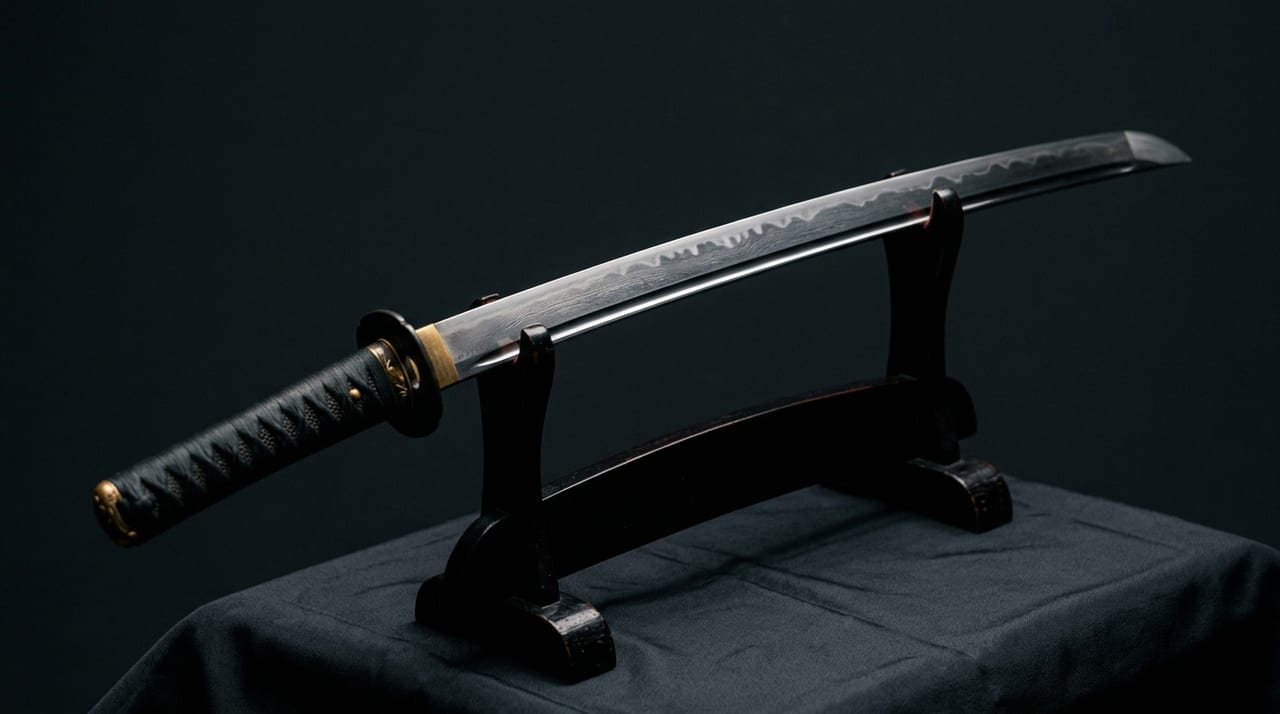 * Image is for illustrative purposes only.
Table of Contents
The Tōshō System Divides into "Legal Procedures" and "Evaluation"
For tōshō who make nihontō in modern Japan, there is no system of "tōshō license" or "tōshō qualification exam" in law. What the law prescribes are the procedures of manufacturing approval for each sword to be made and registration of the completed sword (Act for Controlling the Possession of Firearms or Swords and Other Such Weapons (Jūtōhō) e-Gov Statute Search, Articles 14 and 18-2). Separate from this, there are evaluation systems: awards and "mukansa" (no-examination status) at open exhibitions held by organizations, and recognition as a holder of an important intangible cultural property (commonly known as a Living National Treasure) conferred by the Minister of Education, Culture, Sports, Science and Technology. The two differ in who decides and on what basis.
| System | Decision-maker | Content |
|---|---|---|
| Manufacturing approval (first time) | Commissioner of the Agency for Cultural Affairs | Approves the manufacture of each sword to be made |
| Manufacturing approval (from the second sword onward) | Board of Education of the prefecture of the applicant's domicile | Approves the manufacture of each sword to be made |
| Registration | Board of Education of the prefecture of the owner's domicile | Registers the sword based on the assessment of registration examiners |
| Open exhibition awards and mukansa | Organization hosting the exhibition | Examines submitted works and awards prizes |
| Holder of important intangible cultural property | Minister of Education, Culture, Sports, Science and Technology | Recognizes holders of important intangible cultural property techniques |
Manufacturing Approval for Each Sword
A person wishing to make swords with value as works of art must obtain approval from the Board of Education of the prefecture of their domicile for each sword they intend to make. In cases defined by cabinet order, the Commissioner of the Agency for Cultural Affairs grants the approval; Article 42 of the Enforcement Order defines such cases as "cases where a person who has not previously received approval seeks to receive approval" (Act for Controlling the Possession of Firearms or Swords and Other Such Weapons (Jūtōhō) e-Gov Statute Search, Article 18-2, Paragraph 1; Enforcement Order of the Act for Controlling the Possession of Firearms or Swords and Other Such Weapons e-Gov Statute Search, Article 42). In other words, the first approval is granted by the Commissioner of the Agency for Cultural Affairs, and from the second sword onward by the local Board of Education.
The requirements for the first approval are: that the person in charge of manufacture has devoted themselves continuously for five or more years to the refinement of skills under a tōshō who has previously received approval, with that tōshō providing certification; that two or more registration examiners provide guarantees; and that the person has completed training on sword manufacture conducted by the Commissioner of the Agency for Cultural Affairs. From the second sword onward, the Board of Education grants approval if the person in charge of manufacture is someone who has previously received approval. In both cases, it is a prerequisite that the swords to be made have value as works of art (Rules on Approval for Manufacture of Art Swords e-Gov Statute Search, Article 2). The path to meeting these requirements is explained step by step in How to Become a Tōkō.
What to Write in the Application
Article 1 of the Approval Rules prescribes the items to be stated in the approval application as follows.
- Name (or organization name) and address of the applicant; if the person in charge of manufacture differs from the applicant, their name and address as well
- Date of birth and career history as a tōkō of the person in charge of manufacture
- Name (or organization name) and address of the person who commissioned the manufacture
- Type and number of swords to be made (including the number of kage-uchi)
- Purpose of manufacture, place of manufacture, and scheduled start and completion dates
When approval is granted, an approval certificate is issued; when it is not granted, notification to that effect is given (Approval Rules, Article 2, Paragraph 3). When the Board of Education grants approval, the Public Safety Commission of the prefecture of the applicant's domicile is notified (Firearms and Swords Control Act (Jūtōhō), Article 18-2, Paragraph 3).
No Upper Limit on Number in the Rules
The Approval Rules contain no provision setting an upper limit on the number of swords that may be made in a year. Some prefectures, however, set a standard number of days in their examination criteria; Aomori Prefecture sets the standard number of days for tanren of newly made swords at 15 or more days per piece for tachi, katana, and naginata, and 10 or more days per piece for wakizashi, tantō, and the like (Aomori Prefecture, "Examination Standards and Standard Processing Periods for Dispositions on Applications (Act for Controlling the Possession of Firearms or Swords and Other Such Weapons)").
Completed Swords Receive Registration
A person who manufactures swords under approval is permitted to possess the completed sword while holding it in accordance with the purpose of manufacture (Firearms and Swords Control Act (Jūtōhō), Article 3, Paragraph 1, Item 10). In all other situations, possession of swords is permitted only for those that have, in principle, received registration under Article 14 (same paragraph, Item 6). Registration is applied for by the owner with the Board of Education of their prefecture of domicile and is carried out based on the assessment of registration examiners (same Act, Article 14; Act for Controlling the Possession of Firearms or Swords and Other Such Weapons e-Gov Statute Search).
The Tokyo Metropolitan Board of Education lists, as one of the official documents required for registration, the "Art Sword Manufacturing Approval Certificate" and "Art Sword Manufacturing Completion Report" (for tōshō only) issued by the Agency for Cultural Affairs or a prefectural Board of Education, and sets the registration examination fee at 6,300 yen per sword (Tokyo Metropolitan Board of Education, "When You Find Firearms or Swords"). The handling of registration certificates in general is summarized in The Complete Guide to Nihontō Registration Certificates.
Open Exhibition Awards and "Mukansa"
NBTHK "Gendai Tōshoku-ten"
NBTHK (Society for the Preservation of Japanese Art Swords), a public interest incorporated foundation, holds the "Gendai Tōshoku-ten," and the 2019 event guidelines describe the sword-making, blade carving, and metal carving sections as the "former Shinsakumeitō Exhibition" (2019 Gendai Tōshoku-ten Event Guidelines). According to the 2026 entry page, non-members of the association may also enter, works not made using traditional techniques and materials are excluded from judging, and submitted swords must include a registration certificate (NBTHK, "Gendai Tōshoku-ten (Sword-Making Section)").
The association's 2026 list of judging results begins with tōshō entered as "mukansa" (no-examination entries), followed by the Takamatsu-no-Miya Memorial Prize, Kunzan Prize, Kanzan Prize, Association President's Prize, Excellence Award, Effort Award, Newcomer Award, and Selected entries listed by section (2026 Gendai Tōshoku-ten, Sword-Making Section: Mukansa Entries and Judging Results). Tōshō with mukansa status are treated separately from competitive entries, but the criteria for attaining mukansa status are not described in these documents.
The Masamune Prize appears in the "Awards and Prize Money" section of the 2019 event guidelines as a prize of 200,000 yen, separate from the special prize (prize money: 100,000 yen). It does not appear in the "Awards and Prize Money" section of the 2026 entry page or in the judging results, meaning it is not necessarily awarded every year.
Exhibitions by Other Organizations
The Japan Sword Culture Promotion Association, a public interest incorporated foundation, holds the "New Nihontō, Polishing, Fittings, and Swordcraft Skills Exhibition" every year and honors outstanding works with a ministerial prize and other awards (Japan Sword Culture Promotion Association, "Exhibition Activities"). The All Japan Tōshō Association hosts the "Omamori-katana Exhibition" (All Japan Tōshō Association, "Overview").
Awards and mukansa status at any of these exhibitions are evaluations by the organizing body's review and do not constitute statutory qualifications. They are not part of the requirements for manufacturing approval (Approval Rules, Article 2) either.
Holders of Important Intangible Cultural Properties (Living National Treasures)
The Minister of Education, Culture, Sports, Science and Technology may designate important items among intangible cultural properties as important intangible cultural properties, and upon designation must recognize their holders or holding organizations. Designations and recognitions are announced in the Official Gazette (Act on Protection of Cultural Properties e-Gov Statute Search, Article 71, Paragraphs 1 through 3). Holders recognized as individuals are commonly called "Living National Treasures." The basis for this differs from both the per-sword approval under the Firearms and Swords Control Act (Jūtōhō) and from awards at organization-held open exhibitions.
Tamahagane and Nittōho Tatara
NBTHK states that it operates the "Nittōho Tatara" (a tatara, or traditional smelter, directly managed by the association) in Okuizumo-chō, Nita-gun, Shimane Prefecture; that it has been recognized as a selected preservation technique under the Act on Protection of Cultural Properties; and that it distributes the tamahagane and other materials it produces to tōshō nationwide (NBTHK, "Tatara Operations"). Distribution takes place in principle once a year, and in principle tamahagane cannot be obtained by anyone other than a tōshō (NBTHK, "Tamahagane Distribution").
Tōshō Organizations and Training Workshops
The All Japan Tōshō Association is a tōshō organization established in Shōwa 50 (1975), and lists among its activities the presentation and research of sword-making techniques, hosting the Omamori-katana Exhibition, and cooperating in events such as dispatching instructors to the Agency for Cultural Affairs' "Art Sword Tōshō Technique Preservation Training Workshop" (All Japan Tōshō Association, "Overview"). NBTHK holds the "Sword-Making Technique Practical Training Workshop" once a year as in-service education for tōshō, with mukansa tōshō as the primary instructors and targeting young tōshō and tōshō apprentices (NBTHK, "Sword-Making Practical, Polishing, Fittings Technique, and Kaji Polishing Training Workshops").
Membership in these organizations or participation in their training workshops is not among the requirements in the Approval Rules. The training listed as a requirement for the first approval is "training on sword manufacture conducted by the Commissioner of the Agency for Cultural Affairs" (Rules on Approval for Manufacture of Art Swords e-Gov Statute Search, Article 2, Paragraph 1).
Summary
- There is no tōshō license or tōshō qualification exam in law. The legal procedures are manufacturing approval for each sword and registration of the completed sword.
- Manufacturing approval is granted by the Commissioner of the Agency for Cultural Affairs for the first sword, and by the Board of Education of the prefecture of domicile from the second sword onward.
- Awards and mukansa status at the Gendai Tōshoku-ten are evaluations by the organizing body and are not requirements for approval.
- Holders of important intangible cultural properties (Living National Treasures) are recognized by the Minister of Education, Culture, Sports, Science and Technology under the Act on Protection of Cultural Properties.
The steps from becoming an apprentice to receiving the first approval are covered in detail in How to Become a Tōkō.