The Science of Hamon and Yaki-ire — The Chemical Reaction of Water Quenching, the Most Critical Step in Nihontō Forging
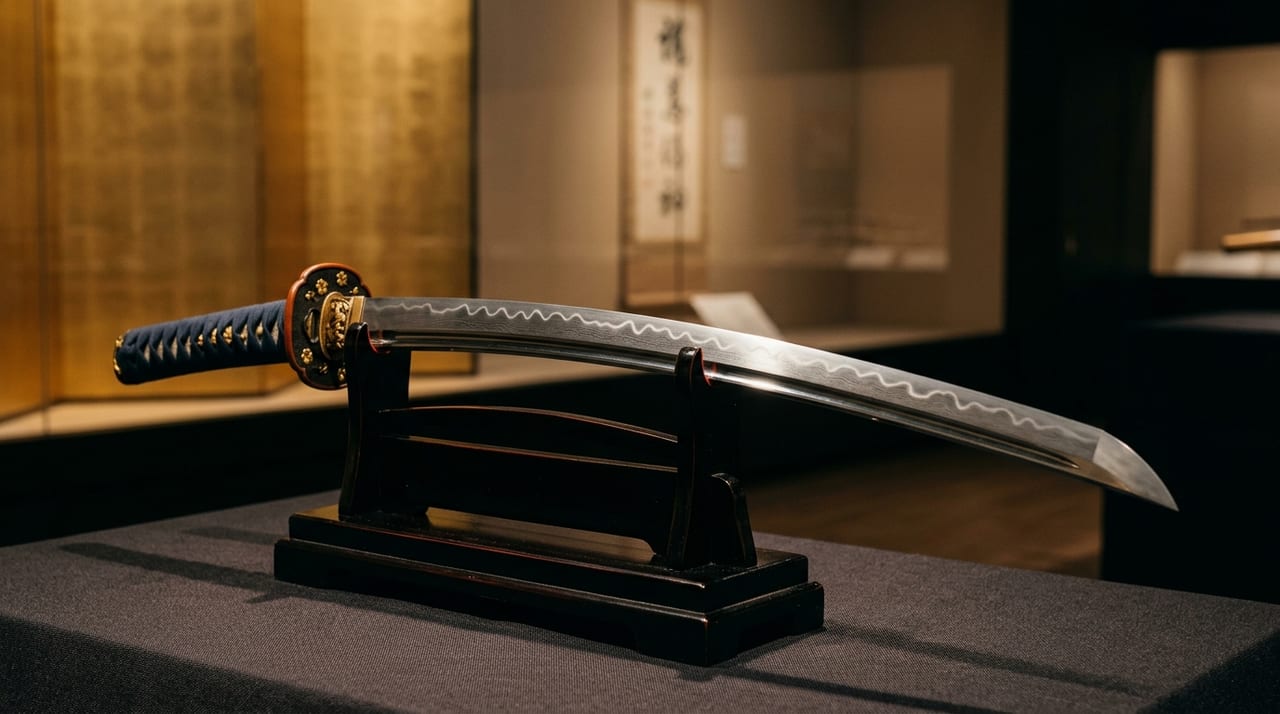
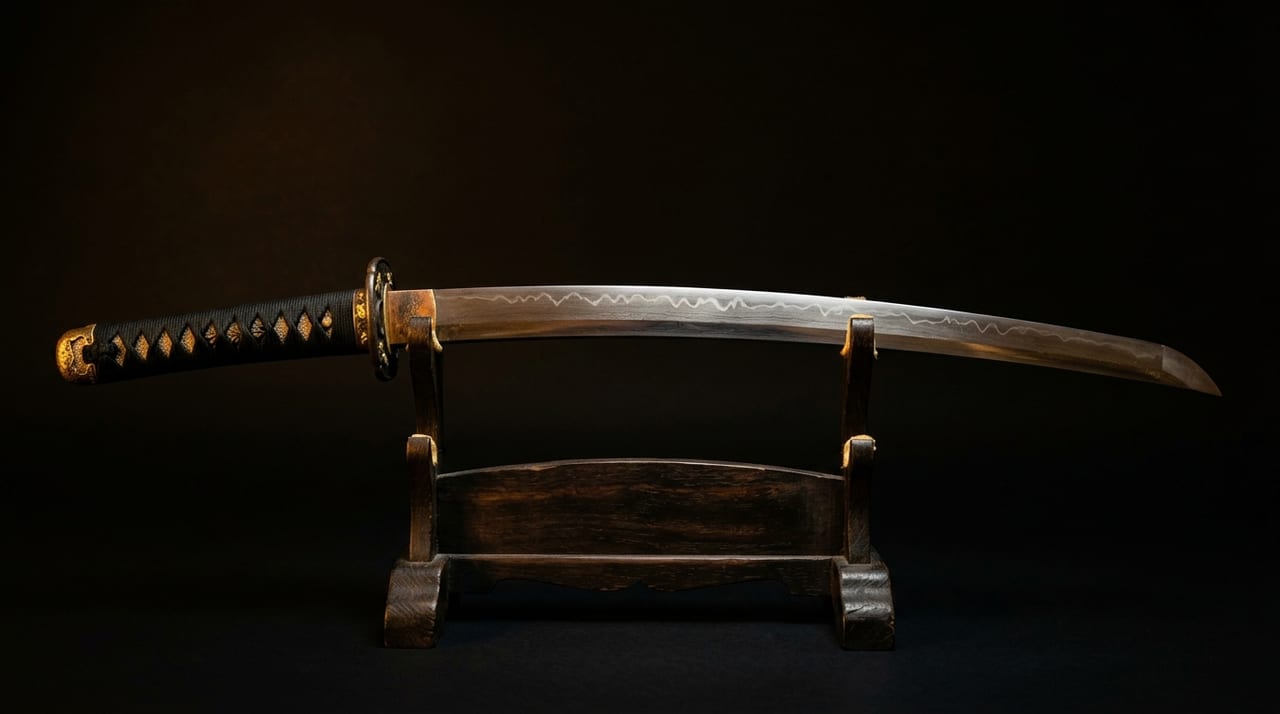
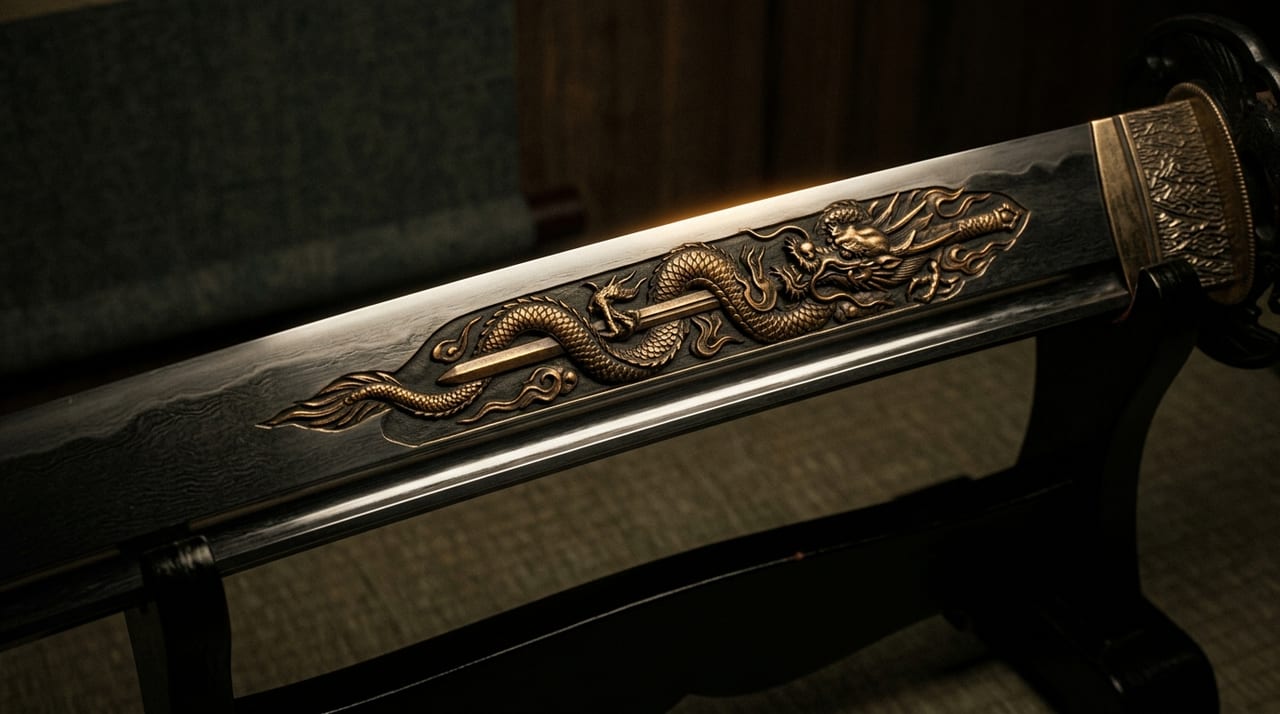
 * Image is for illustrative purposes only.
Table of Contents
What is Yaki-ire?
Yaki-ire is the final and most critical step in the blade-forging process that produces the hamon (temper line). When the blade is heated to a high temperature and rapidly cooled in water, a change in metallic structure known as martensitic transformation occurs in the cutting edge, raising its hardness to the extreme.
This step demands an exceptionally high level of technical skill. Failure results in problems such as the blade cracking ("ware"), warping, or failing to develop a hamon, making it one of the steps that most severely tests the tōshō's (swordsmith's) skill.
The Tsuchioki Process
Before yaki-ire, clay (tsuchi) is applied to the blade in a process called tsuchioki (applying the clay coating).
Composition of Yakiba-tsuchi (Quenching Clay)
The composition of yakiba-tsuchi differs from tōshō to tōshō, but the following materials are generally used.
- Clay (for fire resistance)
- Powdered charcoal (carbon supply and insulation adjustment)
- Whetstone powder (for improved mold release)
- Water (for kneading)
The Tsuchioki Method
- Ha-bu (cutting edge): Clay is applied thinly. Cooling is faster, producing martensite.
- Ji-bu (body) and mine (spine): Clay is applied thickly. Insulation prevents rapid cooling, producing pearlite and bainite structures.
The thickness of the clay and its application pattern determine the shape of the hamon. The tōshō carefully applies the clay with a brush or bamboo spatula, tracing the desired shape of the hamon.
Heating and Water Quenching
Once the clay has dried, the blade is heated evenly in a charcoal furnace.
Heating Requirements
- Target temperature: 770–800°C (above the austenite transformation temperature)
- Color guide: A state in which the blade glows a pale red-orange inside the furnace (the tōshō judges temperature by eye)
- Even heating: The smaller the temperature difference between the cutting edge and the body, the better the result of the yaki-ire
Mizu-yaki (Water Quenching)
The heated blade is plunged all at once into a water tank (yaki-oke). The water temperature is typically around 10–15°C, though there is also significant adjustment based on each tōshō's experience.
Physics of Rapid Cooling
- Ha-bu (cutting edge — clay is thin, cooling is fast): Martensitic transformation produces high hardness (HRC 60 or above)
- Ji-bu and mine (body and spine — clay is thick, cooling is gradual): Pearlite and bainite transformation maintains toughness (approximately HRC 30–45)
The key to achieving both sharpness and resistance to breaking lies in making a hard cutting edge and a tough body coexist within a single blade.
The Science of Martensitic Transformation
The reason the hamon stands out in such beauty lies in the metallic structure called martensite.
The Mechanism of Transformation
- During heating: The crystal structure of the iron changes to austenite (FCC structure), dissolving carbon into solid solution.
- During rapid cooling: Without time for carbon to diffuse, the lattice transforms into martensite (BCT structure) in a distorted state.
- Result: Carbon is trapped within the lattice, forming a structure of extremely high hardness and strength.
The hardness of martensite depends on carbon content. In steel with approximately 0.8% carbon, hardness reaches around HRC 65, comparable to tool steel.
Types of Hamon and Schools
Various hamon are formed depending on the tsuchioki pattern.
| Hamon Name | Characteristics | Representative Schools |
|---|---|---|
| Suguha | Straight hamon | Yamashiro-den, etc. |
| Gunome | Wave-like rounded hamon | Bizen-den, Mino-den, etc. |
| Chōji | Clove-blossom petal shape | Bizen-den (Fukuoka Ichimonji, etc.) |
| Notare | Large, gentle waves | Sōshū-den, etc. |
| Midare-ba | Irregular, disordered pattern | Various schools |
| Hitatsura | Quenching extends across the entire blade | Late Sōshū-den |
Internal Structure of the Hamon
Within the hamon, minute patterns called "nie" and "nioi" appear.
- Nie: Granular martensite crystals. Each individual grain is clearly visible.
- Nioi: A fine aggregate of martensite that appears as a mist.
- Kinsuji and sunagashi: Linear or flowing activities that appear within the hamon.
These are important elements in appreciating the hamon and serve as criteria for judging the quality of a blade.
Risks of Yaki-ire Failure
Yaki-ire always carries risks that could ruin an entire blade.
| Type of Failure | Cause | Result |
|---|---|---|
| Ware (cracking) | Stress concentration during rapid cooling | The blade cracks (discarded) |
| Magari (warping) | Uneven cooling | The blade deforms (requires correction) |
| Hamon fudezu (hamon fails to appear) | Insufficient heating; clay |