The World of habaki, koiguchi, and Kanagushi——The Skills and Roles of Japanese Sword Exterior Metal Fittings Craftsmen
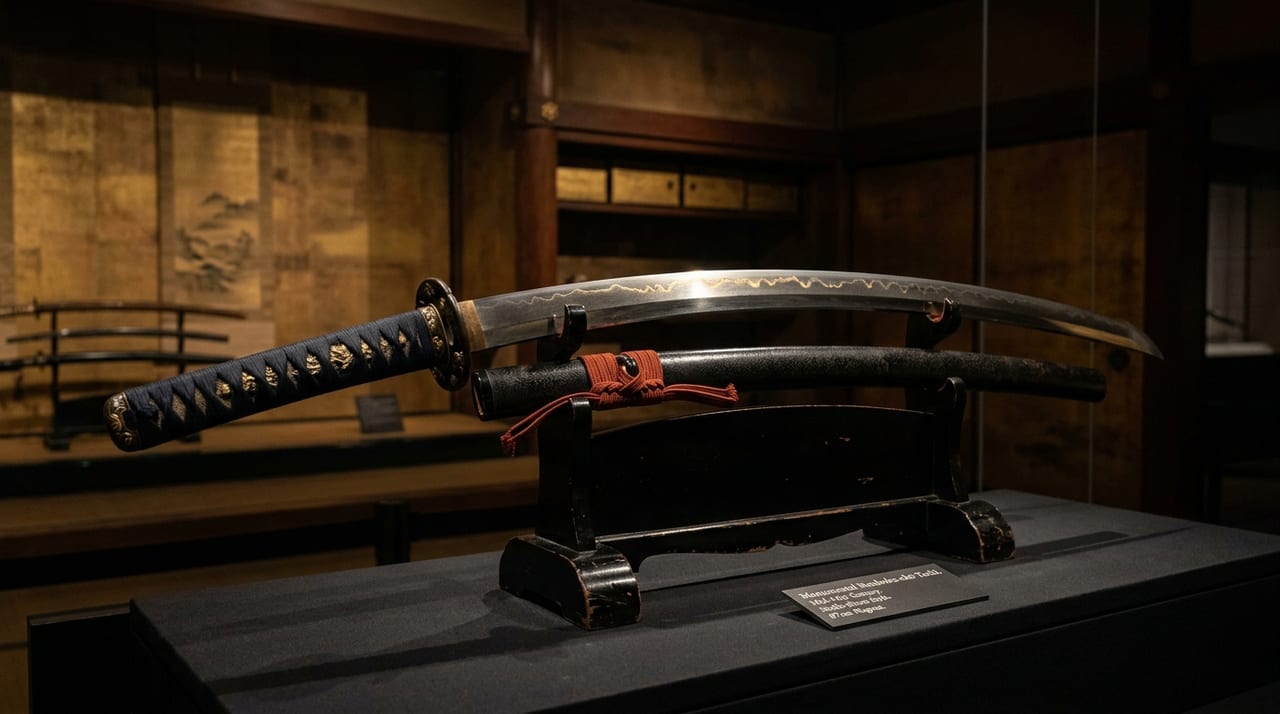 * Image is for illustrative purposes only.
Table of Contents
The Role of Japanese Sword Exterior Metal Fittings Craftsmen
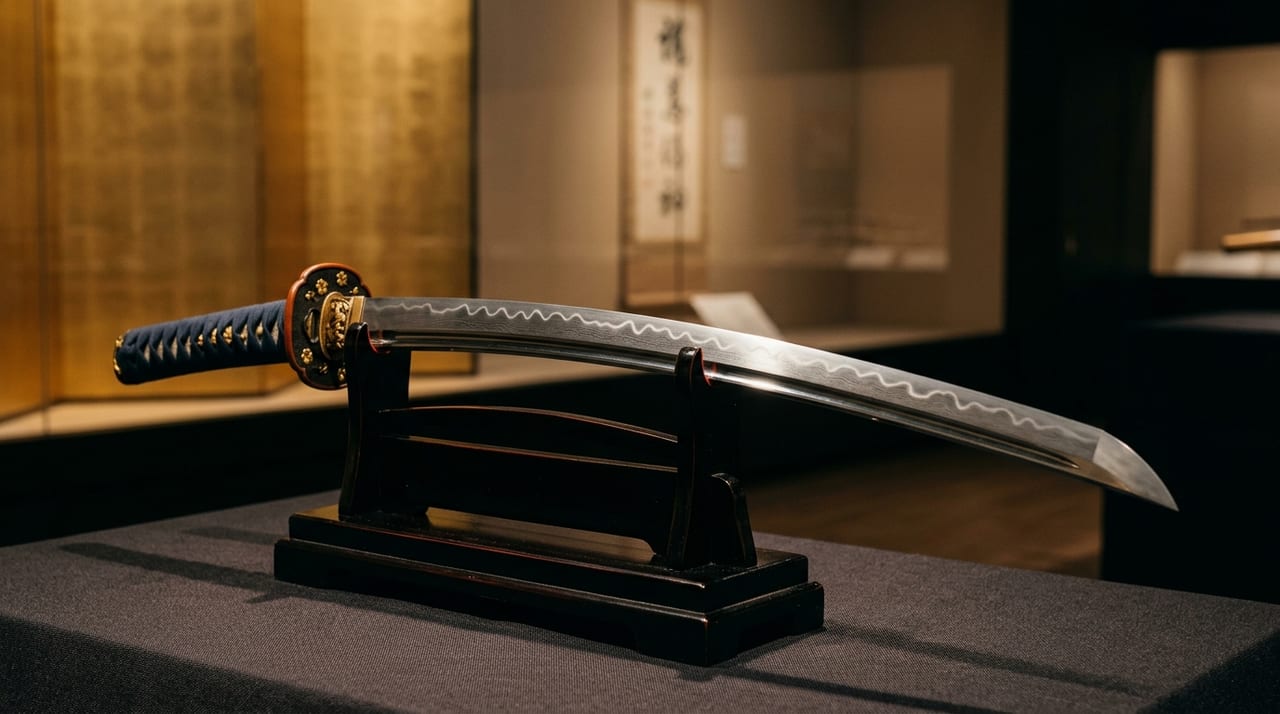
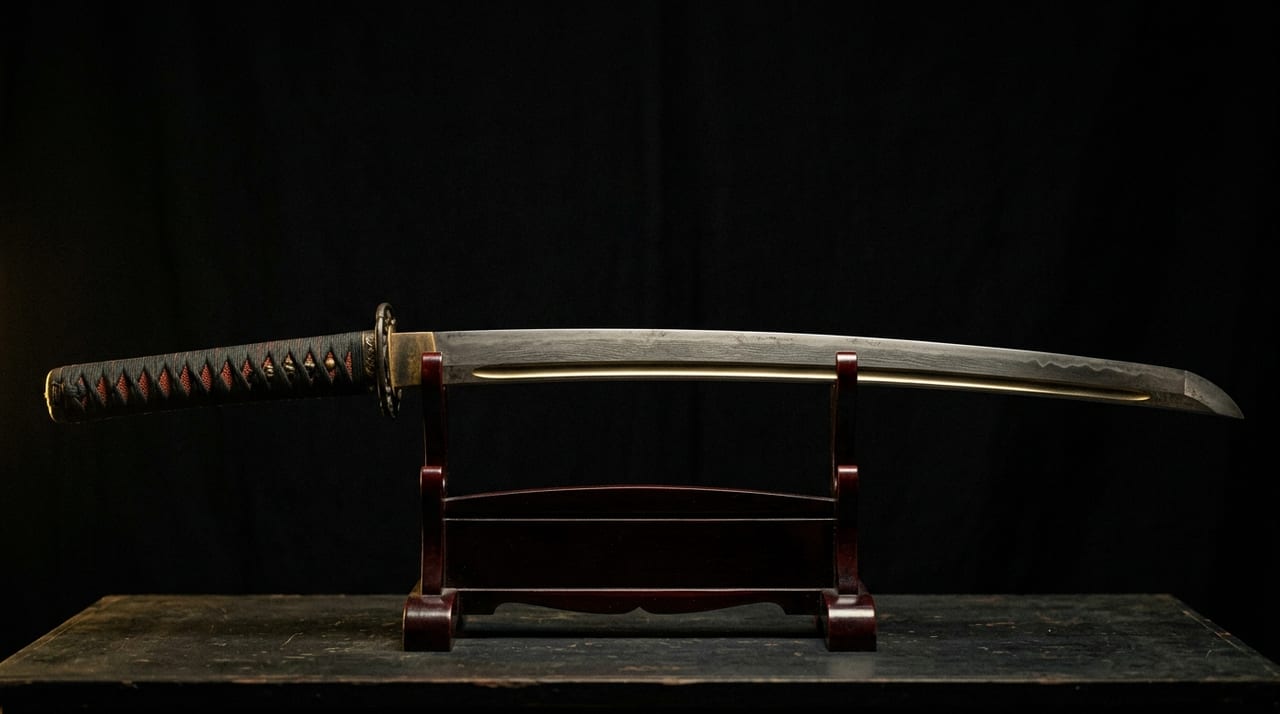
A Japanese sword is composed of the blade (including the nakago) and the exterior furnishings (koshirae), and a variety of metal fittings are used in the koshirae. The craftsmen who specialize in making these fittings are collectively called kanagushi (metal fittings craftsmen) or tōsōgu-shi (tōsōgu craftsmen). Working in coordination with the koshiraeshi who oversees the overall design of the koshirae, each kanagushi handles their respective specialty area.
Exterior metal fittings serve both practical functions and artistic value. In particular, from the Edo period onward, in a time of prolonged peace swords transformed from weapons into "personal ornaments that embody the aesthetic sensibility of the samurai," and the design and craftsmanship of exterior metal fittings developed as an independent field of fine arts and crafts.
Main Types of Exterior Metal Fittings and Their Craftsmen
habaki-shi
The habaki is a metal retaining fitting attached at the junction between the blade and the tsuka (hilt) and saya (scabbard). It serves both the practical role of securing the blade so it does not fall out of the saya and the artistic role of decorating the base of the blade.
Materials: gold, silver, shakudō, sukane (unalloyed copper), shinchū (brass), and others Techniques: tankin (hammering and shaping), chōkin (engraving), zōgan (inlay), kinkise (gold overlay)
habaki-shi work in close coordination with tōshō and togi-shi, precisely measuring the dimensions of the blade's nakago (tang) to produce atsurae (custom-fitted) pieces, which demands high precision and knowledge of materials. The actual flow of a day's work is introduced in detail in A Day in the Life of a habaki-shi.
tsuba-shi
The tsuba is a circular or oval guard fitted between the tsuka and the blade. In uchigatana koshirae it is used in combination with seppa (spacers).
Historical schools and production centers:
- Nanban tsuba: openwork tsuba influenced by 16th-century Portuguese and Spanish styles
- Higo tsuba: plain tsuba favored by warrior-class tastes, made by official appointment to the Kumamoto domain
- Edo tsuba: decorative tsuba featuring intricate chōkin and zōgan
- Kyō sukashi tsuba: elegant openwork tsuba favored by court nobles and daimyo
Many contemporary tsuba-shi work as independent fine arts and crafts artists, and many submit works to NBTHK (Society for the Preservation of Japanese Art Swords) tōsōgu exhibitions.
menuki-shi
The menuki are decorative fittings embedded beneath the tsuka wrapping cord (tsukaito). They are small three-dimensional sculptures that serve the dual purpose of providing a non-slip grip when firmly holding the tsuka and serving as ornamentation.
Subjects: wide-ranging, including dragons, hawks, waves, flowers and birds, weapons, and the mitsu-ba aoi (Tokugawa family crest) Techniques: casting, tankin, chōkin, zōgan (using gold, silver, shakudō, shibuichi, and others)
The techniques of menuki-shi combine fine casting and chōkin, and the Gotōke (Gotō family) of the Edo period is known for having long maintained an exclusive technical tradition. The details of these techniques are explained in menuki-shi.
kozuka-shi
The kozuka is the hilt of a small utility knife stored on the outside of the saya. It functions as a practical tool while also holding artistic value as a finely engraved decorative piece. There are many celebrated examples for which the hilt alone commands prices ranging from several hundred thousand to over one million yen.
fuchi-kashira-shi
The fuchi is the collar that tightens the koiguchi end of the tsuka, and the kashira is the fitting that covers the tip of the tsuka; together as a pair they play the role of tightening the overall design of the tsuka. Fuchi-kashira are often made together with menuki, kozuka, and tsuba as a set with a unified design, a practice called toriawase or mitate.
fuchi-kashira-shi use the same chōkin and zōgan techniques as menuki-shi, but they also require the compositional skill to fit a design seamlessly onto the limited curved surface of the tsuka. The overall coherence of the koshirae depends on the sharing of design intentions among the kanagushi who work on fuchi-kashira, menuki, kozuka, and tsuba.
Representative Techniques
| Technique | Description |
|---|---|
| tankin | Shaping metal sheets by hammering |
| chōkin | Carving directly into a metal surface |
| zōgan | Inlaying dissimilar metals into grooves |
| shakudō finish | A treatment to develop the distinctive black-purple color unique to shakudō |
| kinkise | A technique of covering a copper base with a thin sheet of gold |
| nunome zōgan | Hammering metal foil into fine fabric-like scratches in the surface |
The State of Contemporary Craftsmen and Challenges in Training
The population of exterior metal fittings craftsmen is said to be even smaller than that of tōshō and togi-shi, with only a few dozen nationwide. The shortage of successors is serious, and the situation makes technical transmission difficult.
The main training routes are as follows.
- Enrollment in a metalworking program at Tokyo University of the Arts, Kanazawa College of Art, or similar institutions
- Apprenticeship at a workshop (finding a master is the greatest challenge)
- Participation in workshops hosted by NBTHK and local sword societies
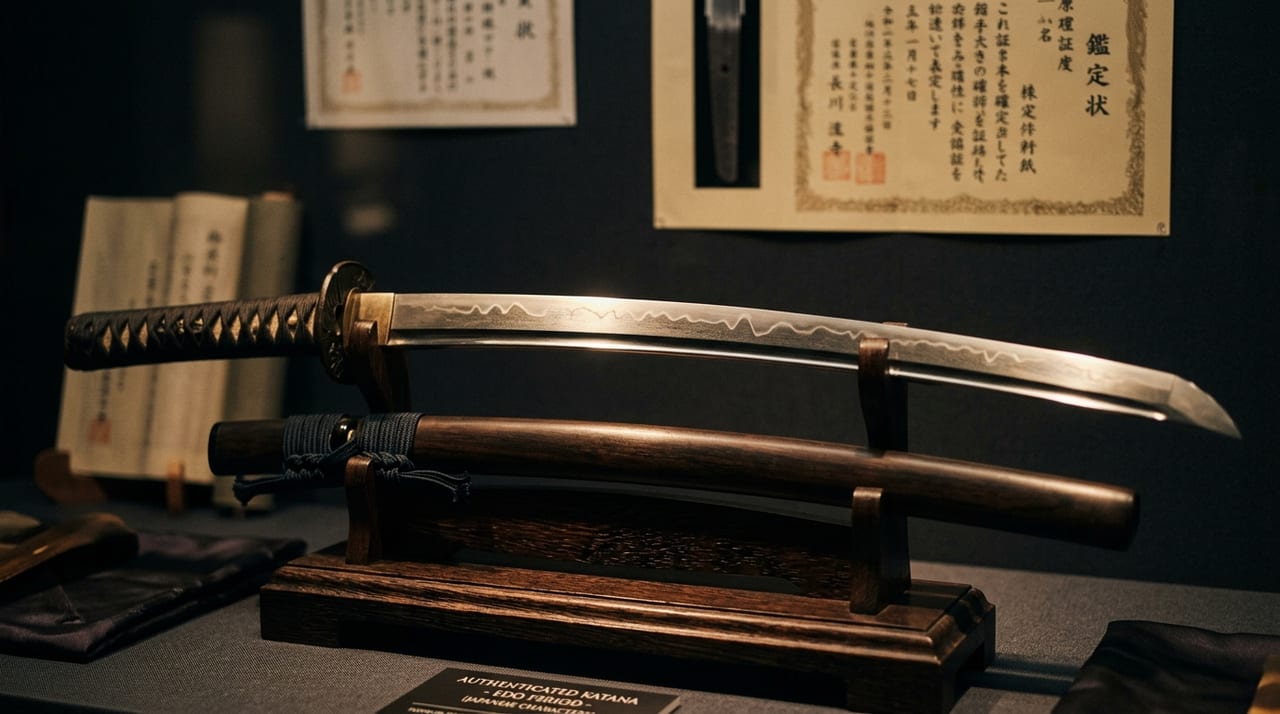
tōsōgu are an important evaluation factor in the appraisal and sale of Japanese swords, and the presence or absence of high-quality exterior metal fittings significantly affects the transaction price of swords. Judging the authenticity and period of manufacture of exterior metal fittings is done by comprehensively assessing factors such as the presence or absence of a mei (signature) and the style of its engraving, the color of the base metal, and the natural patina (nare-tsuya) that comes from years of careful handling. NBTHK issues kanteisho (appraisal certificates) not only for blades but also for tōsōgu such as tsuba, menuki, kozuka, and fuchi-kashira, classified as hozon tōsōgu (preserved sword fittings) and tokubetsu hozon tōsōgu (specially preserved sword fittings), allowing exterior metal fittings to receive official appraisal evaluation on their own. When purchasing or having pieces appraised, the presence or absence of a kanteisho for the fittings alone is one important clue for judging authenticity.
Tips for Caring for and Appreciating Exterior Metal Fittings
Like the blade, exterior metal fittings are also susceptible to perspiration and skin oils, and touching them directly with bare hands can easily cause rust or discoloration. When handling pieces for appreciation, the basic practice is not to touch the metal fittings of the tsuka or tsuba directly but to handle them through a cloth. Since the storage environment is also susceptible to humidity, it is advisable to regularly check the condition of the exterior metal fittings alongside the care of the blade.
The following are points to note when appreciating pieces.
- Presence of mei and style of engraving: When a kanagushi's mei (signature) is engraved on a piece, the script style and depth of the cut serve as clues for reading the production background
- Color and finish of the base metal: Whether the coloration characteristic of the alloy — such as the black-purple of shakudō or the pale gray of shibuichi — has been carefully finished
- Coherence of design: Whether the tsuba, menuki, kozuka, and fuchi-kashira have been made as a matched set with the same subject or technique (presence or absence of toriawase)
- Condition with age: Whether the piece has a natural luster from years of careful handling rather than from wear or dirt
These are perspectives that even non-specialists can gradually learn to assess by carefully observing actual pieces or photographs.
Conclusion
Exterior metal fittings craftsmen are the unsung heroes who bear responsibility for the artistic completeness of Japanese swords. They are important specialists on a par with tōshō and togi-shi, yet little known, and the transmission of their skills has become one of the most urgently pressing challenges in contemporary Japanese sword culture. Learning about the specialized techniques of habaki-shi, menuki-shi, tsuba-shi, kozuka-shi, and fuchi-kashira-shi alike leads to developing a perspective for appreciating Japanese swords not merely as "blades" but as "comprehensive works of craft."